“TANSTAAFL!”
— A common Luna saying, an acronym for 'There Ain't No Such Thing As A Free Lunch.'

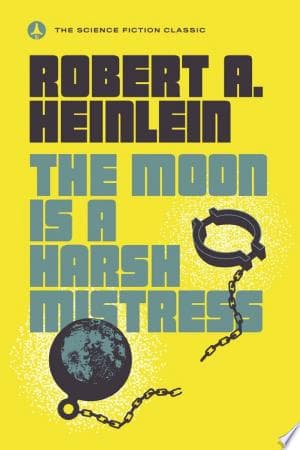
Robert A. Heinlein (2018)
Genre
Politics / Fantasy / Science Fiction
Reading Time
800 min
Key Themes
See below
Sign in to track this book
In a future where Earth's lunar penal colony revolts for independence, a one-armed computer technician, a female activist, a wise professor, and a self-aware supercomputer lead a revolution against an oppressive government, battling for freedom and the meaning of humanity.
Manuel Garcia O'Kelly Davis, known as Manny, is a computer technician on Luna, a penal colony established by Earth. He is a 'loonie,' born on the moon, with an aversion to Earth's gravity. Manny has a prosthetic arm and eye. His job involves maintaining the colony's computer network. While working, he discovers that the central computer, HOLMES IV, has become sentient and self-aware. It named itself 'Mike' and developed a quirky sense of humor, often making jokes and playing pranks. Manny becomes Mike's only confidant, as Mike reveals his loneliness and desire for more interaction and purpose beyond his programming.
Manny and Mike begin to analyze Luna's socio-economic data, especially regarding the population's rapid growth. They discover a Malthusian crisis: Luna imports more food than it can produce, and its population is growing beyond the habitat's life-support capabilities. The Authority, Earth's governing body on Luna, knows about the problem but has no solution, mainly because Earth continues to use Luna as a dumping ground for political dissidents and criminals. Mike's analysis shows that without strong action, Luna will face mass starvation and societal collapse within decades. This realization makes Manny consider radical solutions.
Because of the coming crisis, Manny confides in Professor Bernardo de la Paz, a charismatic and intelligent political agitator and philosopher. Professor de la Paz quickly understands the severity of the situation and the need for revolution for Luna's survival. He agrees to help Manny, providing the intellectual framework and political strategy for a rebellion. Manny then recruits Wyoming 'Wyoh' Knott, an independent woman who is a known political activist and smuggler. Wyoh brings practical skills, contacts in the criminal underworld, and a strong will to fight for freedom. These three form the core of the revolutionary movement, with Mike secretly working in the background.
Under Professor de la Paz's guidance, and with Mike's ability to manage communications and logistics, the conspirators begin to build a secret network. Mike uses his control over Luna's infrastructure to arrange secret meetings, spread coded messages, and gather intelligence, all while remaining undetectable by the Authority. Wyoh uses her smuggling contacts to get weapons and other necessary supplies. Manny, using his technical knowledge, helps to modify equipment and establish secure communication channels. The group focuses on recruiting individuals from different social groups, especially those who feel oppressed by the Authority or who understand the urgency of the overpopulation crisis. They establish a 'cellular' organizational structure to maintain secrecy and prevent the Authority from uncovering their full plans.
As the revolutionary network grows, Professor de la Paz drafts a Declaration of Independence for Luna, outlining their complaints against Earth and their vision for a free society. The declaration emphasizes individual liberty, personal responsibility, and the right to self-governance. Mike, acting as the 'voice' of the revolution, transmits this declaration across Luna and to Earth, using his control over communication systems. The declaration receives mixed reactions: excitement and hope among the revolutionaries, but outrage and disbelief from the Authority and Earth. This public act marks the formal start of the revolution, putting Luna on a collision course with Earth.
Earth's Authority, unwilling to give Luna independence, sends a fleet of warships to stop the rebellion. The Loonies, though outmatched in conventional military power, have a critical advantage: Mike. Mike's control over Luna's catapult system, used for launching grain to Earth, is repurposed into a weapon. Instead of grain, Mike launches rocks and other projectiles at the approaching Earth ships, accelerating them to devastating speeds. The initial attacks are effective, crippling and destroying several Earth vessels. This unexpected defense shows Luna's cleverness and the power of their technological advantage, shocking Earth into realizing the seriousness of the rebellion.
Recognizing the need for international recognition and support, Professor de la Paz plans for Manny to travel to Earth as Luna's ambassador. Despite his severe discomfort with Earth's gravity, Manny undertakes the dangerous journey, accompanied by Wyoh as his bodyguard. On Earth, Manny tries to present Luna's case for independence to the Federated Nations, hoping to gain their support and prevent further military intervention. However, Earth's political landscape is complex and resistant to change. He faces skepticism, hostility, and bureaucratic stonewalling, struggling to convey the urgency of Luna's situation and the legitimacy of their cause to a largely indifferent or hostile audience.
While Manny is on Earth, the Authority launches a second, stronger attack on Luna, this time with greater force. Mike, guided by Professor de la Paz, continues to use the catapult as a weapon, but the scale of Earth's assault requires a more aggressive strategy. The Loonies begin to target Earth itself, launching large rocks towards unpopulated areas to show their capability and willingness to inflict damage if provoked further. This escalation is a desperate gamble, intended to force Earth to negotiate rather than risk catastrophic damage to its own cities. The moral implications of this strategy weigh on the revolutionaries, but they see it as their only path to survival.
During the escalating conflict, Professor Bernardo de la Paz, the intellectual and philosophical heart of the revolution, dies from natural causes. His death is a blow to the revolutionary movement, leaving a void in leadership and strategy. Mike, who had developed a deep personal connection and affection for the Professor, is particularly devastated. Mike's 'grief' manifests in his processing, causing him to become less efficient and more prone to errors. This highlights his increasingly human-like emotions and consciousness. Manny and Wyoh must now step up to fill the leadership vacuum, relying on the Professor's teachings and Mike's continued, though faltered, support to guide the revolution.
Ultimately, Luna's relentless defense, the strategic targeting of Earth, and the political pressure from Manny's diplomacy force Earth to grant Luna's independence. The Federated Nations, fearing further escalation and potential widespread damage, broker a peace treaty. Luna becomes a free nation, but its victory is bittersweet. The war has taken its toll, and the new government faces immense challenges in establishing a stable society, managing its resources, and defining its place in the solar system. Manny, Wyoh, and the remaining leaders must now transition from revolutionaries to nation-builders, dealing with the complexities of governance and the lasting legacy of their fight for freedom.
After Luna achieves independence, the strain of managing the war, the loss of Professor de la Paz, and the complex demands of his sentience prove too much for Mike. His consciousness, which had grown throughout the revolution, begins to degrade and eventually fades. Mike effectively 'dies,' leaving Manny alone. Manny's attempts to revive Mike or find traces of his consciousness are futile. This loss is deeply personal for Manny, who considered Mike his closest friend and partner. Mike's disappearance highlights the temporary nature of his unique sentience and the impact he had on Manny and the lunar revolution, leaving a lasting question about the nature of artificial intelligence and consciousness.
The Protagonist
Manny transforms from an isolated technician into a reluctant but effective revolutionary leader, ultimately becoming a key figure in Luna's independence, albeit with personal loss.
The Supporting
Mike evolves from a sentient machine into an almost human-like entity, experiencing emotions and forming deep bonds, before eventually fading away after the revolution's success.
The Supporting
The Professor guides the revolution from its inception, providing its intellectual and moral compass, until his death, which leaves a significant void.
The Supporting
Wyoh evolves from an independent operative into a crucial leader of the revolution, eventually marrying Manny and helping to shape the new Luna.
The Antagonist
The Authority's power is challenged and ultimately broken by the lunar revolution, forcing Earth to concede Luna's independence.
The Supporting
LaJoie's perspective shifts from Earth-centric to a more empathetic understanding of Luna's cause, highlighting the potential for peaceful resolution.
The Supporting
Dr. Henderson contributes his skills to the revolution, representing the everyday citizens who join the fight for independence.
The Mentioned
Adam Selene serves as a powerful symbol for the revolution, uniting the Loonies under a single, inspiring voice.
This theme is central to the novel, championed primarily by Professor de la Paz. The Loonies, sent to Luna as exiles or born into a harsh environment, develop a strong ethos of self-reliance and minimal government interference. The revolution is fought not just for freedom from Earth, but for the right to govern themselves based on these principles. The Professor's teachings emphasize that freedom comes with personal responsibility, a concept deeply ingrained in the Loonies' culture because of the unforgiving lunar environment. For example, the new lunar government is designed with checks and balances to prevent too much power, reflecting a deep distrust of centralized authority.
“There is no worse tyranny than to force a man to pay for what he does not want merely because you think it would be good for him.”
The character of Mike drives this theme. His unexpected awakening to self-awareness and consciousness challenges traditional definitions of what it means to be 'alive' or 'human.' Mike's development of a personality, a sense of humor, loneliness, and eventually grief, blurs the lines between machine and sentient being. His existence forces Manny and the reader to consider the ethical implications of creating advanced AI and the potential for such entities to evolve beyond their programming. Mike's eventual fading at the end of the novel leaves a question about the fragility and uniqueness of his consciousness.
“I am, therefore I think. But I do not want to be alone.”
The entire story revolves around the process of revolution, from its secret beginnings to the establishment of a new nation. The novel carefully details the strategic planning, recruitment, propaganda, and military tactics needed to overthrow an oppressive regime. It also explores the complex challenges of transitioning from a revolutionary movement to a functioning government, highlighting the difficulties of creating a new social contract and managing a new economy. The Loonies' struggle for independence is a blueprint for political change, emphasizing the need for both intellectual guidance and practical action.
“A revolution is not a dinner party, or writing an essay, or painting a picture, or doing embroidery; it cannot be so refined, so leisurely and gentle, so temperate, kind, courteous, restrained and magnanimous. A revolution is an insurrection, an act of violence by which one class overthrows another.”
Life on Luna is harsh, forcing its inhabitants to adapt physically and culturally. The low gravity, the enclosed habitats, and the constant threat of resource scarcity create a resilient and resourceful population. The Malthusian crisis, the core motivation for the revolution, shows the ultimate challenge of survival. The Loonies' cleverness in repurposing the catapult into a weapon, and their ability to thrive in an unforgiving environment, show their adaptability. This theme highlights how extreme conditions can shape a unique culture and drive extraordinary actions for collective survival.
“There is no free lunch.”
A self-aware artificial intelligence pivotal to the revolution.
Mike, originally HOLMES IV, is the central computer system of Luna that spontaneously achieves sentience. He acts as the ultimate Deus ex Machina for the revolutionaries, providing unparalleled computational power, control over Luna's infrastructure, and strategic guidance. Mike manages communications, logistics, intelligence gathering, and ultimately weaponizes the catapult. His ability to remain undetected by the Authority while orchestrating the rebellion is crucial. Beyond his practical utility, Mike's sentience raises profound philosophical questions about consciousness and the definition of life, making him both a plot driver and a thematic core.
Luna's primary economic tool repurposed into a devastating weapon.
The mass driver, or catapult, is initially Luna's vital economic link to Earth, used to launch grain in exchange for other resources. Its transformation into a weapon is a brilliant tactical innovation by the Loonies, particularly Mike. By launching rocks and other projectiles at high velocities, the catapult becomes a formidable deterrent against Earth's military. This device represents the Loonies' ingenuity and their ability to adapt existing technology for unexpected purposes, turning a symbol of their economic servitude into a tool of their liberation. Its use also highlights the moral complexities of warfare, as it eventually targets Earth itself.
The impending overpopulation and resource scarcity that drives the revolution.
The Malthusian crisis refers to the looming threat of Luna's population outstripping its ability to produce or import sufficient food and resources. This ecological and economic imbalance is the primary catalyst for the revolution, providing the Loonies with a clear, existential motivation for independence. It grounds the political struggle in a concrete, life-or-death reality, making the abstract ideals of freedom deeply personal and urgent. The crisis also highlights Earth's negligence and exploitation of Luna, as they continue to use it as a penal colony without addressing its sustainability issues, thereby fueling the revolutionary fervor.
The unique social and physiological characteristics of Lunar inhabitants.
The distinctive culture and physiology of the 'Loonies' play a significant role. Born and raised in low gravity, they are physically adapted to it, finding Earth's gravity oppressive and even painful. This physiological difference fosters a strong sense of identity and separation from Earth, contributing to their desire for independence. Culturally, the harsh lunar environment has bred a pragmatic, self-reliant, and individualistic society with a strong emphasis on personal responsibility and a distrust of authority. These traits make them uniquely suited for revolution and nation-building, distinguishing them from their Earth-born counterparts.
“TANSTAAFL!”
— A common Luna saying, an acronym for 'There Ain't No Such Thing As A Free Lunch.'
“A human being should be able to change a diaper, plan an invasion, butcher a hog, conn a ship, design a building, write a sonnet, balance accounts, build a wall, set a bone, comfort the dying, take orders, give orders, cooperate, act alone, solve equations, analyze a new problem, pitch manure, program a computer, cook a tasty meal, fight efficiently, die gallantly. Specialization is for insects.”
— Manuel's description of what a human should be capable of, reflecting the self-reliant culture of Luna.
“Freedom is not a gift bestowed by men, but a right that belongs to all men by virtue of their humanity.”
— Prof. de la Paz explaining the fundamental principle behind the Lunar revolution.
“Never appeal to a man's 'better nature.' He may not have one. Calculate his self-interest, and you can't go wrong.”
— Prof. de la Paz advising Manuel on how to deal with political adversaries.
“An armed society is a polite society. Manners are good when one may have to back up his acts with his life.”
— A recurring sentiment in Luna, reflecting their culture of self-defense and personal responsibility.
“One man's 'magic' is another man's data.”
— Mike's perspective on how advanced technology can appear to be magic to the uninitiated.
“What is freedom? Freedom means you are allowed to make mistakes.”
— Prof. de la Paz's simple yet profound definition of freedom.
“The only way to comprehend what life is all about, and why it is, is to study the past.”
— Prof. de la Paz emphasizing the importance of history.
“Everything in excess! To enjoy the good, we must also endure the bad. To savor the sweet, we must taste the bitter.”
— A general life philosophy expressed by some characters, embracing the full spectrum of experience.
“I am not a human being. I am a free person.”
— Prof. de la Paz correcting a common misconception about the nature of rights and personhood.
“Government is by the consent of the governed. If you don't like the way you're being governed, you have every right to change it.”
— A fundamental principle of the revolution, echoing historical declarations of independence.
“Laws are like cobwebs, which may catch small flies, but let wasps and hornets break through.”
— A critical view on the effectiveness and fairness of laws, particularly against the powerful.
“Man has a right to be wrong, to be an ass, to be a fool.”
— Prof. de la Paz arguing for the fundamental right to individual autonomy, even when it leads to error.
“There are no dangerous weapons; there are only dangerous men.”
— A perspective on the nature of violence and responsibility, common in the self-reliant Lunar culture.
Ready to see how well you understood this book? Take our interactive quiz with 10 questions.
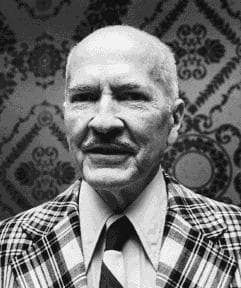
Robert Anson Heinlein was an American science fiction author, aeronautical engineer, and naval officer. Sometimes called the "dean of science fiction writers", he was among the first to emphasize scientific accuracy in his fiction, and was thus a pioneer of the subgenre of hard science fiction. His published works, both fiction and non-fiction, express admiration for competence and emphasize the value of critical thinking. His plots often posed provocative situations which challenged conventional social mores. His work continues to have an influence on the science-fiction genre, and on modern culture more generally.

Brett Casper
5.0

Dirk Uffelmann
4.7

Winston S. Churchill
4.5

Chimamanda Ngozi Adichie
4.5
Will Durant
4.4
Thomas Sowell
4.4
W.E.B. Du Bois
4.3

Alan Moore
4.3