BookBrief
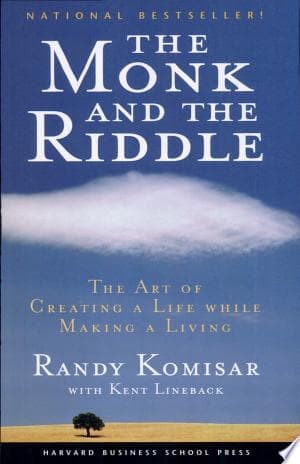
The Monk and the Riddle cover
Archivist's Choice

The Monk and the Riddle

Kent L. Lineback (2001)

Genre

General

Reading Time

180 min

Key Themes

See below

Track Your Reading

Sign in to track this book

Learn how to make your daily work a source of personal growth, satisfaction, and joy, not just a paycheck.

Core Idea

The Monk and the Riddle says a good career is not a goal but a continuous process of self-discovery, investing in your skills, and adapting. It questions the usual career path, suggesting an 'entrepreneurial mindset' where people actively shape their work lives by understanding their strengths, passions, and the three parts of work (doing, learning, earning). The book emphasizes that real job satisfaction comes from solving the 'riddle' of meaningful work by matching personal values with job goals, instead of only chasing outside signs of success.
Reading time
180 min
Difficulty
Medium
✓ Read this if...
You are feeling unfulfilled in your current career, contemplating a significant career change, or seeking a more intentional and iterative approach to long-term career planning and personal growth.
✗ Skip this if...
You are looking for a prescriptive, step-by-step guide to finding a specific job, or you prefer a rigid, traditional view of career progression.

Core idea

The central argument and framework that powers the entire book.

The Monk and the Riddle says a good career is not a goal but a continuous process of self-discovery, investing in your skills, and adapting. It questions the usual career path, suggesting an 'entrepreneurial mindset' where people actively shape their work lives by understanding their strengths, passions, and the three parts of work (doing, learning, earning). The book emphasizes that real job satisfaction comes from solving the 'riddle' of meaningful work by matching personal values with job goals, instead of only chasing outside signs of success.

At a glance

Reading time

180 min

Difficulty

Medium

Read this if...

You are feeling unfulfilled in your current career, contemplating a significant career change, or seeking a more intentional and iterative approach to long-term career planning and personal growth.

Skip this if...

You are looking for a prescriptive, step-by-step guide to finding a specific job, or you prefer a rigid, traditional view of career progression.

Key Takeaways

1

The Three Dimensions of Work

Work's true value lies beyond just money, encompassing personal growth and purpose.

Quote

Work is not just about making a living; it's about making a life. It's about how you grow, how you contribute, and how you find meaning.

Lineback says work has three parts: money (what you earn), experience (what you learn and the skills you get), and purpose (the meaning you find). Many people, especially early in their careers, focus too much on money, often ignoring the other two. Real career satisfaction and long-term success come from balancing all three. Ignoring the experience part leads to staying still, while ignoring the purpose part results in an empty life, no matter the salary. A smart approach to work means making choices that improve all three, knowing t...

Supporting evidence

The author introduces the 'Three Dimensions of Work' as a foundational model, emphasizing that while money is tangible, the growth and meaning derived from work are equally, if not more, valuable in the long run.

Apply this

Evaluate your current role against these three dimensions. Are you prioritizing financial gain at the expense of learning or purpose? Actively seek opportunities that offer a better balance, even if it means a temporary financial trade-off for significant experiential or spiritual gains.


career-satisfactionwork-life-balancepersonal-growth
2

The 'Riddle' of Meaningful Work

Finding your unique purpose is an ongoing quest, not a one-time discovery.

Quote

The riddle is not just about what you want to do, but who you want to be, and how your work contributes to that becoming.

The 'riddle' in the book's title is the ongoing challenge of finding and matching your work with your deepest values and hopes. It is not a puzzle with one answer, but a changing question that grows with you. Lineback suggests that many people struggle in their careers because they have not truly thought about this riddle. They chase outside signs of success instead of inner satisfaction. Solving the riddle means understanding your unique talents, passions, and what kind of impact you want to make, then actively shaping your work to s...

Supporting evidence

The entire premise of the book is built around the 'riddle' as a metaphor for finding purpose and meaning in work, highlighted by the author's own journey and observations of others who struggled with career fulfillment.

Apply this

Regularly reflect on your core values and long-term aspirations. Ask yourself: 'Does my current work move me closer to the person I want to be and the impact I want to make?' Be open to career pivots or redefinitions if your current path diverges too much from your evolving 'riddle.'

purpose-driven-workcareer-pathself-discovery
3

Investing in Your 'Human Capital'

Your most valuable asset is your accumulated skills, knowledge, and network.

Quote

Your human capital—what you know, what you can do, and who you know—is your most valuable asset, far more enduring than any salary.

Lineback strongly suggests seeing your career as an investment in your 'human capital.' This capital includes your skills, knowledge, reputation, and professional connections. Unlike a salary, which is spent, human capital grows over time, increasing your future earning potential and job options. A common mistake is to chase quick money without thinking about how a role helps build this capital. He says that sometimes, a lower-paying job that offers good learning chances, exposure to new fields, or access to helpful mentors is a much ...

Supporting evidence

The author contrasts short-term financial gains with long-term career resilience, using examples of individuals who prioritized learning and networking over immediate high salaries, ultimately achieving greater success and fulfillment.

Apply this

Before accepting a new role or project, assess its contribution to your human capital. Will it teach you new skills, expand your network, or enhance your reputation? Actively seek out learning opportunities, mentors, and build genuine professional relationships, even if they don't offer immediate financial returns.

skill-developmentnetworkingcareer-investment
4

The Power of 'Small Wins'

Consistent, incremental progress builds momentum and reinforces purpose.

Quote

The path to significant achievement is paved with a series of small, consistent wins, each reinforcing your commitment and building your capabilities.

Lineback says that big goals can be scary and stop you from starting. Instead, he supports the power of 'small wins' – steady, small steps that build momentum, confidence, and skill. These small successes, whether finishing a tough task, learning new software, or working well on a small project, show real progress and strengthen your sense of purpose. They also create a loop where you can adjust and improve as you go. This way of thinking goes against the all-or-nothing mindset, making big goals seem possible and helping you develop a...

Supporting evidence

The author illustrates this with examples of how successful individuals and organizations achieve their objectives not through grand gestures, but through disciplined, iterative steps and consistent effort.

Apply this

Break down your larger career goals into smaller, manageable tasks. Celebrate each small accomplishment. This consistent positive reinforcement will fuel your motivation and make the overall journey feel less overwhelming and more rewarding.

goal-settingprogress-trackingmotivation
5

Embrace the 'Entrepreneurial Mindset'

Treat your career as a venture, regardless of your employment status.

Quote

Whether you work for yourself or someone else, your career is your business. You are its CEO, its chief strategist, and its primary investor.

A main idea of the book is to have an 'entrepreneurial mindset' about your career, even if you work for someone else. This means taking responsibility, being active, finding chances, managing risks, and always improving your own 'product' (your skills and what you offer). It involves understanding what makes you valuable, actively looking for problems to solve, and building your personal brand. This mindset changes you from just doing tasks to actively building your professional life, giving you more control and strength. It is about ...

Supporting evidence

Lineback contrasts employees who passively wait for direction with those who proactively seek out projects, develop new skills, and build networks, demonstrating how the latter group consistently outperforms and finds greater satisfaction.

Apply this

Identify areas within your current role where you can take more initiative. Propose solutions to problems, even if they're outside your immediate job description. Think about your 'personal brand' and how you can differentiate yourself. Act as if your career's success depends entirely on your strategic decisions.

proactive-careerpersonal-brandintrapreneurship
6

The Importance of 'Fit' Over 'Fortune'

Alignment with culture and values often outweighs higher compensation.

Quote

A good 'fit' in terms of values, culture, and personal interests will often generate more long-term satisfaction and success than a job that simply pays more.

Lineback says many people put salary and status ahead of 'fit' – how well their personal values, work style, and a company's culture match. While money is important, a bad cultural fit can lead to constant unhappiness, stress, and eventually burnout, no matter the pay. He stresses the importance of carefully checking potential employers for cultural match and understanding your own preferences for work environment, how you like to work with others, and ethical standards. A good fit leads to engagement, helps you do well, and often res...

Supporting evidence

The author recounts stories of individuals who left high-paying, prestigious jobs due to toxic work environments or misaligned values, finding greater contentment and even renewed success in roles that offered a better 'fit' despite initial financial sacrifices.

Apply this

During job interviews, ask probing questions about company culture, team dynamics, and leadership style. Reflect on your own ideal work environment and non-negotiable values. Prioritize roles where you feel you can genuinely belong and contribute authentically, even if it's not the highest offer on the table.

company-culturevalues-alignmentjob-satisfaction
7

Cultivate a 'Learning Discipline'

Continuous learning is non-negotiable for long-term relevance and growth.

Quote

The half-life of knowledge is shrinking. What you know today will be obsolete tomorrow. A commitment to continuous learning is your only defense.

In a fast-changing world, Lineback states that a 'learning discipline' is very important. This is not just about formal education, but an active, ongoing commitment to getting new skills, knowledge, and ideas. He suggests that those who see learning as optional will quickly become irrelevant. Having this discipline means actively seeking new information, trying new tools, engaging with different ideas, and being open to feedback. It is about knowing that every experience, even failures, offers a chance to learn and adapt, which increa...

Supporting evidence

The book frequently references the accelerating pace of technological change and market demands, underscoring how individuals who fail to update their skills quickly become redundant, while those who embrace learning stay competitive.

Apply this

Dedicate specific time each week to learning new skills relevant to your field or future aspirations. Read industry publications, take online courses, attend workshops, or seek out mentors. View challenges as learning opportunities, not just obstacles.

lifelong-learningskill-reskillingadaptability
8

The Value of 'Time Off'

Strategic breaks and reflection are crucial for creativity and sustained effort.

Quote

True productivity isn't about working more hours, but about working smarter, which often includes strategic disengagement and periods of deep reflection.

Against common belief, Lineback says that 'time off' – whether daily breaks, weekends, vacations, or even career breaks – is not a luxury but a key part of lasting productivity, creativity, and well-being. Always working leads to burnout, less effective results, and a lack of perspective. Planned breaks allow for mental rest, encourage new ideas, and help keep a wider view of your work and life goals. It recharges your mind and emotions, making your working times more effective and enjoyable. Ignoring this leads to tiredness and losin...

Supporting evidence

The author shares anecdotes of highly successful individuals who intentionally build in periods of rest and reflection, demonstrating how these breaks often lead to breakthroughs and renewed focus, rather than hindering progress.

Apply this

Schedule regular breaks throughout your workday. Take your allotted vacation time and truly disconnect. Consider longer periods for reflection or skill acquisition if feasible. Recognize that rest is part of the work, not a distraction from it.

work-life-integrationmindfulnessburnout-prevention
9

Building Your 'Support System'

No one succeeds in isolation; foster strong personal and professional relationships.

Quote

Your career journey is not a solo endeavor. The quality of your support system—your mentors, colleagues, friends, and family—will profoundly impact your ability to navigate challenges and celebrate successes.

Lineback highlights the important role of a strong 'support system' in career satisfaction and success. This system includes mentors who guide you, peers who give feedback and company, and personal relationships (family, friends) that offer emotional strength. He warns against being alone, as challenges become too much and successes feel empty without sharing them. Actively building these relationships – through networking, mentoring, and real personal connection – provides emotional support, practical advice, and opens doors to new c...

Supporting evidence

The book cites examples where strong mentorship or peer networks were instrumental in individuals overcoming career obstacles or identifying new paths, highlighting the collaborative nature of success.

Apply this

Identify key individuals who can serve as mentors, advisors, or peer support. Proactively reach out, offer value, and nurture these relationships. Invest time in your personal relationships, as they provide the foundation for your overall well-being and resilience.

mentorshipprofessional-networkcommunity-building
10

The Iterative Nature of Career Planning

Your career path is a series of experiments, not a fixed blueprint.

Quote

A career is not a straight line to a predetermined destination. It's a series of experiments, adjustments, and new directions based on what you learn along the way.

Finally, Lineback challenges the traditional idea of a strict, long-term career plan. He says that in today's changing world, a better way is iterative planning – treating your career as a series of experiments. This means setting short-to-medium term goals, acting, seeing the results, learning from both successes and failures, and then changing your path. This flexible approach allows for more adaptability, reduces the pressure of making 'perfect' decisions, and accepts that your interests and the market will change. It is about bein...

Supporting evidence

The author contrasts the outdated industrial-era career model with the modern, more fluid career landscape, using examples of individuals who successfully pivoted their careers multiple times based on new information and opportunities.

Apply this

Instead of a 10-year plan, focus on 1-3 year 'experiments.' What new skills can you acquire, projects can you undertake, or roles can you explore in the near future? Regularly review your progress, gather feedback, and be willing to pivot based on new insights.

agile-careercareer-pivotadaptive-planning

Critical analysis

Notable Quotes

The greatest enemy of a good plan is the dream of a perfect plan.

Discussing the pursuit of an ideal that can hinder practical progress.

Strategy is about making choices, and those choices mean saying 'no' to other good things.

Emphasizing the necessity of trade-offs in strategic decision-making.

The purpose of a business is to create a customer.

A fundamental statement about the core objective of any enterprise.

Execution is strategy. Everything else is just talk.

Highlighting the critical importance of implementing plans over mere conceptualization.

The only sustainable competitive advantage is to learn faster than your competition.

Stressing the role of continuous learning and adaptation in long-term success.

Innovation is not about doing new things; it's about doing old things in new ways.

Redefining innovation as a process of re-imagining existing processes or products.

The riddle is not how to get started, but how to keep going.

Addressing the challenge of sustained effort and perseverance beyond initial enthusiasm.

Fear of failure is often a greater obstacle than failure itself.

Discussing how apprehension can paralyze action more effectively than actual setbacks.

The value of a good idea is in its use, not in its existence.

Underscoring that an idea's worth is only realized through its application and impact.

You can't manage what you don't measure.

A classic management principle emphasizing the need for metrics and data.

The future belongs to those who see possibilities before they become obvious.

Encouraging foresight and the ability to identify emerging opportunities.

Simplicity is the ultimate sophistication.

Advocating for clear, uncomplicated approaches in business and life.

Don't confuse activity with accomplishment.

Warning against mistaking busy work for actual productive output.

The most dangerous phrase in the language is 'we've always done it this way.'

Critiquing resistance to change and the complacency of tradition.

Quiz

Test Your Knowledge

Ready to see how well you understood this book? Take our interactive quiz with 10 questions.

10
Questions
~5
Minutes
?
Best Score

Key Questions (FAQ)

This book explores how individuals can find deeper meaning and satisfaction in their work beyond just monetary compensation. It offers insights into aligning personal values with professional pursuits to achieve a more fulfilling career experience.

About the author