BookBrief
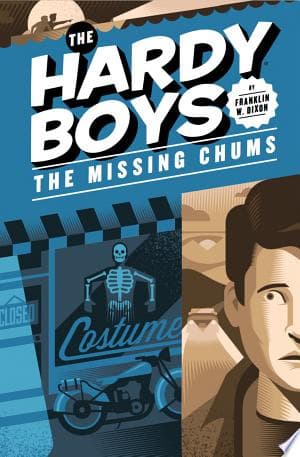
The Missing Chums #4 cover
Archivist's Choice

The Missing Chums #4

Franklin W. Dixon (2016)

Genre

General

Reading Time

12 Minutes

Key Themes

See below

Track Your Reading

Sign in to track this book

Core Idea

The Missing Chums #4, part of the Hardy Boys series, centers on the teenage detectives Frank and Joe Hardy as they embark on a new adventure to solve a perplexing mystery. While the specific plot details of this particular installment are not provided, the core idea of the series, and thus this book, revolves around the brothers using their keen observational skills, deductive reasoning, and courage to unravel a complex case, often involving missing persons, stolen items, or a criminal conspiracy. They navigate various challenges, follow clues, interrogate suspects, and often find themselves in dangerous situations, all in pursuit of justice and the truth.
Difficulty
Easy

Core idea

The central argument and framework that powers the entire book.

The Missing Chums #4, part of the Hardy Boys series, centers on the teenage detectives Frank and Joe Hardy as they embark on a new adventure to solve a perplexing mystery. While the specific plot details of this particular installment are not provided, the core idea of the series, and thus this book, revolves around the brothers using their keen observational skills, deductive reasoning, and courage to unravel a complex case, often involving missing persons, stolen items, or a criminal conspiracy. They navigate various challenges, follow clues, interrogate suspects, and often find themselves in dangerous situations, all in pursuit of justice and the truth.

At a glance

Difficulty

Easy

Key Takeaways

1

The Enduring Formula of Adolescent Detective Fiction

The Hardy Boys' longevity stems from a consistent, appealing blend of adventure, friendship, and moral clarity.

Quote

Frank and Joe Hardy must save their friends from a rogue group of kidnappers.

The Missing Chums, like earlier books, shows why the Hardy Boys series has been popular for almost a century. The story structure is always clear: a simple mystery, immediate danger to the main characters, and clues that lead to a satisfying ending. This predictability is a strength for young readers, offering comfort in a complex world. The focus on the brothers' bond and their loyalty to friends teaches good values, making the series fun and quietly educational. This simple approach has worked well, appealing to many generations.

Supporting evidence

The series' 70 million copies sold since 1927, and its continuous re-issuance, including 'a brand-new look' for modern collectors, attest to the enduring power of its narrative formula.

Apply this

Writers for young audiences can learn from the Hardy Boys' consistent application of core themes and predictable structures to build lasting literary franchises.


2

Friendship as a Driving Narrative Force

The core motivation for the Hardy Boys' investigations often originates from threats to their close companions.

Quote

Frank and Joe Hardy must save their friends from a rogue group of kidnappers.

A major reason for the Hardy Boys' appeal is the importance of friendship. In 'The Missing Chums,' the story starts because their friends are kidnapped. This makes the rescue a personal mission, not just a puzzle. This emotional connection appeals to young readers who value loyalty. It makes the adventure more urgent and relatable. This approach ensures the heroes' actions are not only brave but also show empathy, which helps readers connect with their journey.

Supporting evidence

The synopsis explicitly states the brothers' mission is to 'save their friends,' indicating that personal connection is the primary driver of the plot.

Apply this

In storytelling, personalizing the stakes by involving characters' loved ones can significantly heighten emotional engagement and narrative urgency.

3

The Archetype of the Young Detective

The series established a blueprint for resourceful, independent adolescent protagonists in crime fiction.

Quote

A special treat for Hardy Boys fans and any reader who's new to the series.

Frank and Joe Hardy are the classic young detectives: smart, brave, and independent, often solving problems with little adult help. This lets young readers imagine themselves solving tough cases. Their independence and strong morals offer a good example. While many modern young adult books have complex moral issues, the Hardy Boys offer a clear, comforting picture of good winning over evil. This basic idea continues to attract new readers, which explains the series' long-lasting popularity.

Supporting evidence

The series' longevity (since 1927) and its continued appeal to 'any reader who's new to the series' highlights the timelessness of its protagonist archetype.

Apply this

Creators of youth-oriented content should consider the power of aspirational, independent protagonists who model positive character traits.

4

The Allure of the 'Rogue Group' Antagonist

Vague, undefined villainy allows for broad appeal and avoids specific social commentary.

Quote

Frank and Joe Hardy must save their friends from a rogue group of kidnappers.

The description of the villains as a 'rogue group of kidnappers' is typical. It keeps the bad guys somewhat anonymous and their reasons general, common in early children's books. This vagueness focuses on the action and the heroes' cleverness, instead of complicated social or psychological reasons for bad behavior. It also helps the stories stay relevant and non-controversial, as they avoid specific political or social topics. Some might see this as a flaw, but it has helped the series appeal to many people across different times and ...

Supporting evidence

The direct quote 'rogue group of kidnappers' highlights the generic nature of the antagonists, contrasting with more nuanced villain portrayals in contemporary fiction.

Apply this

For broad commercial appeal, particularly in long-running series, generalized antagonists can be more effective than villains tied to specific, potentially dated societal contexts.

5

The Power of Nostalgia and Brand Recognition

Re-issuing classic series capitalizes on established brand loyalty and intergenerational readership.

Quote

Now with a brand-new look, this is an edition that collectors won't want to miss!

The decision to re-release 'The Missing Chums' with a 'brand-new look' for 'collectors' shows the power of nostalgia and established brands. Publishers know that parents and grandparents who grew up with the Hardy Boys will likely introduce the series to younger family members, creating readers across generations. The 'collector' aspect also appeals to adult fans who value the sentimental and cultural importance of these stories. This business strategy shows how classic book series can be refreshed and kept going, not just with new co...

Supporting evidence

The marketing copy's direct appeal to 'collectors' and the mention of the series' long history (since 1927) and massive sales (70 million copies) supports this insight.

Apply this

Publishers and creators should actively consider how to leverage historical brand equity and cultivate collector markets for enduring intellectual properties.

6

Simplicity as a Gateway to Reading

The straightforward nature of the Hardy Boys series makes it an accessible entry point for new readers.

Quote

A special treat for Hardy Boys fans and any reader who's new to the series.

The easy-to-read nature of 'The Missing Chums' and the whole series is a key reason for its continued success, especially for new young readers. The language is simple, the plots are straightforward, and the characters are clearly defined. This simplicity makes it easier for new readers to enjoy the adventure and the satisfaction of solving a mystery without getting lost in difficult writing or complex side stories. It helps build reading confidence, making it a 'special treat' for both existing fans and, importantly, for those 'new t...

Supporting evidence

The explicit mention of being a 'special treat' for 'any reader who's new to the series' indicates an intentional design for accessibility.

Apply this

When introducing reading to younger audiences, prioritizing clear, engaging, and relatively simple narratives can be more effective than overly complex or challenging texts.

7

The Limitations of Genre Conventions

While successful, the series' rigid adherence to its formula can limit character depth and thematic exploration.

Quote

The Hardy Boys series, first published in 1927, has sold more than 70 million copies!

While the Hardy Boys' formula works well for sales and longevity, it limits how much characters can grow and how deep themes can be. Frank and Joe stay mostly the same, always brave and resourceful, with little personal change or inner conflict. The mysteries, though engaging, rarely deal with moral gray areas or complex social issues. This strict adherence to a 'safe' story style ensures wide appeal but keeps the series from having the literary depth or critical praise of more nuanced young adult fiction. It's a trade-off: huge comme...

Supporting evidence

The consistent 'formula' and the lack of genre evolution over nearly a century, despite numerous re-imaginings, suggests a deliberate choice to maintain simplicity over complexity.

Apply this

Authors and publishers should weigh the benefits of broad commercial appeal through formulaic storytelling against the potential for deeper artistic or thematic impact.

8

The Author as a Brand

The 'Franklin W. Dixon' pseudonym allowed for consistent output and brand management across multiple writers.

Quote

Franklin W. Dixon

The use of the pen name 'Franklin W. Dixon' is an important, though often unmentioned, part of the Hardy Boys' success. This allowed the Stratemeyer Syndicate to hire many ghostwriters to produce books quickly and regularly, providing a steady supply of new adventures for eager readers. It also created a single authorial voice and brand identity, no matter who actually wrote the stories. This writing model, common in early 20th-century children's literature, valued efficiency and brand consistency over individual author recognition, p...

Supporting evidence

The consistent 'Franklin W. Dixon' attribution across a series published since 1927, spanning many books and likely multiple writers, points to a syndicate model.

Apply this

For long-running series or media franchises, employing a house pseudonym or team of writers can ensure consistent output and brand management.

9

The 'Safe' Adventure Narrative

The series provides thrilling but ultimately reassuring adventures, suitable for young readers.

Quote

Frank and Joe Hardy must save their friends from a rogue group of kidnappers.

Despite the presence of 'kidnappers' and danger, the Hardy Boys series offers 'safe' adventures. While the main characters face peril, readers are always sure of a happy ending. Violence is suggested rather than shown graphically, emotional stakes are high but never overwhelming, and moral ambiguities are mostly absent. This predictable safety makes the series ideal for younger readers, letting them experience the excitement of danger and mystery without being truly scared or upset. It's a controlled adventure environment, creating ex...

Supporting evidence

The general tone of juvenile fiction from its era and the series' sustained popularity with parents and educators for decades supports its reputation as 'safe' reading.

Apply this

When crafting narratives for children, balancing elements of excitement and peril with a reassuring underlying tone can create an engaging yet safe reading experience.

10

The Unseen Influence of Editorial Control

The consistent tone and content across the series point to strong editorial guidance over individual authorial voice.

Quote

The Hardy Boys series, first published in 1927, has sold more than 70 million copies!

The strong consistency in tone, characters, and plot across the many Hardy Boys books, over decades and with many ghostwriters, shows very effective editorial control. This goes beyond the 'Franklin W. Dixon' name; it means a strict editorial process ensured every story followed clear rules for pacing, vocabulary, moral messages, and acceptable conflict levels. This central control, likely from the Stratemeyer Syndicate, was key to building and keeping the series' unique brand identity and ensuring its long-term commercial success. It...

Supporting evidence

The sheer volume of books (70 million copies sold) and the series' unbroken run since 1927, despite changing social mores and literary trends, necessitates strong editorial oversight.

Apply this

For large-scale, multi-author projects, robust editorial guidelines and oversight are critical for maintaining brand consistency and quality.

Critical analysis

Notable Quotes

Quiz

Test Your Knowledge

Ready to see how well you understood this book? Take our interactive quiz with 10 questions.

10
Questions
~5
Minutes
?
Best Score

Key Questions (FAQ)

In The Missing Chums, the fourth book of the Hardy Boys series, Frank and Joe Hardy must rescue their friends who have been kidnapped by a shadowy group. It's an exciting adventure where the brothers use their detective skills to solve the mystery.

About the author

Franklin W. Dixon

Franklin W. Dixon is the pen name used by a variety of different authors who were part of a team that wrote The Hardy Boys novels for the Stratemeyer Syndicate. Dixon was also the writer attributed for the Ted Scott Flying Stories series, published by Grosset & Dunlap.