The Duality of Moral Reasoning
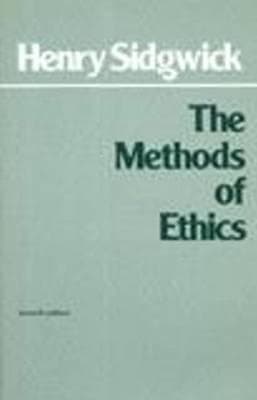
Sidgwick's exploration of common-sense morality reveals its inherent tension between egoism and utilitarianism.
Quote
The common sense of mankind has a duality in its moral judgments, which it is the business of philosophy to reconcile or to explain.
Sidgwick carefully examines the 'methods' of ethics, not as rules, but as distinct rational ways to decide what we should do. He argues that ordinary moral thought, or 'Common Sense Morality,' is not a single system but a complex mix of different, often conflicting, principles. Specifically, he finds a basic tension between egoism (seeking one's own greatest good) and utilitarianism (seeking the greatest good for all). This conflict is not easily solved, as both approaches seem reasonable and deeply rooted in human thought. Sidgwick's...
Supporting evidence
Sidgwick's detailed analysis of 'Common-Sense Morality' in Book III, where he examines concepts like justice, benevolence, and self-regard, revealing how each contains elements of both individual and collective well-being without fully resolving their conflict.
Apply this
When facing a moral dilemma, explicitly identify whether your reasoning is driven by self-interest (egoism) or by the well-being of the collective (utilitarianism). Acknowledge the tension and consider how a decision might be justified from both perspectives, or if one must ultimately take precedence.