BookBrief
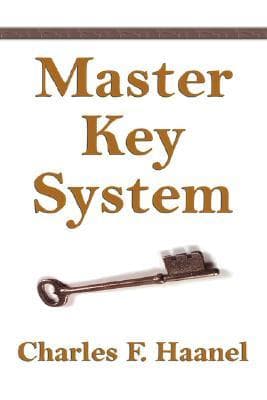
The Master Key System cover
Archivist's Choice

The Master Key System

Charles F. Haanel (1919)

Genre

Business / Psychology / Spirituality / Philosophy / Self-Help

Reading Time

236 min

Key Themes

See below

Track Your Reading

Sign in to track this book

Master universal laws of thought, attraction, and creative power to achieve personal success and joy.

Core Idea

The Master Key System states that the universe operates on fixed laws, with the Law of Attraction being central: like attracts like. It presents the human mind as a creative force that shapes reality through thought. By understanding and applying universal principles, people can use their subconscious mind, visualization, and focused attention to achieve their desires, succeed, and find personal balance. The book emphasizes that the 'I AM' principle is the foundation of individual power, and that consistent use of these mental laws, combined with faith and persistence, is the key to unlocking one's full potential and making any desired outcome real. It argues that the subconscious mind translates conscious thoughts into physical reality. Therefore, controlling and directing one's thoughts, maintaining a positive mindset, and consistently visualizing desired outcomes are fundamental acts of creation. The book offers a systematic, week-by-week guide to training the mind to align with these universal laws, promising that sustained practice will lead to health, wealth, and happiness.
Reading time
236 min
Difficulty
Medium
✓ Read this if...
You are interested in the foundational texts of New Thought, the Law of Attraction, or mental manifestation principles, and are willing to engage with a systematic, instructional approach to self-development from the early 20th century.
✗ Skip this if...
You prefer modern, scientifically-backed self-help with contemporary language, or are skeptical of metaphysical explanations for success and reality creation.

Core idea

The central argument and framework that powers the entire book.

The Master Key System states that the universe operates on fixed laws, with the Law of Attraction being central: like attracts like. It presents the human mind as a creative force that shapes reality through thought. By understanding and applying universal principles, people can use their subconscious mind, visualization, and focused attention to achieve their desires, succeed, and find personal balance. The book emphasizes that the 'I AM' principle is the foundation of individual power, and that consistent use of these mental laws, combined with faith and persistence, is the key to unlocking one's full potential and making any desired outcome real.

It argues that the subconscious mind translates conscious thoughts into physical reality. Therefore, controlling and directing one's thoughts, maintaining a positive mindset, and consistently visualizing desired outcomes are fundamental acts of creation. The book offers a systematic, week-by-week guide to training the mind to align with these universal laws, promising that sustained practice will lead to health, wealth, and happiness.

At a glance

Reading time

236 min

Difficulty

Medium

Read this if...

You are interested in the foundational texts of New Thought, the Law of Attraction, or mental manifestation principles, and are willing to engage with a systematic, instructional approach to self-development from the early 20th century.

Skip this if...

You prefer modern, scientifically-backed self-help with contemporary language, or are skeptical of metaphysical explanations for success and reality creation.

Key Takeaways

1

The Law of Attraction is Fundamental

Your thoughts directly shape your reality and attract corresponding experiences.

Quote

The great law of attraction will bring to you the conditions, environments, and experiences in life, corresponding to your habitual attitude of mind.

Haanel states that the universe works on a basic principle: like attracts like. Your main thoughts, beliefs, and emotions act as a magnet, drawing into your life situations, people, and chances that match them. This is not just wishful thinking; it is a principle that guides how your inner world becomes your outer reality. Understanding this law is the first step toward conscious creation, moving from passively reacting to circumstances to actively designing your future. It requires constant attention to your thoughts, as every though...

Supporting evidence

Haanel frequently references 'the great law of attraction' as an immutable universal principle, drawing parallels to natural laws like gravity, though without specific scientific studies from his era.

Apply this

Practice daily visualization and affirmation. Spend 10-15 minutes each morning vividly imagining your desired outcomes as if they have already occurred, feeling the emotions of achievement. Supplement this with positive affirmations throughout the day, ensuring your internal dialogue consistently supports your goals.
law-of-attractionvibrationmanifestation
2

Mind as a Creative Force

Your mind is not just a receiver, but an active projector of reality.

Quote

The mind is the great creative power, and it is the nature of mind to project itself into objective form.

Haanel says that the mind is the main creative force in the universe, a part of the 'Universal Mind.' It does not just observe reality but actively shapes it. Every thought, image, and belief held in the mind has a creative energy that seeks to appear in the physical world. This means our inner mental states are not just in our heads; they are dynamic forces constantly influencing and building our external environment. To master this, one must recognize the great power of their own consciousness and learn to direct its focus with clea...

Supporting evidence

Haanel often refers to the 'Universal Mind' and the individual mind as a part of it, emphasizing its inherent creative nature, a concept prevalent in New Thought philosophy.

Apply this

Dedicate time each day to 'constructive thinking.' This involves intentionally focusing on solutions, desired outcomes, and positive possibilities, rather than dwelling on problems or limitations. Use journaling to track your dominant thoughts and actively reframe negative patterns.

universal-mindconscious-creationthought-power
3

The Power of the Subconscious

Unlock your hidden potential by consciously programming your subconscious mind.

Quote

The subconscious mind is amenable to suggestion, and it is through suggestion that it can be made to work for you.

The subconscious mind is described as a very powerful engine, working constantly below conscious awareness. It stores all our memories, habits, and beliefs, and it is the way our thoughts become real. However, it does not reason; it simply accepts and acts on whatever ideas are given to it, whether consciously or unconsciously. This means that if we are not deliberately programming our subconscious with positive, empowering beliefs, it will operate based on old, limiting programs. The key to unlocking its potential is to consciously i...

Supporting evidence

Haanel emphasizes the subconscious mind's role in executing the will of the conscious mind and its non-discriminatory nature in accepting suggestions, a core tenet of early psychological thought.

Apply this

Before sleep, repeat a specific, positive affirmation related to your goal 10-20 times. This is when the subconscious is most receptive. Additionally, use guided meditations or subliminal audio to impress desired suggestions directly into your subconscious.

subconscious-mindaffirmationssuggestion
4

Visualization as a Creative Act

Mental images are blueprints for your future reality.

Quote

Thought is the spiritual activity of the individual. The power of visualization is the most potent means of thought activity.

Haanel promotes visualization not as mere daydreaming, but as a powerful creative act. He argues that a mental image, held clearly and consistently, acts as a blueprint that the subconscious mind and the Universal Mind will work to bring into physical form. The more vivid, detailed, and emotionally charged your visualization, the stronger its creative power. This process involves more than just seeing; it involves feeling the emotions linked to the desired outcome, using all senses to create a rich, immersive mental experience. This c...

Supporting evidence

The book repeatedly instructs students to 'form a mental picture' of their desired outcome and to hold it steadily, emphasizing its power as a creative force.

Apply this

Create a 'vision board' both physical and mental. Daily, spend time visualizing specific scenes from your desired future, focusing on sensory details – what you see, hear, feel, and even smell. Practice this for 5-10 minutes, fully immersing yourself in the experience.

visualizationmental-imagecreative-imagination
5

Concentration and Attention are Key

Directed focus is the engine of manifestation.

Quote

Concentration is the ability to hold a thought in the mind until it is absorbed by the subconscious.

In a world full of distractions, Haanel's focus on concentration is very relevant. He argues that scattered thought is not effective; true creative power comes from the ability to direct and maintain mental focus on a single idea or goal until it fills the subconscious mind. This is not just about avoiding distractions, but about actively channeling mental energy. Concentration is the link between conscious desire and subconscious action. Without it, even the strongest visualizations or affirmations remain superficial. Developing this...

Supporting evidence

Haanel dedicates significant portions of the lessons to exercises designed to improve concentration, such as focusing on a single object or thought for increasing periods.

Apply this

Practice daily concentration exercises. Start by focusing on a simple object (like a pen or a candle flame) for 5 minutes, trying to eliminate all other thoughts. Gradually increase the duration and complexity, focusing on abstract ideas or your specific goals.

concentrationfocusmental-discipline
6

The Principle of Cause and Effect

Every thought is a cause, and every condition is an effect.

Quote

Every thought is a cause and every condition an effect. For this reason, it is absolutely essential that you control your thoughts.

Haanel clearly states that the universal law of cause and effect is central to personal manifestation. He believes that our thoughts are the main causes, and our life circumstances, experiences, and even our character are the effects. There is no such thing as an event without a cause; every external condition can be traced back to an inner mental equivalent. This view places great responsibility on the individual, as it means we are constantly creating our reality, whether we know it or not. Understanding this principle empowers us t...

Supporting evidence

This principle is a foundational concept throughout the lessons, serving as the logical underpinning for the entire system of mental creation.

Apply this

Implement a 'thought audit' daily. At the end of each day, reflect on your dominant thoughts and their corresponding outcomes. Identify any negative thought patterns and consciously choose replacement thoughts that align with your desired effects.

cause-and-effectmental-causationresponsibility
7

Cultivating Gratitude and Expectation

An attitude of gratitude and positive expectation amplifies manifestation.

Quote

Gratitude is an acknowledgment of the power of the Universal Mind, and expectation is the magnet that draws the desired conditions to you.

While often overlooked, Haanel highlights the important role of emotional states in the manifestation process. Gratitude, he argues, is more than a pleasant feeling; it is a strong acknowledgment of the abundance already present and an energetic signal to the universe that you are open to more. It shifts your energy to one of appreciation and receptivity. Along with this is positive expectation – a firm, steady belief that your desired outcome is not only possible but certain. This is not blind optimism but a deep inner knowing that c...

Supporting evidence

Haanel consistently advises cultivating a 'spirit of gratitude' and maintaining a 'strong expectation' of success as essential components for successful manifestation.

Apply this

Start and end each day with a gratitude practice, listing 3-5 things you are genuinely thankful for. Simultaneously, cultivate an 'attitude of expectancy' by regularly affirming that your desires are already on their way and feeling the joy of their arrival.

gratitudepositive-expectationvibrational-alignment
8

The Power of the 'I AM'

Recognize your inherent connection to infinite power and intelligence.

Quote

The 'I AM' is the consciousness of power, the consciousness of wisdom, the consciousness of love, and the consciousness of all that is desirable.

Haanel explores the spiritual side of self-mastery by focusing on the deep meaning of the 'I AM' principle. He teaches that 'I AM' is not just a statement of existence but an affirmation of one's natural connection to the Universal Mind, to infinite intelligence and power. When you say 'I AM,' you are not just speaking about your individual self, but calling upon the universal creative principle within you. This understanding changes self-perception from a limited individual to an expression of limitless potential. Understanding and l...

Supporting evidence

Haanel frequently uses the phrase 'I AM' throughout the lessons, particularly in meditations and affirmations, to reinforce the student's connection to universal power.

Apply this

Consciously use 'I AM' statements throughout your day. Instead of saying 'I wish I were confident,' say 'I AM confident.' Replace limiting 'I am not' statements with empowering 'I AM' affirmations that reflect your desired qualities and states of being.

i-am-consciousnessuniversal-intelligenceself-realization
9

Persistence and Faith

Unwavering belief and consistent effort are non-negotiable for success.

Quote

Persistence is simply the determination to carry out what you have undertaken; faith is the knowledge that you will do so.

Haanel makes it clear that simply understanding these principles is not enough. True mastery requires steady persistence and strong faith. Persistence means consistently doing the mental exercises, visualizing, affirming, and maintaining positive thoughts even when immediate results are not obvious. It is the determination to continue despite setbacks or doubts. Faith, in this context, is not blind belief but a deep inner conviction that comes from understanding the unchanging laws of the universe and your own creative power. It is th...

Supporting evidence

The structure of the book as a 24-week correspondence course inherently demands persistence and faith from the student to complete and apply the lessons.

Apply this

Commit to a daily practice of mental exercises for at least 30 consecutive days, regardless of perceived results. Keep a 'faith journal' where you record instances of small manifestations or positive shifts to reinforce your belief in the system.

persistencefaithresiliencediscipline
10

Harmony and Balance

True power comes from aligning your thoughts, emotions, and actions with universal principles.

Quote

Harmony is the result of balance, and balance is secured by a recognition of the law of justice, which is a universal law.

While the book emphasizes individual power, Haanel also stresses the importance of living in harmony with universal laws. This means not only aligning your thoughts with your desires but also ensuring your actions and intentions align with ethical principles and the greater good. True, lasting success, he argues, cannot come from selfish or destructive intentions. Instead, it comes from a balanced approach where personal ambition is integrated with a sense of justice, fairness, and contribution. This harmony creates a powerful resonan...

Supporting evidence

Haanel frequently discusses the 'law of justice' and the importance of 'right thought' and 'right action' for lasting success and peace of mind.

Apply this

Before making significant decisions or setting new goals, ask yourself: 'Is this in harmony with my highest good and the good of others?' Seek to resolve internal conflicts and external disputes, striving for a sense of peace and balance in all areas of your life.

harmonybalanceuniversal-lawsethics

Critical analysis

Notable Quotes

All possession is based upon a certain state of consciousness.

Explaining the mental origins of material gain.

The great mistake of the past has been in trying to force things, in trying to make things happen.

Critiquing traditional, forceful approaches to achieving goals.

Thought is the only reality.

Emphasizing the foundational nature of thought in creation.

The 'secret' of power, then, is not in any particular method, but in the recognition of the power itself.

Highlighting the internal recognition of power rather than external techniques.

Concentration is the ability to hold your attention on one subject until you have thoroughly mastered it.

Defining and emphasizing the importance of focused attention.

The law of attraction will certainly and unfailingly bring to you the conditions, environment, and experiences in life, corresponding to your habitual and predominant mental attitude.

Explaining how the Law of Attraction operates based on one's mindset.

The greatest power which can be exercised is the power of love.

Identifying love as the supreme force.

We are not here to get something for nothing, but to give something for something.

Discussing the principle of exchange and contribution.

The Universal Mind is the one and only reality.

Introducing the concept of a singular, all-encompassing consciousness.

Every thought is a cause, and every condition is an effect.

Illustrating the cause-and-effect relationship between thoughts and circumstances.

The subconscious mind is the builder of the body and the controller of all its functions.

Describing the role of the subconscious in physical and physiological processes.

The imagination is the workshop of the mind, where all plans are created.

Highlighting the creative power of imagination.

Fear is the great destroyer of all success, all happiness, all health.

Warning about the detrimental impact of fear.

The world within is the cause; the world without is the effect.

Summarizing the core philosophy that internal states dictate external reality.

Quiz

Test Your Knowledge

Ready to see how well you understood this book? Take our interactive quiz with 10 questions.

10
Questions
~5
Minutes
?
Best Score

Key Questions (FAQ)

'The Master Key System' is a 24-lesson correspondence course designed to teach readers how to tap into Cosmic Intelligence to attract their ambitions and aspirations. It combines principles of business, psychology, spirituality, philosophy, and self-help to empower individuals.

About the author

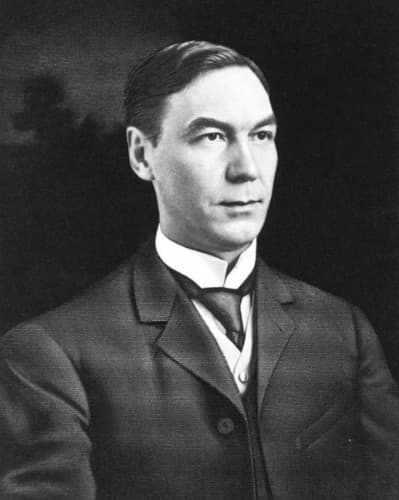
Charles F. Haanel

Charles F. Haanel was an American author and businessman, best known for his 1912 book, 'The Master Key System.' This seminal work in the self-help and New Thought movements explores principles of mental and spiritual development for achieving success. Haanel's writings continue to influence personal development and motivational literature worldwide.