BookBrief
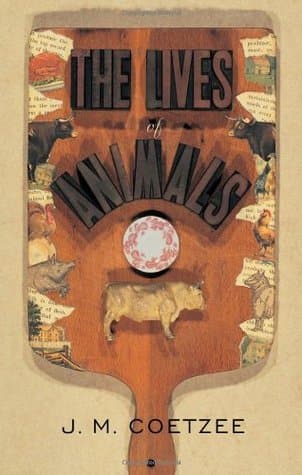
The Lives of Animals cover
Archivist's Choice

The Lives of Animals

J.M. Coetzee (2021)

Genre

Philosophy

Reading Time

90 min

Key Themes

See below

Track Your Reading

Sign in to track this book

A celebrated novelist's firm belief about human cruelty to animals alienates her from family and colleagues, sparking an uncomfortable look at our moral duties to the non-human world.

Synopsis

J.M. Coetzee's "The Lives of Animals" looks at the ethical and philosophical gap between human and animal existence, mainly through the character Elizabeth Costello. She is a novelist who strongly questions the human-centered ideas of Western thought. The book suggests that reason, often seen as humanity's defining trait, can become a tool of oppression when it treats animals as objects, allowing for their systematic exploitation and suffering. Costello believes that a true moral view requires an imaginative leap of empathy, a willingness to understand an animal's perspective, rather than relying on detached rational arguments or limited 'rights' frameworks. The main idea is a criticism of humanity's failure to face the reality of animal pain and death, suggesting this failure is not just a philosophical oversight but a moral blind spot. Through Costello's passionate lectures and her audience's reactions, Coetzee questions how well language, academic discussion, and traditional ethics can address the basic question of animal life and our responsibility to it. The book suggests that literature, with its ability to create imaginative immersion and challenge common thought, might offer a better path to ethical insight than pure philosophy.
Reading time
90 min
Difficulty
Medium
✓ Read this if...
You are interested in a deep, literary, and philosophical exploration of animal ethics that challenges conventional human-centric views and grapples with the emotional and intellectual difficulty of confronting animal suffering.
✗ Skip this if...
You are looking for a straightforward, systematic philosophical treatise on animal rights, or prefer a less emotionally charged and more purely academic discussion of the topic.

Plot Summary

Principal Figures

Themes & Insights

Plot Devices & Literary Techniques

Critical analysis

Notable Quotes

I am not a philosopher. I am a novelist. I don't pretend to be able to solve the problem of evil. I am only interested in representing it.

Elizabeth Costello reflecting on her role as an artist and her limitations in addressing philosophical problems.

But the truth is, we have lost the capacity to feel. We are numb. And the animals, they are still feeling.

Elizabeth Costello lamenting humanity's disconnect from suffering, particularly that of animals.

The problem is not that we don't know what to do. The problem is that we don't want to know.

Elizabeth Costello suggesting willful ignorance as a barrier to addressing ethical issues.

What is it like to be a bat? We will never know. But we can imagine. And in imagining, we extend our humanity.

Elizabeth Costello referencing Thomas Nagel's essay and its implications for understanding other forms of consciousness.

Reason, after all, is not the only faculty of the mind. There is also sympathy, and imagination, and the capacity for love.

Elizabeth Costello arguing for the importance of faculties beyond pure reason in ethical considerations.

The greatest evil is not to feel. Not to care. Not to be moved.

Elizabeth Costello expressing her view on the most profound moral failing.

To be human is to be a moral agent. And to be a moral agent is to choose.

Elizabeth Costello emphasizing the active role of individuals in ethical decision-making.

We are all in the same boat, the animals and us. We are all living creatures, and we all suffer.

Elizabeth Costello advocating for a shared sense of vulnerability and connection between humans and animals.

Perhaps the only way to truly understand another being is to become that being, even if only in imagination.

Elizabeth Costello exploring the limits and possibilities of empathy and understanding across species.

The animal's silence is not an absence of voice, but a voice we have chosen not to hear.

Elizabeth Costello suggesting that the apparent voicelessness of animals is a human construct.

To deny the suffering of animals is to deny a part of our own humanity.

Elizabeth Costello linking human empathy for animals to the integrity of human moral character.

We are capable of great cruelty, and also of great compassion. The choice is always ours.

Elizabeth Costello highlighting the duality of human nature and the importance of ethical choice.

The stories we tell ourselves about animals are often more revealing about ourselves than about them.

Elizabeth Costello reflecting on the anthropocentric nature of human narratives about other species.

It is not enough to simply exist. We must also live with a certain awareness, a certain responsibility.

Elizabeth Costello advocating for a conscious and ethical approach to life.

Quiz

Test Your Knowledge

Ready to see how well you understood this book? Take our interactive quiz with 10 questions.

10
Questions
~5
Minutes
?
Best Score

Key Questions (FAQ)

Elizabeth Costello argues that human reason is often overrated and that the inability to reason does not diminish the value of a life. She critiques humanity's cruelty towards animals, particularly in industrial farming and research, viewing it as a crime of immense scale.

About the author

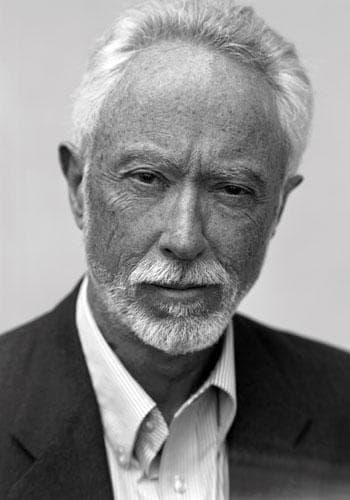
J.M. Coetzee

John Maxwell Coetzee OMG is a South African and Australian novelist, essayist, linguist, translator and recipient of the 2003 Nobel Prize in Literature. He is one of the most critically acclaimed and decorated authors in the English language. He has won the Booker Prize (twice), the CNA Prize (thrice), the Jerusalem Prize, the Prix Femina étranger, and The Irish Times International Fiction Prize, and holds a number of other awards and honorary doctorates.