“It is only with the heart that one can see rightly; what is essential is invisible to the eye.”
— The fox explaining a secret to the Little Prince.

Genre
General
Reading Time
1-2 hours
Key Themes
See below
Sign in to track this book
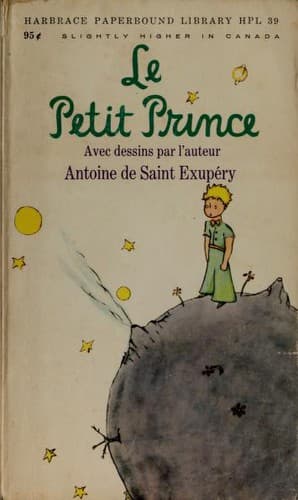
A stranded pilot in the Sahara encounters a celestial traveler who shares whimsical tales of his asteroid home, a demanding rose, and the profound lessons learned from a fox about seeing with the heart.
The story opens with the narrator, an aviator, recalling his childhood. At six years old, he drew a boa constrictor digesting an elephant, but adults consistently misinterpreted it as a hat. This experience led him to abandon a career as an artist and pursue aviation, believing adults were incapable of understanding anything truly important without constant explanation. He grew up feeling isolated, never finding anyone with whom he could truly converse about essential matters until his plane crashed in the Sahara Desert.
Stranded in the Sahara Desert with limited water and a damaged plane, the narrator is startled to be awakened by a small, extraordinary boy. This boy, the Little Prince, asks him to draw a sheep. Initially frustrated by the request given his dire circumstances, the narrator tries to draw various sheep, none of which satisfy the Prince. Eventually, he draws a box and explains the sheep is inside, which delights the Prince, revealing his unique way of seeing the world.
Over several days, the Little Prince shares details about his home, Asteroid B-612, which is barely larger than a house. He describes his daily routine of clearing out baobab saplings to prevent them from engulfing his tiny planet and cleaning his three miniature volcanoes. His greatest concern is the well-being of a single, unique rose that grew on his planet. This rose, beautiful yet vain and demanding, captivated and troubled the Prince, leading him to question its sincerity and his own feelings.
Feeling hurt and confused by the rose's complicated nature, the Little Prince decides to leave Asteroid B-612. He takes advantage of a migration of wild birds to depart. His initial travels lead him to visit several nearby asteroids, each inhabited by a single, peculiar adult. He encounters a King obsessed with ruling, a Vain Man seeking admiration, a Drunkard ashamed of his drinking, a Businessman consumed by counting stars, and a Lamplighter diligently following pointless orders.
Each encounter on the asteroids reveals the narrow-mindedness and absurdity of the adult world from the Little Prince's perspective. The King only gives orders he knows will be obeyed, the Vain Man only hears praise, the Drunkard drinks to forget he is ashamed of drinking, and the Businessman believes he owns the stars without doing anything for them. The Lamplighter is the only one he feels a flicker of respect for, as he is dedicated to something beyond himself, even if it seems meaningless.
The Little Prince eventually lands on Earth, specifically in the Sahara Desert. He is surprised by its vastness and the absence of people. His first encounter is with a poisonous snake, which speaks in riddles and hints at its power to send him back to where he came from. The snake tells him that it can solve all riddles and that anyone it touches it sends back to the earth from which they came. This encounter sets a foreboding tone for his time on Earth.
Feeling lonely, the Little Prince discovers a garden filled with thousands of roses, which deeply saddens him, as he believed his rose was unique. He then meets a fox, who teaches him the profound meaning of 'taming' – establishing ties and creating unique bonds. The fox explains that it is the time he spent on his rose that makes her so important and unique to him. This realization helps the Prince understand his love for his own rose.
During his travels, the Little Prince observes more of humanity. He meets a railway switchman who directs trains full of people endlessly rushing to destinations without knowing what they seek, only to return to where they started. He also encounters a merchant selling thirst-quenching pills, promising to save fifty-three minutes a week, which the Prince finds absurd, preferring to use that time for a slow walk to a fountain.
As the narrator's water supply dwindles, he and the Little Prince embark on a desperate search for a well. They walk through the desert, and the Prince shares his wisdom, emphasizing that what is essential is invisible to the eye. Miraculously, they find a well, and the water tastes sweeter than any other, a symbol of their shared journey and newfound understanding. This moment deepens the bond between the two.
On the anniversary of his arrival on Earth, the Little Prince prepares to return to his planet. He seeks out the snake, allowing it to bite him, explaining to the narrator that his body is merely a shell and his spirit will return to his rose. The narrator is heartbroken but understands the Prince's need to go home. The Prince assures him that he will hear his laughter in the stars. The narrator is left with the memory of his friend and a lingering hope that the Prince's sheep did not eat his rose.
The Protagonist, Observer, Storyteller
From a practical, cynical adult who has forgotten the importance of imagination and true connection, to a man profoundly touched by the Little Prince, rediscovering his childlike wonder and the value of invisible truths. He learns to see with his heart.
The Protagonist, Catalyst, Philosopher
Begins as somewhat naive and hurt by his rose's vanity, leading him to leave his planet. Through his travels and encounters, especially with the Fox, he learns the true meaning of love, responsibility, and the unique bond of 'taming.' He ultimately embraces his love for his rose and returns to her, accepting the bittersweet nature of life and loss.
The Symbol, Catalyst for the Prince's Journey
Maintains her character throughout, but her impact on the Prince's understanding of love and responsibility evolves. She serves as the ultimate destination for his emotional growth, as he realizes her unique value despite her imperfections.
The Mentor, Philosopher
Serves primarily as a static mentor figure. His wisdom is fully formed, and his role is to impart this knowledge to the Little Prince, enabling the Prince's growth.
The Mysterious Figure, Facilitator of Passage
A static, symbolic character. Its role is to offer a path of return for the Little Prince, representing a necessary end to his earthly journey.
The story strongly advocates for retaining the imaginative perspective of childhood, which allows one to see beyond superficial appearances to grasp true meaning. Adults, represented by the narrator's early experiences and the planet-hopping encounters, are often depicted as too concerned with 'matters of consequence' like numbers and ownership, losing their ability to understand what is truly essential and beautiful.
“All grown-ups were once children—though few of them remember it.”
Central to the narrative is the exploration of love and the commitment it entails. The Fox's lesson on 'taming' teaches the Prince that love is not about possession but about investing time and care, which makes another being unique and irreplaceable. This theme underscores the idea that true love involves accepting vulnerability and taking responsibility for the well-being of the beloved, despite their flaws.
“It is the time you have wasted on your rose that makes your rose so important.”
The book critiques the materialistic and often absurd values of adults. Through the Little Prince's encounters with the King, the Vain Man, the Drunkard, the Businessman, and the Lamplighter, the narrative highlights how grown-ups prioritize power, admiration, forgetfulness, ownership, and blind adherence to routine over genuine human connection, understanding, and joy. Their lives are often portrayed as isolated and meaningless.
“Grown-ups love numbers. When you tell them about a new friend, they never ask you about essential matters.”
Both the Narrator and the Little Prince experience profound loneliness. The Narrator feels isolated from adults who don't understand him, and the Prince is alone on his tiny planet until his rose appears. His journey is a quest for understanding and connection, culminating in his bond with the Narrator and the Fox. The desert itself symbolizes this vast solitude, where meaningful encounters become even more precious.
“It is only with the heart that one can see rightly; what is essential is invisible to the eye.”
A Symbol of Isolation and Essential Truths
The Sahara Desert serves as a crucial backdrop for the story. Its vast, barren, and isolated nature symbolizes the Narrator's spiritual and emotional desolation before meeting the Prince. It strips away distractions, forcing both characters to confront fundamental questions about life, death, and connection. In this stark environment, the 'invisible' truths become more apparent, and the discovery of water, both literal and metaphorical, signifies profound understanding and renewal.
A Metaphor for Adult Blindness to Imagination
The Narrator's childhood drawing of a boa constrictor digesting an elephant, consistently mistaken by adults for a hat, is a powerful recurring motif. It immediately establishes the central conflict between childlike imagination and adult literalism. This device highlights the theme of how adults lose their capacity to see beyond the surface, setting the stage for the Little Prince to be the only one who truly 'sees' the drawing for what it is, thus validating his unique perspective.
Allegories for Adult Flaws
The six small planets the Little Prince visits before arriving on Earth are allegorical representations of various adult follies and obsessions. Each planet's sole inhabitant embodies a specific flaw: the King's desire for absolute power, the Vain Man's need for admiration, the Drunkard's self-destructive shame, the Businessman's obsession with ownership, and the Lamplighter's blind adherence to routine. These encounters serve to critique the superficiality and isolation of the adult world through the Prince's innocent eyes.
“It is only with the heart that one can see rightly; what is essential is invisible to the eye.”
— The fox explaining a secret to the Little Prince.
“All grown-ups were once children—although few of them remember it.”
— The narrator reflecting on the nature of adults.
“You become responsible, forever, for what you have tamed.”
— The fox explaining the nature of relationships to the Little Prince.
“The stars are beautiful, because of a flower that cannot be seen.”
— The Little Prince explaining his unique perspective on the stars.
“What makes the desert beautiful is that somewhere it hides a well.”
— The Little Prince and the narrator discussing the beauty of the desert.
“The most beautiful things in the world cannot be seen or touched, they are felt with the heart.”
— Similar to the 'essential is invisible' quote, a core theme.
“It is much more difficult to judge oneself than to judge others. If you succeed in judging yourself rightly, then you are indeed a man of true wisdom.”
— The King on the first planet explaining his philosophy.
“I must endure the presence of a few caterpillars if I want to become acquainted with the butterflies.”
— The Little Prince's rose explaining why she tolerates the caterpillars.
“One runs the risk of weeping a little, if one allows himself to be tamed.”
— The fox warning the Little Prince about the emotional cost of relationships.
“The men where you live," said the little prince, "raise five thousand roses in the same garden... and they do not find in it what they are looking for..."”
— The Little Prince reflecting on the superficiality of adult pursuits.
“And now here is my secret, a very simple secret: It is only with the heart that one can see rightly; what is essential is invisible to the eye.”
— The fox repeating his crucial secret to the Little Prince.
“To me, you are still nothing more than a little boy who is just like a hundred thousand other little boys. And I have no need of you. And you, on your part, have no need of me. To you, I am nothing more than a fox like a hundred thousand other foxes. But if you tame me, then we shall need each other. To me, you will be unique in all the world. To you, I shall be unique in all the world.”
— The fox explaining the process and significance of taming to the Little Prince.
Ready to see how well you understood this book? Take our interactive quiz with 10 questions.