“I was a moth, and he was my flame. But I was the kind of moth that would burn the whole damn forest down.”
— Francesca's strong, rebellious nature in contrast to Wolfe's dangerous allure.

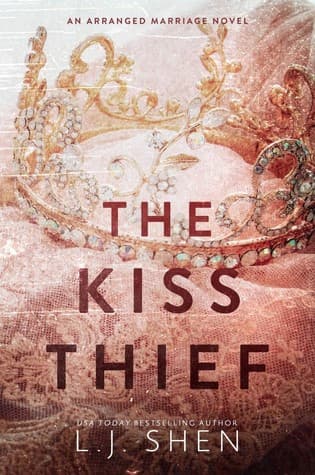
L.J. Shen (2019)
Genre
Politics / Romance
Reading Time
320 min
Key Themes
See below
Sign in to track this book
A woman promised to a mafia heir is taken by a powerful senator who blackmails her into marriage, forcing her to navigate a dangerous political world while her heart is torn between two rivals.
Francesca Rossi, daughter of Chicago Outfit boss Rocco Rossi, celebrates her eighteenth birthday. She is promised to Angelo Bandini, heir to a rival mafia family, a union meant to strengthen power. At a masquerade, Francesca finds a moment of quiet on the rooftop. There, she meets a mysterious man in a black mask who kisses her forcefully, stealing her first kiss. This encounter leaves Francesca shaken and curious, unaware of the man's identity or his future role in her life. The stolen kiss is a moment that hints at her future loss of control.
Weeks after the ball, Francesca's life changes when Senator Wolfe Keaton, a powerful politician, arrives at the Rossi mansion. He tells Rocco Rossi he has evidence of Rocco's illegal activities, enough to destroy his empire and send him to prison. Wolfe gives Rocco an ultimatum: for his silence and his family's safety, Francesca must marry him, becoming his political trophy wife. Rocco, desperate to protect his family and business, agrees. This shatters Francesca's dreams of a future with Angelo and forces her into a marriage with a man she dislikes.
The wedding between Francesca and Wolfe Keaton is a grand, public event, but it is a joyless occasion. Francesca walks down the aisle, her heart heavy, knowing she is sacrificing her happiness for her family. Angelo Bandini, her promised fiancé, watches in disbelief and heartbreak as the woman he loves is taken from him. His pain turns to anger, and he vows revenge against Wolfe Keaton. The wedding marks the start of Francesca's new life, one without love and filled with the cold presence of her new husband, whose true reasons are unclear.
Francesca moves into Wolfe Keaton's large estate, a contrast to her family home. Her new life involves strict routines, public appearances, and emotional isolation. Wolfe treats her with cold respect, making it clear their marriage is for politics, not affection. Francesca struggles with her loss of freedom and the constant attention that comes with being a senator's wife. She observes Wolfe, trying to understand the complex man, while also quietly resisting his control in small ways, showing her independence where she can.
Despite Wolfe's initial coldness, Francesca begins to notice small inconsistencies in his behavior. She sees moments of unexpected kindness, strong protectiveness, and a vulnerability that goes against his ruthless public image. At a political event, Wolfe defends her from a rude rival, and she sees concern in his eyes. These small gestures reduce her initial dislike, causing her to question her belief that he is a heartless villain. She starts to wonder if there is more to Wolfe, and her conflicted feelings grow.
Angelo Bandini, unable to accept Francesca's marriage, returns to Chicago with revenge in mind. He actively pursues Francesca, reminding her of their past and the future they were supposed to share. He arranges to see her, sends her secret messages, and appears at political events. This restarts the conflict between the two men, as Angelo openly challenges Wolfe's claim on Francesca, creating a love triangle. Francesca is torn between her lingering feelings for Angelo and the confusing, developing emotions she feels for Wolfe, who becomes more possessive.
Driven by her growing curiosity and desire for answers, Francesca begins to investigate the circumstances of her forced marriage. She looks into her father's past and Wolfe's history, slowly uncovering a web of deceit and old grudges. She learns that the evidence Wolfe held against Rocco was tied to a past betrayal involving Wolfe's family, showing a deeper, more personal reason for his actions. This discovery complicates her understanding of both men, making her re-evaluate who the true villain is and her father's role in the situation.
During a confrontation, or through a clue, Francesca realizes: Wolfe Keaton was the masked stranger who kissed her at her debutante ball. The recognition of his eyes, a mannerism, or a shared memory clicks into place. This discovery changes Francesca, as it means the man she was forced to marry, the man she initially disliked, was also the mysterious figure who sparked a forbidden desire in her. This knowledge adds another layer to her feelings for Wolfe, blurring the lines between dislike, curiosity, and a growing attraction.
With all the truths revealed, Francesca faces a choice. She confronts Wolfe about his deception and the true reasons for his actions, demanding honesty. She also confronts Angelo, acknowledging their past but stating her need to build her own future, free from family expectations. Francesca, no longer a pawn, decides to take control of her destiny. She chooses to stand by Wolfe, not out of duty, but because she has grown to understand and love him, recognizing his sacrifices and the genuine care he developed for her, despite their unusual start.
Francesca and Wolfe begin to build a real relationship based on honesty and mutual respect, moving past the initial deception and forced circumstances. They face the challenges of their public life and threats from their past, especially from Angelo, who eventually accepts their union. Francesca embraces her role as Wolfe's wife, using her influence for good and finding her voice in the political world. Their love story, born from blackmail and rivalry, becomes a strong bond, showing that even the most unusual beginnings can lead to a lasting love, with Francesca finally creating her own happy ending.
The Protagonist
Francesca transforms from a naive, obedient daughter into a strong, independent woman who reclaims her narrative and chooses her own path in love and life.
The Antagonist/Love Interest
Wolfe evolves from a vengeful, emotionally guarded man to one who learns to trust, love, and ultimately finds redemption through his relationship with Francesca.
The Supporting/Rival Love Interest
Angelo initially clings to the past and his claim on Francesca, but ultimately, he is forced to accept her choices and move on, albeit with lingering resentment.
The Supporting
Rocco faces the consequences of his past actions, struggling with the pain of sacrificing his daughter's happiness for the family's survival.
The Supporting
Lucian remains steadfast in his loyalty to Wolfe, subtly supporting Francesca as she navigates her new life.
The Mentioned
Alessandra's story serves as a tragic backstory, driving Wolfe's actions and later providing context for Francesca.
The novel explores the link between love and sacrifice, especially concerning family loyalty and personal happiness. Francesca sacrifices her love for Angelo and her freedom to protect her father and his business. Wolfe, driven by love for his deceased sister, sacrifices his own emotional peace to get revenge, which leads him to an unexpected love. The characters constantly weigh what they will give up for those they care about, showing the difficult choices in deep affections, as seen when Rocco gives Francesca to Wolfe.
“They say your heart only beats for one man. Mine split and bled for two rivals who fought for it until the bitter end.”
Redemption is a main theme, especially for Wolfe Keaton, whose first actions are driven by revenge. Through his relationship with Francesca, he begins to soften and allows himself to feel love and vulnerability, finding a new purpose. Francesca also must accept her father's past and forgive the circumstances that led to her forced marriage. The story suggests that even characters with complex pasts can find redemption through real connection and a willingness to change.
“I was promised to Angelo Bandini, the heir to one of the most powerful families in the Chicago Outfit. Then taken by Senator Wolfe Keaton, who held my father’s sins over his head to force me into marriage.”
Francesca's journey is about her struggle to regain control over her own life. Initially, she is a pawn in the political and mafia games of powerful men, her choices dictated by others. Her forced marriage to Wolfe Keaton takes away her freedom, but it also sparks her desire for independence. She gradually finds her voice and agency, refusing to be just a trophy wife. This theme is clear in her small acts of rebellion and her final decision to choose her own path.
“They say that all great love stories have a happy ending. I, Francesca Rossi, found myself erasing and rewriting mine until the very last chapter.”
The novel often contrasts outward appearances with inner truths. Wolfe Keaton shows a cold, ruthless face to the world, but Francesca slowly uncovers a more complex, protective, and vulnerable man beneath. The glamorous world of Chicago's elite and political circles often hides dark secrets, blackmail, and violence. Francesca's view of both Wolfe and her father changes as she uncovers hidden motives and past events, showing that what seems true on the surface is often a carefully built illusion.
“The devil wore a masquerade mask, but his eyes were a dead giveaway.”
A central conflict that drives the plot and character development.
The forced marriage between Francesca and Wolfe Keaton serves as the primary catalyst for the entire plot. It immediately establishes high stakes, creates an intense power dynamic, and forces the protagonists into close proximity, allowing their complex relationship to develop. This device is crucial for exploring themes of sacrifice, control, and the unexpected nature of love, as it removes Francesca's agency and sets her on a path she never intended, directly contrasting with her initial arranged marriage to Angelo.
A romantic conflict involving three characters.
The love triangle between Francesca, Wolfe, and Angelo provides significant romantic tension and emotional conflict. It highlights Francesca's internal struggle between her past affections and her developing feelings, and it fuels the rivalry between the two powerful men. This device allows for exploration of different kinds of love – the passionate, familiar love with Angelo versus the complex, intense, and initially antagonistic love with Wolfe – and forces Francesca to make a difficult choice that defines her future.
The driving force behind the initial conflict and subsequent revelations.
Blackmail is the foundational plot device that initiates the forced marriage, as Wolfe Keaton uses incriminating evidence against Rocco Rossi. This sets in motion a chain of events where secrets from the past gradually unravel. These secrets, particularly concerning Rocco's actions and Wolfe's true motivations, add layers of intrigue and suspense. They are crucial for revealing character backstories, complicating alliances, and ultimately providing the context necessary for Francesca to understand and forgive the circumstances of her marriage.
A symbolic moment that foreshadows the complex relationship.
The stolen kiss at Francesca's debutante ball is a highly symbolic plot device. It introduces the enigmatic Wolfe Keaton (though his identity is initially unknown) as a figure of forbidden allure and disruption. This moment foreshadows the loss of Francesca's control and the unexpected, intense nature of her future relationship. It creates a powerful initial connection and a lingering mystery, making the later revelation of Wolfe's identity as the masked man a significant turning point in Francesca's understanding of their intertwined destinies.
“I was a moth, and he was my flame. But I was the kind of moth that would burn the whole damn forest down.”
— Francesca's strong, rebellious nature in contrast to Wolfe's dangerous allure.
“There was a fine line between love and hate, and we were tap-dancing all over it.”
— Describing the intense, conflicted emotions between Francesca and Wolfe.
“Some men were born to rule. Others were born to be ruled. I was born to break the ones who thought they were the former.”
— Francesca's defiant internal monologue about her refusal to be controlled.
“He was the storm, and I was the lighthouse. Unwavering, but always watching.”
— Francesca seeing herself as a steady, observant force against Wolfe's chaotic nature.
“A kiss could be a promise, a lie, or a declaration of war. His was all three.”
— Reflecting on the complex and often contradictory nature of Wolfe's actions.
“Power wasn’t about what you took, but what you made others believe you could take.”
— Wolfe's philosophy on the perception and exercise of power.
“My heart was a battlefield, and he was the only general I would ever surrender to.”
— Francesca's reluctant admission of her feelings for Wolfe despite their conflict.
“You don't just love someone. You choose to love them, every single day, even when they make you want to rip your hair out.”
— A reflection on the active choice and commitment involved in love.
“He didn’t steal my first kiss. He stole my breath, my sanity, and my peace of mind.”
— Francesca's intense reaction to her initial encounter with Wolfe.
“In politics, there are no friends, only allies, and even they are temporary.”
— A cynical view of political relationships and loyalty.
“He wasn't a good man. Not by any stretch of the imagination. But he was my bad man.”
— Francesca acknowledging Wolfe's flaws but accepting him as her own.
“Sometimes, the only way to win a war was to burn down everything you held dear.”
— A dark perspective on the sacrifices required in power struggles.
“My family was my weakness, but also my greatest strength.”
— Francesca's internal conflict regarding her loyalty to her family.
“He was a beautiful lie, and I was a willing participant in his deception.”
— Francesca's awareness of Wolfe's manipulative nature but her complicity.
Ready to see how well you understood this book? Take our interactive quiz with 10 questions.

Brett Casper
5.0
Dirk Uffelmann
4.7

Winston S. Churchill
4.5
Chimamanda Ngozi Adichie
4.5
Will Durant
4.4
Thomas Sowell
4.4
W.E.B. Du Bois
4.3
Alan Moore
4.3