BookBrief
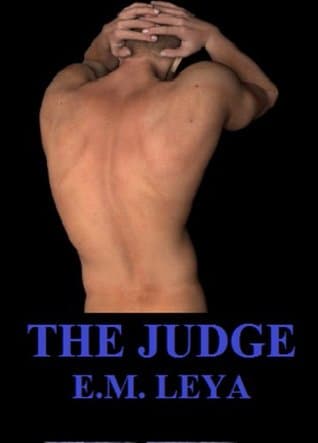
The Judge cover
Archivist's Choice

The Judge

E.M. Leya (2012)

Genre

General

Reading Time

120 min

Key Themes

See below

Track Your Reading

Sign in to track this book

In the late 1800s, a young woman flees an arranged marriage to a violent drunk, only to find herself forced into a life of servitude and unexpected pleasure under the protection of a powerful judge, whose ability to keep her safe is tested when her past inevitably catches up.

Core Idea

E.M. Leya's "The Judge" follows a young woman who makes difficult choices in a world without common law and order. The book shows how desperation can change one's moral views, leading people to accept transactional relationships where safety is traded for a scary kind of 'pleasure' and submission. Through its main character's journey, the story asks the reader to consider the unclear lines between victim and accomplice. It shows how the idea of complete safety, even with a powerful and morally complex figure like 'The Judge,' has a lasting personal cost. Leya suggests that surviving in such a setting requires a complete change of self, where past innocence is replaced by a complex, often troubling, new identity shaped by pressure and past trauma.
Reading time
120 min
Difficulty
Medium
✓ Read this if...
You are interested in dark psychological thrillers exploring themes of survival, power dynamics, and moral ambiguity in a lawless setting.
✗ Skip this if...
You prefer lighthearted narratives or are sensitive to explicit themes of coercion, sexual violence, and psychological distress.

Core idea

The central argument and framework that powers the entire book.

E.M. Leya's "The Judge" follows a young woman who makes difficult choices in a world without common law and order. The book shows how desperation can change one's moral views, leading people to accept transactional relationships where safety is traded for a scary kind of 'pleasure' and submission. Through its main character's journey, the story asks the reader to consider the unclear lines between victim and accomplice. It shows how the idea of complete safety, even with a powerful and morally complex figure like 'The Judge,' has a lasting personal cost. Leya suggests that surviving in such a setting requires a complete change of self, where past innocence is replaced by a complex, often troubling, new identity shaped by pressure and past trauma.

At a glance

Reading time

120 min

Difficulty

Medium

Read this if...

You are interested in dark psychological thrillers exploring themes of survival, power dynamics, and moral ambiguity in a lawless setting.

Skip this if...

You prefer lighthearted narratives or are sensitive to explicit themes of coercion, sexual violence, and psychological distress.

Key Takeaways

1

Desperation as a Catalyst for Unconventional Choices

Extreme circumstances can force individuals into morally ambiguous situations for survival.

Quote

When Bethany's father tries to pay off a debt by giving her to a violent drunk, she knows her life is on the line and runs.

The novel shows how dire situations can make people choose things they would never otherwise consider. Bethany's escape from a brutal arranged marriage is a fight for survival against violence and possible death. This immediate, life-threatening danger overrides common moral rules and social expectations. It leads her to seek safety in a place that offers protection but demands a deeply personal and unusual price. Her decision shows the basic human need to survive, even if it means giving up personal comfort, innocence, or long-held b...

Supporting evidence

Bethany's initial flight from her father's debt-payment scheme, which involves marrying her to a 'violent drunk,' directly sets up her desperate need for an alternative, no matter how unusual.

Apply this

Consider how societal structures and individual vulnerabilities can create situations where people are forced into 'lesser of two evils' choices. Reflect on the ethical implications of judging such decisions from a place of safety.


survival-instinctmoral-dilemmahistorical-vulnerability
2

Power Dynamics and Transactional Safety

Protection often comes with a significant, and sometimes exploitative, cost when power is imbalanced.

Quote

Judge Higgins is the only person in town that has the power to protect her and offer her the safety she seeks, but that safety will come at a cost, one that virginal Bethany isn't sure she can handle.

The relationship between Bethany and Judge Higgins is an example of transactional power dynamics. In a society where formal justice might fail or not exist, people with informal power, like the Judge, become the actual providers of safety. However, this safety is rarely unselfish. Bethany's great need for protection is met with a demand for personal service, turning her into a commodity in exchange for security. This shows how power, when held by a few, can be used to get personal benefit from those who are vulnerable. It is a serious...

Supporting evidence

The explicit statement that Judge Higgins's protection 'will come at a cost,' which Bethany, as a 'virginal' woman, finds deeply challenging.

Apply this

Analyze contemporary situations where individuals or groups in vulnerable positions exchange personal autonomy or dignity for security or resources. Question the ethics of such exchanges.

power-imbalancetransactional-relationshipsexploitationpatriarchal-society
3

The Unforeseen Nature of 'Pleasure'

What begins as a coerced sacrifice can evolve into an unexpected journey of self-discovery and sensation.

Quote

Having to choose between serving the judge and his many friends or certain death, Bethany is thrust into a world of pleasure unlike any she could imagine.

One interesting part of Bethany's journey is the unexpected direction her 'service' takes. What she expects to be a terrible, demeaning duty becomes an exploration of 'pleasure unlike any she could imagine.' This challenges simple ideas of consent and experience. It suggests that even within forced or transactional relationships, people can find new parts of themselves, their bodies, and their desires. This is not an approval of coercion. Instead, it explores the complex psychological and physical responses to new experiences, even th...

Supporting evidence

The direct phrase 'thrust into a world of pleasure unlike any she could imagine' after being given the choice between service and death.

Apply this

Explore how individuals adapt and find unexpected facets of experience even within difficult or non-ideal circumstances. Discuss the complexities of human response to pressure and new sensations.

sexual-awakeningpsychological-adaptationconsent-complexityunexpected-agency
4

The Illusion of Absolute Safety

Even within a powerful protector's domain, past threats can resurface, challenging the perceived security.

Quote

But when her past comes calling, will the judge’s power really be enough to keep her safe?

The story cleverly shows that safety, once gained, is not absolute or permanent. Bethany finds a powerful protector in Judge Higgins, seemingly creating a new, though costly, secure life. However, the return of her past threat—the 'violent drunk' or her father's original debt—breaks this idea of unbreakable security. This shows an important point: power, no matter how great, has limits, and past actions or unsolved conflicts can always return. It creates tension and reminds the reader that even in a seemingly controlled environment, o...

Supporting evidence

The concluding question of the summary, 'But when her past comes calling, will the judge’s power really be enough to keep her safe?'

Apply this

Reflect on how past decisions or unresolved conflicts can continue to impact present security, even when new protective measures are in place. Discuss the concept of lasting consequences.

past-consequencesfragile-securityunresolved-conflictexternal-threats
5

The Price of Protection in a Lawless Era

When official justice is weak, personal power dictates terms of survival, often demanding intimate sacrifices.

Quote

It's not uncommon in the late 1800's for arranged marriages to take place, but when Bethany's father tries to pay off a debt by giving her to a violent drunk, she knows her life is on the line and runs.

The late 1800s setting is important because it shows a time when legal and social protections for vulnerable people, especially women, were very limited. Bethany's father's ability to 'pay off a debt' with his daughter shows the lack of legal options for women against such arrangements. In such a lack of official justice, people like Judge Higgins become the only sources of order and safety, but their protection is personal and transactional. This shows how, without strong rule of law, survival often depends on making deals with those...

Supporting evidence

The historical context of 'late 1800's' and the 'uncommon' nature of arranged marriages for debt, combined with Judge Higgins being the 'only person in town that has the power to protect her.'

Apply this

Consider how the strength or weakness of legal frameworks impacts individual autonomy and safety, particularly for marginalized groups. Discuss the ethical implications of 'private justice' in the absence of public systems.

historical-justicerule-of-lawanarchy-consequencesfemale-vulnerability
6

Beyond Innocence: The Evolution of Self

Forced into a new reality, an individual can shed innocence and develop a more complex identity.

Quote

that safety will come at a cost, one that virginal Bethany isn't sure she can handle. ... Bethany is thrust into a world of pleasure unlike any she could imagine.

Bethany's initial description as 'virginal' sets a clear starting point for her character. Her later entry into a 'world of pleasure' directly challenges and changes this part of her identity. This is not just about physical experience, but about a deep shift in how she sees herself and understands the world. Her journey explores how innocence, once lost, leads to a more complex, experienced self. It looks at the idea that growth and self-discovery can happen in unexpected, even undesirable, situations. The story suggests that while l...

Supporting evidence

The contrast between her initial 'virginal' state and her later immersion into a 'world of pleasure unlike any she could imagine.'

Apply this

Reflect on how pivotal life experiences, even difficult ones, contribute to personal growth and the formation of a more complex identity. Discuss the societal value placed on 'innocence' and its implications.

coming-of-ageself-discoveryidentity-formationsexual-liberation
7

The Nature of 'Choice' Under Duress

When faced with a 'life or death' scenario, the concept of free choice becomes inherently compromised.

Quote

Having to choose between serving the judge and his many friends or certain death, Bethany is thrust into a world of pleasure unlike any she could imagine.

The novel gives Bethany a harsh, brutal 'choice': 'serving the judge... or certain death.' This immediately raises questions about consent and choice when one option is total destruction. While she 'chooses' to serve, it is a choice made under extreme pressure, very different from a free, unforced decision. This shows the ethical difficulties of situations where the only 'option' for survival involves great personal sacrifice or exploitation. It forces the reader to face the reality that not all 'choices' are truly free, and that the ...

Supporting evidence

The explicit framing of Bethany's decision as a 'choice between serving the judge... or certain death.'

Apply this

Analyze real-world scenarios where individuals make difficult choices under extreme duress (e.g., refugees, victims of trafficking). Discuss the ethical framework for understanding consent in such contexts.

coerced-consentethical-dilemmasagency-under-duresssurvival-choices
8

The Judge as a Figure of Ambiguous Morality

A protector can also be an exploiter, embodying the complex moral landscape of power.

Quote

Judge Higgins is the only person in town that has the power to protect her and offer her the safety she seeks, but that safety will come at a cost...

Judge Higgins is not a simple hero or villain; he is a morally complex figure whose actions are driven by self-interest but also provide a kind of salvation. He offers protection, but at a deeply personal and transactional cost, using Bethany's vulnerability for his own and his friends' pleasure. This dual nature is central to the novel's examination of power. The Judge shows the complex reality that those who have power can be both sources of refuge and exploitation. His character challenges simple moral categories, making the reader...

Supporting evidence

The description of Judge Higgins as having 'the power to protect her' but demanding a 'cost' that Bethany finds difficult, implying a non-altruistic exchange.

Apply this

Examine characters or real-world figures who operate in morally grey areas, providing a service while simultaneously extracting a personal cost. Discuss the challenges of defining 'good' and 'evil' in complex scenarios.

moral-ambiguityanti-heropower-corruptioncomplex-character
9

The Enduring Shadow of the Past

Even a new life cannot fully erase the threats and trauma left behind.

Quote

But when her past comes calling, will the judge’s power really be enough to keep her safe?

Bethany's flight to Judge Higgins starts a new chapter, but the story shows that the past is not easily escaped. The 'violent drunk' or her father's debt are not just a physical threat but also the trauma and instability she fled from. The return of this past threat reminds us that trauma and unsolved conflicts have long-lasting effects, often returning when least expected. This shows the psychological burden of a traumatic past and the constant alertness needed to keep a fragile sense of safety. It suggests that true security means n...

Supporting evidence

The direct question, 'But when her past comes calling, will the judge’s power really be enough to keep her safe?'

Apply this

Discuss how past traumas and unresolved issues can continue to impact an individual's sense of security and well-being, even when their immediate circumstances improve. Consider the concept of 'triggering' events.

trauma-recoverypast-hauntspsychological-impactenduring-threats

Critical analysis

Notable Quotes

Justice is not a blindfolded woman with scales; it is a living, breathing entity that demands we see clearly.

Judge Aris reflects on the nature of justice during a pivotal courtroom scene.

The law is a tool, but it is the human hand that wields it—for good or for ill.

Aris contemplates the role of personal morality in legal decisions.

In the silence of the bench, I hear the echoes of every life I have judged.

Aris experiences a moment of introspection after a difficult case.

To judge another is to hold a mirror to oneself, and sometimes the reflection is unbearable.

Aris discusses the psychological toll of being a judge with a colleague.

The courtroom is a theater where truth and fiction perform a delicate dance.

Aris observes the dynamics of a trial involving conflicting testimonies.

Power corrupts, but in the robes of a judge, it can also illuminate.

Aris defends the importance of judicial integrity in a public speech.

We are all prisoners of our pasts, but the law offers a key—if we dare to use it.

Aris considers the case of a defendant with a troubled history.

The gavel falls not with a sound of finality, but with the weight of consequence.

Aris describes the emotional impact of delivering a verdict.

To seek justice is to walk a path lined with thorns, yet it is the only path worth taking.

Aris encourages a young lawyer pursuing a challenging case.

In the eyes of the accused, I see not a criminal, but a story waiting to be understood.

Aris reflects on the humanity of those who stand before the court.

The law is a shield for the innocent, but in the wrong hands, it becomes a weapon.

Aris warns about the misuse of legal authority in a private conversation.

Every verdict is a seed planted in the garden of society; what grows depends on the soil.

Aris discusses the broader impact of judicial decisions on community values.

To wear the robe is to bear the burden of hope—for those who seek justice and those who fear it.

Aris describes the dual expectations placed on judges.

The truth is often a mosaic, pieced together from fragments of perception and memory.

Aris analyzes conflicting evidence in a complex case.

Quiz

Test Your Knowledge

Ready to see how well you understood this book? Take our interactive quiz with 10 questions.

10
Questions
~5
Minutes
?
Best Score

Key Questions (FAQ)

'The Judge' is a historical romance novel set in the late 1800s about Bethany, a young woman forced into an arranged marriage to a violent drunk to settle her father's debt. She flees and seeks protection from Judge Higgins, who offers safety in exchange for serving him and his friends, leading her into a world of unexpected pleasure and danger.

About the author

E.M. Leya

E.M. Leya is a non-fiction author known for "The Judge," "Out Of The Flames," and "Bigfoot." Her work often explores intriguing and sometimes controversial subjects, drawing readers into well-researched narratives. Leya's writing style is noted for its clarity and engaging presentation of complex topics.