BookBrief
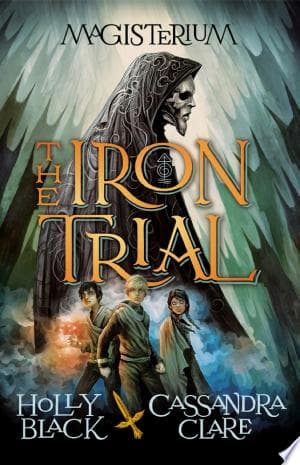
The Iron Trial (Magisterium #1) cover
Archivist's Choice

The Iron Trial (Magisterium #1)

Holly Black (2014)

Genre

General

Reading Time

300 min

Key Themes

See below

Track Your Reading

Sign in to track this book

A boy determined to fail at magic to escape a dark destiny instead finds himself entangled in a sinister magical school with deep ties to his forbidden past.

Core Idea

Callum Hunt, a boy with a limp and a father who warns him against magic, is forced into the Magisterium, a magic academy. He tries to fail the entrance 'Iron Trial,' but he is admitted anyway. He soon discovers that his father's fear and his own ideas about magic connect to a dangerous prophecy and his true identity. The story shows how prophecy, parental fear, and potential can shape a child's destiny, often against their will, while also showing the unexpected friendships among outcasts.
Reading time
300 min
Difficulty
Easy
✓ Read this if...
You enjoy fantasy stories about magical schools, reluctant heroes, found families, and mysteries surrounding a protagonist's true identity and destiny.
✗ Skip this if...
You dislike young adult fantasy, stories with cliffhangers, or narratives where the protagonist initially struggles with their magical abilities.

Core idea

The central argument and framework that powers the entire book.

Callum Hunt, a boy with a limp and a father who warns him against magic, is forced into the Magisterium, a magic academy. He tries to fail the entrance 'Iron Trial,' but he is admitted anyway. He soon discovers that his father's fear and his own ideas about magic connect to a dangerous prophecy and his true identity. The story shows how prophecy, parental fear, and potential can shape a child's destiny, often against their will, while also showing the unexpected friendships among outcasts.

At a glance

Reading time

300 min

Difficulty

Easy

Read this if...

You enjoy fantasy stories about magical schools, reluctant heroes, found families, and mysteries surrounding a protagonist's true identity and destiny.

Skip this if...

You dislike young adult fantasy, stories with cliffhangers, or narratives where the protagonist initially struggles with their magical abilities.

Key Takeaways

1

The Peril of Prophecy and Parental Fear

Callum's father's extreme aversion to magic stems from a tragic past and a chilling prophecy.

Quote

Your mother died because of magic. You will die because of magic.

Alastair Hunt's efforts to keep his son, Callum, away from the Magisterium are not just overprotective; they stem from his wife Sarah's traumatic death and a troubling prophecy. This parental fear shapes Callum's entire view, making him distrust magic and want to fail the Iron Trial. The story uses Alastair's warnings to build suspense, hinting at a darker secret about Callum's birth and his connection to the Enemy of Death. This creates a strong inner conflict for Callum, as his inherited fear clashes with the undeniable pull of the ...

Supporting evidence

Alastair's constant warnings to Callum about the dangers of magic, his refusal to discuss Sarah's death in detail, and his explicit instruction for Callum to fail the Iron Trial.

Apply this

Consider how deeply ingrained fears and past traumas, especially those from parental figures, can influence an individual's choices and perceptions, even when presented with new opportunities. Question inherited biases and seek independent understanding.


inherited-traumaparental-influenceprophecy-dilemma
2

Failing Upwards: The Iron Trial's Twist

Callum's deliberate attempts to fail the entrance exam ironically lead to his acceptance into the Magisterium.

Quote

He tried his best to do his worst – and failed at failing.

The Iron Trial offers a clever reversal of expectations. Callum, influenced by his father's warnings, actively tries to sabotage his performance, aiming to appear incompetent and uninterested in magic. He purposely casts spells wrong, acts disruptive, and generally makes trouble. However, his very clumsiness and unusual approach are misunderstood by the mages, especially Master Rufus, as signs of raw, wild power or a unique magical ability. This 'failing upwards' plot device shows how assessment can be subjective and how our actions o...

Supporting evidence

Callum's disastrous performance during the Iron Trial, including his inability to light a candle correctly and his general defiance, yet still being chosen by Master Rufus.

Apply this

Recognize that sometimes, our attempts to avoid a path can inadvertently lead us directly to it. Embrace unexpected outcomes and be open to interpretations of your actions that differ from your own intentions.

unintended-consequencesdestiny-ironysubverting-expectations
3

The Found Family of Outcasts

Callum, Aaron, and Tamara form an unlikely bond as misfits in the Magisterium.

Quote

They were the three most unlikely candidates, chosen for reasons none of them fully understood.

The dynamic between Callum, Aaron, and Tamara is key to the novel, showing the power of found family among those who feel like outsiders. Callum is a reluctant participant with a severe limp and a deep distrust of magic. Aaron is an orphan who shows immense, almost overwhelming, raw power. Tamara comes from a respected magic family but struggles with self-doubt and pressure to succeed. Despite their different backgrounds and initial awkwardness, they are grouped together under Master Rufus. Their shared experiences of being 'different...

Supporting evidence

Their shared struggles in class, their teamwork during challenges (like the copper gauntlet test), and their gradual development of trust and camaraderie, despite initial friction.

Apply this

Seek out individuals who complement your strengths and weaknesses, even if they seem different from you. Embrace the power of diverse perspectives and shared struggle in building strong relationships.

found-familydiverse-friendshipsbelonging-identity
4

Magic as a Force of Nature

Magic in the Magisterium is portrayed as primal, dangerous, and intrinsically tied to the elements.

Quote

Magic wasn't something you did. It was something that was done to you, that flowed through you, that changed you.

Unlike many magic systems that show magic as a learned skill or a series of spells, 'The Iron Trial' shows magic as a raw, almost untamed force of nature. It connects deeply to the elements – earth, air, fire, water, and spirit – and requires a deep connection rather than just memorization. This elemental approach gives magic a sense of inherent danger and power, emphasizing that it can be both destructive and creative. Mages don't just 'cast spells'; they 'channel' or 'manipulate' these fundamental forces. This view raises the stakes...

Supporting evidence

The elemental classification of magic, the dangers of uncontrolled magic (like the chaos of the 'untamed' elemental currents), and the emphasis on understanding and respecting the elements rather than simply commanding them.

Apply this

Appreciate that powerful forces, whether literal or metaphorical, require respect and understanding, not just control. Seek harmony and attunement rather than brute force.

elemental-magicprimal-powermagical-attunement
5

The Weight of a Limp: Disability and Perception

Callum's physical disability shapes his self-perception and how others view his capabilities.

Quote

His limp was a constant reminder of his otherness, a mark that set him apart.

Callum's severe limp is not just a physical trait; it is a significant part of his identity and a source of both insecurity and strength. It makes him feel vulnerable, awkward, and 'other' among the more physically capable students. This inner struggle is made worse by the casual ableism he sometimes encounters, even if unintentional. However, his limp also forces him to develop different ways of coping and a unique perspective, making him more observant and perhaps more empathetic. The book subtly explores how a physical difference c...

Supporting evidence

Callum's self-consciousness about his limp, his difficulty with physical tasks during training, and the occasional looks or comments from other students or instructors.

Apply this

Cultivate empathy and challenge preconceived notions about individuals based on physical differences. Recognize that perceived weaknesses can often foster unique strengths and perspectives.

disability-identityableism-subtleresilience-physical
6

The Shifting Sands of Trust

Callum struggles to discern who to trust, given his father's warnings and the Magisterium's secrets.

Quote

Every secret his father had kept, every warning he’d issued, now echoed in the cavernous halls of his mind.

From the moment he enters the Magisterium, Callum is caught in a web of conflicting information and hidden motives. His father's dire warnings about magic and the Magisterium clash with the apparent kindness of some of his teachers, like Master Rufus, and the true friendship offered by Aaron and Tamara. This constant uncertainty forces Callum to question everyone's motives, including his own. He considers that his father might have been right, or that he is being manipulated, or that the truth is somewhere in between. This idea of tru...

Supporting evidence

Callum's internal monologues questioning Master Rufus's intentions, his initial reluctance to confide in Aaron and Tamara, and the ominous hints about the Enemy of Death and the past war.

Apply this

Practice critical thinking when faced with conflicting information from trusted sources. Be open to re-evaluating long-held beliefs as new evidence emerges, but also remain discerning.

trust-dilemmahidden-agendasskepticism-growth
7

The Burden of Potential

Aaron's immense magical talent brings both awe and immense pressure.

Quote

He was a channel of pure magic, a conduit, and sometimes it seemed like he couldn't control the flow.

Aaron's character explores the 'chosen one' story with a complex view, focusing on the huge burden that comes with extraordinary potential. He is quickly identified as incredibly powerful, a natural leader, and possibly even the legendary Makar – a being who can wield Chaos magic. While this brings him admiration, it also puts immense pressure on him, both from the instructors and from his own developing sense of responsibility. He struggles with the sheer force of his magic, often feeling overwhelmed and fearing its destructive capab...

Supporting evidence

Aaron's effortless mastery of complex spells, Master Rufus's particular attention to him, and Aaron's own anxieties about his power and the expectations placed upon him.

Apply this

Recognize that exceptional talent or potential comes with its own set of challenges and pressures. Support those who carry such burdens, and understand that even the 'gifted' need guidance and understanding.

chosen-one-burdenuntamed-powerresponsibility-potential
8

The Enemy's Shadow: A Lingering Threat

The past war and the looming threat of the Enemy of Death cast a long shadow over the Magisterium.

Quote

The war was over, but its ghost still haunted the halls, whispering of what had been lost and what might yet come.

The Magisterium exists after a devastating war against the Enemy of Death, a powerful mage named Constantine Madden. Although he was supposedly defeated, his presence remains through fear, prophecies, and the scars left on the magic world. This historical conflict is not just background; it actively influences the present, shaping the curriculum, the students' training, and the underlying paranoia within the magic community. The constant fear of the Enemy's return or the emergence of a new threat creates a pervasive sense of dread and...

Supporting evidence

Mentions of the 'previous war,' the legends surrounding Constantine Madden, the Magisterium's focus on defense, and the constant vigilance of the teachers against a resurgence of dark magic.

Apply this

Understand how historical events and past conflicts, even if seemingly resolved, can continue to influence present-day anxieties, policies, and societal structures. Be aware of the 'ghosts' that linger.

historical-traumalingering-threatwar-aftermath
9

Secrets and Revelations: The True Identity

The shocking twist reveals Callum's true, terrifying connection to the Enemy of Death.

Quote

You are Constantine Madden. You are the Enemy of Death.

The book ends with a surprising revelation: Callum Hunt is not just an ordinary boy with a mysterious past; he is the reincarnation of Constantine Madden, the feared Enemy of Death. This twist changes everything that came before – his father's warnings, his limp (a result of his soul being imperfectly transferred), and the prophecy itself. It brilliantly turns the protagonist from an unwitting hero into a potentially terrifying villain, or at least a vessel for one. This revelation challenges the reader's view of good and evil, destin...

Supporting evidence

The climactic scene where the truth about Callum's soul being intertwined with Constantine Madden's is unveiled, explaining his limp and his father's extreme behavior.

Apply this

Question initial assumptions about characters and situations. Understand that identity can be complex and multi-layered, and that perceived 'villains' or 'heroes' may have deeper, more nuanced truths.

identity-crisisreincarnation-twisthero-villain-duality

Critical analysis

Notable Quotes

Callum Hunt, your parents named you well. You are a disaster.

Master Rufus's first impression of Callum during the Iron Trial.

Always remember that your enemy is not the person you think it is.

Master Rufus giving advice to the apprentices.

The Magisterium was a school that taught you how to turn the world inside out.

Callum's initial perception of the magical school.

You can't just wish away the bad things, Call. Sometimes you have to fight them.

Tamara talking to Callum about facing challenges.

Chaos wants to be free. It wants to change things. It wants to destroy.

A description of the nature of Chaos magic.

Sometimes the things you're most afraid of are the things that save you.

Callum reflecting on his fears and unexpected outcomes.

There are no accidents in the Magisterium.

A common saying within the school, implying deeper meanings.

Being a hero isn't about being perfect. It's about trying.

Aaron comforting Callum after a mistake.

You can't choose your family, but you can choose your friends.

Callum thinking about his relationships with his father and his new friends.

Magic isn't about power, it's about control.

Master Rufus instructing his apprentices on the nature of magic.

When you're dealing with magic, you're always dealing with consequences.

A warning about the repercussions of using magic.

The Magisterium chooses you, not the other way around.

A statement about the selection process for the school.

It was a mistake to be here. A mistake to have been born.

Callum's internal despair about his circumstances.

Some things are worth fighting for, even if you know you're going to lose.

Callum's determination in a difficult situation.

Quiz

Test Your Knowledge

Ready to see how well you understood this book? Take our interactive quiz with 10 questions.

10
Questions
~5
Minutes
?
Best Score

Key Questions (FAQ)

The Magisterium is a secret, underground school of magic where mages are trained. It's a place of wonder and danger, holding many secrets, especially concerning Callum Hunt's past and future.

About the author