BookBrief
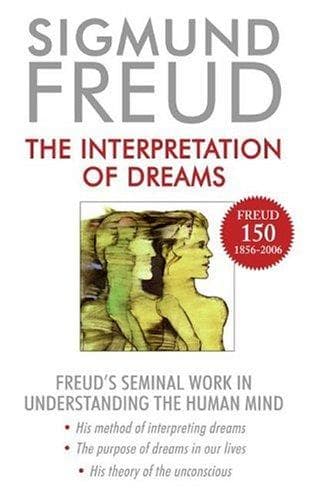
The Interpretation of Dreams cover
Archivist's Choice

The Interpretation of Dreams

Sigmund Freud

Genre

General

Reading Time

10-15 hours (it's a dense and lengthy foundational text)

Key Themes

See below

Track Your Reading

Sign in to track this book

Freud plunges into the nocturnal theater of the human mind, arguing that our most bizarre dreams are meticulously coded messages from the unconscious, revealing our deepest desires and unresolved conflicts.

Core Idea

Sigmund Freud's "The Interpretation of Dreams" posits that dreams are not random neurological events but rather disguised fulfillments of repressed wishes. He argues that the unconscious mind, a reservoir of desires, memories, and emotions, expresses itself through dreams, particularly those wishes deemed unacceptable or too threatening to conscious thought. The manifest content of a dream (what we remember) is a distorted version of its latent content (the true, unconscious wish), transformed through various 'dream-work' mechanisms like condensation, displacement, symbolism, and secondary revision. Freud meticulously details these mechanisms, demonstrating how they serve to protect the sleeper from disturbing truths while still allowing the unconscious wish to be expressed, albeit in an often bizarre and symbolic form. By analyzing these transformations and the symbolic elements within dreams, Freud believed one could uncover the underlying unconscious conflicts, often tracing them back to childhood experiences and repressed traumas, thereby gaining insight into the individual's psyche and neuroses.
Reading time
10-15 hours (it's a dense and lengthy foundational text)
Difficulty
Hard
✓ Read this if...
You are interested in the foundational theories of psychoanalysis, want to understand how dreams might offer insight into the unconscious mind, or are curious about the historical origins of modern psychology's approach to dreams and mental processes.
✗ Skip this if...
You are looking for a purely neuroscientific or contemporary cognitive explanation of dreams, or if you are averse to complex psychological theories and lengthy case studies.

Core idea

The central argument and framework that powers the entire book.

Sigmund Freud's "The Interpretation of Dreams" posits that dreams are not random neurological events but rather disguised fulfillments of repressed wishes. He argues that the unconscious mind, a reservoir of desires, memories, and emotions, expresses itself through dreams, particularly those wishes deemed unacceptable or too threatening to conscious thought. The manifest content of a dream (what we remember) is a distorted version of its latent content (the true, unconscious wish), transformed through various 'dream-work' mechanisms like condensation, displacement, symbolism, and secondary revision. Freud meticulously details these mechanisms, demonstrating how they serve to protect the sleeper from disturbing truths while still allowing the unconscious wish to be expressed, albeit in an often bizarre and symbolic form. By analyzing these transformations and the symbolic elements within dreams, Freud believed one could uncover the underlying unconscious conflicts, often tracing them back to childhood experiences and repressed traumas, thereby gaining insight into the individual's psyche and neuroses.

At a glance

Reading time

10-15 hours (it's a dense and lengthy foundational text)

Difficulty

Hard

Read this if...

You are interested in the foundational theories of psychoanalysis, want to understand how dreams might offer insight into the unconscious mind, or are curious about the historical origins of modern psychology's approach to dreams and mental processes.

Skip this if...

You are looking for a purely neuroscientific or contemporary cognitive explanation of dreams, or if you are averse to complex psychological theories and lengthy case studies.

Key Takeaways

1

Dreams as Wish Fulfillment

Dreams are disguised attempts by the unconscious to fulfill repressed wishes.

Quote

The dream is a (disguised) fulfillment of a (repressed) wish.

Freud posits that the primary function of dreams is to serve as wish fulfillments. During sleep, the ego's defenses are relaxed, allowing repressed desires from the unconscious mind to surface. However, these desires are often unacceptable to the conscious mind, so the dream-work distorts them through various mechanisms, making them appear bizarre or nonsensical. The 'manifest content' (what we remember) is a symbolic representation of the 'latent content' (the underlying repressed wish). Understanding this distinction is crucial for ...

Supporting evidence

Freud's clinical observations of patients' dreams and their associations, particularly cases where patients reported satisfying desires in their dreams that they were unable to fulfill in waking life.

Apply this

When analyzing personal dreams, consider what underlying desires or needs might be metaphorically expressed, even if the dream's manifest content seems unrelated or even disturbing.

wish-fulfillmentrepressed-desiresmanifest-contentlatent-content
2

The Dream-Work Mechanisms

The unconscious employs specific processes to transform latent dream thoughts into manifest content.

Quote

The dream-work is not a creative act, but a transformation of existing material.

Freud identified several key mechanisms through which the 'dream-work' operates: condensation, displacement, symbolism, and secondary revision. Condensation involves multiple latent thoughts being combined into a single manifest image or idea. Displacement shifts emotional intensity from an important, disturbing idea to a trivial or less threatening one. Symbolism represents abstract concepts or forbidden objects with concrete, often universally recognized, symbols. Secondary revision is the final stage where the dream is made to appe...

Supporting evidence

Detailed analysis of numerous dream examples, showing how a single manifest image could be traced back to multiple latent ideas (condensation) or how the emotional focus shifted from one element to another (displacement).

Apply this

When recalling a dream, try to identify instances where multiple ideas might be compressed into one image, or where a strong feeling is attached to an seemingly insignificant detail, as these are clues to the underlying latent content.

dream-workcondensationdisplacementsymbolismsecondary-revision
3

Symbolism and Universal Meanings

Certain dream elements hold universal symbolic meanings, often related to primal drives and experiences.

Quote

The symbolism in dreams has a wide range of application, extending far beyond the individual.

Freud observed that certain symbols appear consistently across different individuals' dreams and cultures, suggesting a universal, albeit often unconscious, understanding. These symbols often relate to the body, sexuality, birth, death, and familial relationships. For example, elongated objects like sticks, trees, or weapons are frequently interpreted as phallic symbols, while enclosed spaces like rooms, boxes, or caves can symbolize the female genitals or the womb. While individual associations are paramount, Freud argued that these ...

Supporting evidence

Cross-cultural analysis of myths, fairy tales, jokes, and linguistic expressions, which often share similar symbolic representations to those found in dreams.

Apply this

While recognizing common symbolic interpretations (e.g., water representing birth or the unconscious), always prioritize the dreamer's personal associations and life context to refine the meaning of a symbol.

dream-symbolsuniversal-symbolsphallic-symbolssexual-symbolism
4

Childhood Experiences and Repression

Early childhood experiences, particularly traumatic or unresolved ones, profoundly shape unconscious desires and dream content.

Quote

The child is father to the man, and the dreams of the adult often echo the wishes and fears of the child.

Freud emphasized the enduring impact of childhood experiences on the adult psyche. Many of the repressed wishes that surface in dreams originate from early developmental stages, particularly those related to the Oedipus complex, sibling rivalries, or early experiences of pleasure and pain. These experiences, if unresolved or traumatic, can become deeply embedded in the unconscious and continue to exert influence throughout life, manifesting symbolically in dreams. The dream-work often connects current events to these deeply rooted chi...

Supporting evidence

Clinical case studies where adult patients' dreams revealed consistent thematic links to their reported childhood traumas or unresolved family dynamics, particularly around parental figures.

Apply this

When interpreting dreams, look for recurring themes or imagery that might connect to early childhood memories, family relationships, or unresolved conflicts from that period.

childhood-traumaoedipus-complexrepressed-memoriesdevelopmental-stages
5

The Role of Anxiety Dreams

Anxiety dreams are wish fulfillments that have been unsuccessful in disguising their repressed content, leading to distress.

Quote

Anxiety dreams are not an exception to the theory of wish-fulfillment, but rather a confirmation of it.

While most dreams are successful in disguising their latent content, anxiety dreams occur when the dream-work fails to adequately mask the repressed wish, allowing the underlying, often forbidden or terrifying, desire to break through into the manifest content. The ego's defense mechanisms are overwhelmed, leading to feelings of dread, fear, or panic. These dreams are still considered wish fulfillments, but of a masochistic or punitive nature, where the dreamer's unconscious desires for punishment or self-sabotage are being met. The a...

Supporting evidence

Patients reporting intense anxiety or terror upon waking from dreams that contained overtly threatening or taboo imagery, which, upon analysis, linked to deeply repressed aggressive or sexual desires.

Apply this

Instead of dismissing anxiety dreams as simply 'bad,' explore what deeply repressed, potentially unacceptable wishes or fears might be attempting to surface, and why the disguise failed.

anxiety-dreamsfailed-repressionsuperegopunitive-wish
6

Dreams as Royal Road to the Unconscious

Dreams offer the most direct and accessible pathway to understanding the contents and workings of the unconscious mind.

Quote

The interpretation of dreams is the royal road to a knowledge of the unconscious activities of the mind.

Freud considered dreams to be the most valuable tool for psychoanalysis because, unlike other manifestations of the unconscious (like neuroses or slips of the tongue), dreams occur nightly and provide a rich, albeit disguised, narrative of repressed thoughts and desires. During sleep, the conscious ego's censorship is significantly reduced, allowing the unconscious to express itself more freely. By meticulously analyzing the manifest content and tracing it back through the dream-work mechanisms to the latent dream thoughts, analysts c...

Supporting evidence

The entire body of Freud's clinical work, where dream analysis consistently provided crucial insights into patients' underlying psychological dynamics that were otherwise inaccessible.

Apply this

Regularly record and reflect on your dreams, even seemingly insignificant ones, viewing them as valuable messages from your deeper self rather than random occurrences.

unconscious-mindpsychoanalysisdream-interpretationego-censorship
7

The Dream's Relation to Waking Life

Dreams are not random but are intimately connected to recent waking experiences, often addressing unresolved issues.

Quote

A dream is never concerned with trifles.

Freud observed that dreams frequently incorporate 'day residues'—fragments of recent waking experiences, thoughts, and impressions. These residues, however, are not randomly included; they serve as catalysts or starting points for the dream-work to attach to and express deeper, often unresolved, unconscious wishes or conflicts. A seemingly trivial event from the previous day might be seized upon by the dream-work because it resonates symbolically with a significant repressed desire or a long-standing psychological issue. Thus, dreams ...

Supporting evidence

Patients frequently reporting dreams that included specific, albeit distorted, elements from conversations, sights, or events from the day preceding the dream.

Apply this

After recalling a dream, consider what recent events, conversations, or emotional experiences from your waking life might have served as 'day residues' for the dream's content.

day-residueswaking-lifeunresolved-issuesdream-catalyst
8

The Importance of Free Association

The dreamer's personal associations are paramount in uncovering the latent meaning of dream elements.

Quote

The dream is not to be interpreted atomistically, but in connection with the dreamer's free associations.

While Freud acknowledged universal symbols, he stressed that the most effective way to interpret a dream is through the dreamer's free association. Instead of imposing a pre-determined meaning on a dream symbol, the analyst encourages the dreamer to say whatever comes to mind in connection with each element of the dream, no matter how illogical or irrelevant it may seem. This process bypasses conscious censorship and allows the underlying latent thoughts and repressed memories to emerge. Free association helps to trace the manifest co...

Supporting evidence

Clinical examples where the same dream symbol (e.g., a house) elicited vastly different associations from different patients, leading to unique and personal interpretations.

Apply this

When trying to understand your own dreams, don't just look up symbols in a dictionary; instead, take each element and write down every thought, feeling, or memory that comes to mind, no matter how absurd.

free-associationdream-analysis-techniquepersonal-meaningunconscious-connections
9

Neuroses and Dream-Work Parallels

The mechanisms of dream-work bear striking similarities to the psychological processes underlying neurotic symptoms.

Quote

The dream is a normal psychosis.

Freud drew a powerful parallel between the processes of dream-work and the formation of neurotic symptoms. He argued that both represent disguised expressions of repressed wishes or conflicts. Just as dreams use condensation, displacement, and symbolism to transform latent thoughts into manifest content, neurotic symptoms (e.g., phobias, obsessions, hysteria) employ similar mechanisms to express unacceptable desires in a distorted, often debilitating, form. Understanding the dream-work thus provides a crucial framework for comprehendi...

Supporting evidence

Freud's detailed comparisons of the symbolic content and structural transformations observed in dreams with the symptoms and underlying conflicts of his neurotic patients.

Apply this

Consider how repetitive patterns in your waking life, particularly those causing distress or irrational behavior, might be symbolic expressions of underlying, unresolved conflicts, similar to how dreams function.

neurosispsychosissymptom-formationpsychopathology

Critical analysis

Notable Quotes

The interpretation of dreams is the royal road to a knowledge of the unconscious activities of the mind.

Freud's declaration of the paramount importance of dream analysis in understanding the human psyche.

Dreams are disguised fulfillments of repressed wishes.

A core tenet of Freud's theory, stating that dreams serve to satisfy desires that are unacceptable to the conscious mind.

Every dream has a meaning.

Freud's assertion that dreams are not random occurrences but purposeful psychological phenomena.

The dream-work is the process which transforms the latent dream-thoughts into the manifest dream-content.

Explaining the mechanism by which unconscious desires are translated into the remembered dream narrative.

The censor is an agency of the ego, which supervises the passage from unconscious to conscious.

Describing the psychological mechanism that distorts unacceptable unconscious content before it reaches consciousness, especially in dreams.

The manifest dream-content is the dream as it is remembered and told.

Defining the surface narrative of a dream, which often conceals its true, underlying meaning.

The latent dream-thoughts are the true, unconscious thoughts and desires that underlie the dream.

Defining the hidden, symbolic meaning of a dream, which the analyst seeks to uncover.

Dream-distortion is a measure of the extent of this repression.

Explaining that the degree to which a dream is disguised reflects the strength of the psychological repression of the underlying wish.

Infantile wishes are the most frequent and powerful instigators of dreams.

Highlighting the significant role of early childhood desires and experiences in shaping dream content.

Symbolism is a fundamental feature of the dream-work.

Emphasizing the use of symbols in dreams to represent repressed thoughts and desires in a disguised form.

The dream is a compromise formation between the repressed wish and the resistance of the ego.

Explaining that dreams are a result of the conflict between unconscious desires and the conscious mind's efforts to keep them repressed.

Every dream is, in some sense, an ego-centric production.

Stating that dreams are fundamentally about the dreamer's own experiences, desires, and conflicts.

The forgetting of dreams is itself a manifestation of resistance.

Suggesting that the inability to recall dreams is not accidental but a psychological defense mechanism against disturbing unconscious content.

Quiz

Test Your Knowledge

Ready to see how well you understood this book? Take our interactive quiz with 10 questions.

10
Questions
~5
Minutes
?
Best Score

Key Questions (FAQ)

Freud's central argument is that dreams are not random but are highly organized expressions of unconscious desires, thoughts, and motivations. He proposes that dreams serve as a 'royal road to the unconscious,' revealing repressed wishes, particularly those from childhood, in a disguised form.

About the author