BookBrief
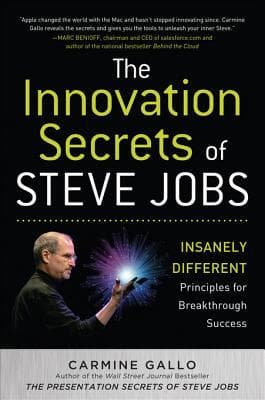
The Innovation Secrets of Steve Jobs cover
Archivist's Choice

The Innovation Secrets of Steve Jobs

Carmine Gallo (2010)

Genre

Business / Entrepreneurship / Biography / Leadership / Technology

Reading Time

12 Minutes

Key Themes

See below

Track Your Reading

Sign in to track this book

Carmine Gallo breaks down Steve Jobs's 'Think Different' philosophy into seven practical principles for sparking creativity and achieving innovation in any field.

Core Idea

Carmine Gallo distills the innovation philosophy and presentation techniques of Steve Jobs into seven core principles that any professional can apply to their own work and leadership. The book argues that Jobs's success wasn't solely due to his genius, but rather to a consistent application of learnable strategies for passion, vision, design, marketing, and storytelling, which he used to create groundbreaking products and captivate audiences. By analyzing Jobs's keynotes, product launches, and business decisions, Gallo provides a practical guide for fostering creativity, inspiring teams, and effectively communicating transformative ideas.
Difficulty
Easy

Core idea

The central argument and framework that powers the entire book.

Carmine Gallo distills the innovation philosophy and presentation techniques of Steve Jobs into seven core principles that any professional can apply to their own work and leadership. The book argues that Jobs's success wasn't solely due to his genius, but rather to a consistent application of learnable strategies for passion, vision, design, marketing, and storytelling, which he used to create groundbreaking products and captivate audiences. By analyzing Jobs's keynotes, product launches, and business decisions, Gallo provides a practical guide for fostering creativity, inspiring teams, and effectively communicating transformative ideas.

At a glance

Difficulty

Easy

Key Takeaways

1

Passion Fuels Innovation

Aligning work with personal passion is the bedrock of sustained creativity and resilience.

Quote

The only way to do great work is to love what you do.

Gallo argues that Steve Jobs's drive and innovative spirit came directly from his deep passion for his work. This isn't just a motivational idea; it's presented as a strategic necessity. When people genuinely love what they do, they are more likely to keep going through setbacks, work extra hours, and stay curious and engaged. The book states that this passion isn't natural for everyone but can be developed by finding meaning and purpose in one's tasks, even by rethinking career paths or reframing current roles. This idea suggests tha...

Supporting evidence

Jobs's return to Apple when the company was struggling, driven by his belief in its potential despite initial financial disincentives, exemplifies his deep passion. His lifelong dedication to perfecting products, even when it meant risking market trends, also highlights this principle.

Apply this

Leaders should strive to create environments where employees can connect their work to their personal values and passions. Individuals should actively seek roles or projects that ignite their interest, even if it requires a significant career pivot.

2

Make a Dent in the Universe

Innovation is driven by a grand, audacious vision that transcends mere product development.

Quote

We're here to put a dent in the universe. Otherwise, why even be here?

This principle highlights Jobs's belief in a compelling vision. It's not enough to create a good product; true innovators aim to change the world or an industry. This 'dent in the universe' mentality inspires teams to think beyond small improvements and instead focus on revolutionary ideas that challenge current norms. Gallo suggests that this grand vision helps in making decisions, ensuring every project aligns with a higher purpose. This ambitious goal setting helps attract top talent and maintain morale during tough times.

Supporting evidence

Apple's mission to make technology beautiful, intuitive, and accessible to the masses, rather than just a tool for corporations, is a prime example. The introduction of the Macintosh, the iPod, and the iPhone each represented a 'dent' by redefining their respective product categories and user experiences.

Apply this

Organizations should articulate a clear, inspiring vision that extends beyond financial targets. Individuals should define personal or professional 'dents' they aspire to make, using these as guiding principles for their efforts.

3

Connect the Dots Differently

Creativity is about synthesizing disparate experiences and ideas into novel solutions.

Quote

Creativity is just connecting things. When you ask creative people how they did something, they feel a little guilty because they didn't really do it, they just saw something.

Gallo argues that Jobs's genius was not in inventing entirely new things but in combining existing ideas from different fields. This principle encourages people to broaden their experiences (arts, humanities, travel) and look for unexpected connections. The book suggests that innovation often comes from the meeting point of unrelated areas. This 'connecting the dots' approach challenges the idea that creativity is a solitary, sudden event, framing it instead as an active process of observing, absorbing, and recombining.

Supporting evidence

Jobs's calligraphy class at Reed College, seemingly unrelated to technology, profoundly influenced the typography and aesthetic design of the Macintosh. His appreciation for design, music, and user experience from various disciplines converged in Apple's product philosophy.

Apply this

Actively seek out diverse experiences and knowledge outside your core domain. Encourage cross-disciplinary collaboration and foster environments where different perspectives are valued and can intersect.

4

Sell Dreams, Not Products

Focus on the emotional benefits and aspirational lifestyle a product enables, not just its features.

Quote

Some people think you have to be crazy to buy an iPhone. But in that craziness, we see genius. We see people who want to change the world. That’s what we sell.

This principle offers insight into Apple's marketing strength. Jobs understood that consumers buy an experience, a status, or a solution to a desire, not just devices. The book emphasizes going beyond technical specifications to explain the 'why' behind a product – how it helps users, simplifies their lives, or fulfills an aspiration. This approach builds a deeper emotional connection with customers, creating loyalty and a willingness to pay more. It shifts the focus from selling transactions to building relationships based on shared ...

Supporting evidence

Apple's iconic '1984' Super Bowl ad for the Macintosh, which positioned the computer as a tool for liberation from conformity, or the 'iPod + iTunes' ecosystem which sold the 'dream' of having '1,000 songs in your pocket' rather than just an MP3 player.

Apply this

Marketers and innovators should identify the emotional core of their products and services. Craft narratives that highlight the transformative impact and aspirational lifestyle associated with their offerings, rather than just listing features.

5

Simplify and Say No

Ruthless prioritization and extreme simplicity are keys to focus and superior design.

Quote

Innovation is saying no to 1,000 things.

This is one of the book's strongest insights, showing the discipline behind Apple's clean design and simple user interfaces. Jobs was known for cutting out complexity, features, and even entire product lines that did not fit a clear vision. Gallo highlights that true innovation often requires taking things away, not just adding them. Saying 'no' is hard, as it means sacrificing good ideas for great ones, but it allows for intense focus on perfecting essential elements. This principle applies to product design, strategic decisions, and...

Supporting evidence

Jobs famously streamlined Apple's sprawling product line upon his return, cutting 70% of products to focus on just four core categories. The minimalist design of the iPod, with its single scroll wheel, or the iPhone, with its single home button, are testaments to this 'less is more' philosophy.

Apply this

Regularly review projects and features, asking 'Is this essential?' or 'Does this simplify the user experience?' Be prepared to eliminate distractions and resist the urge to add features for the sake of it.

6

Create Insanely Great Experiences

Every customer touchpoint, from unboxing to customer service, must be meticulously crafted.

Quote

You've got to start with the customer experience and work backward to the technology.

Beyond the product itself, Jobs focused on the entire customer journey. Gallo emphasizes that Apple's success was not just about groundbreaking products, but about the 'great' experience at every interaction point. This includes the feel of unboxing, the simple software interface, the look of retail stores, and even efficient customer support. This complete approach builds strong brand loyalty that goes beyond product features. It suggests that companies must design not just products, but entire systems of interaction, ensuring consis...

Supporting evidence

The meticulous design of Apple's packaging, often described as part of the product experience, the inviting and interactive layout of Apple Stores, and the seamless integration between hardware and software, all contribute to this 'insanely great' experience.

Apply this

Map out the entire customer journey for your product or service. Identify every touchpoint and brainstorm ways to elevate the experience from merely functional to delightful and memorable.

7

Master the Message

The ability to articulate and present ideas compellingly is as crucial as the innovation itself.

Quote

The most powerful person in the world is the storyteller.

Gallo argues that even revolutionary ideas will fail without good communication. Jobs was a master storyteller, turning product launches into theatrical events and complex technologies into simple, relatable benefits. This principle highlights the importance of creating a clear, concise, and emotionally resonant story around innovations. It's about persuading, inspiring, and educating, not just informing. The book emphasizes practicing presentations, simplifying jargon, and focusing on the audience's needs and aspirations to 'master t...

Supporting evidence

Jobs's legendary keynotes, which combined storytelling, demonstrations, and dramatic reveals, were instrumental in building anticipation and desire for Apple's products. His ability to distill complex features into simple, powerful statements (e.g., '1,000 songs in your pocket') is a prime example.

Apply this

Develop strong communication and presentation skills. Practice distilling complex ideas into simple, compelling narratives. Focus on the 'why' and the benefits to the audience, rather than just technical details.

8

Cultivate an Insurgent Mindset

Constantly challenge conventional wisdom and embrace being the 'underdog' to drive innovation.

Quote

It's more fun to be a pirate than to join the navy.

This principle captures Jobs's rebellious spirit and his belief in encouraging a culture that thrives on challenging the norm. Gallo explains that Jobs often presented Apple as an underdog, even when it was a market leader, to maintain urgency and prevent complacency. This 'pirate' mentality encourages employees to think independently, question assumptions, and not be limited by industry norms or corporate rules. It's about maintaining a startup's agility and experimental spirit, even in a large organization. This mindset is key for c...

Supporting evidence

Jobs's creation of the Macintosh team as a 'pirate' group, deliberately separated from the main Apple campus and given a skull-and-crossbones flag, exemplifies this desire to foster an independent, rebellious spirit. His constant push against industry standards, like not including a floppy drive in the iMac, also showcases this.

Apply this

Encourage teams to challenge existing paradigms and think outside established norms. Create smaller, autonomous 'skunkworks' teams within larger organizations to foster an insurgent spirit. Celebrate unconventional thinking and risk-taking.

9

Obsess Over Detail and Design

A relentless pursuit of aesthetic beauty and functional perfection elevates products to art.

Quote

Design is not just what it looks like and feels like. Design is how it works.

Jobs's focus on every detail, from the internal layout of circuit boards (even if unseen by users) to the curve of a product's edge, is a recurring theme. Gallo highlights that for Jobs, design was not just superficial style but a core part of function and user experience. This principle suggests that true innovation involves an unwavering commitment to craftsmanship and an understanding that form and function are inseparable. It's about aiming for elegance and ease of use, ensuring the product is not just effective but also enjoyable...

Supporting evidence

The unibody aluminum casing of MacBooks, the seamless glass and metal construction of iPhones, and the iconic scroll wheel of the iPod all demonstrate an incredible attention to both aesthetic and functional design details. Jobs's insistence on beautiful internal components, even if hidden, is another example.

Apply this

Instill a culture of meticulous attention to detail in product development and service delivery. Invest in high-quality design talent and processes, viewing design as a core strategic differentiator, not an afterthought.

10

Embrace the 'Reality Distortion Field'

Inspire and motivate teams through unwavering belief and persuasive conviction, even against odds.

Quote

The reality distortion field was a phrase used to describe Steve Jobs's charisma and ability to persuade himself and others to believe almost anything with a mix of charm, charisma, bravado, hyperbole, and persistence.

While often viewed with skepticism, Gallo presents Jobs's 'reality distortion field' (RDF) as a powerful tool for innovation. The RDF was Jobs's ability to convince engineers and designers to achieve seemingly impossible feats by projecting a strong belief in their capabilities and the product's potential. This is not about deception, but about inspiring teams to push past perceived limits and conventional wisdom. It highlights the leader's role in setting ambitious goals and fostering a belief that they are possible, even when facing...

Supporting evidence

Jobs's ability to convince engineers that the Macintosh could be built in an impossibly short timeframe, or that the iPhone could combine multiple devices into one, despite significant technical hurdles, are classic examples of the RDF in action.

Apply this

Leaders should cultivate strong conviction in their vision and use persuasive communication to inspire and motivate their teams. Challenge assumptions about what's possible, but also ensure that ambitious goals are balanced with realistic support and resources.

Critical analysis

Notable Quotes

Quiz

Test Your Knowledge

Ready to see how well you understood this book? Take our interactive quiz with 10 questions.

10
Questions
~5
Minutes
?
Best Score

Key Questions (FAQ)

The book outlines seven guiding principles inspired by Steve Jobs: Do What You Love, Put a Dent in the Universe, Kick Start Your Brain, Sell Dreams Not Products, Say No to 1,000 Things, Create Insanely Great Experiences, and Master the Message.

About the author

Carmine Gallo

Carmine Gallo is a communications and leadership expert, best known for his bestselling book, "The Innovation Secrets of Steve Jobs." He has authored numerous books on communication, innovation, and leadership, drawing on his extensive experience as a journalist and speaker. Gallo helps individuals and organizations unlock their potential through compelling storytelling and effective communication strategies.