BookBrief
The Innocents Abroad cover
Archivist's Choice

The Innocents Abroad

Mark Twain (1800)

Genre

Lifestyle / Biography / Memoir / History

Reading Time

15-20 hours (approx. 560 pages)

Key Themes

See below

Track Your Reading

Sign in to track this book

Mark Twain's 1867 grand tour on the Quaker City is a hilarious trip where he uses his sharp wit to mock European airs and American innocence, turning a religious journey into a funny cultural clash.

Core Idea

Mark Twain's "The Innocents Abroad" shows the conflict between an simple American way of thinking and the old traditions of Europe and the Holy Land. Through the eyes of a self-proclaimed 'pilgrim' and his fellow American tourists, Twain makes fun of the expected reverence from travelers, the often-exaggerated history presented, and the silliness of just accepting common beliefs. It is a key book in American humor, creating a critical, disrespectful, and distinctly American voice. This voice questions old-world snobbery and finds humor in the gap between romantic ideas and everyday reality. The book suggests that an honest, often doubtful, view is better than just admiring things without thought. It implies that real understanding comes from seeing the world as it is, not as tradition says it should be. Twain uses satire not just to be funny but to question power, show hypocrisy, and celebrate a practical, democratic American identity against the background of European history.
Reading time
15-20 hours (approx. 560 pages)
Difficulty
Medium
✓ Read this if...
You enjoy satirical travelogues, want to understand the origins of American humor, or appreciate a critical, irreverent look at historical sites and cultural norms.
✗ Skip this if...
You prefer serious, reverent historical accounts or travel writing, or dislike extensive use of sarcasm and a somewhat cynical narrative voice.

Core idea

The central argument and framework that powers the entire book.

Mark Twain's "The Innocents Abroad" shows the conflict between an simple American way of thinking and the old traditions of Europe and the Holy Land. Through the eyes of a self-proclaimed 'pilgrim' and his fellow American tourists, Twain makes fun of the expected reverence from travelers, the often-exaggerated history presented, and the silliness of just accepting common beliefs. It is a key book in American humor, creating a critical, disrespectful, and distinctly American voice. This voice questions old-world snobbery and finds humor in the gap between romantic ideas and everyday reality.

The book suggests that an honest, often doubtful, view is better than just admiring things without thought. It implies that real understanding comes from seeing the world as it is, not as tradition says it should be. Twain uses satire not just to be funny but to question power, show hypocrisy, and celebrate a practical, democratic American identity against the background of European history.

At a glance

Reading time

15-20 hours (approx. 560 pages)

Difficulty

Medium

Read this if...

You enjoy satirical travelogues, want to understand the origins of American humor, or appreciate a critical, irreverent look at historical sites and cultural norms.

Skip this if...

You prefer serious, reverent historical accounts or travel writing, or dislike extensive use of sarcasm and a somewhat cynical narrative voice.

Key Takeaways

1

The American Gaze: Expectation vs. Reality

Travel often shatters romanticized notions, revealing the mundane or absurd.

Quote

Travel is fatal to prejudice, bigotry, and narrow-mindedness, and many of our people need it sorely on these accounts. Broad, wholesome, charitable views of men and things cannot be acquired by vegetating in one little corner of the earth all one's lifetime.

Twain skillfully questions the often-simple ideas American travelers have when they meet old-world cultures. His 'innocents' arrive with ideas from books and church, only to find the reality—whether it is a dirty holy site or the selling of a historical item—very different. This constant clash between an ideal past and a messy present is the funny part of the book. Twain suggests that while travel expands the mind, it also shows the silliness of unthinking respect and the narrow views of those who will not see past their own culture. ...

Supporting evidence

Twain's persistent debunking of European and Holy Land 'relics' and 'miracles,' often pointing out their dubious authenticity or the blatant commercial exploitation surrounding them, such as the numerous fragments of the 'True Cross' or the 'sacred' objects that appear suspiciously new or mass-produced.

Apply this

Before traveling, research the historical context but also mentally prepare for a reality that might be less glamorous than imagined. Embrace the unexpected and the uncomfortable as opportunities for genuine learning, rather than clinging to preconceived ideals.
cultural-relativismtravel-expectationsromanticism-vs-realism
2

The Absurdity of Reverence

Unquestioning devotion to historical or religious sites can blind one to present-day realities.

Quote

I do not see how a man could look upon the scenery of the Yosemite without feeling that it was the work of a Divine Power; and I do not see how he could look upon a church and feel that it was the work of a Divine Power.

Twain often makes fun of the pilgrims' unquestioning respect for every European relic and Holy Land site. He often compares their devotion with the clear poverty, corruption, or plainness of the surroundings. He finds humor in their eagerness to believe in questionable miracles and their willingness to ignore today's mess for an imagined, grand past. This criticism extends to the European guides and locals who use this reverence for money. Twain's doubt is not against religion itself, but against hypocrisy and blind faith, especially ...

Supporting evidence

His detailed and often sarcastic descriptions of the 'relics' presented to the travelers, such as pieces of the True Cross, bones of saints, or the very stones Jesus supposedly touched. He frequently questions their authenticity and the motives of those presenting them, often juxtaposing the 'sacred' object with the grubby conditions of its display.

Apply this

Approach historical and religious sites with an open mind and a critical eye. Appreciate the history and significance, but also acknowledge the present reality, the commercialization, and the human elements involved. Don't let romanticized notions prevent you from seeing things as they truly are.

skepticismreligious-tourismhistorical-authenticity
3

The Power of Satire and Humor

Humor can be a potent tool for social critique and self-reflection.

Quote

The very ink with which history is written is merely fluid prejudice.

Twain's lasting fame comes from his unique use of satire and humor, and The Innocents Abroad is a key example. He uses irony, exaggeration, and dry wit to show the foolishness of his fellow travelers, the Europeans they meet, and even himself. The humor is not just for fun; it is a sharp critical tool. It lets him comment on cultural differences, religious hypocrisy, the silliness of human behavior, and the limits of common travel stories. By making readers laugh, he makes them more open to his criticisms of narrow-mindedness, blind...

Supporting evidence

His mock-serious 'interviews' with historical figures' graves, his exaggerated complaints about food and accommodation, and his humorous encounters with persistent beggars or overly enthusiastic guides. The recurring joke of the Americans asking if historical figures are 'dead' is a prime example of his satirical method.

Apply this

When encountering new cultures or ideas, try to find the humor in the situation, even if it's initially frustrating. Use lighthearted self-deprecating humor to bridge cultural gaps and acknowledge your own biases. Satire in art and conversation can be an effective way to prompt reflection without being overly confrontational.

literary-satiresocial-commentarytravel-writing
4

The American Identity Abroad

Travel reveals and sharpens a sense of national identity, often through contrast.

Quote

In America, we have a system of free education, and in Europe, they have a system of education that is not free.

Twain's journey is about defining what it means to be American as much as it is about seeing Europe and the Holy Land. Through his observations, he shows the growing American character: practical, democratic, less tied to old traditions, and often annoyed by what they see as the inefficiencies or superstitions of the Old World. He compares American cleverness and directness with European formality and what he sees as decay. While he often pokes fun at his countrymen's narrow views, there is also pride in American practicality and comm...

Supporting evidence

Twain's frequent comparisons between American and European customs, infrastructure, and societal norms. For instance, his observations on European beggars versus American self-reliance, or the perceived lack of cleanliness and modern conveniences in European cities compared to American standards.

Apply this

When traveling, pay attention to how your own cultural background shapes your perceptions. Reflect on what aspects of your identity become more prominent or challenged when you're outside your familiar environment. Use these contrasts to better understand both your own culture and the one you're visiting.

national-identitycultural-clashamerican-exceptionalism
5

The Unreliable Narrator's Charm

Embracing subjectivity and humor can make a narrative more engaging and truthful.

Quote

I was to learn that the human being is a creature of habit, and that the greatest habit of all is the habit of being alive.

Twain's character in The Innocents Abroad is important to its success. He is not a neutral observer but a very opinionated, often grumpy, and self-aware narrator. He freely admits his biases, exaggerates for effect, and contradicts himself, making him an 'unreliable' narrator in the best way. This unreliability makes him more relatable and trustworthy because he does not pretend to be objective. His personal, often disrespectful view cuts through the usual seriousness of travelogues, asking the reader to question their own assumptio...

Supporting evidence

Twain's frequent asides to the reader, his open disdain for certain historical figures or 'relics,' and his willingness to admit when he's bored or unimpressed, even by sights traditionally considered awe-inspiring. His exaggerated descriptions of his own suffering or the ridiculousness of others.

Apply this

In personal storytelling, don't be afraid to inject your own personality and perspective. Acknowledge your biases and present your experiences honestly, even if they aren't perfectly polished or universally agreeable. Authenticity and a strong voice often resonate more than forced objectivity.

narrative-voicesubjectivitymemoir-writing
6

The Discomfort of the Grand Tour

Even 'pleasure' travel can be fraught with petty annoyances and discomforts.

Quote

I had a good mind to stay at home and never go abroad again.

Underneath the humor, Twain clearly shows the physical and mental difficulties of 19th-century travel. From seasickness and uncomfortable beds on the Quaker City to bad food, constant beggars, dishonest guides, and the endless list of 'must-see' places, the 'pleasure trip' is often anything but. He carefully details the small annoyances that chip away at the travelers' romantic ideas. This highlights how the everyday parts of travel can overshadow the grandeur of the destinations. This focus on reality makes his criticism of the 'gran...

Supporting evidence

His extensive complaints about the Quaker City's accommodations, the quality of European hotels and food, the relentless demands of beggars in Italy and the Holy Land, and the sheer exhaustion of being constantly rushed from one sight to another by demanding guides.

Apply this

When planning travel, factor in potential discomforts and frustrations. Don't expect every moment to be perfect; instead, cultivate resilience and a sense of humor to navigate the inevitable challenges. Embrace the imperfections as part of the authentic experience.

travel-frustrationshistorical-travelresilience-in-travel
7

The Enduring Power of the Familiar

Despite grand adventures, the comfort of home and familiar culture often remains paramount.

Quote

I had been to Europe and the Holy Land, but I had not seen anything that was any better than the things I had seen at home.

For all his travels and observations, Twain often compares what he sees abroad with what he knows at home. Often, home wins. This is not just being narrow-minded; it is a human tendency to find comfort and value in what is familiar. He often says he misses American newspapers, American food, and the simplicity of American life. This idea shows that while travel can broaden views, it also strengthens the unique qualities and comforts of one's own culture. The journey ultimately helps him, and perhaps his fellow travelers, appreciate wh...

Supporting evidence

Twain's frequent expressions of yearning for American comforts, his comparisons of European landscapes or architecture to similar (and often, in his opinion, superior) American counterparts, and his ultimate relief upon returning home, despite the wonders he witnessed.

Apply this

While traveling, make an effort to immerse yourself in the local culture, but also allow yourself moments to connect with home. Reflect on what aspects of your own culture you appreciate more after experiencing others. Recognize that a deeper appreciation for home is a valid outcome of travel.

homesicknesscultural-appreciationtravel-reflection
8

The Perils of Group Travel

Traveling with a homogenous group can amplify biases and limit genuine cultural immersion.

Quote

Our party was a 'happy family,' but it was also a 'happy family' of 'old fogies' who were determined to see everything through their own prejudices.

Twain's story of the Quaker City trip is a warning about the limits of group travel, especially when the group is mostly similar and isolated. The 'pilgrims' often strengthen each other's biases and narrow views, creating a bubble that stops real interaction with the foreign cultures they meet. They move from one landmark to another, checking boxes, rather than truly talking to locals or understanding different ways of life. This group narrow-mindedness becomes a source of both humor and frustration for Twain, showing how who you trav...

Supporting evidence

The recurring depiction of the 'pilgrims' as a unit, often making collective, uniform judgments about what they see, their resistance to trying local customs or food, and their general disinterest in anything that deviates from their pre-approved itinerary or expectations.

Apply this

When traveling in a group, actively seek out opportunities for individual exploration and interaction with locals. Challenge groupthink and encourage diverse perspectives within your travel party. Be mindful of creating a 'bubble' that shields you from authentic experiences.

group-dynamicscultural-immersiontravel-bias
9

History as a Living Narrative

The past is not static; it's interpreted, exploited, and often misrepresented in the present.

Quote

The past is a foreign country; they do things differently there.

Twain consistently shows that 'history' as presented at tourist sites is often a created story, filtered through local interests, business reasons, and current biases. He questions the truth of relics, the accuracy of tour guides, and the very idea of a plain historical truth. His doubt makes the reader think about how history is consumed and sold. This idea is still very important today. It reminds us to look at historical sites and stories with a critical eye, recognizing that every presentation of the past is an interpretation, oft...

Supporting evidence

His detailed critiques of the countless 'relics' and 'sacred sites' in Europe and the Holy Land, where he often highlights their questionable origins, the blatant commercialism surrounding them, or the conflicting accounts of their significance. He frequently contrasts the 'official' story with his own common-sense observations.

Apply this

When visiting historical sites, don't just passively absorb the information presented. Ask critical questions: Who built this narrative? What might be missing? What are the potential biases? Seek out multiple perspectives and engage with the site as a living, evolving story rather than a static fact.

historical-interpretationheritage-tourismcritical-thinking
10

The Value of Unconventional Observation

True insight often comes from looking beyond the expected and embracing personal reactions.

Quote

I never let my schooling interfere with my education.

Unlike his fellow travelers who carefully read their guidebooks and show expected awe, Twain often finds meaning or humor in what is overlooked, everyday, or in his own disrespectful reactions. He is more interested in the living present—the local people, the beggars, the street scenes—than in just checking off historical sites. His willingness to show boredom, doubt, or even disgust at what others hold sacred is what makes his observations so fresh and insightful. This approach supports the value of individual, honest experience over...

Supporting evidence

His descriptions of everyday life in European and Middle Eastern cities, his interactions with common people rather than just historical figures, and his often-contrarian opinions about famous artworks or landmarks that his fellow travelers adore. His detailed accounts of things like the food or the street scenes, rather than just the grand monuments.

Apply this

When traveling or exploring, allow yourself to deviate from the planned itinerary. Pay attention to the unexpected, the everyday details, and your own genuine reactions, even if they're not what you 'should' be feeling. Trust your instincts and let your curiosity guide you to unique discoveries.

observational-learningmindful-travelpersonal-discovery

Critical analysis

Notable Quotes

Travel is fatal to prejudice, bigotry, and narrow-mindedness, and many of our people need it sorely on these accounts. Broad, wholesome, charitable views of men and things cannot be acquired by vegetating in one little corner of the earth all one's lifetime.

Twain's reflection on the transformative power of travel.

If I have done so, I have not done it wittingly, but have been beguiled into it by the treacherous nature of the subject.

Twain's humorous disclaimer about potentially offending his readers.

The people of those countries are very, very ignorant. They are not like us. They are not like us in their general intelligence.

Twain's initial, often sarcastic, observations about the Europeans, reflecting American ethnocentrism.

I have been to the barber's and got my hair cut, and I feel as if I had been to a funeral, or a wedding, or something of that sort.

A humorous observation on the mundane experience of getting a haircut abroad.

We were in a foreign land. We were among strangers. We were in a country where the people spoke a language we did not understand.

Describing the initial feelings of alienation and unfamiliarity in a new country.

There are many things in this world that are not worth seeing, and many things that are not worth hearing, but there are very few things that are not worth thinking about.

A philosophical reflection on the value of observation and contemplation.

It is a pity that we cannot get rid of our prejudices. We are so apt to judge others by ourselves.

A more serious reflection on human nature and the difficulty of overcoming personal biases.

The gentle reader will never, never know what a consummate ass he can become until he goes abroad with his native prejudices clinging to him like a burr.

A direct address to the reader about the importance of shedding prejudices when traveling.

I have been a good many places, and seen a good many things, but I never saw anything that was half so beautiful as a good, square, honest, old-fashioned lie.

A humorous and cynical take on the allure of fiction and exaggeration.

He was a good man, and he meant well, but he was a fool.

A concise and often applicable judgment of a character or situation.

We have been to the land of dreams, and we have brought back nothing but a headache.

A humorous disillusionment after visiting a highly anticipated location.

The New England conscience doesn't keep you from doing anything, it just keeps you from enjoying it.

A witty observation on the puritanical mindset and its impact on enjoyment.

What a world of wonders is there in a single drop of water!

A moment of awe and appreciation for the simple beauty of nature.

There are three kinds of lies: lies, damned lies, and statistics.

Though often attributed to Twain, he popularized this quote, reflecting his skepticism about data.

Quiz

Test Your Knowledge

Ready to see how well you understood this book? Take our interactive quiz with 10 questions.

10
Questions
~5
Minutes
?
Best Score

Key Questions (FAQ)

'The Innocents Abroad' is a humorous travelogue by Mark Twain, chronicling his 1867 'Great Pleasure Excursion' through Europe and the Holy Land aboard the Quaker City. It offers a satirical look at American tourists abroad and the places they visit.

About the author

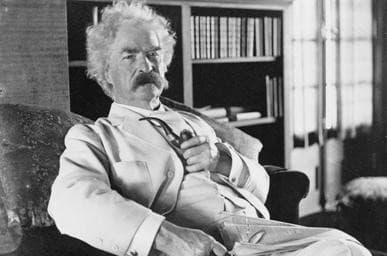
Mark Twain

Samuel Langhorne Clemens, best known by his pen name Mark Twain, was an American writer, humorist, entrepreneur, publisher, and lecturer. He was praised as the "greatest humorist the United States has produced", and William Faulkner called him "the father of American literature". His novels include The Adventures of Tom Sawyer (1876) and its sequel, Adventures of Huckleberry Finn (1884), the latter of which has often been called the "Great American Novel". Twain also wrote A Connecticut Yankee in King Arthur's Court (1889) and Pudd'nhead Wilson (1894), and co-wrote The Gilded Age: A Tale of Today (1873) with Charles Dudley Warner.