BookBrief
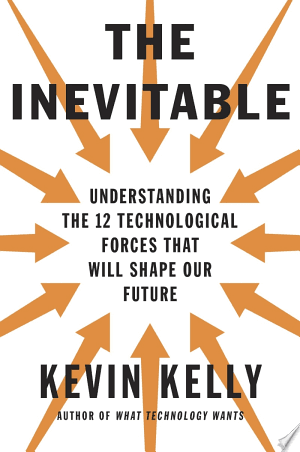
The Inevitable cover
Archivist's Choice

The Inevitable

Kevin Kelly (2016)

Genre

General

Reading Time

12 Minutes

Key Themes

See below

Track Your Reading

Sign in to track this book

Core Idea

Kevin Kelly's "The Inevitable" explores the twelve technological forces that will shape the next thirty years, arguing that these trends are not just possible, but inevitable. He identifies these forces—such as becoming, cognifying, flowing, screening, accessing, sharing, filtering, remixing, interacting, tracking, questioning, and beginning—as deep currents that will drive the future of technology, culture, and society. Kelly suggests that understanding and embracing these trends is key to navigating and thriving in the coming era, rather than resisting or fearing them. He emphasizes that these forces will lead to a world of constant change, where intelligence is ubiquitous, access trumps ownership, and continuous innovation is the norm.
Difficulty
Medium

Core idea

The central argument and framework that powers the entire book.

Kevin Kelly's "The Inevitable" explores the twelve technological forces that will shape the next thirty years, arguing that these trends are not just possible, but inevitable. He identifies these forces—such as becoming, cognifying, flowing, screening, accessing, sharing, filtering, remixing, interacting, tracking, questioning, and beginning—as deep currents that will drive the future of technology, culture, and society. Kelly suggests that understanding and embracing these trends is key to navigating and thriving in the coming era, rather than resisting or fearing them. He emphasizes that these forces will lead to a world of constant change, where intelligence is ubiquitous, access trumps ownership, and continuous innovation is the norm.

At a glance

Difficulty

Medium

Key Takeaways

1

The Power of Cognification

AI isn't just smart; it's making everything around us smarter.

Quote

The greatest competitive advantage any company can have in the coming decades is to be the one that cognifies its industry first.

Kelly says the most important trend is 'cognifying' everything. This means putting artificial intelligence into everyday objects, services, and infrastructure. It's not just about supercomputers; it's about distributed, specialized AI improving common items, from smart toasters to intelligent roads. This will create a new layer of intelligence in our environment, making systems more efficient, predictive, and personalized. The book argues that this widespread AI will be a utility, like electricity, rather than a standalone product. Th...

Supporting evidence

Kelly cites the rise of deep learning and neural networks, enabling AI to perform complex tasks previously thought exclusive to humans, from image recognition to natural language processing, becoming integrated into platforms like Google Search and Amazon's recommendations.

Apply this

Businesses should identify core processes or products that can be enhanced by embedded AI, focusing on specialized, narrow AI rather than general intelligence. Individuals should consider how AI-powered tools can augment their skills rather than replace them.


2

The Flowing Nature of Information

Everything is becoming a continuous stream, constantly updated and remixed.

Quote

The future of all media is not as a product but as a service, a flow, a stream.

Kelly argues that information, media, and products are changing from fixed items to continuous 'flows.' Books become subscriptions, music becomes streaming, and software becomes a service. This constant updating means nothing is ever truly finished; it's always being improved. This trend values access over ownership and highlights the importance of real-time data and dynamic content. It challenges traditional business models built on separate products and encourages ongoing engagement and iterative development.

Supporting evidence

Examples include Spotify, Netflix, and software-as-a-service (SaaS) models like Adobe Creative Cloud, where users pay for continuous access and updates rather than one-time purchases of static versions.

Apply this

Content creators and businesses should prioritize subscription models and continuous service delivery over one-off sales. Focus on fostering ongoing relationships with users through updates, community, and personalized streams of information.

3

The Universal Screen

Screens are everywhere, creating new interfaces and realities.

Quote

The screens of the future will not only be on our devices but will be our devices.

The 'screening' trend shows how screens are appearing in every part of our lives, from small wearables to large public displays, and eventually, augmented and virtual reality. These screens do more than just show information; they are becoming our main way to interact with the digital world, allowing new forms of communication and immersion. These screens help information 'flow' and enable 'cognification' by providing accessible views into intelligent systems. Kelly emphasizes that augmented reality can overlay digital information ont...

Supporting evidence

The rapid adoption of smartphones, smartwatches, and the emerging capabilities of AR/VR headsets like the HoloLens illustrate this trend, transforming how we perceive and interact with our environment.

Apply this

Designers and developers should think beyond traditional device screens, considering how information can be displayed and interacted with across diverse, context-aware interfaces, including augmented reality overlays. Focus on intuitive, glanceable information.

4

Access Over Ownership

The value shifts from possessing goods to having instant, on-demand access.

Quote

In the new economy, accessing will be better than owning.

Kelly argues that the future favors access over ownership. In a world of abundant, flowing information and services, owning a physical item or a static piece of content is less valuable. Instead, value comes from instant, reliable access to many resources, often through subscription or on-demand models. This trend is driven by 'flowing' information and the desire for convenience, flexibility, and less maintenance. It affects everything from transportation (Uber) to entertainment (Netflix) to tools (cloud computing), changing consumer ...

Supporting evidence

The rise of the sharing economy (Airbnb, Zipcar), streaming services, and cloud computing platforms like AWS, where companies pay for computing power as a service rather than owning physical servers, exemplify this shift.

Apply this

Businesses should explore service-based models and subscription offerings, prioritizing convenience and on-demand availability for their customers. Individuals should evaluate whether ownership truly serves their needs or if access provides greater flexibility and value.

5

The Power of Remixing

Creativity thrives by combining and repurposing existing elements.

Quote

The greatest works will not be original, but remixed.

Kelly highlights 'remixing' as a basic creative force of the digital age. With endless information 'flowing' and easily 'accessed,' creating something new often means combining, reusing, and reinterpreting existing ideas, media, and data. This trend challenges old ideas of originality and intellectual property, emphasizing the value of curation, mashups, and iterative development. It suggests that future innovation will often come from clever recombination rather than pure invention, making platforms that allow remixing very powerful.

Supporting evidence

Examples range from sampling in music and fan fiction to open-source software development and the rapid iteration of memes online, where existing elements are constantly recontextualized and shared.

Apply this

Embrace platforms and practices that encourage collaboration, open standards, and the repurposing of content. Focus on creating modular components that can be easily remixed by others, fostering a vibrant ecosystem around your creations.

6

Tracking for Greater Insight

Pervasive data collection fuels personalization and efficiency.

Quote

The more we track, the more we understand, and the more we can optimize.

The 'tracking' imperative describes the growing ability and desire to monitor and record almost every part of our lives and the world around us. From wearable fitness trackers to smart city sensors, this constant data collection feeds the 'cognification' process, allowing AI to learn, predict, and personalize experiences. While it raises privacy concerns, Kelly argues that the benefits of tracking, such as better health, optimized resource use, and highly personalized services, will drive its continued growth. This is a powerful idea,...

Supporting evidence

Fitness trackers like Fitbit, personalized advertising algorithms, and smart traffic management systems that use real-time data to optimize flow are direct manifestations of this trend.

Apply this

Consider how data collection, with appropriate privacy safeguards, can be used to improve products, services, or personal well-being. Focus on extracting actionable insights from tracked data rather than just accumulating it.

7

The Perpetual Questioning

Technology constantly generates more questions than answers.

Quote

The more answers we generate, the more questions we uncover.

Kelly's 'questioning' trend is arguably the book's strongest philosophical insight. He argues that technology, instead of providing final answers, always creates new, deeper questions. Every scientific discovery or technological breakthrough opens new areas of inquiry, making our ignorance grow alongside our knowledge. This suggests that the future isn't about reaching perfect understanding but about a continuous process of inquiry. This view offers an optimistic outlook on human purpose in an AI-dominated world, emphasizing our role ...

Supporting evidence

The development of the internet provided answers to information access but raised questions about privacy, misinformation, and digital identity. Advances in genetic engineering solve some medical problems but open ethical debates about human augmentation.

Apply this

Cultivate a mindset of curiosity and continuous learning. Instead of seeking ultimate answers, focus on identifying valuable new questions that arise from technological change. This is where human creativity and critical thinking will remain indispensable.

8

The Filtering Imperative

As information explodes, discerning value becomes paramount.

Quote

In a world of infinite choices, the most valuable thing is good filtering.

With vast amounts of information 'flowing' and 'screening,' 'filtering' becomes an important skill and service. Kelly says that as information grows, the ability to find, curate, and recommend relevant content becomes very valuable. This is not just about search engines; it's about personalized algorithms, trusted curators, and reputation systems that help us navigate the overwhelming digital world. Effective filtering helps us understand the noise, find what matters, and avoid information overload, making it a critical part of almost...

Supporting evidence

Recommendation engines on Netflix and Amazon, curated newsletters, social media algorithms, and even professional review sites all serve as filters to help individuals manage information overload.

Apply this

Develop strong critical thinking skills to evaluate information sources. For businesses, creating effective filtering mechanisms or becoming a trusted filter for a specific niche can be a significant competitive advantage.

9

Sharing as a Default

The internet fosters a culture of collaboration and collective intelligence.

Quote

The internet is a giant copying machine, but it is also a giant sharing machine.

Kelly identifies 'sharing' as a basic driver of the networked world. The ease of digital copying and distribution creates a culture where sharing ideas, resources, and even personal data (with varying consent) is the default. This leads to strong network effects, collective intelligence, and faster innovation through collaboration. While it raises concerns about privacy and intellectual property, the benefits of shared knowledge and collective effort are presented as a dominant force, supporting trends like 'remixing' and 'accessing.'

Supporting evidence

The success of Wikipedia, open-source software like Linux, and the collaborative nature of social media platforms demonstrate the power of widespread sharing and collective contribution.

Apply this

Seek opportunities for collaboration and knowledge sharing within your field or community. Consider how making your work shareable or open can amplify its impact and foster innovation.

Critical analysis

Notable Quotes

Quiz

Test Your Knowledge

Ready to see how well you understood this book? Take our interactive quiz with 10 questions.

10
Questions
~5
Minutes
?
Best Score

Key Questions (FAQ)

Kevin Kelly identifies twelve technological forces that will shape the next thirty years: Becoming, Cognifying, Flowing, Screening, Accessing, Sharing, Filtering, Remixing, Tracking, Questioning, Commencing, and Learning. These are not specific inventions but rather ongoing processes driven by technology.

About the author