BookBrief
The Icarus Deception: How High Will You Fly? cover
Archivist's Choice

The Icarus Deception: How High Will You Fly?

Seth Godin (2013)

Genre

Business / Productivity / Leadership / Creativity / Self-Help

Reading Time

180 min

Key Themes

See below

Track Your Reading

Sign in to track this book

Stop fearing ambition and instead embrace your inner artist. The real danger is playing it too safe in a world that needs bold, creative contributions.

Core Idea

Seth Godin says the old industrial age contract, which rewarded following rules and mass production, is over. Now, the economy values art, which he defines as a human act of creativity, generosity, and connection. The traditional advice to play it safe, like Icarus avoiding the sun, is misleading and leads to becoming irrelevant. Instead, people must take the risk of being more ambitious, creating original work that matters, connecting with others, and leading without a clear path. This book encourages everyone with the potential to create meaningful work to let go of the fear of failure, stop seeking safety, and make a significant impact through their unique contributions.
Reading time
180 min
Difficulty
Medium
✓ Read this if...
You feel stuck in a conventional career path, desire to make a unique impact, or are looking for inspiration to infuse more creativity and meaning into your work and life.
✗ Skip this if...
You prefer highly practical, step-by-step guides for business or productivity, or are uncomfortable with philosophical arguments about work and art.

Core idea

The central argument and framework that powers the entire book.

Seth Godin says the old industrial age contract, which rewarded following rules and mass production, is over. Now, the economy values art, which he defines as a human act of creativity, generosity, and connection. The traditional advice to play it safe, like Icarus avoiding the sun, is misleading and leads to becoming irrelevant. Instead, people must take the risk of being more ambitious, creating original work that matters, connecting with others, and leading without a clear path. This book encourages everyone with the potential to create meaningful work to let go of the fear of failure, stop seeking safety, and make a significant impact through their unique contributions.

At a glance

Reading time

180 min

Difficulty

Medium

Read this if...

You feel stuck in a conventional career path, desire to make a unique impact, or are looking for inspiration to infuse more creativity and meaning into your work and life.

Skip this if...

You prefer highly practical, step-by-step guides for business or productivity, or are uncomfortable with philosophical arguments about work and art.

Key Takeaways

1

The Icarus Deception: Fly Higher, Not Just Safe

The real danger isn't flying too high, but too low, in a world that rewards conformity less and less.

Quote

Everyone knows that Icarus’s father made him wings and told him not to fly too close to the sun. But he ignored that warning and plunged to his doom. We’ve retold this myth, and many others like it, to generations of kids. All these stories have the same lesson: Play it safe. Obey your parents. Listen to the experts.

Godin reinterprets the Icarus myth. He shows how its traditional lesson—play it safe, obey authority—was good for the industrial economy. This story encouraged conformity and discouraged independent thought, creating a workforce for repetitive tasks. Godin says this interpretation is incomplete and outdated. The full myth warns against flying too close to the sun (ambition, risk) and against flying too low (timidity, mediocrity), where the sea water could ruin Icarus's wings. In today's economy, the 'safety zone' has changed; conformi...

Supporting evidence

Godin dissects the Icarus myth, highlighting how the 'don't fly too high' warning has been emphasized to promote obedience, while the 'don't fly too low' warning is conveniently forgotten by those in power who benefit from a compliant workforce.

Apply this

Challenge ingrained beliefs about safety and risk. Identify areas in your work or life where you've been 'flying too low' out of fear of standing out or making a mistake. Actively seek opportunities to push boundaries and differentiate yourself, rather than simply following established norms.
icarus-myth-reinterpretationindustrial-economy-propagandaconformity-dangers
2

The End of the Industrial Age Contract

The old promise of comfort through conformity is broken; the new economy rewards creativity, not obedience.

Quote

The safety zone has moved. The propaganda has been exposed, and the old promises have been broken: Conformity no longer leads to comfort.

For generations, the industrial economy offered a clear deal: show up, follow instructions, don't cause trouble, and you'd have a stable job, a pension, and a good life. This system valued people as parts of a machine, not as creators. Godin states that this deal is now over. Automation, global competition, and the internet have ended the old guarantees. Playing it safe and sticking to the usual way is no longer a path to security; it is a path to becoming irrelevant. The new economy values uniqueness, innovation, and the ability to s...

Supporting evidence

Godin points to the exposure of 'propaganda' and the breaking of 'old promises' as evidence that the economic landscape has fundamentally changed, rendering the industrial-age contract obsolete.

Apply this

Evaluate your career path and skills. Are you relying on tasks that are easily automated or outsourced? Actively cultivate unique skills, creative problem-solving abilities, and a willingness to take initiative. Don't wait for permission; create value where none existed before.

post-industrial-economybroken-promisesautomation-impact
3

Art as a Mindset, Not a Medium

Being an artist isn't about paint or music; it's about bringing passion, innovation, and self to any work.

Quote

Being an artist isn’t a genetic disposition or a specific talent. It’s an attitude we can all adopt. It’s a hunger to seize new ground, make connections, and work without a map.

Godin redefines 'art' and 'artist.' He rejects the traditional idea that art is only painting, sculpture, or music, and that artists are rare, gifted people. Instead, he says art is a way of seeing the world and approaching work—an attitude. It is about bringing your unique perspective, passion, and creativity to whatever you do, no matter your job. An artist is someone who makes connections others miss, who takes initiative, who creates something new and meaningful, and who works without a pre-defined plan. This view makes creativity...

Supporting evidence

Godin explicitly states that artistry is an 'attitude we can all adopt,' characterized by a 'hunger to seize new ground, make connections, and work without a map,' challenging conventional definitions of art.

Apply this

Identify an area in your current role where you can inject more creativity, personal ownership, or unconventional thinking. Don't just follow the manual; find a way to improve a process, connect with a customer differently, or present information more compellingly. Treat your work as a canvas for your unique contribution.

democratized-creativityart-as-attitudeshipping-your-art
4

The Scarcity of Creativity, The Abundance of Value

In a world drowning in data and standardization, genuine creativity and brave leadership are precious commodities.

Quote

But the good news is that creativity is scarce, and more valuable than ever. So is choosing to do something unpredictable and brave: make art.

While machines can easily copy conformity and obedience, true creativity remains human and rare. Godin suggests that this rarity makes creativity very valuable in the modern economy. Businesses and organizations need people who can think differently, innovate, lead without a map, and connect with others on a human level. This is not just about coming up with 'new ideas,' but about the courage to put them into action, to stand out, and to take responsibility for the result. 'Making art'—doing something unpredictable and brave—is the ne...

Supporting evidence

Godin directly states that 'creativity is scarce, and more valuable than ever,' linking this scarcity to the value of 'choosing to do something unpredictable and brave: make art.'

Apply this

Actively seek out problems that require non-obvious solutions. Don't shy away from being the person who proposes a new approach, even if it feels risky. Develop your 'artistic muscle' by deliberately practicing creative thinking and courageous action in small, everyday ways.

value-of-creativityleadership-without-mapcompetitive-advantage
5

Working Without a Map

True artists and leaders embrace uncertainty, navigating by intuition and vision rather than predefined instructions.

Quote

It’s an attitude we can all adopt. It’s a hunger to seize new ground, make connections, and work without a map.

The industrial age taught us to follow maps, to stick to standard procedures, and to look for clear instructions. Godin argues that this approach does not work in an era that needs innovation. 'Working without a map' means accepting uncertainty, making decisions with incomplete information, and trusting your intuition and judgment to find new ways. It means being a pioneer, not someone who settles. This requires moving from seeking outside approval and instructions to developing inner conviction and self-direction. It is the willingne...

Supporting evidence

Godin defines the artistic attitude as a 'hunger to seize new ground, make connections, and work without a map,' directly advocating for navigating uncertainty.

Apply this

Identify a project or task where you typically wait for detailed instructions. Instead, proactively define the problem, research potential solutions, and propose a course of action. Take initiative to chart your own course, even if it's a small deviation from the norm. Learn to be comfortable with not having all the answers upfront.

embracing-ambiguitypioneering-mindsetself-direction
6

The Illusion of Safety in Low Flight

Conformity offers a false sense of security, making it more dangerous than the perceived risks of high flight.

Quote

Icarus was also warned not to fly too low, because sea water would ruin the lift in his wings. Flying too low is even more dangerous than flying too high, because it feels deceptively safe.

The most dangerous part of the Icarus myth, Godin argues, is the overlooked warning against flying too low. This 'low flight' means conformity, playing it safe, and blending in. While it feels safe—avoiding the 'burning' risks of ambition—it is, in fact, more dangerous in the long run. The 'sea water' that ruins Icarus's wings represents irrelevance, stagnation, and the loss of one's unique abilities in a world that no longer rewards mediocrity. This misleading safety gives people a false sense of security, stopping them from developi...

Supporting evidence

Godin highlights the often-ignored part of the Icarus myth where flying too low is warned against, stating it 'feels deceptively safe' but is ultimately more dangerous due to the 'sea water' ruining wings.

Apply this

Reflect on areas where you might be deliberately underperforming or avoiding visibility to feel safe. Challenge the assumption that blending in protects you. Identify one small way to 'raise your altitude' at work or in a personal project, even if it means stepping outside your comfort zone.

deceptive-safetyrisk-of-mediocrityirrelevance-trap
7

The Courage to Care

Artistry is fundamentally about caring deeply enough to make a difference, even when it's hard or unrewarded.

Quote

Whether you’re a teacher, engineer, doctor, middle manager, or customer service rep, you can fly higher by bringing your best self to work. You can care about what you’re doing today and how you can improve tomorrow.

At its core, Godin's call to artistry is a call to care deeply about your work. It is not enough to simply show up; it is about putting your best self, your intelligence, and your passion into what you do, every day. This 'caring' shows up as a constant desire for improvement, a wish to make things better, and a willingness to take responsibility for results. It means asking 'how can I improve tomorrow?' instead of just 'what do I have to do today?' This level of involvement turns a job into a calling and a task into art. It takes cou...

Supporting evidence

Godin explicitly connects flying higher with 'bringing your best self to work' and a commitment to 'care about what you’re doing today and how you can improve tomorrow.'

Apply this

Choose one aspect of your work that you currently approach with minimal enthusiasm. Challenge yourself to find a way to care more deeply about it, focusing on the potential impact or the opportunity for personal growth. Proactively seek feedback on how you can improve and then act on it.

engaged-workpassion-in-professionownership-mindset
8

Permission is Obsolete

Waiting for approval stifles creativity; true artists grant themselves permission to create and lead.

Quote

Godin shows us how it’s possible, and convinces us why it’s essential.

One of the most important changes Godin suggests is rejecting the need for outside permission. In the industrial age, hierarchy meant waiting for a manager's approval or a company directive before acting. This model goes against creativity and innovation. Artists, by definition, do not wait for permission; they give it to themselves. They see a problem or an opportunity and take initiative to create a solution or explore new ground. This self-permission helps creativity grow. It requires confidence, a willingness to take calculated ri...

Supporting evidence

While not a direct quote on 'permission,' the entire premise of the book—challenging established myths, encouraging individuals to 'make art' and 'fly higher' without a map—implicitly argues against waiting for external validation or permission.

Apply this

Identify a project or idea you've been holding back on because you're waiting for someone else to give you the green light. Instead, take a small, actionable step forward on that idea without seeking explicit permission. Demonstrate its value rather than just proposing it.

self-authorizationinitiative-takingbreaking-hierarchy
9

The Imperative of Generosity

True art is a gift given to the world, creating value and connection without expectation of direct reciprocity.

Quote

If you do those things you’re an artist, no matter what it says on your business card.

Though not directly stated in the summary, generosity is a core part of Godin's philosophy, built into the idea of 'making art.' Art is a gift. It is created not just for personal gain, but to make a difference, to connect, to inspire, or to solve a problem for others. When you 'bring your best self to work' and 'care about how you can improve tomorrow,' you are being generous with your unique talents and insights. This generosity builds trust, creates community, and ultimately makes more value than a self-serving approach. It is abou...

Supporting evidence

The summary's emphasis on 'bringing your best self to work' and 'how you can improve tomorrow' implies a commitment to contribute and serve beyond mere obligation, aligning with Godin's broader philosophy of generosity in 'shipping your art.'

Apply this

Look for opportunities to go above and beyond in your work, not for recognition, but to genuinely help a colleague, improve a customer's experience, or refine a product. Share your knowledge or insights freely without expecting immediate returns. See your contributions as gifts.

gift-economyvalue-creationcommunity-building

Critical analysis

Notable Quotes

The only thing that makes people and organizations great is their willingness to be not great along the way.

Godin discusses embracing failure as part of the creative process.

The industrial economy is gone. The connection economy is here.

Godin contrasts old economic models with the new era of relationships and networks.

Art is not a gene or a specific talent. Art is an attitude, culturally driven and available to anyone who chooses to adopt it.

Godin redefines art as accessible creative work, not limited to traditional artists.

The path to success is to take massive, determined action.

Encouraging bold moves over cautious planning in the connection economy.

We are surrounded by invisible walls, walls built by industrialists and marketers and bosses and teachers and parents.

Describing societal constraints that limit creative expression.

The only purpose of starting is to finish, and while the projects we do are never really finished, they must ship.

Emphasizing the importance of completing and sharing work.

The lizard brain is hungry, scared, angry, and horny. The lizard brain only wants to eat and be safe.

Godin explains the primal instincts that resist creative risk-taking.

If it scares you, it might be a good thing to try.

Advocating for stepping outside comfort zones to achieve growth.

The connection economy rewards things that can't be easily copied.

Highlighting the value of unique contributions in modern business.

We are all artists now, and it is our job to make art.

Encouraging readers to view their work as creative expression.

The industrialist wanted to know 'how can I make a lot of them?' The artist asks, 'is it remarkable?'

Contrasting mass production with the pursuit of meaningful work.

You are not your resume. You are your work.

Focusing on tangible contributions over credentials.

The only way to do great work is to love what you do.

Stressing passion as a driver for excellence and innovation.

The future belongs to those who care, who stand out, and who are willing to be vulnerable.

Predicting success for those who embrace emotional risk and authenticity.

Quiz

Test Your Knowledge

Ready to see how well you understood this book? Take our interactive quiz with 10 questions.

10
Questions
~5
Minutes
?
Best Score

Key Questions (FAQ)

The book challenges the traditional interpretation of the Icarus myth, arguing that playing it safe by 'flying too low' is more dangerous than taking creative risks. It encourages treating work as art through creativity, bravery, and non-conformity in the modern economy.

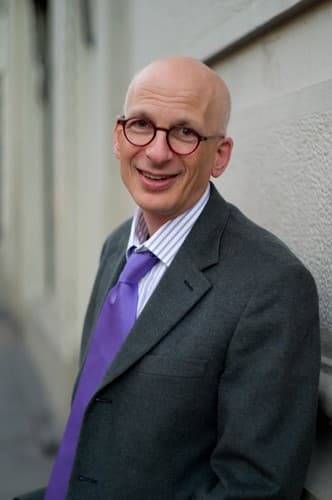
About the author