BookBrief
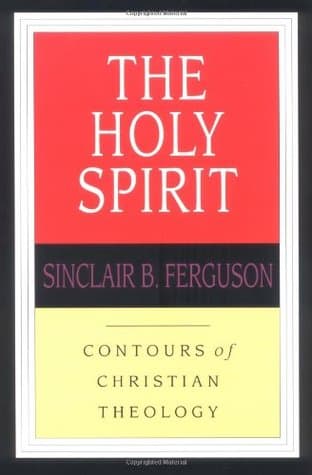
The Holy Spirit cover
Archivist's Choice

The Holy Spirit

Sinclair B. Ferguson (1996)

Genre

Reference / Spirituality

Reading Time

360 min

Key Themes

See below

Track Your Reading

Sign in to track this book

Sinclair Ferguson clearly explains the Holy Spirit's work from creation to redemption, combining scripture, historical theology, and modern thought to offer a clear view of the third person of the Trinity.

Core Idea

Sinclair Ferguson examines the person and work of the Holy Spirit, arguing for a robust, Trinitarian understanding integrated into Christian theology and experience. He stresses that the Spirit is not just an impersonal force or an extra, but a distinct divine person, equal with the Father and the Son. The Spirit's main mission is Christ-centered: to glorify Christ and apply His saving work to believers. The book explores the Spirit's role in creation, regeneration, sanctification, assurance, inspiring Scripture, church life, and God's redemptive plan. It shows His essential and constant role in all Christian faith and life. Ferguson argues that understanding the Holy Spirit correctly prevents both too much focus on human effort and a detached, abstract Christianity. Instead, it encourages a Spirit-led life rooted in God's grace. He urges readers to look past simple charismatic or cessationist debates and appreciate the Spirit's complete work as shown in Scripture, which enriches their worship, discipleship, and community.
Reading time
360 min
Difficulty
Medium
✓ Read this if...
You want a deep, theologically rich, and systematically organized exploration of the Holy Spirit's person and work from a Reformed perspective. You are looking for a comprehensive biblical understanding of the Spirit's role in salvation, sanctification, and the church.
✗ Skip this if...
You are seeking a light, devotional read or a book focused solely on contemporary charismatic experiences without a strong theological grounding. You prefer a less academic or dense approach to theological topics.

Core idea

The central argument and framework that powers the entire book.

Sinclair Ferguson examines the person and work of the Holy Spirit, arguing for a robust, Trinitarian understanding integrated into Christian theology and experience. He stresses that the Spirit is not just an impersonal force or an extra, but a distinct divine person, equal with the Father and the Son. The Spirit's main mission is Christ-centered: to glorify Christ and apply His saving work to believers. The book explores the Spirit's role in creation, regeneration, sanctification, assurance, inspiring Scripture, church life, and God's redemptive plan. It shows His essential and constant role in all Christian faith and life.

Ferguson argues that understanding the Holy Spirit correctly prevents both too much focus on human effort and a detached, abstract Christianity. Instead, it encourages a Spirit-led life rooted in God's grace. He urges readers to look past simple charismatic or cessationist debates and appreciate the Spirit's complete work as shown in Scripture, which enriches their worship, discipleship, and community.

At a glance

Reading time

360 min

Difficulty

Medium

Read this if...

You want a deep, theologically rich, and systematically organized exploration of the Holy Spirit's person and work from a Reformed perspective. You are looking for a comprehensive biblical understanding of the Spirit's role in salvation, sanctification, and the church.

Skip this if...

You are seeking a light, devotional read or a book focused solely on contemporary charismatic experiences without a strong theological grounding. You prefer a less academic or dense approach to theological topics.

Key Takeaways

1

The Spirit's Cosmic Dance

The Holy Spirit is not merely a New Testament phenomenon but an active agent in creation and the Old Testament.

Quote

The Spirit is not an add-on to the Godhead, but a co-equal and co-eternal Person, present and active in all of God's works from creation to consummation.

Many Christians often limit the Holy Spirit's activity, mainly connecting Him with Pentecost and the New Testament church. Ferguson disproves this narrow view, showing that the Spirit's presence and power appear throughout the entire biblical narrative. From hovering over the waters in Genesis 1 to inspiring prophets and empowering judges, the Spirit is consistently shown as the divine executor of God's will. This historical grounding elevates the Spirit's role from a specialized New Testament function to an essential, ever-present Pe...

Supporting evidence

Ferguson meticulously traces the Spirit's activity from Genesis 1:2, where the 'Spirit of God was hovering over the waters,' through various Old Testament accounts, such as the anointing of kings and prophets (e.g., Saul, David, Elijah, Elisha) and the empowerment of artisans for the Tabernacle (Bezalel and Oholiab). He highlights the consistent Hebrew term 'ruach' to denote this divine breath and power across millennia.

Apply this

When reading the Old Testament, actively look for the 'Spirit of God' or 'Spirit of the Lord' at work, recognizing His pre-incarnate activity in shaping history and preparing for Christ. This will deepen your understanding of God's consistent character and the Spirit's eternal involvement in His plans.


ruachcreationold-testamenttrinity
2

The Spirit's Trinitarian Identity

The Holy Spirit is a distinct, co-equal Person within the Godhead, not merely an impersonal force or emanation.

Quote

The Spirit is not merely the energy of God, nor an influence, but a Person who thinks, wills, speaks, loves, and grieves.

A common misunderstanding, even among believers, is to see the Holy Spirit as an impersonal power or a divine 'it' rather than a 'He.' Ferguson strongly refutes this, emphasizing the Spirit's full personality and equality with the Father and the Son. He systematically presents biblical evidence that attributes personal characteristics to the Spirit: He teaches, guides, comforts, intercedes, grieves, and makes decisions. This strong affirmation of the Spirit's personhood is crucial for proper worship and relationship. If the Spirit wer...

Supporting evidence

Ferguson cites passages like John 14-16, where Jesus refers to the Spirit as 'another Helper' (paraclete), and attributes personal actions: 'He will teach you all things' (John 14:26), 'He will guide you into all truth' (John 16:13), and 'He will glorify Me' (John 16:14). He also points to Romans 8:26-27, where the Spirit 'intercedes for us' with groanings, indicating a distinct will and purpose.

Apply this

Address the Holy Spirit in prayer as a distinct Person, rather than an abstract force. Engage with Him in conversation, seeking His guidance and comfort, and acknowledging His presence as you would with any beloved friend or mentor.

personhoodtrinitygodheadparaclete
3

The Spirit's Christocentric Mission

The Holy Spirit's primary work is to reveal, glorify, and apply the saving work of Jesus Christ.

Quote

The Spirit's mission is not to draw attention to Himself, but to shine the spotlight on Christ.

In an era where some spiritual movements emphasize the Spirit's gifts in isolation, Ferguson offers a vital correction: the Holy Spirit's work is inherently Christ-centered. From Jesus' conception to His resurrection, the Spirit is the divine agent who brings about and applies Christ's redemptive work. He convicts the world of sin to point them to Christ, regenerates hearts to unite them with Christ, and sanctifies believers to conform them to Christ's image. The Spirit never speaks of Himself but always points to Jesus. This Christ-c...

Supporting evidence

Ferguson frequently quotes John 16:14: 'He will glorify Me, for He will take what is Mine and declare it to you.' He also highlights the Spirit's role in Christ's incarnation (Luke 1:35), anointing for ministry (Luke 4:18), and resurrection (Romans 8:11). The Spirit's gifts are always for the building up of the body of Christ (1 Corinthians 12).

Apply this

When seeking the Holy Spirit's power or gifts, always ask how they will glorify Christ and build up His church. Evaluate any spiritual experience by whether it draws you closer to Jesus and His teachings, rather than simply providing a personal thrill or sensation.

christocentricglorification-of-christredemptionregeneration
4

Regeneration: The Spirit's Sovereign Act

Spiritual birth is solely the work of the Holy Spirit, apart from human merit or decision.

Quote

You cannot make yourself born again. Regeneration is a divine act, not a human achievement.

One of the Holy Spirit's most foundational works is regeneration, the act of giving new spiritual life to a dead soul. Ferguson emphasizes that this is a sovereign, monergistic work of God, meaning it is entirely God's doing, not a cooperative effort with human will. Before regeneration, humanity is spiritually dead and unable to choose God. The Spirit, like the wind (John 3:8), blows where He wills, quickening hearts, enlightening minds, and enabling faith. This doctrine highlights God's absolute grace and humbles humanity, removing ...

Supporting evidence

Ferguson draws heavily on John 3, particularly Jesus' conversation with Nicodemus about being 'born again' or 'born of the Spirit' (John 3:5-8). He also references Ephesians 2:1-5, which describes humanity as 'dead in trespasses and sins' until God 'made us alive together with Christ,' and Ezekiel 36:26-27, where God promises to 'remove the heart of stone' and 'give you a heart of flesh.'

Apply this

Cultivate a deep sense of humility and gratitude for your salvation, recognizing it as an undeserved gift from the Spirit. When evangelizing, pray fervently for the Spirit to regenerate hearts, understanding that human persuasion alone is insufficient for true conversion.

regenerationmonergismnew-birthsovereigntygrace
5

Sanctification: A Lifelong Partnership

The Holy Spirit progressively transforms believers into Christ's likeness through an ongoing, cooperative work.

Quote

Sanctification is not a sprint, but a marathon, powered by the Spirit's indwelling presence and our responsive obedience.

While regeneration is a single, instantaneous event, sanctification is the lifelong process of becoming more like Christ. Ferguson explains this journey as a partnership between the Spirit and the believer. The Spirit indwells, empowers, convicts, and guides, but believers are called to actively 'work out their salvation' (Philippians 2:12-13). This involves putting off sin, pursuing holiness, and growing in the fruit of the Spirit. It is a process marked by both divine enablement and human responsibility. Understanding this prevents ...

Supporting evidence

Ferguson highlights Philippians 2:12-13, 'work out your own salvation with fear and trembling, for it is God who works in you, both to will and to work for his good pleasure.' He also refers to Galatians 5:16, 'walk by the Spirit, and you will not gratify the desires of the flesh,' and the 'fruit of the Spirit' (Galatians 5:22-23) as the Spirit's produce in a yielded life.

Apply this

Actively engage in spiritual disciplines (prayer, Bible study, fellowship) and consciously choose obedience, knowing that the Spirit empowers your efforts. When you struggle with sin, confess it and lean on the Spirit's power for victory, rather than relying on willpower alone.

sanctificationholinessfruit-of-the-spiritsynergyspiritual-disciplines
6

The Spirit's Role in Assurance

The Holy Spirit provides inner witness and conviction, assuring believers of their adoption and salvation.

Quote

The Spirit does not merely tell us we are God's children; He causes us to cry out, 'Abba, Father!'

For many believers, the question of assurance of salvation can cause anxiety. Ferguson presents the Holy Spirit as the divine guarantor of our adoption into God's family. The Spirit's work is not only to regenerate and sanctify but also to provide an internal witness that we are indeed God's children. This witness is not based on fleeting emotions or perfect performance, but on the Spirit's deep conviction within our hearts, leading us to cry out to God as 'Abba, Father.' This assurance brings deep peace, joy, and confidence, freeing ...

Supporting evidence

Ferguson focuses on Romans 8:15-16, 'For you did not receive the spirit of slavery to fall back into fear, but you have received the Spirit of adoption as sons, by whom we cry, 'Abba! Father!' The Spirit himself bears witness with our spirit that we are children of God.' He also mentions Galatians 4:6, which echoes this sentiment.

Apply this

When doubts about your salvation arise, turn to prayer and ask the Spirit to reaffirm His witness within your heart. Reflect on the work of Christ and the changes the Spirit has wrought in your life as evidence of His indwelling presence.

assuranceadoptionabba-fatherinner-witnesspeace
7

The Spirit and the Word

The Holy Spirit illuminates Scripture, making it living and active in the believer's heart.

Quote

Without the Spirit, the Bible is a dead letter; with Him, it becomes the living voice of God.

Ferguson stresses the strong link between the Holy Spirit and the written Word of God. While the Bible is objectively true and inspired by the Spirit, its transformative power is unleashed only when the Spirit illuminates its truths to the individual heart. Without the Spirit's work, the Bible can remain a mere historical or literary text, its spiritual meaning hidden. The Spirit opens our eyes to understand, applies its principles to our lives, and convicts us by its truth. This dynamic interaction means that Bible study is not just ...

Supporting evidence

Ferguson references 1 Corinthians 2:14, 'The natural person does not accept the things of the Spirit of God, for they are folly to him, and he is not able to understand them because they are spiritually discerned.' He also points to passages where Jesus explains the Scriptures to His disciples (Luke 24:45), signifying the Spirit's role in opening understanding.

Apply this

Before reading the Bible, always pray for the Holy Spirit to open your eyes and heart to understand and apply its truths. Don't rely solely on intellectual effort; seek spiritual illumination.

illuminationscriptureinspirationword-of-godspiritual-discernment
8

The Spirit's Gifts for the Church

Spiritual gifts are diverse, sovereignly distributed by the Spirit for the common good and building up of the body of Christ.

Quote

The Spirit empowers every believer with gifts, not for personal display, but for the mutual edification of the church.

The Holy Spirit generously gives spiritual gifts to every believer, but these gifts are not for personal gain or selfish use. Ferguson emphasizes that they are given by the Spirit 'as He wills' (1 Corinthians 12:11) for the 'common good' and the 'building up of the church.' He details the diversity of these gifts, from prophecy and teaching to service and administration, showing how each contributes to the body of Christ's health and growth. This perspective counters both apathy towards spiritual gifts and an overemphasis on certain '...

Supporting evidence

Ferguson extensively references 1 Corinthians 12-14 and Romans 12:3-8, which list various spiritual gifts and emphasize their diversity and purpose within the body of Christ. He highlights the metaphor of the church as a body with many members, each with a unique function.

Apply this

Pray to discern your spiritual gifts and actively seek opportunities to use them to serve your local church and community. Resist comparing your gifts to others, and instead, celebrate the diversity of gifts within the body of Christ.

spiritual-giftscharismatabody-of-christedificationdiversity
9

The Spirit and Christian Unity

The Holy Spirit is the bond of peace and unity within the diverse body of Christ.

Quote

The Spirit does not merely create individual Christians; He creates a unified people, bound together by His presence.

In a fractured world and often divided church, Ferguson reminds us that the Holy Spirit is the ultimate source of Christian unity. He not only regenerates individuals but also baptizes them into one body, breaking down barriers of race, social status, and denominational differences. The Spirit encourages humility, love, and mutual forbearance, enabling believers to maintain the 'unity of the Spirit in the bond of peace.' This unity is not uniformity but a harmonious diversity, where different gifts and perspectives come together under...

Supporting evidence

Ferguson emphasizes Ephesians 4:3, 'eager to maintain the unity of the Spirit in the bond of peace,' and 1 Corinthians 12:13, 'For in one Spirit we were all baptized into one body—Jews or Greeks, slaves or free—and all were made to drink of one Spirit.' He also touches on the fruit of the Spirit, particularly love, joy, and peace, as catalysts for unity.

Apply this

Actively seek opportunities to build bridges with believers from different backgrounds and denominations. Prioritize unity in essential doctrines while extending grace and charity in non-essentials. Pray for the Spirit to heal divisions within the church.

unity-of-the-spiritchurch-unitybody-of-christpeacereconciliation
10

The Spirit as Eschatological Guarantee

The Holy Spirit is the 'down payment' and 'seal' of our future inheritance and glorification.

Quote

The Spirit is God's personal guarantee that what He has begun in us, He will surely complete.

Ferguson concludes by emphasizing the Holy Spirit's role as our guarantee for the future. The Spirit's indwelling presence is not just for our present comfort and power but serves as a 'down payment' or 'seal' of our future inheritance, resurrection, and glorification. He is the firstfruits of the new creation, giving us a foretaste of the glory to come. This understanding provides deep hope and perseverance in the face of present suffering and challenges. It assures us that God, who has given us His Spirit, will not abandon His work ...

Supporting evidence

Ferguson highlights Ephesians 1:13-14, 'In Him you also, when you heard the word of truth, the gospel of your salvation, and believed in Him, were sealed with the promised Holy Spirit, who is the guarantee of our inheritance until we acquire possession of it.' He also refers to 2 Corinthians 1:22 and 5:5, which use similar imagery of the Spirit as a 'guarantee' or 'deposit.'

Apply this

When facing trials or uncertainties about the future, remember that the Holy Spirit within you is God's personal promise of your ultimate salvation and glorification. Lean into this hope, allowing it to fuel your endurance and joy.

eschatologyguaranteesealinheritanceglorificationhope

Critical analysis

Notable Quotes

The Holy Spirit is not merely an influence or a power; he is a person, the third person of the Trinity, co-equal with the Father and the Son.

Emphasizing the personhood of the Holy Spirit against common misconceptions.

To neglect the Spirit is to neglect the means by which Christ is made real and effective in our lives.

Highlighting the Spirit's essential role in applying Christ's work to believers.

Our deepest need is not for more programs, more resources, or more methods, but for more of the Holy Spirit.

Challenging the church to prioritize spiritual empowerment over human efforts.

The Spirit's primary work is to glorify Christ, not himself.

Explaining the Spirit's self-effacing nature and focus on Christ.

He is the Spirit of truth, leading us into all truth, not merely giving us information but transforming us by it.

Describing the Spirit's role in guiding believers into understanding and living out truth.

Regeneration is the Spirit's sovereign act of making us alive to God, enabling us to respond to the gospel.

Defining regeneration as a work of the Spirit, prior to human faith.

The fruit of the Spirit is not a list of separate virtues to be picked and chosen, but a single cluster, an organic unity, reflecting the character of Christ.

Explaining the interconnectedness and holistic nature of the fruit of the Spirit.

Without the Spirit, we cannot truly pray, for he intercedes for us with groanings too deep for words.

Illustrating the Spirit's indispensable role in genuine prayer.

The Spirit illuminates the Word of God, making it living and active in our hearts and minds.

Describing how the Spirit enables believers to understand and apply scripture.

He is the down payment, the guarantee of our future inheritance, sealing us for the day of redemption.

Highlighting the Spirit as the assurance and pledge of future glory.

The Spirit convicts us of sin, righteousness, and judgment, not to condemn but to lead us to repentance and faith.

Explaining the Spirit's work in bringing conviction for salvation and ongoing sanctification.

The filling of the Spirit is not a one-time event but a continuous need and command for the believer's life.

Clarifying that being filled with the Spirit is an ongoing experience, not just an initial one.

He empowers us for witness and service, giving us the gifts necessary for the building up of the body of Christ.

Discussing the Spirit's role in equipping believers for ministry and evangelism.

Quiz

Test Your Knowledge

Ready to see how well you understood this book? Take our interactive quiz with 10 questions.

10
Questions
~5
Minutes
?
Best Score

Key Questions (FAQ)

Ferguson's book primarily focuses on the scriptural narrative of the Holy Spirit's work in creation and redemption. It aims to provide a comprehensive understanding of the Spirit's person and work, rooted deeply in biblical theology.

About the author