BookBrief
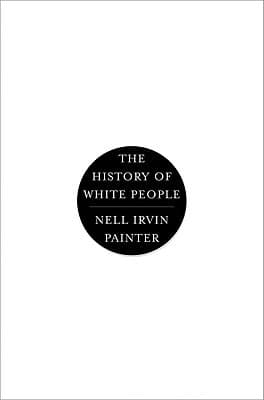
The History of White People cover
Archivist's Choice

The History of White People

Nell Irvin Painter (2010)

Genre

Politics / History

Reading Time

10-15 hours (based on 512 pages)

Key Themes

See below

Track Your Reading

Sign in to track this book

Nell Irvin Painter unearths the constructed and changing idea of 'whiteness,' showing its surprising origins and shifting limits throughout Western history and American identity.

Core Idea

Nell Irvin Painter's "The History of White People" argues that 'whiteness' is not biological but a created and changing socio-political identity, mainly shaped by intellectual, scientific, and artistic trends in Europe and America. The book traces how various groups were included in or excluded from the 'white' category over centuries. It shows the arbitrary and often self-serving nature of its definition, which always helped consolidate power and privilege for specific European and American populations.
Reading time
10-15 hours (based on 512 pages)
Difficulty
Hard
✓ Read this if...
You are interested in understanding the historical, intellectual, and cultural construction of 'whiteness' as a social category, rather than a biological reality, and its profound impact on Western society.
✗ Skip this if...
You are looking for a simple, chronological narrative of European history, or if you prefer a book that does not challenge conventional understandings of race and identity.

Core idea

The central argument and framework that powers the entire book.

Nell Irvin Painter's "The History of White People" argues that 'whiteness' is not biological but a created and changing socio-political identity, mainly shaped by intellectual, scientific, and artistic trends in Europe and America. The book traces how various groups were included in or excluded from the 'white' category over centuries. It shows the arbitrary and often self-serving nature of its definition, which always helped consolidate power and privilege for specific European and American populations.

At a glance

Reading time

10-15 hours (based on 512 pages)

Difficulty

Hard

Read this if...

You are interested in understanding the historical, intellectual, and cultural construction of 'whiteness' as a social category, rather than a biological reality, and its profound impact on Western society.

Skip this if...

You are looking for a simple, chronological narrative of European history, or if you prefer a book that does not challenge conventional understandings of race and identity.

Key Takeaways

1

Whiteness: A Fabricated Construct

Race is a social invention, not a biological reality, historically manipulated for power.

Quote

Race is not a biological fact but a social construct, an idea that changes over time and place, and serves various purposes.

Painter dismantles the idea of 'whiteness' as a fixed category. She shows that the concept of a unified 'white race' is a relatively modern invention, coming from specific historical, political, and economic contexts rather than any objective biological fact. Early European societies saw differences based on geography, religion, or social status, but not an overall 'white' identity. The consolidation of 'whiteness' was often a deliberate act, especially in colonialism, slavery, and nation-building, to create hierarchies and justify po...

Supporting evidence

Painter traces the shift from a world where 'Christians' or 'Englishmen' were distinct to the 17th-century American colonies, where the need for a unified labor force (contrasting with enslaved Africans) and a dominant social class led to the gradual codification of 'white' as a legal and social category, often encompassing disparate European groups.

Apply this

Challenge the implicit assumptions of race as a natural category. When encountering discussions about race, ask: 'Who benefits from this definition of race?' and 'How might this definition have changed over time?' This critical lens helps uncover underlying power structures.


social-constructionracial-formationpower-dynamics
2

The Shifting Boundaries of Whiteness

The definition of 'white' has expanded and contracted, absorbing and excluding groups based on political utility.

Quote

Who was 'white' was not a fixed category but a fluid one, expanding to include previously excluded groups when it served the interests of the dominant power structure.

One of Painter's most convincing arguments is that 'whiteness' changes. She shows how groups first seen as 'non-white' or 'less white'—like Irish, Italian, and Jewish immigrants—were eventually included in the white racial category in America. This assimilation was not natural but strategic, often driven by the need for a larger unified front against perceived threats (e.g., Black Americans, indigenous populations) or to expand the labor pool and consumer base. Conversely, other groups might be pushed out of whiteness. This fluidity s...

Supporting evidence

Painter details how 19th-century Irish immigrants, often caricatured as ape-like and lazy, were eventually integrated into whiteness, particularly as they served as a buffer class and a source of labor and political allegiance, especially against the backdrop of post-Civil War racial tensions.

Apply this

Analyze current debates about immigration and national identity through the lens of historical racial assimilation. Consider which groups are currently being 'othered' and how their perceived racial status might change over time based on societal needs or political shifts.

racial-assimilationethnic-identityimmigration-history
3

Aestheticized Whiteness: Beauty and Power

From ancient Greece to modern America, whiteness has been linked to ideals of beauty, intelligence, and civilization.

Quote

The aestheticization of whiteness... made it the embodiment of beauty, power, and intelligence, a standard against which all others were judged.

Painter reveals how 'whiteness' became deeply linked with ideals of beauty, intelligence, and moral superiority. Tracing this back to classical antiquity, she shows how European thinkers, especially during the Enlightenment, selectively interpreted ancient Greek and Roman art and philosophy to build a narrative where 'white' features (e.g., light skin, specific facial structures) were seen as the height of human perfection. This aestheticization was not just about looks; it served to make racial hierarchies seem natural, implying that...

Supporting evidence

Painter discusses how 18th-century German art historian Johann Joachim Winckelmann's influential writings on classical Greek sculpture, which he deemed the epitome of beauty, inadvertently laid groundwork for associating 'white' features with ideal human form, despite the sculptures originally being painted.

Apply this

Critically examine media, art, and advertising for subtle (or overt) biases in representation. Notice how 'neutral' or 'universal' beauty standards often align with features historically associated with whiteness. Challenge these assumptions by seeking out and promoting diverse representations of beauty and intelligence.

beauty-standardsenlightenmentcultural-hegemony
4

The Anglo-Saxon Myth

Early American identity was narrowly defined by Anglo-Saxon heritage, excluding many Europeans.

Quote

For many early American intellectuals, being truly 'American' meant being Anglo-Saxon, a lineage that excluded vast swaths of European immigrants.

Painter highlights how the initial understanding of American identity was narrow, focusing on an idealized 'Anglo-Saxon' heritage. Influential figures like Ralph Waldo Emerson and Thomas Jefferson supported this specific lineage, linking it with democracy, liberty, and intellectual ability. This exclusive view meant that even other European groups—such as the Irish, Italians, and Eastern Europeans—were at first considered 'not quite white' or 'not truly American.' This idea solidified the power of the dominant Protestant, Anglo-Saxon ...

Supporting evidence

Painter quotes Ralph Waldo Emerson's admiration for the 'English race' and its supposed role in founding American institutions, contrasting it with his skepticism towards other European immigrant groups.

Apply this

When studying historical documents or narratives about American identity, question who is implicitly or explicitly included and excluded. Recognize that the 'American' ideal has always been contested and often narrowly defined, with significant consequences for those outside the privileged group.

american-identitynativismethnic-exclusion
5

Science's Role in Racial Invention

Scientific theories, often pseudoscientific, were used to legitimize and naturalize racial hierarchies.

Quote

Science, or what passed for it, frequently served to rationalize existing social hierarchies by giving 'objective' backing to racial distinctions that were in fact social constructs.

A troubling theme in Painter's work is the involvement of 'science' in creating and strengthening racial categories. From phrenology and craniometry to eugenics, various pseudoscientific theories emerged, claiming to measure and classify human races based on physical traits. These theories, often flawed and biased, were then used to 'prove' the inherent superiority of 'white' people and the inferiority of others. This was not merely academic; these 'scientific' justifications had serious real-world consequences, supporting racist poli...

Supporting evidence

Painter discusses how 19th-century 'scientists' like Samuel George Morton measured skull capacities to 'prove' that Caucasians had larger brains and thus superior intelligence, despite later refutations exposing his biased methodology.

Apply this

Maintain a healthy skepticism towards any 'scientific' claims that purport to prove inherent racial differences in intelligence, behavior, or capability. Always examine the historical, social, and political context in which such 'science' emerged, and question its methodologies and potential biases.

pseudoscienceeugenicsscientific-racism
6

The Forgotten Whiteness of Europe

Before 'white' became a global category, Europeans themselves were highly stratified and 'racialized'.

Quote

Before the invention of 'white people,' there were only Europeans, highly diverse and often mutually hostile, with their own internal hierarchies of status and perceived worth.

Painter reminds us that the idea of a unified 'white' race is relatively recent, even in Europe. For centuries, Europeans themselves were highly fragmented, identifying by nationality, religion, region, or social class. 'Race' as we understand it today was not the main way they saw themselves or each other. Instead, distinctions between 'civilized' and 'barbarian' often applied within Europe, with Southern and Eastern Europeans frequently being 'othered' by their Western counterparts. This historical context is important because it sh...

Supporting evidence

Painter details the historical disparagement of Irish and Southern Italian people within Europe, often depicted with racialized caricatures similar to those used against non-European peoples, highlighting their initial exclusion from a broad 'white' category.

Apply this

Resist the temptation to view European history as a monolithic 'white' experience. Recognize the deep internal divisions and 'racializations' that existed, which helps to understand how the concept of 'whiteness' was later constructed and exported.

european-identityintra-european-conflictcolonialism
7

Whiteness as a Property

Being 'white' conferred tangible advantages, functioning as a form of social and economic capital.

Quote

Whiteness was more than skin color; it was a form of property, conferring legal, social, and economic advantages that were denied to others.

Building on Cheryl Harris's work, Painter argues that 'whiteness' acted as a form of property, giving its holders access to resources, opportunities, and protections denied to non-white individuals. This 'property' appeared in many ways: access to land, voting rights, freedom from chattel slavery, preferential treatment in legal systems, and social acceptance. Even when poor, 'white' individuals had the social capital of their racial classification, which often provided a basic level of dignity and opportunity unavailable to people of...

Supporting evidence

Painter highlights the legal distinctions in colonial America, where even poor white indentured servants had different legal standing and eventual prospects for freedom and land ownership compared to enslaved Africans, whose status was permanent and inheritable.

Apply this

Recognize the ongoing material benefits that accrue to 'white' individuals in contemporary society, even in the absence of overt discrimination. Consider how 'whiteness' can still operate as an unearned advantage in areas like housing, employment, and interactions with institutions like the police or judiciary.

white-privilegesystemic-racismeconomic-inequality
8

The American Paradox: Liberty for Whites

The ideals of American liberty and democracy were often exclusively applied to white citizens.

Quote

The grand ideals of American liberty and equality were, for much of history, explicitly or implicitly reserved for white men, creating a profound paradox at the nation's core.

Painter exposes a deep contradiction in American history: a nation founded on liberty and equality that simultaneously legalized slavery and denied basic rights to indigenous peoples and, for centuries, to non-white populations. The 'We the People' of the Constitution was, in practice, 'We the White People.' This contradiction shaped the nation's laws, social structures, and cultural stories. The fight for universal rights has thus been, in large part, a fight to expand the definition of who counts as 'people' deserving of these promi...

Supporting evidence

Painter details how figures like Thomas Jefferson, who wrote eloquently about liberty, simultaneously owned enslaved people and expressed views on racial hierarchy that justified their subjugation, illustrating the stark disconnect between rhetoric and reality.

Apply this

Critically analyze historical narratives of American exceptionalism and democracy. Question whose liberty and equality were prioritized and whose were denied. Advocate for a more inclusive understanding of American history that acknowledges these foundational contradictions.

american-revolutionracial-democracyfounding-fathers
9

Beyond Biology: The Intellectual's Burden

Intellectuals and academics have historically been central to defining and perpetuating racial categories.

Quote

The 'history of white people' is largely a history of ideas, and those ideas were often generated and disseminated by intellectuals, scholars, and writers.

Painter places importance on the role of intellectuals—philosophers, historians, scientists, and writers—in shaping and legitimizing the concept of 'whiteness.' These figures were not just observers but active participants in creating the narratives, classifications, and hierarchies that defined race. From classical scholars interpreting ancient texts to Enlightenment thinkers creating racial taxonomies, and later American intellectuals defining national identity, their ideas had lasting consequences. This highlights the power of inte...

Supporting evidence

Painter extensively cites the writings of influential figures like Carl Linnaeus (creator of racial classifications), Johann Blumenbach (who coined 'Caucasian'), and American intellectuals like Emerson, demonstrating their direct contributions to defining and elevating 'whiteness.'

Apply this

Be critical of the sources and intellectual lineages behind contemporary discussions of race. Understand that academic and intellectual work is not always neutral but can be deeply embedded in power structures. Support and amplify diverse intellectual voices and perspectives that challenge established racial narratives.

intellectual-historydiscourse-analysisacademic-responsibility
10

The Ongoing Relevance of Whiteness

Understanding the history of whiteness is crucial for dismantling contemporary racial inequality.

Quote

The history of white people is not merely an academic exercise; it is essential for understanding the enduring legacies of race and power in our present moment.

Painter's historical journey is a call to action. By tracing the invention and evolution of 'whiteness,' she provides a framework for understanding current racial dynamics. The legacies of aestheticized whiteness, its function as property, and its shifting boundaries continue to shape social policies, cultural norms, and individual experiences. To ignore this history is to remain blind to the structural advantages and disadvantages that persist. Only by recognizing 'whiteness' as a constructed and historical category can we begin to d...

Supporting evidence

The entire book serves as evidence, culminating in the argument that the historical narrative presented directly informs current issues of racial identity, privilege, and systemic racism.

Apply this

Engage in ongoing self-education about the history of race and power. Participate in discussions and initiatives aimed at racial justice, applying a critical historical lens to current events and policy debates. Advocate for curricula that accurately reflect this complex history.

racial-justicehistorical-consciousnessequity

Critical analysis

Notable Quotes

Whiteness is not a given. It is a social construct, an invention of human beings.

Introducing the central thesis of the book, challenging essentialist views of race.

The idea of a single 'white race' is a relatively recent invention, forged in specific historical circumstances.

Discussing the historical contingency of 'whiteness' as a unified concept.

In the American context, 'white' was often defined by what it was not: not black, not Indian, not Asian.

Explaining the exclusionary nature of white identity formation in the U.S.

The Irish, the Italians, the Jews—they all had to fight for their place in the category of 'white.'

Highlighting the struggles of various European immigrant groups to be accepted as white.

Beauty standards, often associated with classical Greek ideals, played a significant role in defining and reinforcing whiteness.

Examining the aesthetic dimensions of racial categorization and their historical roots.

The invention of 'whiteness' was deeply intertwined with the development of scientific racism.

Connecting the intellectual history of race to the rise of pseudo-scientific justifications for hierarchy.

Whiteness, once established, became a default, an unmarked category against which other races were measured.

Describing the invisible privilege and normative status of whiteness.

The concept of 'white trash' reveals the internal class divisions and anxieties within the broader category of whiteness.

Exploring the complexities and internal hierarchies within white identity.

Enlightenment thinkers, while advocating for universal rights, often simultaneously constructed racial hierarchies.

Critiquing the paradoxical role of the Enlightenment in both promoting equality and codifying race.

The history of white people is not a monolithic story but a complex tapestry of migrations, conflicts, and evolving self-definitions.

Emphasizing the diversity and internal contradictions within the history of white identity.

Whiteness is a moving target, its boundaries shifting and redefined across time and place.

Illustrating the fluid and dynamic nature of racial categories.

The very act of writing a history of white people is an attempt to make visible what has often been invisible.

Reflecting on the author's own methodology and the significance of her project.

Understanding the history of whiteness is crucial for understanding the history of race itself.

Underlining the foundational importance of this topic for broader racial studies.

The invention of 'white' was not a natural occurrence but a political act, with profound political consequences.

Highlighting the power dynamics and political motivations behind racial categorization.

Quiz

Test Your Knowledge

Ready to see how well you understood this book? Take our interactive quiz with 10 questions.

10
Questions
~5
Minutes
?
Best Score

Key Questions (FAQ)

Nell Irvin Painter argues that 'whiteness' is not a fixed biological category but a social construct invented and redefined over centuries for political, economic, and scientific purposes. The book traces how the concept of a white race evolved and was used to establish power and identity.

About the author