BookBrief
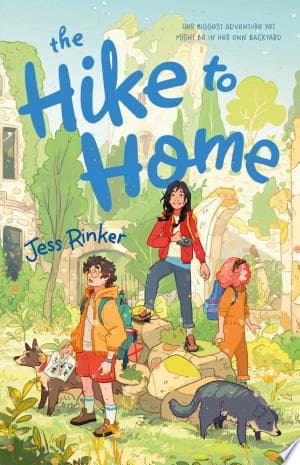
The Hike to Home cover
Archivist's Choice

The Hike to Home

Jess Rinker (2022)

Genre

General

Reading Time

180 min

Key Themes

See below

Track Your Reading

Sign in to track this book

A nomadic girl, grounded in suburban New Jersey, embarks on a quest with new friends to find a legendary ruined castle, hoping to lure her adventurer mom home and redefine what 'home' truly means.

Core Idea

Jess Rinker's "The Hike to Home" explores belonging, arguing that 'home' is less a fixed place and more a state of mind achieved through shared experience and self-discovery. The book says that true belonging comes not from finding a pre-existing place, but from forming connections and understanding oneself in nature and local legends. It asserts that embracing challenges and new perspectives on an adventurous journey is the best way to redefine one's sense of home and oneself. The central idea is that the act of seeking, especially through challenging adventures with others, is the reward itself. This process transforms external landscapes into internal ones and creates a sense of rootedness beyond traditional definitions of home. The book shows that shared challenges, when met with an open mind, clarify new perspectives and strengthen the bonds that make up a genuine sense of belonging.
Reading time
180 min
Difficulty
Medium
✓ Read this if...
You're interested in how adventure, shared challenges, and local folklore can redefine your understanding of 'home' and belonging, or if you appreciate narratives about self-discovery through nature.
✗ Skip this if...
You prefer highly academic analyses of belonging or are looking for a purely practical guide to finding a physical home.

Core idea

The central argument and framework that powers the entire book.

Jess Rinker's "The Hike to Home" explores belonging, arguing that 'home' is less a fixed place and more a state of mind achieved through shared experience and self-discovery. The book says that true belonging comes not from finding a pre-existing place, but from forming connections and understanding oneself in nature and local legends. It asserts that embracing challenges and new perspectives on an adventurous journey is the best way to redefine one's sense of home and oneself.

The central idea is that the act of seeking, especially through challenging adventures with others, is the reward itself. This process transforms external landscapes into internal ones and creates a sense of rootedness beyond traditional definitions of home. The book shows that shared challenges, when met with an open mind, clarify new perspectives and strengthen the bonds that make up a genuine sense of belonging.

At a glance

Reading time

180 min

Difficulty

Medium

Read this if...

You're interested in how adventure, shared challenges, and local folklore can redefine your understanding of 'home' and belonging, or if you appreciate narratives about self-discovery through nature.

Skip this if...

You prefer highly academic analyses of belonging or are looking for a purely practical guide to finding a physical home.

Key Takeaways

1

The Quest for Belonging

Adventure as a search for connection and a sense of 'home.'

Quote

Hiking to this castle would be like a quest. . . such an amazing quest that Mom might even come home, and they could adventure together the way they used to.

Lin Moser's reason for the hike is not just about discovery; it comes from a longing for her past, especially the adventurous life she shared with her mother. The 'castle' is more than a ruin; it represents a chance to restore a lost connection and a cherished way of life. This shows how children, when facing big changes or loss, often create elaborate plans or quests to return things to a familiar state. The adventure becomes a way to cope, a big project to fill a void, rather than just an exploration. Her desire for her mom to retur...

Supporting evidence

Lin's internal monologue about her mom's naturalist assignment and her hope that finding the castle will bring her mom back to adventure with them.

Apply this

When feeling disconnected or missing a past routine, identify the core emotional need (e.g., connection, stability, adventure) rather than just the surface-level desire. Explore new ways to fulfill that need in the present, perhaps by creating new traditions or adventures with current companions, rather than solely trying to recreate the past.


sense-of-belongingemotional-questchildhood-grief
2

Redefining 'Home'

Home is a feeling, not a fixed location or structure.

Quote

Determined to create her own adventure, Lin sets off on her biggest one yet—braving the wilderness with her two new friends, seeking the castle, and maybe discovering a new idea of home along the way.

For Lin, 'home' has always been flexible, tied to the RV and her parents. Being 'stuck' in Newbridge, New Jersey, initially feels like the opposite of home. However, the story subtly guides her (and the reader) toward a broader definition. Through shared experiences, challenges, and new friendships during the hike, Lin starts to understand that home is not just a physical place or a return to the past. It is about the people you connect with, the support you find, and the sense of belonging created through shared adventures and unders...

Supporting evidence

The evolution of Lin's feelings about Newbridge and her new friends as the adventure progresses, contrasting her initial resignation with her later experiences.

Apply this

Actively seek out new connections and experiences in unfamiliar environments. Be open to the idea that comfort and belonging can emerge from unexpected places and people, challenging preconceived notions of what 'home' should look or feel like.

place-attachmentbelongingredefining-home
3

The Power of Shared Adversity

Challenges forge stronger bonds than comfort ever could.

Quote

braving the wilderness with her two new friends, seeking the castle...

Lin starts her summer isolated and resigned to boredom. Her first interactions with her new friends are tentative. However, braving the wilderness together is what breaks down initial awkwardness and builds real friendship. Facing unknown paths, potential dangers, and the physical effort of the hike together creates a unique shared history. They rely on each other, see each other's weaknesses and strengths, and celebrate small victories. This shared struggle builds trust and camaraderie more effectively than any casual interaction cou...

Supporting evidence

The description of the wilderness as something to be 'braved' implies challenges that will necessitate teamwork and mutual support among the three friends.

Apply this

Intentionally seek out shared challenges or projects with new acquaintances. Volunteer for a difficult task with a team, or embark on a small 'adventure' that requires collaboration. Observe how these experiences deepen connections faster than passive interaction.

team-buildingfriendship-developmentresilience
4

The Allure of Local Legends

Myths and stories offer a gateway to discovery and personal growth.

Quote

But then she finds out about a local legend: an ancient ruined castle in the woods that no one has been able to find. Hiking to this castle would be like a quest...

The 'ancient ruined castle' is not just a destination; it is a narrative tool that sparks Lin's imagination and gives purpose to her 'boring' summer. Local legends, even if fantastical, often contain some truth or reflect history, and they offer a framework for adventure. For Lin, the legend transforms a mundane landscape into a place of mystery and potential. It shows how stories, passed down through generations, can inspire people to explore, question, and engage with their environment. The legend provides the 'why' for her 'what,' ...

Supporting evidence

The legend of the unfound castle is the direct catalyst for Lin's decision to embark on the hike, transforming her perspective on her summer.

Apply this

Research local legends or historical mysteries in your own area. Use these stories as inspiration to explore local parks, historical sites, or even just your neighborhood with a new sense of curiosity and purpose. Let the narratives guide your observations.

folkloremythologyexploration
5

Adventure as Self-Discovery

Stepping out of comfort zones reveals inner strengths and capabilities.

Quote

Determined to create her own adventure, Lin sets off on her biggest one yet...

Lin's decision to go on the castle quest is an act of self-reliance, a refusal to accept a 'boring summer.' This self-initiated adventure forces her to face not only external challenges of the wilderness but also internal ones: fear, doubt, and the need to adapt. Away from the familiar structure of her RV life and her parents, she must rely on her own wit, resilience, and problem-solving skills, alongside her new friends. This process of navigating the unknown builds self-confidence and a deeper understanding of her own abilities. The...

Supporting evidence

Lin's active choice to 'create her own adventure' and the implied difficulties of 'braving the wilderness' suggest a journey of personal challenge and growth.

Apply this

Identify a personal challenge that pushes you slightly outside your comfort zone – it could be learning a new skill, navigating an unfamiliar city, or starting a new project. Document your feelings before, during, and after to recognize the growth that occurs through the process.

personal-growthself-reliancecourage
6

The Unpredictability of Nature

The wilderness teaches adaptability and respect for the unknown.

Quote

braving the wilderness...

The wilderness setting is an active part of Lin's journey, not just a backdrop. It presents unpredictable obstacles, requiring the children to think quickly, solve problems, and adapt their plans. This might involve navigating difficult terrain, unexpected weather, or encountering wildlife. Unlike the controlled environment of an RV or a house, nature is wild and indifferent, forcing Lin and her friends to learn flexibility and resourcefulness. This aspect of the story is important for middle-grade readers, teaching them to appreciate...

Supporting evidence

The phrase 'braving the wilderness' inherently suggests encountering and overcoming natural challenges and unpredictable elements.

Apply this

Spend time in a natural environment (a local park, forest, or even a backyard garden) and observe its unpredictability. Practice simple outdoor skills like identifying directions without a compass, or preparing for unexpected weather. Develop a greater awareness and respect for natural systems.

environmental-awarenessadaptabilityresilience
7

The Value of New Perspectives

New friends bring different skills and viewpoints to solve problems.

Quote

braving the wilderness with her two new friends...

Lin's initial isolation in Newbridge ends with new friendships. These friends are essential to her quest's success. Each friend likely brings unique skills, knowledge, or personality traits that Lin lacks. One might be a good navigator, another a keen observer of nature, or perhaps a natural leader or peacemaker. This dynamic highlights the strength of collaboration and the importance of diverse perspectives in overcoming challenges. It teaches that even strong individuals benefit greatly from the collective wisdom and support of a te...

Supporting evidence

The inclusion of 'two new friends' as essential companions in 'braving the wilderness' implies their active participation and contribution to the adventure.

Apply this

When facing a complex problem, actively seek input from people with different backgrounds, expertise, or viewpoints. Recognize that your own perspective, while valuable, is enhanced by the insights of others. Practice active listening to understand these varied contributions.

collaborationteamworkdiversity-of-thought
8

The Journey as the Reward

The true discoveries are often made along the way, not just at the destination.

Quote

seeking the castle, and maybe discovering a new idea of home along the way.

While the ruined castle is the goal, Lin's most significant changes happen during the 'hike to home.' The phrase 'discovering a new idea of home along the way' clearly points to this theme. The challenges faced, the friendships made, and the personal growth experienced during the journey are more impactful than just reaching a physical landmark. This takeaway emphasizes that life's most profound lessons and fulfilling moments often come from the process of striving and experiencing, rather than solely from achieving a specific outcome...

Supporting evidence

The specific phrasing 'and maybe discovering a new idea of home along the way' strongly suggests that the process of the hike is as significant, if not more so, than the destination.

Apply this

When embarking on a new project or goal, consciously shift focus from solely the end result to appreciating and learning from each step of the process. Keep a journal to note small victories, unexpected discoveries, and personal growth that occurs during the journey, not just at its conclusion.

process-over-productexperiential-learningmindfulness

Critical analysis

Notable Quotes

The mountains don't care if you're sad, or happy, or lost. They just are. And sometimes, that's exactly what you need.

Main character reflecting on the impartiality of nature during her journey.

Home wasn't a place you found; it was a feeling you carried, a light you nurtured inside.

A realization the protagonist has about the true meaning of home.

Every step was a choice. Every choice was a step towards who I was becoming, not just where I was going.

Character contemplating the personal growth experienced during the hike.

You can't outrun your past, but you can choose how you carry it.

An internal thought about dealing with past trauma or mistakes.

The quiet of the forest was a different kind of loud, a symphony of rustling leaves and distant bird calls that filled the empty spaces inside me.

Describing the immersive experience of being in nature.

Sometimes the bravest thing you can do is keep going, even when every fiber of your being screams to stop.

Reflecting on perseverance during a particularly difficult part of the hike.

A map tells you where to go, but your heart tells you why.

Contrasting practical guidance with emotional motivation.

The most beautiful views often come after the hardest climbs.

A metaphor for life's challenges and rewards.

It's okay to be broken, as long as you're willing to put the pieces back together, even if they don't fit exactly the same way.

An internal monologue about healing and self-acceptance.

The trail doesn't judge. It just waits.

Reflecting on the non-judgmental nature of the path.

Loneliness wasn't the absence of people; it was the absence of connection.

A profound thought about the nature of loneliness experienced on the hike.

Sometimes you have to get lost to find what you're truly looking for.

A common theme explored as the character navigates both physical and emotional landscapes.

The wind carried my worries away, one gust at a time, leaving behind only the crisp scent of pine and the quiet hum of the world.

A moment of relief and connection with nature.

Every sunrise was a promise, a fresh start painted across the sky.

Observing a sunrise and feeling a sense of renewed hope.

Quiz

Test Your Knowledge

Ready to see how well you understood this book? Take our interactive quiz with 10 questions.

10
Questions
~5
Minutes
?
Best Score

Key Questions (FAQ)

'The Hike to Home' is a middle-grade adventure story about Lin Moser, a girl used to life on the road, who finds herself stuck in suburban New Jersey. She embarks on a quest with two new friends to find a legendary ruined castle in the woods, hoping it will bring her absent mother home and redefine her understanding of home itself.

About the author