BookBrief
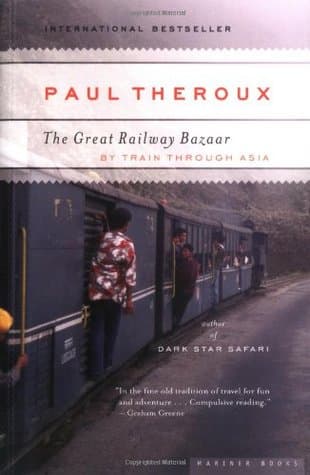
The Great Railway Bazaar cover
Archivist's Choice

The Great Railway Bazaar

Paul Theroux (1975)

Genre

Lifestyle / Biography / Memoir

Reading Time

9-12 hours

Key Themes

See below

Track Your Reading

Sign in to track this book

Paul Theroux travels across continents on legendary 1970s trains, from the Orient Express to the Trans-Siberian, encountering diverse cultures and characters with his wit and sharp observations.

Core Idea

Paul Theroux's 'The Great Railway Bazaar' tells of an overland train journey from London to Tokyo and back. It argues that trains, with their contained societies and changing views, are a unique way to observe people. The book shows how long travel removes pretenses, forcing self-reflection and highlighting both differences and commonalities among people across various places through often uncomfortable, humorous, and personal encounters.
Reading time
9-12 hours
Difficulty
Medium
✓ Read this if...
You appreciate immersive travel narratives, enjoy sharp wit and cynical observations, or are fascinated by train travel as a metaphor for life's journey.
✗ Skip this if...
You prefer practical travel guides, seek an optimistic or purely inspirational tone, or dislike extensive descriptions of discomfort and cultural misunderstandings.

Core idea

The central argument and framework that powers the entire book.

Paul Theroux's 'The Great Railway Bazaar' tells of an overland train journey from London to Tokyo and back. It argues that trains, with their contained societies and changing views, are a unique way to observe people. The book shows how long travel removes pretenses, forcing self-reflection and highlighting both differences and commonalities among people across various places through often uncomfortable, humorous, and personal encounters.

At a glance

Reading time

9-12 hours

Difficulty

Medium

Read this if...

You appreciate immersive travel narratives, enjoy sharp wit and cynical observations, or are fascinated by train travel as a metaphor for life's journey.

Skip this if...

You prefer practical travel guides, seek an optimistic or purely inspirational tone, or dislike extensive descriptions of discomfort and cultural misunderstandings.

Key Takeaways

1

The Train as a Microcosm

Rail travel reveals the true character of a place and its people.

Quote

Any journey is a journey into yourself.

Theroux shows that a train car is more than transport; it is a self-contained world reflecting the larger society it crosses. Unlike air travel, which flies over the land, or car travel, which isolates, the train brings passengers close together and slowly reveals the changing scenery. This ongoing, often uncomfortable, interaction removes pretenses, showing the raw humanity, cultural details, and economic realities of each area. The small space highlights character traits, national quirks, and the shared human experience, making each...

Supporting evidence

His encounters with a diverse cast of characters – from the boisterous American tourists on the Orient Express to the stoic Soviet officials on the Trans-Siberian, and the curious locals sharing food on a crowded Indian train – illustrate this dynamic. The cramped compartments and shared dining cars become stages for profound observations.

Apply this

When traveling, seek out modes of transport that encourage interaction and slow observation, rather than simply speed. Engage with fellow passengers; their stories often reveal more about a destination than guidebooks ever could.
travel-philosophycultural-immersionobservational-travel
2

The Allure of the Unknown

Embracing discomfort and uncertainty enriches the travel experience.

Quote

I have always liked to travel and to see things that I don't know.

Theroux's journey highlights the rewards of exploring the unfamiliar and accepting the discomforts of long, non-luxury travel. He addresses the dirt, delays, language barriers, and often bad food. He uses these challenges as part of an authentic experience. This acceptance of the unknown, rather than being a problem, helps create real understanding and memorable stories. It argues against clean, pre-packaged tourism, suggesting a more raw and unpredictable way to see the world.

Supporting evidence

His experiences on the crowded, often unhygienic trains of India and Southeast Asia, or the monotonous stretches of the Trans-Siberian, are filled with moments of frustration that ultimately lead to deeper insights or unexpected human connections. His willingness to eat questionable food or sleep in uncomfortable berths are prime examples.

Apply this

When planning a trip, intentionally incorporate elements of spontaneity and local, less-polished experiences. Be open to discomfort; it often leads to the most memorable and authentic moments.

authentic-traveladventure-travelembracing-uncertainty
3

Travel as Self-Reflection

Long journeys provide a unique canvas for introspection and personal growth.

Quote

The only way to write about travel is to be traveling.

Beyond the external places and cultures, Theroux's story also includes an internal journey. The train's rhythm, forced solitude among crowds, and constant environmental changes create a good state for thinking. He uses these times to reflect on his past, goals, and place in the world. For Theroux, travel is not just about seeing new places; it helps him discover himself, process experiences, confirm opinions, and change his view of life. The book suggests that true travel involves looking inward as much as looking outward.

Supporting evidence

Theroux frequently intersperses descriptions of scenery and interactions with personal musings, literary references, and recollections of his life before the journey. His observations often pivot from external events to internal reflections on human nature, solitude, and the passage of time.

Apply this

Incorporate journaling or dedicated reflection time into your travels. Allow the changes in scenery and routine to prompt deeper thought about your own life and values.

introspectionpersonal-growthsolitude-in-travel
4

The Illusion of Progress

Despite modern advancements, many places retain their timeless character.

Quote

The past is always present in India.

Theroux's journey, taken in the mid-1970s, shows a world about to change significantly, yet many places he visits still hold onto old traditions and conditions. He points out the sharp differences between quick modernization in some areas (like Japan) and lasting poverty, colonial effects, and traditional ways of life in others (like India or parts of Southeast Asia). This observation questions the simple idea of linear global progress, suggesting that cultural identity and historical slowness often override modern influences, creatin...

Supporting evidence

His descriptions of the crowded, slow, and often primitive railway systems in India, where passengers ride on roofs and share compartments with livestock, stand in stark contrast to the efficiency and technological advancement he later encounters in Japan with its bullet trains.

Apply this

When encountering a new place, look beyond the superficial signs of modernity. Seek out historical sites, traditional markets, and local customs to understand the deeper, enduring character of the culture.

cultural-preservationhistorical-contextglobal-disparities
5

The Art of Observation

Keen attention to detail is paramount for understanding the world.

Quote

Travel is just observation, and observation is just writing.

Theroux's writing is known for his very sharp eye for detail. He notices everything: specific train smells, subtle passenger gestures, the exact feel of a landscape, speech nuances, and often absurd official procedures. This careful observation is not just descriptive; it is analytical, allowing him to find deeper meaning in everyday situations and reveal truths about human behavior and cultural dynamics. It shows that truly understanding a place or person requires a deliberate and ongoing effort to see beyond the surface.

Supporting evidence

His vivid descriptions of the different types of passengers on the Orient Express, the specific attire of officials in various countries, or the detailed accounts of meals served on the trains are all products of this acute observational skill. For instance, his description of the 'smell of Asia' – a mix of woodsmoke, spices, and humanity – is a prime example.

Apply this

Practice mindful observation in your daily life and travels. Pay attention to sensory details, body language, and subtle cues. Keep a notebook to jot down these observations; it enhances memory and understanding.

mindfulnesssensory-awarenessdescriptive-writing
6

The Enduring Power of Railways

Despite challenges, trains remain a vital and romantic mode of global connection.

Quote

The railway journey is a journey into the past, into the future, into the self.

Even with early air travel, Theroux's book supports the lasting importance and unique appeal of train journeys. He shows how trains, from the fancy Orient Express to the practical Trans-Siberian, are vital for trade, communication, and cultural exchange across continents. Despite often old infrastructure, delays, and discomforts, they connect people and places in a way no other transport can. The train offers a unique view, a slow unfolding of the world, creating a sense of history and connection that air travel cannot match.

Supporting evidence

His entire journey is predicated on the vast network of railways crisscrossing Europe and Asia. The book itself is a testament to the fact that, even in the 1970s, it was still possible to traverse continents almost entirely by rail, connecting disparate cultures and economies.

Apply this

When possible, choose train travel over other modes for long distances. Appreciate the unique perspective it offers, the chance to witness the landscape change, and the historical legacy it represents.

rail-travel-romanceglobal-connectivitysustainable-travel
7

Humor as a Coping Mechanism

Wry wit and an appreciation for the absurd make difficult journeys bearable.

Quote

Humor is a good way of getting through things.

Theroux's dry humor and sharp sense of the absurd are not just entertaining; they help him deal with the many frustrations and odd encounters in long, challenging travel. From official incompetence to confusing cultural misunderstandings and uncomfortable living conditions, his ability to find dark comedy in situations helps him keep perspective and avoid despair. This approach suggests that a lighthearted, even cynical, view can turn potential problems into memorable stories and deepen one's appreciation for human comedy.

Supporting evidence

His encounters with overly officious border guards, the peculiar habits of fellow passengers, or the often-unappetizing meals are frequently recounted with a dry, self-deprecating wit. For example, his descriptions of the 'curious' Soviet cuisine or the endless official forms are infused with humor.

Apply this

When faced with travel mishaps or frustrating situations, try to find the humor in them. A shift in perspective can turn a negative experience into a funny story and reduce stress.

travel-humorcoping-strategiesabsurdist-perspective
8

The Ephemeral Nature of Connection

Travel fosters intense but often fleeting human relationships.

Quote

On a train, you are a part of a temporary society.

A repeated idea in Theroux's journey is the forming of strong, but temporary, relationships with other travelers. The small space and shared experience on the train often lead to quick bonds, deep talks, and shared meals with strangers from different backgrounds. However, these connections almost always end at the next stop or journey's end, leaving a bittersweet feeling of friendship and loss. This shows the unique social aspect of long-distance train travel, where strangers become temporary friends before returning to anonymity, lea...

Supporting evidence

He details numerous encounters: the American couple 'Mr. and Mrs. Mapple' on the Orient Express, the British expatriates in India, the various backpackers and officials on the Trans-Siberian. These interactions are often profound but rarely extend beyond the shared journey.

Apply this

Be open to conversing and connecting with strangers during your travels. Embrace the intensity of these temporary bonds, understanding that their fleeting nature is part of their unique charm.

human-connectiontravel-relationshipstransient-encounters
9

The Burden of Expectation

Romanticized notions of travel often clash with the grittier reality.

Quote

Travel is glamorous only in retrospect.

Theroux often contrasts the romantic image of exotic places and famous trains (like the Orient Express) with the often rough, uncomfortable, and sometimes disappointing reality. He shows the gap between the idealized view from books and popular culture and the everyday, bureaucratic, or even dirty conditions found on the ground. This constant tension reminds us that travel, while life-changing, is rarely a smooth, perfect experience. It encourages readers to drop their preconceived ideas and accept the world as it is, not as they wish...

Supporting evidence

His descriptions of the 'real' Orient Express, which he finds less opulent and more filled with ordinary tourists than its legendary status implies, or the often-bleak landscapes and uninspired food on the Trans-Siberian, directly confront idealized expectations.

Apply this

Approach travel with an open mind and minimal expectations. Research realistically, but be prepared for the unexpected and the less-than-glamorous aspects. Embrace the reality, not just the dream.

travel-expectationsromanticism-vs-realitydisillusionment

Critical analysis

Notable Quotes

I sought the exotic, the unfamiliar, the strange, the bizarre, the bizarre, the bizarre.

Theroux's motivation for his journey across Asia and Europe by train.

Anything is possible on a train: a love affair, the writing of a poem, a murder.

Reflecting on the unique atmosphere and potential of train travel.

The further you go, the more you see, the less you understand.

A realization Theroux has about the complexities of the world as he travels.

Travel is a state of mind. It has nothing to do with distance, or the exotic, or the unfamiliar.

A deeper reflection on the true nature of travel, beyond just physical movement.

A train is a world in miniature, and in its small confines, all human life is played out.

Observing the microcosm of society that exists within a long-distance train journey.

I had a great desire to go to places where I was not known and could not be reached.

Explaining a desire for anonymity and escape during his travels.

The greatest pleasure of travel is to watch all the world go by, to observe, to be a spectator.

Highlighting the joy of passive observation while traveling by train.

Most travel is a matter of being somewhere, not going somewhere.

Distinguishing between simply arriving at a destination and truly experiencing the journey.

I had learned that it was not the destination that mattered, but the journey.

A classic realization about the value of the travel itself.

There are no foreign lands. It is only the traveler who is foreign.

A profound statement on perspective and one's own role in experiencing other cultures.

The railway, after all, is a great invention; it makes a country smaller and the world larger.

Reflecting on the transformative power of trains in connecting places and expanding horizons.

To travel is to discover that everyone is wrong about other countries.

Challenging preconceived notions and stereotypes through direct experience.

Reading a map is a good way to fall in love with a place you've never been.

Describing the imaginative allure of maps and the anticipation of travel.

The most important thing for a traveler is not a passport, but a sense of humor.

Emphasizing the importance of a positive attitude and resilience when facing travel challenges.

Quiz

Test Your Knowledge

Ready to see how well you understood this book? Take our interactive quiz with 10 questions.

10
Questions
~5
Minutes
?
Best Score

Key Questions (FAQ)

'The Great Railway Bazaar' chronicles Paul Theroux's extensive railway journey through Asia and parts of Europe, starting and ending in London. It's a vivid memoir detailing his experiences, observations, and encounters while traveling on legendary trains like the Orient Express and the Trans-Siberian Express.

About the author