“All of Indian history is a series of footnotes to the Ramayana, or the Mahabharata, or both.”
— Introductory statement about the cyclical nature of Indian history and mythology.

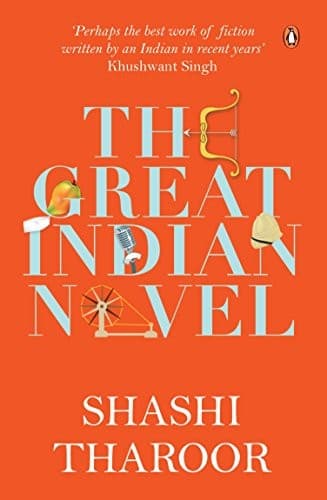
Shashi Tharoor (2014)
Genre
Politics / Historical Fiction
Reading Time
15-20 hours
Key Themes
See below
Sign in to track this book
Tharoor's reimagining of the Mahabharata as a satire on 20th-century Indian politics shows ancient heroes dealing with modern issues of democracy, corruption, and partition.
The novel begins with Ved Vyasa, an aging, cynical, and disappointed politician, dictating his work, 'The Great Indian Novel,' to his young secretary, Ganapathi. Vyasa, representing a post-independence Indian statesman, directly compares modern Indian history to the Mahabharata. He introduces himself as both 'author' and 'character,' a recurring idea, and sets the stage for a story that reinterprets India's struggle for independence and its early decades through the epic. He laments current affairs and selective history, promising a more 'truthful' (though satirized) account.
Vyasa begins his retelling with the British Raj, personified by the blind King Dhritarashtra. Dhritarashtra represents the colonial power that, despite its presence, was 'blind' to India's true spirit. He then introduces Pandu, an enlightened but frail figure, symbolizing the early, moderate Indian National Congress. Dhritarashtra's hundred sons, the Kauravas, are the various factions and leaders within the Congress, especially during the independence movement. Duryodhana, the eldest Kaurava, becomes the ambitious and destructive leader, representing authoritarian and self-serving elements in post-independence politics. The story subtly critiques the internal power struggles that led to India's partition, hinting at future conflicts.
The five Pandava brothers represent key figures in India's independence movement. Yudhishtir becomes Dharma-Dharma-Raja, clearly standing in for Jawaharlal Nehru, known for his idealism and moral approach. Bhima is Sardar Patel, the strongman and unifier. Arjuna is Maulana Azad, the intellectual and strategist. Nakula and Sahadeva are less prominent but represent other important figures or aspects of the freedom struggle. Their mentor, Gangaji (Mahatma Gandhi), is the guiding force, preaching non-violence and civil disobedience. The narrative details their early struggles against the British (Dhritarashtra) and initial conflicts within the Congress (Kauravas), preparing for the epic fight for independence.
The dice game from the Mahabharata is reinterpreted as the political maneuvers that led to India's partition. Dhritarashtra, symbolizing the British, and Duryodhana, representing extreme elements demanding partition, arrange events that cause the tragic division. Draupadi, representing Mother India, is 'disrobed' by the partition, suffering great pain, loss, and communal violence. The Pandavas, despite moral objections, cannot prevent the disaster. This shows the powerlessness of even well-meaning leaders against overwhelming political forces and the destructive results of divisive politics. This section strongly critiques the human cost of political convenience.
After independence, the story shows two 'kingdoms': Indraprastha, representing India's idealistic, secular, and democratic vision championed by Dharma-Dharma-Raja (Nehru), and Hastinapura, symbolizing more traditional, power-hungry, and sometimes corrupt elements within the political system, led by Duryodhana. This period details independent India's early years, the writing of its constitution, and the challenges of nation-building. The rivalry between the Pandavas and Kauravas continues, reflecting ideological and personal clashes between Nehru and other political figures, as well as early struggles for control and influence in the new republic.
Draupadi, now symbolizing Indian democracy, suffers humiliation from Duryodhana (Indira Gandhi's authoritarian tendencies) and her supporters. This directly refers to the declaration of the Emergency in 1975, when democratic rights were suspended and political opponents jailed. The story portrays the shock and disappointment felt by many, comparing it to Draupadi's public shaming. The Pandavas, representing opposition figures and democratic institutions, are largely powerless. This highlights how fragile democratic norms are when faced with unchecked executive power and the loss of basic freedoms.
The Kurukshetra War, the main battle of the Mahabharata, is reinterpreted as the intense political and ideological struggle that followed the Emergency and continued for decades. It represents the clash between democracy and authoritarianism, secularism and communalism, idealism and pragmatism. The many characters on both sides of the war symbolize various political parties, groups, and ideologies competing for India's future. The war is not just a physical fight but a moral and ethical one, reflecting the deep divisions and challenges the nation faced in defining its identity and future.
Lord Krishna, the divine charioteer and advisor, is reimagined as a shrewd, pragmatic, and often Machiavellian political strategist. Initially, he advises Dharma-Dharma-Raja (Nehru) during nation-building, offering counsel on foreign policy, economic development, and social reforms. Later, Krishna's role evolves to represent behind-the-scenes power brokers, manipulators of public opinion, and architects of political alliances. He embodies the often-unseen forces that shape political outcomes, showing that even in a democracy, power is used through complex strategies and ethical compromises, blurring the lines between right and wrong for the greater good (or self-interest).
The war ends, with the Pandavas winning, but at a huge cost. The victory is mixed, leaving a scarred nation and a generation dealing with the moral and human consequences of the conflict. This reflects India's state after its political upheavals, where even 'victories' come with lasting divisions, corruption, and a sense of lost innocence. The story explores the psychological and societal impact of long political conflict, questioning what triumph truly means when so much has been sacrificed. The legacy of these struggles continues to shape the nation's identity.
As Ved Vyasa finishes dictating to Ganapathi, he reflects on history's repeating nature. He states that 'The Great Indian Novel' is not a finished story but an ongoing epic, with new chapters always being written. Past characters and conflicts continue to appear in current events, showing that basic human motivations—power, greed, dharma, and sacrifice—remain constant. Vyasa's final words comment on India's lasting complexity, its capacity for both greatness and folly, and the continuous struggle to define its destiny, leaving the reader with a sense of the nation's unfinished journey.
The Narrator/Protagonist
From a seemingly objective narrator, Vyasa reveals his own biases and involvement, showcasing the subjectivity of historical interpretation.
The Supporting
Initially naive, Ganapathi gradually gains a deeper, albeit unsettling, understanding of Indian politics through Vyasa's narration.
The Supporting
From an almost divine figure, Gangaji is eventually sidelined and tragically removed from the political stage, symbolizing the loss of moral leadership.
The Protagonist
Starts as an unwavering idealist but faces increasing disillusionment and political challenges, often compromising his ideals for the sake of governance.
The Antagonist
Rises from a position of relative obscurity to absolute power, culminating in authoritarian rule before her eventual downfall.
The Mentioned/Symbolic Antagonist
His rule eventually ends, but his legacy of division and political structures continues to influence the new nation.
The Supporting
Remains a consistent force for unity and practical governance, often clashing with more idealistic approaches.
The Supporting
Serves as a consistent intellectual and moral voice, advocating for secularism and unity amidst divisive forces.
The Supporting
Remains a consistent, powerful, and often unseen force, shaping events through strategic advice and manipulation.
Tharoor's novel constantly shows that history is not linear but cyclical. Past events and characters reappear in new forms. By comparing the Mahabharata with modern Indian history, Vyasa illustrates how human nature, power struggles, and ethical dilemmas stay the same. The partition of India, for example, mirrors the disastrous dice game, and the Emergency parallels Draupadi's disrobing. This theme suggests that while details change, basic patterns of conflict are deeply rooted and always return, making the past key to understanding the present.
“History does not repeat itself, but it often rhymes.”
The novel explores the idea that no single, objective truth exists, especially in historical accounts. Vyasa, as narrator, often reminds the reader of his own biases and interpretations, presenting multiple versions of events. He challenges official histories, showing how stories are shaped by their tellers and their goals. This is clear in his satirical portrayals of revered figures, removing their mythologized images to reveal human flaws and political motives. The book suggests that history is a constructed narrative, always open to reinterpretation and often serving political ends.
“Every nation has its own history, and every history its own truth.”
A main theme is how power, even when first sought for good reasons, eventually corrupts. Characters like Duryodhana (Indira Gandhi) begin with a desire to serve but gradually give in to the appeal of absolute control, leading to authoritarianism and suppressed dissent. Even the well-meaning Dharma-Dharma-Raja (Nehru) makes compromises and faces disappointment as governing demands erode his ideals. The novel shows that pursuing and keeping power often requires moral compromises, leading to a cycle of ambition, betrayal, and violence, as seen in the Kurukshetra War.
“Power is like a drug, Ganapathi. It promises exhilaration, but delivers only addiction.”
Tharoor shows how fragile democratic institutions and high ideals are when faced with political convenience and human ambition. The 'disrobing of Draupadi' (the Emergency) is a stark reminder of how quickly democratic rights can be suspended. The initial idealism of figures like Dharma-Dharma-Raja (Nehru) is constantly tested and often lost to the realities of governance, internal conflicts, and external pressures. The novel questions whether a nation founded on noble principles can truly uphold them when confronted with the raw struggle for power and the inherent flaws of its leaders.
“Democracy, like a delicate plant, needs constant tending, or it withers under the shadow of ambition.”
The novel explores what it means to be Indian, both as a nation and as a collective. By blending ancient mythology with modern history, Tharoor examines the lasting cultural, philosophical, and political elements that define India. The conflicts, alliances, and ethical dilemmas faced by the characters reflect India's struggle to balance its diverse traditions, its colonial past, and its hopes for a democratic, secular future. The book suggests that India's identity is not simple but a complex, evolving story, always shaped by its past and present struggles.
“India is not a country, Ganapathi, it is an idea. And like all ideas, it is constantly being debated, defined, and redefined.”
The entire novel is an extended allegory, mapping Indian history onto the Mahabharata.
The most significant plot device is the pervasive use of allegory. The entire narrative functions as an extended allegorical retelling, where characters, events, and themes from the Mahabharata directly parallel figures and incidents in 20th-century Indian history. For example, the Kauravas represent the Congress Party factions, the Pandavas are specific leaders like Nehru and Patel, and the Kurukshetra War symbolizes major political conflicts. This device allows Tharoor to offer a multi-layered critique of history, highlighting the timelessness of human struggles and drawing profound connections between ancient myths and modern realities, adding depth and satirical bite to his historical analysis.
A story within a story, with Ved Vyasa dictating his 'novel' to Ganapathi.
The novel employs a strong metafictional framing narrative. Ved Vyasa, a character within the story, is also the 'author' dictating 'The Great Indian Novel' to his secretary, Ganapathi. This device allows for constant commentary on the act of storytelling, the construction of history, and the author's own biases. Vyasa frequently breaks the fourth wall, addressing Ganapathi (and by extension, the reader) directly, discussing his narrative choices, and offering philosophical asides. This self-awareness underscores the subjective nature of history and gives the reader insight into the creative and interpretive process behind the allegorical retelling.
Humorous and often biting critique of political figures and events.
Satire and parody are central to the novel's tone and purpose. Tharoor uses humor, wit, and exaggeration to mock and critique political figures, ideologies, and historical events. Characters are given names that are humorous distortions of their real-life counterparts (e.g., Dharma-Dharma-Raja for Nehru, Duryodhana for Indira Gandhi), and their actions are often presented in an ironic or exaggerated light. This device allows the author to challenge conventional narratives, expose hypocrisies, and offer a fresh, often irreverent, perspective on India's past without being overtly polemical. The satire serves to entertain while delivering sharp social and political commentary.
Extensive referencing and reinterpretation of the Mahabharata.
Intertextuality is a fundamental device, as the entire novel is built upon its continuous engagement with the Mahabharata. Tharoor doesn't just reference the epic; he reinterprets its characters, plot points, and philosophical dilemmas within a contemporary Indian context. This constant dialogue between the ancient text and modern history enriches both. Readers familiar with the Mahabharata gain deeper insights into the allegorical connections, while those less familiar are introduced to its timeless themes through a modern lens. The intertextuality highlights the enduring relevance of the epic to understanding Indian culture and politics.
“All of Indian history is a series of footnotes to the Ramayana, or the Mahabharata, or both.”
— Introductory statement about the cyclical nature of Indian history and mythology.
“History, you see, is not a seamless narrative; it is a collection of stories, each told from a different perspective.”
— Vyasa reflecting on the challenge of presenting a singular truth in a historical epic.
“The past is not dead; it is not even past. It is merely unread.”
— A reflection on the enduring relevance of historical events and narratives.
“In India, even the gods are political.”
— A commentary on the pervasive intertwining of religion and politics in Indian society.
“Democracy, in India, is not just a system of government; it is a way of life, a way of arguing, a way of being.”
— A celebration of the vibrant and often chaotic democratic spirit of India.
“The tragedy of India is that it has always been too large for one man's vision.”
— A lament on the difficulty of unifying such a diverse and complex nation.
“To be truly Indian is to be many things at once, to hold contradictions in your heart and to celebrate them.”
— A description of the multifaceted and inclusive nature of Indian identity.
“Power, like a river, always finds its way to the sea, no matter how many dams you build.”
— A metaphor for the irresistible and often corrupting force of political power.
“The greatest lesson of the Mahabharata is that there is no absolute good or evil, only shades of grey.”
— Vyasa's philosophical conclusion about the moral complexities of human actions.
“Every hero is someone else's villain.”
— A concise statement on the subjective nature of heroism and villainy.
“The greatest epic of all is the one that is still being written, by all of us, every day.”
— A meta-commentary on the ongoing narrative of life and history.
“India is not just a country; it is an idea, a set of possibilities, a constant negotiation.”
— An expansive definition of India beyond geographical boundaries.
“The truth is rarely pure and never simple, especially in politics.”
— A cynical but realistic observation about the nature of political discourse.
“We are all prisoners of our own narratives, and the narratives of others.”
— A reflection on how personal and collective stories shape our understanding of the world.
Ready to see how well you understood this book? Take our interactive quiz with 10 questions.
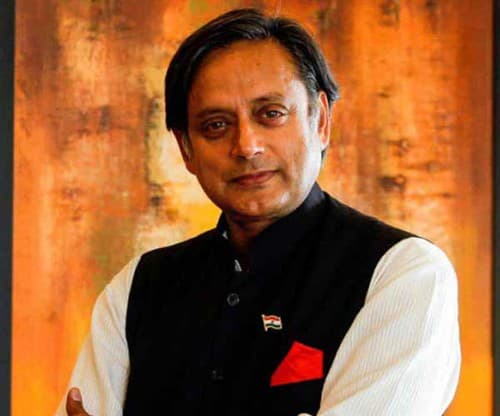
Shashi Tharoor is an Indian former international civil servant, diplomat, bureaucrat and politician, writer and public intellectual who has been serving as Member of Parliament for Thiruvananthapuram, Kerala, since 2009. He is the Chairman of the Standing Committee on Chemicals and Fertilizers. He was formerly Under-Secretary General of the United Nations and unsuccessfully ran for the post of Secretary-General in 2006. Founder-Chairman of All India Professionals Congress, he formerly served as Chairman of the Parliamentary Standing Committee on External Affairs and on Informational Technology.

Brett Casper
5.0
Dirk Uffelmann
4.7

Winston S. Churchill
4.5
Chimamanda Ngozi Adichie
4.5
Will Durant
4.4
Thomas Sowell
4.4
W.E.B. Du Bois
4.3
Alan Moore
4.3