BookBrief
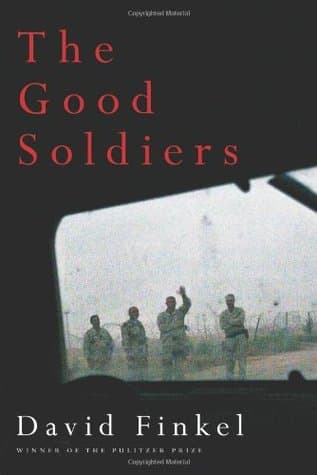
The Good Soldiers cover
Archivist's Choice

The Good Soldiers

David Finkel (2009)

Genre

Politics / Biography / Memoir / History

Reading Time

6-8 hours

Key Themes

See below

Track Your Reading

Sign in to track this book

Through the eyes of an optimistic infantry battalion, *The Good Soldiers* shows the brutal reality of the 2007 Iraq surge, revealing the permanent cost of war on the men who fought it.

Core Idea

David Finkel's "The Good Soldiers" offers an unvarnished, moment-by-moment chronicle of a U.S. infantry battalion's fifteen-month deployment in Baghdad during the 2007 surge. It documents the daily grind of counterinsurgency—the constant threat of IEDs, the moral ambiguities of engaging a civilian population, and the psychological toll of stress and violence. The book's central argument is that modern warfare, even when framed as a mission to bring stability, is a chaotic, often futile endeavor that erodes the humanity of those involved, leaving a mark of trauma and disillusionment, regardless of individual heroism or strategic outcomes.
Reading time
6-8 hours
Difficulty
Medium
✓ Read this if...
You want an intimate, unflinching, ground-level account of the Iraq War's human cost, focusing on the experiences of soldiers rather than high-level strategy or politics. Ideal for those interested in the psychological and moral complexities of combat.
✗ Skip this if...
You prefer a broad historical overview of the Iraq War, a political analysis, or a book with a strong narrative arc and clear resolution. This book is a raw, often bleak, day-by-day immersion.

Core idea

The central argument and framework that powers the entire book.

David Finkel's "The Good Soldiers" offers an unvarnished, moment-by-moment chronicle of a U.S. infantry battalion's fifteen-month deployment in Baghdad during the 2007 surge. It documents the daily grind of counterinsurgency—the constant threat of IEDs, the moral ambiguities of engaging a civilian population, and the psychological toll of stress and violence. The book's central argument is that modern warfare, even when framed as a mission to bring stability, is a chaotic, often futile endeavor that erodes the humanity of those involved, leaving a mark of trauma and disillusionment, regardless of individual heroism or strategic outcomes.

At a glance

Reading time

6-8 hours

Difficulty

Medium

Read this if...

You want an intimate, unflinching, ground-level account of the Iraq War's human cost, focusing on the experiences of soldiers rather than high-level strategy or politics. Ideal for those interested in the psychological and moral complexities of combat.

Skip this if...

You prefer a broad historical overview of the Iraq War, a political analysis, or a book with a strong narrative arc and clear resolution. This book is a raw, often bleak, day-by-day immersion.

Key Takeaways

1

The Illusion of Control

Soldiers on the ground often lack a clear understanding of the larger strategic picture.

Quote

The difference would be them.

Finkel illustrates the disconnect between the grand pronouncements of political leaders and the chaotic reality faced by soldiers. The 2-16 battalion, nicknamed the Rangers, believed their individual efforts and 'can-do' attitude would be the decisive factor in the Surge's success. This belief, while admirable, often masked the limitations of their operational scope and the broader, intractable political and social complexities of Iraq. Their daily battles and sacrifices, though immense, were often just small ripples in a vast, turbul...

Supporting evidence

The soldiers' initial optimism and conviction that they would 'make the difference,' contrasted sharply with the persistent, seemingly endless cycle of violence, IEDs, and sectarian conflict they encountered, despite their best efforts.

Apply this

Leaders in any high-stakes environment should strive for radical transparency about strategic limitations and potential futility, even when it's difficult. Empowering individuals is crucial, but so is managing expectations about the scope of their impact within larger, systemic challenges.


strategic-disconnectoptimism-biaswartime-psychology
2

The Unbearable Weight of Responsibility

Junior officers carry immense burdens, making life-and-death decisions under extreme pressure.

Quote

Every decision was a gamble, with lives as the stakes.

Finkel highlights the psychological toll on junior officers, particularly Captain Kearney. These men lead platoons, constantly making split-second decisions that determine the fate of their soldiers and, sometimes, innocent civilians. The book portrays the agonizing choices between engagement and restraint, the constant threat of IEDs, and the moral ambiguities of counterinsurgency. This relentless pressure, combined with the often-futile nature of their missions, leads to psychological scars, showing that the 'good soldier' is not im...

Supporting evidence

Captain Kearney's constant internal debates and second-guessing after patrols, and the visible deterioration of his mental state as the deployment progresses, burdened by the casualties and difficult choices.

Apply this

Recognize and support mid-level leaders who operate at the critical intersection of strategy and execution. Provide robust psychological support and debriefing mechanisms for those in high-stakes, morally ambiguous roles, as their burden is often invisible but immense.

command-responsibilitymoral-injuryleadership-stress
3

The Mundane Horror of War

War is less about grand battles and more about repetitive, nerve-wracking patrols and constant vigilance.

Quote

It was less about fighting and more about surviving the next foot patrol, the next IED.

Finkel subverts the romanticized notion of war, presenting it as a grinding, monotonous, and terrifying experience. The Rangers' daily reality is not one of heroic charges but of endless patrols through booby-trapped streets, the constant fear of unseen enemies, and the psychological strain of never knowing when or where an IED will strike. This mundane horror, punctuated by moments of extreme violence, is arguably more debilitating than any single large-scale engagement. The book emphasizes that the true brutality of modern warfare l...

Supporting evidence

The detailed descriptions of countless patrols through Baghdad's streets, the soldiers' heightened senses, the paranoia, and the repeated discovery of IEDs or their devastating effects, rather than large-scale direct confrontations.

Apply this

Understand that endurance and resilience in any challenging, long-term endeavor are often tested by repetitive, low-grade stress rather than singular, high-intensity events. Design support systems that address cumulative psychological wear and tear.

psychological-warfareIED-threatendurance-stress
4

The Indelible Mark of Trauma

The psychological wounds of war often prove more devastating and lasting than physical injuries.

Quote

The war came home with them, in their heads and their hearts.

Finkel shows that the 'good soldiers' return home physically intact for the most part, but broken internally. The book tracks the post-deployment struggles of soldiers like Adam Schumann, whose PTSD manifests as severe anxiety, anger, and a desperate struggle to reintegrate into civilian life. This is not just 'stress' but a fundamental rewiring of the brain, a permanent alteration of their perception of safety and normalcy. The true cost of war, Finkel argues, is often paid long after the fighting stops, in the quiet, desperate battl...

Supporting evidence

Adam Schumann's intense nightmares, panic attacks, and strained relationships upon returning home, along with his difficulty explaining his experiences to loved ones who haven't been there.

Apply this

Invest in comprehensive, long-term mental health support for individuals returning from high-stress environments. Recognize that trauma is not a weakness but a natural, often debilitating, response to extreme circumstances, requiring specialized and ongoing care.

PTSDveteran-reintegrationmental-health-support
5

The Paradox of Brotherhood

The intense bonds forged in combat are both a source of strength and a barrier to post-war healing.

Quote

They were closer than brothers, a bond forged in fire and blood.

Finkel highlights the unique camaraderie that develops between soldiers in combat, a bond so strong it often surpasses familial ties. This brotherhood is essential for survival in a warzone, providing mutual support, trust, and a shared understanding of their harrowing experiences. However, this same intensity can become an isolating factor upon return. Those who haven't shared the experience cannot fully comprehend it, leading to a sense of alienation for the veterans. The very thing that sustained them in war becomes a wall between ...

Supporting evidence

The soldiers' reliance on each other for emotional and physical support during patrols, and their subsequent struggles to connect with spouses and friends who cannot relate to their experiences.

Apply this

Facilitate peer support networks for veterans, recognizing that shared experience is a powerful tool for healing. Educate civilian communities on the unique psychological dynamics of military service to bridge the empathy gap.

combat-bondssocial-isolationveteran-community
6

The Unseen Enemy: Bureaucracy

Even within a warzone, bureaucratic inefficiencies and political maneuvering hinder effective operations.

Quote

Paperwork, protocols, and conflicting orders often felt as dangerous as the enemy.

Beyond the direct threats of insurgents and IEDs, Finkel reveals the insidious role of bureaucracy and internal political struggles within the military command structure. Soldiers on the ground often grapple with confusing rules of engagement, shifting objectives, and the frustration of having their tactical successes undermined by strategic missteps or political expediency. This layer of complexity adds another dimension to the soldiers' burden, as they are not just fighting an external enemy but also navigating an often-illogical an...

Supporting evidence

The constant changes in mission objectives, the strict and sometimes counterproductive rules of engagement, and the soldiers' frustrations with receiving orders that seem to contradict their on-the-ground intelligence.

Apply this

In any large organization, critically evaluate how bureaucratic processes impact frontline effectiveness. Streamline communication, empower local decision-making where appropriate, and ensure policies are adaptable to rapidly changing ground realities.

military-bureaucracyrules-of-engagementorganizational-inefficiency
7

The Fragility of 'Success'

The definition of success in war is often fleeting, subjective, and rarely aligns with ground realities.

Quote

Was it really a success? Those are the questions he grapples with.

Finkel forces the reader to confront the uncomfortable question of what 'success' truly means in a protracted conflict like the Iraq War. The 'Surge' was declared a success by politicians, but the book details the immense human cost and the ambiguous, often temporary, nature of any gains made. What looks like success from a policy perspective often feels like an endless, bloody cycle on the ground. The book suggests that measuring success purely by statistics or political declarations ignores the lasting damage inflicted on individual...

Supporting evidence

The narrative's arc, which begins with the hope of the Surge and ends with the soldiers returning home forever changed, with the underlying question of whether their sacrifices truly achieved a lasting peace or stability.

Apply this

When evaluating the success of complex, human-centric initiatives, move beyond simple metrics. Consider the long-term human cost, the sustainability of outcomes, and the perspectives of those directly impacted, rather than just top-down declarations.

war-metricspost-conflict-stabilityhuman-cost-of-war
8

The Journalist's Burden

Reporting from the front lines carries its own profound psychological and ethical challenges.

Quote

David Finkel was with them in Baghdad, and almost every grueling step of the way.

Though the book is about the soldiers, Finkel’s immersive reporting implicitly reveals the unique burden of the embedded journalist. He witnesses firsthand the horrors of war, the suffering of the soldiers, and the moral complexities without the same protective camaraderie or a direct mission beyond observation. This position demands an incredible level of empathy and objectivity, while also exposing the reporter to trauma. Finkel's ability to maintain a 'fly on the wall' perspective while deeply connecting with his subjects hints at ...

Supporting evidence

Finkel's detailed, unvarnished descriptions of chaotic firefights, severe injuries, and the soldiers' raw emotional states, demonstrating his sustained presence and keen observation in extremely dangerous situations.

Apply this

For anyone in a role that requires deep immersion in traumatic environments (e.g., social workers, first responders, journalists), acknowledge and address the potential for vicarious trauma. Implement strategies for emotional processing and maintaining professional boundaries for long-term sustainability.

embedded-journalismvicarious-traumaethical-reporting
9

The Enduring Human Spirit

Despite unimaginable horrors, the capacity for compassion, humor, and resilience persists.

Quote

Even in the darkest moments, there were flashes of humanity, of shared laughter, of quiet strength.

Amidst the relentless violence and despair, Finkel still captures moments of human resilience. The soldiers, despite their fear and exhaustion, show incredible courage, compassion for one another, and even dark humor. These glimpses of humanity are not meant to romanticize war, but rather to highlight the strength of the human spirit in the face of unimaginable adversity. It's a testament to their character that even when their world is crumbling, they find ways to support each other, maintain their dignity, and occasionally even laug...

Supporting evidence

The soldiers' inside jokes, their shared meals, the way they look out for each other during patrols, and their willingness to comfort a grieving comrade, even when they themselves are deeply affected.

Apply this

In any crisis or prolonged challenging situation, actively seek and cultivate opportunities for connection, shared humor, and mutual support. These seemingly small acts of humanity are crucial for maintaining morale and resilience.

resiliencehuman-spiritcoping-mechanisms

Critical analysis

Notable Quotes

The war was not just out there, it was in here.

Reflecting on the psychological toll of combat on soldiers.

They were good soldiers. They were just soldiers.

A poignant observation about the humanity and ordinariness of the men fighting.

In war, there are no good decisions, only less bad ones.

Describing the difficult choices commanders faced in Iraq.

The problem with war is that it's always personal, even when it's not.

Highlighting the individual experiences and feelings within a larger conflict.

He learned that day that courage was not the absence of fear, but the ability to act despite it.

Observing a soldier's bravery in a dangerous situation.

They were fighting an enemy that was everywhere and nowhere, a ghost that could kill you.

Describing the elusive and dangerous nature of the insurgency in Iraq.

The weight of command was not just about giving orders, but about living with the consequences.

Reflecting on the heavy responsibility carried by military leaders.

Home was a place they talked about, dreamed about, but sometimes couldn't quite remember.

Illustrating the disconnect soldiers felt from their lives back home.

The silence after the gunfire was often louder than the gunfire itself.

Describing the chilling aftermath of combat engagements.

They were always ready to go, always ready to fight, always ready to die. It was their job.

Summarizing the constant state of readiness and sacrifice among the soldiers.

He saw the war not as a grand strategy, but as a series of small, brutal moments.

A soldier's perspective on the granular and violent reality of conflict.

The hardest part was not the dying, but the living with what they had seen and done.

Emphasizing the long-term psychological burden of combat.

They were fighting for each other, in a place where no one else understood.

Highlighting the strong bonds and isolation felt by soldiers in combat.

Every day was a gamble, every patrol a roll of the dice.

Describing the constant danger and unpredictability faced by soldiers on deployment.

Quiz

Test Your Knowledge

Ready to see how well you understood this book? Take our interactive quiz with 10 questions.

10
Questions
~5
Minutes
?
Best Score

Key Questions (FAQ)

'The Good Soldiers' is a non-fiction book by David Finkel that chronicles the experiences of the 2-16 Army infantry battalion, nicknamed the Rangers, during the Iraq War's 2007 surge in Baghdad. Finkel, a Pulitzer Prize-winning reporter, embedded with the soldiers, offering an intimate look at their daily lives, the challenges they faced, and the profound impact of the war on them.

About the author

David Finkel

David Finkel is a Pulitzer Prize-winning journalist and author. His book, "The Good Soldiers," earned him widespread acclaim for its immersive and unflinching portrayal of soldiers during the Iraq War. Finkel's work is known for its deep reporting and compelling narrative, often focusing on the human cost of conflict.