BookBrief
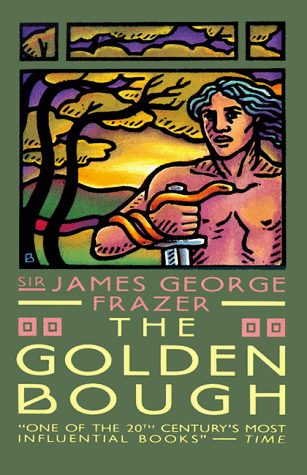
The Golden Bough cover
Archivist's Choice

The Golden Bough

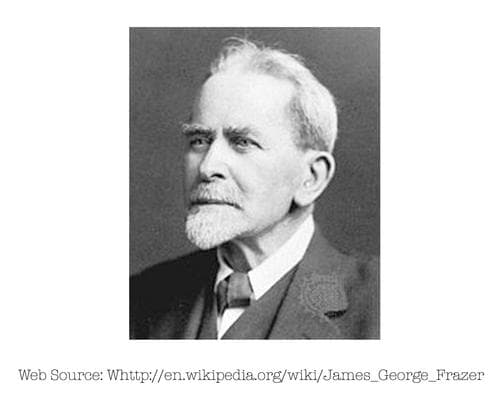
James George Frazer (1890)

Genre

Reference / History / Spirituality / Philosophy

Reading Time

1760 min

Key Themes

See below

Track Your Reading

Sign in to track this book

Frazer explores ancient rites, customs, and magic, showing how human thought evolved from early savagery to civilization.

Core Idea

Frazer's extensive study of myths, rituals, and religious practices across many cultures argues for a universal evolution of human thought, moving from magic to religion and then to science. He suggests that many old beliefs and customs, especially those about fertility, kingship, and sacrifice, come from a basic sympathetic magic. This magic is the belief that like things are connected (homeopathic magic) or that things once in contact remain connected (contagious magic). This magical view supports the idea of a 'sacred king' whose well-being is tied to the land's fertility and his people's prosperity. Kings were often sacrificed or replaced to maintain cosmic balance.
Reading time
1760 min
Difficulty
Hard
✓ Read this if...
You are fascinated by the origins of religious belief, the comparative study of mythology, and the deep historical roots of human cultural practices. Ideal for those interested in anthropology, folklore, and the intellectual history of how societies have understood the world before scientific rationalism.
✗ Skip this if...
You prefer concise, evidence-based arguments over exhaustive compilations of ethnographic data, or if you are looking for modern anthropological perspectives. Frazer's methodology and conclusions are largely outdated by contemporary standards, and the text is extremely dense and repetitive.

Core idea

The central argument and framework that powers the entire book.

Frazer's extensive study of myths, rituals, and religious practices across many cultures argues for a universal evolution of human thought, moving from magic to religion and then to science. He suggests that many old beliefs and customs, especially those about fertility, kingship, and sacrifice, come from a basic sympathetic magic. This magic is the belief that like things are connected (homeopathic magic) or that things once in contact remain connected (contagious magic). This magical view supports the idea of a 'sacred king' whose well-being is tied to the land's fertility and his people's prosperity. Kings were often sacrificed or replaced to maintain cosmic balance.

At a glance

Reading time

1760 min

Difficulty

Hard

Read this if...

You are fascinated by the origins of religious belief, the comparative study of mythology, and the deep historical roots of human cultural practices. Ideal for those interested in anthropology, folklore, and the intellectual history of how societies have understood the world before scientific rationalism.

Skip this if...

You prefer concise, evidence-based arguments over exhaustive compilations of ethnographic data, or if you are looking for modern anthropological perspectives. Frazer's methodology and conclusions are largely outdated by contemporary standards, and the text is extremely dense and repetitive.

Key Takeaways

1

The Evolutionary Arc of Belief

Human thought progresses from magic to religion to science.

Quote

The Golden Bough traces the slow and painful steps by which humanity has toiled upwards from savagery to civilization.

Frazer's most lasting, and perhaps debated, idea proposes a three-stage intellectual evolution for humanity: first, the age of Magic, where humans believe they can directly control nature through spells and rituals; second, the age of Religion, where humans ask powerful deities who control nature; and third, the age of Science, where humans understand nature works by unchanging laws. This progression is not always linear, and elements of each stage often exist together, but it offers a useful way to understand how human thought system...

Supporting evidence

Frazer's extensive comparative analysis of rituals across cultures, from rain-making ceremonies to harvest festivals, consistently shows a belief in the direct efficacy of magical rites preceding appeals to gods, and ultimately, a more empirical understanding of causality.

Apply this

Recognize the lingering influence of magical thinking in modern life (e.g., superstitions, 'lucky' charms) and appreciate the profound intellectual leap represented by scientific inquiry. Understanding this evolution helps contextualize different belief systems without immediately dismissing them as irrational.

magic-religion-scienceintellectual-evolution
2

The Sympathetic Universe

Primitive magic operates on principles of similarity and contagion.

Quote

The principles of magic are two: first, that like produces like, or that an effect resembles its cause; and second, that things which have once been in contact with each other continue to act on each other at a distance after the physical contact has been severed.

Frazer sorts magic into two main types: Homoeopathic (or Imitative) Magic and Contagious Magic. Homoeopathic magic is based on the 'law of similarity,' where an effect is thought to resemble its cause. For example, dolls are used to harm enemies, or red objects are used to cure diseases linked to redness. Contagious magic, on the other hand, is based on the 'law of contact,' stating that things once in contact stay supernaturally connected. This explains why sorcerers seek personal items like hair or nail clippings to influence people...

Supporting evidence

Numerous examples abound: the 'pointing bone' ritual of Australian Aboriginal cultures (homoeopathic), the belief that treating a person's discarded clothing can affect them (contagious), or the practice of lighting bonfires to mimic the sun's warmth and ensure a good harvest (homoeopathic).

Apply this

When encountering seemingly irrational rituals or superstitions, try to deconstruct them into these underlying magical principles. This offers a framework for understanding the 'logic' behind them, even if the premise is incorrect, fostering empathy for historical or different cultural viewpoints.

homoeopathic-magiccontagious-magiclaw-of-similaritylaw-of-contact
3

The Sacrificial King

Many ancient societies practiced the ritual killing of divine rulers.

Quote

The custom of killing the divine king, or his substitute, at the end of a fixed period, or on the appearance of his bodily decay, was widespread throughout the ancient world.

One of Frazer's most striking themes is the 'sacrificial king.' He argues that in many early societies, the king or chief was not just a political leader but often considered divine, representing the fertility and well-being of the land and its people. His health and strength were directly tied to the community's prosperity. If the king showed signs of weakness, age, or illness, he was ritually killed and replaced to ensure the continued life of crops, animals, and the tribe. This made sure that the 'divine power' always stayed in a s...

Supporting evidence

The iconic example is the priest-king of the sacred grove of Nemi, the 'King of the Wood,' who could only hold his office by slaying his predecessor in single combat. Frazer also cites evidence from ancient Africa (e.g., Shilluk kings) and other cultures where rulers were ritually killed after a set term or upon showing signs of infirmity.

Apply this

This concept provides a stark contrast to modern political leadership and reveals the deep, existential connection between early humans and their environment. It helps us understand the origins of sovereignty and the symbolic power invested in leaders, even if the extreme practice of regicide has largely vanished.

divine-kingshipregicidefertility-cultsking-of-the-wood
4

Vegetation Spirits and the Cycle of Life

Ancient rituals personified nature's cycles through dying and rising gods.

Quote

The belief in the death and resurrection of a divine being, whose life is bound up with the life of nature, is one of the most widespread and fundamental elements of primitive religion.

Frazer suggests that many myths and rituals about dying and rising gods (like Osiris, Adonis, Attis, and Persephone) represent the yearly cycle of vegetation. These gods are seen to die with the harvest or winter and are reborn in spring, symbolizing the renewal of life and fertility in nature. The rituals connected with them—mourning, procession, symbolic burial, and joyful resurrection—were believed to help or imitate these natural processes, ensuring good harvests and continued life. This shows a strong link between early human spi...

Supporting evidence

Frazer details the cults of Adonis in Syria, whose annual festivals involved lamentation for his death and rejoicing for his return; the Egyptian myth of Osiris, dismembered and resurrected; and the Phrygian worship of Attis, whose self-mutilation and death were commemorated before his rebirth.

Apply this

Recognize the deep roots of seasonal festivals and the symbolic representation of death and rebirth in various cultural and religious traditions. It allows for a more anthropological understanding of holidays like Easter or harvest festivals, connecting them to ancient agricultural anxieties and hopes.

dying-rising-godsvegetation-cultsfertility-ritualsseasonal-cycles
5

Taboo: The Invisible Chains of Primitive Life

Rules of avoidance and prohibition shaped every aspect of early human existence.

Quote

Taboo is a negative magic, a system of prohibitions designed to avert danger or to preserve sanctity.

Frazer looks closely at 'taboo,' a Polynesian term he uses broadly to describe a system of prohibitions and restrictions found in early societies. Taboos controlled everything from what could be eaten, who could be touched, where one could go, and how sacred objects or people must be treated. They were not just social rules but were believed to carry supernatural penalties for breaking them. Frazer distinguishes between taboos of 'sacredness' (protecting divine figures or objects from harm) and taboos of 'danger' (protecting individua...

Supporting evidence

Examples include taboos surrounding menstruating women, warriors returning from battle, or chiefs and kings whose persons were considered too sacred to touch. In many cultures, certain foods were forbidden, or specific actions (like stepping over a chief's threshold) were strictly prohibited, often with severe consequences.

Apply this

Understanding taboo illuminates the origins of social norms, moral codes, and even hygiene practices. It encourages a deeper look at seemingly arbitrary rules in modern society, recognizing they might have historical roots in protecting individuals or communities from perceived dangers, whether supernatural or practical.

taboo-systemprohibitionssacred-dangerprimitive-law
6

The Scapegoat Mechanism

Communities externalize and purge collective misfortune onto an individual or object.

Quote

The custom of killing a god or a divine animal, or a human being representing a god, in order to avert a calamity or to procure a blessing, is merely a special case of the general practice of getting rid of evil by transferring it to a scapegoat.

Frazer extensively documents the 'scapegoat' event, a ritual where a community symbolically or literally transfers its sins, misfortunes, or evils onto an animal, person, or object, which is then driven away or destroyed. This act aims to cleanse the community and ensure a fresh start, often done during crises or at year-end. The scapegoat carries the collective guilt and suffering, allowing the community to believe it has rid itself of bad luck. This mechanism reveals a strong psychological need for cleansing and the outward expressi...

Supporting evidence

Frazer describes the ancient Jewish ritual of the scapegoat on the Day of Atonement, where a goat was symbolically laden with the sins of the people and driven into the wilderness. He also details similar practices from ancient Greece (the Pharmakos) and various cultures where individuals (often criminals or outsiders) were sacrificed or expelled to cleanse the community.

Apply this

Recognize the 'scapegoat' dynamic in modern political discourse, social blame, and even personal relationships. Understanding this ancient mechanism helps in identifying when groups or individuals are unfairly burdened with collective failures, promoting critical thinking about blame and responsibility.

scapegoat-ritualpurification-ritescollective-guiltatonement
7

The Power of Analogy in Early Thought

Primitive minds often equated superficial resemblances with causal connections.

Quote

The savage identifies the name with the thing, the picture with the original, the shadow with the substance. His thought is steeped in analogy and association.

A repeated idea in Frazer's work is how much early thought relied on analogy and association, often mistaking surface similarities or close timing for deep causes. This is the basis of homoeopathic magic (like produces like) and also explains beliefs about the power of names, images, or reflections. If something looked like rain, it could cause rain; if a picture showed a person, it could affect that person. This way of thinking, while fundamentally wrong from a scientific view, was the best tool early humans had to understand a compl...

Supporting evidence

The belief that harming a person's image (like a wax effigy) will harm the person themselves; the widespread taboo against revealing one's true name for fear of magical manipulation; the fear of mirrors or reflections capturing one's soul. All these stem from an analogical understanding of reality.

Apply this

Be aware of how easily humans, even today, can fall into analogical traps, mistaking correlation for causation or superficial similarities for deep connections. This takeaway encourages a more rigorous, evidence-based approach to understanding the world, while appreciating the historical origins of pattern recognition.

analogical-thinkingcausal-fallaciesname-magicsympathetic-magic
8

Universal Human Patterns, Diverse Expressions

Despite vast cultural differences, core human anxieties and solutions recur globally.

Quote

The comparative method, applied to customs and beliefs, reveals a striking uniformity in the operations of the human mind, even amidst the greatest diversity of outward expression.

Frazer's large comparative study, using countless examples from around the world, suggests that basic human concerns—fertility, death, illness, natural disasters, and the desire for control—lead to very similar patterns of thought and ritual across different cultures and times. While specific deities, symbols, and practices vary greatly, the underlying worries and the magical/religious solutions created to deal with them often echo each other. This points to a shared human psychology and a common way humans first dealt with the myster...

Supporting evidence

The widespread belief in vegetation spirits, the practice of ritual regicide, the use of scapegoats, and the division of magic into homoeopathic and contagious forms are all phenomena Frazer shows to appear independently in numerous unconnected societies worldwide.

Apply this

Cultivate a global perspective and recognize the underlying commonalities that unite humanity, even when faced with seemingly bizarre or alien cultural practices. This fosters cross-cultural understanding and empathy by seeing shared human motivations behind diverse expressions.

comparative-mythologycultural-universalshuman-psychologycross-cultural-studies
9

The Enduring Legacy of Primitive Thought

Ancient beliefs and rituals continue to subtly influence modern culture and religion.

Quote

The Golden Bough is an attempt to trace the development of human thought from savagery to civilization, and to show how the old beliefs, though outwardly discarded, still linger on in the customs and superstitions of our own day.

Frazer's work is not just a historical survey; it argues that the 'primitive' mind is not completely gone. Many customs, superstitions, festivals, and even parts of organized religion keep traces of earlier magical and animistic beliefs. While we may no longer consciously believe a ritual can directly control the weather, the urge to perform symbolic acts, to seek good luck, or to celebrate seasonal cycles remains. This shows how deeply human culture holds onto old ways and how older layers of belief continue under newer ones, often w...

Supporting evidence

Frazer connects modern Christmas customs (like the Yule log, mistletoe, and evergreen trees) to ancient pagan winter solstice festivals and tree worship. He also points to superstitions like knocking on wood, avoiding black cats, or throwing salt over one's shoulder as lingering forms of contagious or homoeopathic magic.

Apply this

Examine contemporary traditions, holidays, and superstitions with a Frazerian lens. This allows for a deeper, more critical understanding of their historical and anthropological roots, revealing how much of our 'modern' behavior is unconsciously shaped by ancient patterns of thought.

cultural-persistencesuperstitionfolkloristicsunconscious-influence
10

The Ambivalence of Progress

While progress leads to science, it also sacrifices the rich symbolic world of magic.

Quote

The slow and painful steps by which humanity has toiled upwards from savagery to civilization have been accompanied by a corresponding decay of the old magical beliefs.

While Frazer clearly sees the shift from magic to religion to science as intellectual progress, his tone has a certain sadness. He recognizes that as humanity moves toward a more rational and scientific understanding of the world, it often loses a rich, complex, and deeply symbolic connection to nature that marked earlier stages. The world of magic, despite its irrationality, was filled with meaning, wonder, and a sense of direct human action. The 'cold light' of science, while revealing truth, can also remove the world's enchantment....

Supporting evidence

Frazer's detailed descriptions of elaborate and deeply felt rituals, such as the veneration of sacred groves or the profound mourning for dying gods, contrast sharply with the detached, analytical approach of modern science, implying a loss of spiritual and emotional depth.

Apply this

Reflect on the balance between rational understanding and the human need for meaning, ritual, and connection. This takeaway encourages an appreciation for the symbolic and spiritual dimensions of human experience, even as we embrace scientific inquiry, and to consider how to re-enchant aspects of modern life.

disenchantmentscientific-rationalismloss-of-meaningmodernity-critique

Critical analysis

Notable Quotes

It is no matter how a man dies, but how he lives.

Frazer often reflects on the nature of life and death, particularly in the context of ancient rituals and beliefs about the soul.

The greater the ignorance, the greater the dogmatism.

Frazer frequently critiques the unreasoning certainty found in early religious and magical systems, contrasting it with scientific inquiry.

For the savage, every event, however trifling, is an effect of some supernatural cause.

This encapsulates Frazer's view on the animistic and supernatural worldview of 'primitive' societies, a core theme of the book.

The magic art, in short, is not a professional monopoly, but rather a universal accomplishment.

Frazer discusses how magic was often an intrinsic part of daily life and knowledge for many ancient peoples, not just a specialized skill.

We are still apt to project our subjective feelings and fancies into the objective world.

A philosophical reflection on human perception and the tendency to imbue the natural world with human attributes, a root of many myths.

The fear of the dead, perhaps, is the most powerful spring of religion.

Frazer explores the origins of religious belief, often tying it to primal fears and the desire to appease or control the spirits of the deceased.

The history of religion is a long attempt to reconcile the irreconcilable.

A critical observation on the inherent contradictions and struggles within religious thought and its evolution.

Thus the savage passes from the practice of magic to the practice of religion.

This highlights Frazer's evolutionary model, where magic is seen as an earlier stage of human thought, eventually giving way to religion.

The custom of killing the divine king is one of the most remarkable and widespread practices of primitive man.

A central and famous theme of The Golden Bough, exploring the ritualistic sacrifice of sacred rulers for the good of the community.

Nature is a vast machine, and man, a tiny cog in it.

Frazer often reflects on the human place within the natural world, particularly when discussing agricultural rituals and dependence on natural cycles.

The common thread that runs through all these diverse customs is the belief in a sympathetic connection between things.

This refers to the principle of 'sympathetic magic,' a foundational concept in the book, explaining how ancient peoples believed they could influence events.

The savage who imagines that he can influence the course of nature by his spells is not so far removed from the philosopher who imagines that he can explain it by his systems.

A provocative comparison, suggesting a continuity in human attempts to understand and control the world, from magic to philosophy.

Everywhere the ancient mind seems to have been deeply impressed by the annual decay and revival of vegetation.

Frazer dedicates extensive sections to fertility cults and vegetation spirits, highlighting their universal importance in early human societies.

The priest and the magician are often found to be one and the same person.

Frazer discusses the blurred lines between religious and magical authority in early societies, where figures held both roles.

Quiz

Test Your Knowledge

Ready to see how well you understood this book? Take our interactive quiz with 10 questions.

10
Questions
~5
Minutes
?
Best Score

Key Questions (FAQ)

'The Golden Bough' is a monumental comparative study of mythology, religion, and folklore across various cultures. It explores the evolution of human thought from magic to religion and finally to science, detailing primitive beliefs, rituals, and customs.

About the author