BookBrief
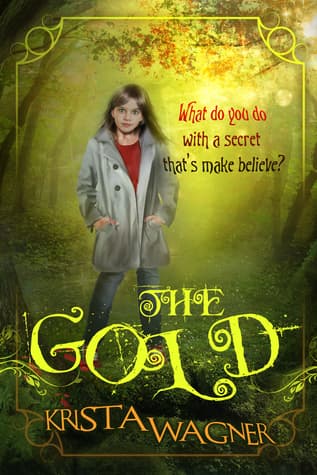
The Gold cover
Archivist's Choice

The Gold

Krista Wagner (2016)

Genre

General

Reading Time

12 Minutes

Key Themes

See below

Track Your Reading

Sign in to track this book

Bullied and neglected, a young girl finds comfort and adventure when a magical talking pebble takes her from her harsh reality into a world of wonder and self-discovery.

Core Idea

Krista Wagner's "The Gold" explores the profound and often overlooked value of everyday experiences and the inherent richness within ordinary life. Through a series of reflections and observations, the book argues that true 'gold' isn't found in grand achievements or material wealth, but in the mindful appreciation of the present moment, the beauty of nature, genuine human connections, and the simple joys that often pass us by unnoticed. It advocates for a shift in perspective, encouraging readers to actively seek out and cherish these subtle yet powerful sources of contentment and meaning.
Difficulty
Easy

Core idea

The central argument and framework that powers the entire book.

Krista Wagner's "The Gold" explores the profound and often overlooked value of everyday experiences and the inherent richness within ordinary life. Through a series of reflections and observations, the book argues that true 'gold' isn't found in grand achievements or material wealth, but in the mindful appreciation of the present moment, the beauty of nature, genuine human connections, and the simple joys that often pass us by unnoticed. It advocates for a shift in perspective, encouraging readers to actively seek out and cherish these subtle yet powerful sources of contentment and meaning.

At a glance

Difficulty

Easy

Key Takeaways

1

Fantasy as a Coping Mechanism

Amanda's imaginative world offers a vital escape from a harsh reality.

Quote

To escape reality, Amanda creates fantasy stories...

The book immediately shows Amanda's reliance on fantasy as a coping mechanism. Faced with constant bullying at school, an emotionally distant older sister, and the clear absence of her deceased mother, her internal world becomes a safe place. This isn't just daydreaming; it's a structured, almost therapeutic way to build a world where she can control things and find comfort, which she completely lacks in her real life. This shows how people often use imagination when reality is too hard, proving that creativity can protect against tra...

Supporting evidence

Amanda's constant creation of fantasy stories is explicitly stated as a way to 'escape reality' from her school bullying and unsatisfactory home life.

Apply this

Recognize the importance of creative outlets for children facing difficult situations; these aren't just hobbies but essential psychological tools for resilience.

2

The Catalyst of the Golden Pebble

A magical object blurs the line between Amanda's imagination and reality.

Quote

...when she discovers a talking golden pebble, her imagined world turns into a new-fangled reality.

The talking golden pebble's introduction is the moment the story changes from a character study of a lonely girl to a magical realism adventure. This object is the literal sign of her inner world mixing with the outer one, making her fantasies real in a visible, audible way. It's more than just a magical item; it's a friend, a confidante, and a way to new experiences. This plot device matters because it doesn't just take Amanda to a fantasy land; it brings the fantasy to her, suggesting her imagination is powerful enough to change how...

Supporting evidence

The text explicitly states the pebble's discovery makes her 'imagined world turn into a new-fangled reality.'

Apply this

Consider how unexpected events or symbols can act as catalysts for personal transformation, often mirroring internal desires or needs.

3

Loneliness and the Need for Connection

Amanda's isolation is the fertile ground for her magical encounter.

Quote

Ten-year old Amanda is constantly teased and tormented in school. Her home life is less than satisfactory...

Amanda's constant loneliness is a main theme, setting the emotional scene for the magical events. Her father's frequent absences, her sister's indifference, and the gap left by her mother's death create a deep sense of isolation. This emotional emptiness makes her especially open to the golden pebble's magic, suggesting that wanting connection and understanding can appear in extraordinary ways. The pebble isn't just a magical object; it's a substitute friend, giving her the companionship and validation her human relationships lack. Th...

Supporting evidence

Her constant teasing, unsatisfactory home life, and missing her mother all point to a deep-seated loneliness.

Apply this

Recognize that profound loneliness can make individuals vulnerable to external influences, both positive and negative, and that fostering genuine connection is vital for well-being.

4

The Absent Parent and Indifferent Sibling

Amanda's family structure contributes significantly to her emotional neglect.

Quote

Her widower father, often away on business trips, leaves her in the care of her indifferent teenaged sister.

The depiction of Amanda's family life is important for understanding her character development and her embrace of fantasy. Her father's frequent business trips and her older sister's indifference create a lack of parental and family support. This isn't necessarily mean neglect, but a practical absence that leaves Amanda emotionally adrift. The sister, likely dealing with her own teenage issues and perhaps her mother's death, can't or won't provide the care Amanda desperately needs. This family dynamic shows how much perceived abandonm...

Supporting evidence

The description of her father being 'often away' and her sister being 'indifferent' directly illustrates this point.

Apply this

Understand how a lack of parental presence and sibling support can compound a child's difficulties, making them seek comfort and validation elsewhere.

5

Grief and Unresolved Loss

The lingering sadness of her mother's death fuels Amanda's need for escape.

Quote

Worse, not a day goes by when Amanda doesn't miss her mom.

The persistent grief over her mother's death is a strong undercurrent throughout Amanda's story. The phrase 'not a day goes by' clearly shows how immediate and constant her loss is, indicating her grief is not a past event but a present reality that deeply shapes her emotional state. This unresolved sadness likely adds a lot to her feelings of loneliness and her retreat into fantasy. The golden pebble's appearance could be seen as a magical sign of her longing for comfort and connection, perhaps even a subconscious effort to fill the ...

Supporting evidence

The explicit statement that she 'doesn't miss her mom' a day underscores the ongoing nature of her grief.

Apply this

Recognize that unresolved grief can manifest in various behaviors, including escapism and a heightened sensitivity to comfort and connection.

6

The Power of the Child's Imagination

Amanda's inner world possesses a potent, reality-altering force.

Quote

To escape reality, Amanda creates fantasy stories, but when she discovers a talking golden pebble, her imagined world turns into a new-fangled reality.

This book celebrates the power of a child's imagination. Amanda's ability to 'create fantasy stories' isn't just a passive hobby; it's shown as a force so strong it can literally bring magic into her life. The golden pebble acts as a channel, but the initial spark for the fantastical elements seems to come directly from Amanda's inner world. This suggests that the lines between thought and reality are blurry, especially for a mind as open and desperate as Amanda's. The story implies that her imagination is not just a refuge, but a cre...

Supporting evidence

The direct connection made between her 'fantasy stories' and the 'new-fangled reality' brought by the pebble.

Apply this

Encourage and value children's imaginative play and storytelling, as these are not just entertainment but crucial for cognitive and emotional development, potentially even shaping their reality.

7

Validation Through Magic

The talking pebble offers Amanda the affirmation she lacks from her human interactions.

Quote

...when she discovers a talking golden pebble, her imagined world turns into a new-fangled reality.

The talking golden pebble gives Amanda something she deeply lacks: validation. Unlike the bullies at school or her indifferent sister, the pebble acknowledges her, talks to her, and confirms her inner world is real. This validation is vital for a child who feels unseen and unheard. The magic isn't just about adventure; it's about confirming that her experiences, feelings, and even her fantasies are real and deserve attention. This shows how important validation is for a child's self-esteem and emotional growth, and how its absence can...

Supporting evidence

The pebble 'talking' to her directly confirms her imagined world and offers interaction.

Apply this

Prioritize active listening and validation in interactions with children, especially those who may be struggling or feeling marginalized.

8

The Duality of Reality and Fantasy

The book explores the intricate interplay between what is real and what is imagined.

Quote

To escape reality, Amanda creates fantasy stories, but when she discovers a talking golden pebble, her imagined world turns into a new-fangled reality.

A central idea of 'The Gold' is the blurring of lines between reality and fantasy. Initially, Amanda's fantasy is a pure escape from a harsh reality. However, the talking pebble changes this clear difference. It implies that fantasy isn't just a mental idea but can actively leak into and reshape reality. This dual nature makes the reader question what 'reality' actually is, especially from a child's view where imagination has immense power. The book suggests that for some, especially those in distress, the imagined world can become ju...

Supporting evidence

The transformation of her 'imagined world' into a 'new-fangled reality' is the central premise of the magical element.

Apply this

Reflect on how personal perception and internal states can profoundly influence one's experience of reality, making individual realities diverse and subjective.

9

The Initiation into a New World

The golden pebble marks Amanda's entry into a larger, magical universe.

Quote

...when she discovers a talking golden pebble, her imagined world turns into a new-fangled reality.

The discovery of the golden pebble is not just a single event; it's an initiation. It marks Amanda's change from an ordinary, suffering child to a participant in a magical world. This is a classic 'hero's journey' pattern, where an ordinary character is called to adventure by an extraordinary object or event. The pebble acts as her guide or mentor, opening doors to experiences she could only previously imagine. This part of the book suggests that even in the worst circumstances, a way to a larger, more meaningful existence can appear,...

Supporting evidence

The pebble's role in turning her imagined world into a 'new-fangled reality' is explicitly stated as the beginning of something new.

Apply this

Consider how small, seemingly insignificant events can serve as the starting point for major life changes or adventures, often leading to personal growth.

Critical analysis

Notable Quotes

Quiz

Test Your Knowledge

Ready to see how well you understood this book? Take our interactive quiz with 10 questions.

10
Questions
~5
Minutes
?
Best Score

Key Questions (FAQ)

"The Gold" by Krista Wagner is the first book in The Magical Forest series. It tells the story of ten-year-old Amanda, who finds solace in fantasy stories to escape a difficult reality of bullying at school and a lonely home life. Her life takes a magical turn when she discovers a talking golden pebble that bridges her imagination with reality.

About the author