“Each man is a first man.”
— A central theme of the book, reflecting the protagonist's journey and the universal human experience of confronting existence anew.

Albert Camus (2013)
Genre
Philosophy
Reading Time
6-8 hours (given 272 pages and dense philosophical themes)
Key Themes
See below
Sign in to track this book
In colonial Algeria, a boy's silent love for his illiterate mother and a teacher's guidance shape him, making him 'the first man' to grapple with identity and the themes that would define Camus's unfinished work.
“Each man is a first man.”
— A central theme of the book, reflecting the protagonist's journey and the universal human experience of confronting existence anew.
“The past is an island, and we are all its castaways.”
— Reflecting on the protagonist Jacques Cormery's relationship with his personal history and Algeria's colonial past.
“One does not live in Algeria as one lives elsewhere.”
— Highlighting the unique and often harsh realities of life in colonial Algeria, a recurring background for Jacques's childhood.
“What is called a reason for living is also an excellent reason for dying.”
— A philosophical musing on the inherent contradictions and absurdities of human existence, echoing Camus's earlier works.
“He was learning that the world was not a simple place, and that even love could be complicated.”
— Jacques's growing understanding of the complexities of human relationships and the world around him as he matures.
“Poverty had taught him to live in the present, to seize the fleeting moment.”
— Describing the impact of Jacques's impoverished upbringing on his perception of time and life.
“The truth is that there is no truth, or rather, that the truth is what we make it.”
— An exploration of subjective reality and the human construction of meaning in a world without inherent purpose.
“To be happy, one must forget oneself.”
— A reflection on the nature of happiness, suggesting that self-transcendence can lead to contentment.
“He knew now that his mother was a stranger to him, as he was to her, despite their blood.”
— Jacques's realization of the emotional distance and unspoken complexities in his relationship with his illiterate mother.
“There is always a first time for everything, even for dying.”
— A poignant reflection on the inevitability and singular experience of death, linking it to other 'first' experiences.
“The sun was a god, and the sea its temple.”
— Evoking the powerful and almost spiritual connection Jacques feels with the natural world of Algeria.
“His life had been a long walk toward a truth he could not name.”
— Summarizing Jacques's lifelong quest for understanding and meaning, a journey that remains somewhat elusive.
“Silence is the only language left when words fail.”
— Reflecting on moments of profound emotion or incomprehension where verbal communication becomes inadequate.
“He learned that the greatest freedom was not to be free from anything, but to be free to choose.”
— A philosophical insight into the nature of true freedom, emphasizing agency and personal responsibility.
Ready to see how well you understood this book? Take our interactive quiz with 10 questions.
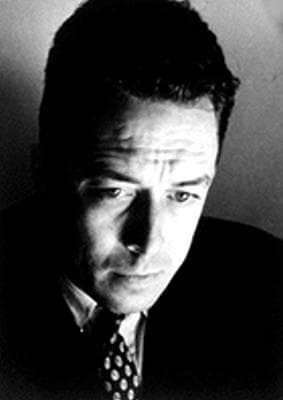
Albert Camus was a French-Algerian philosopher, author, dramatist, and journalist. He was the recipient of the 1957 Nobel Prize in Literature at the age of 44, the second-youngest recipient in history. His works include The Stranger, The Plague, The Myth of Sisyphus, The Fall, and The Rebel.

Jeff Olson
4.4
Thomas Sowell
4.4
Walter Brueggemann
4.3
Rhonda Byrne
4.3

Robin Wall Kimmerer
4.3
George S. Clason
4.3
Elliot Aronson
4.3

Joseph Campbell
4.3