BookBrief
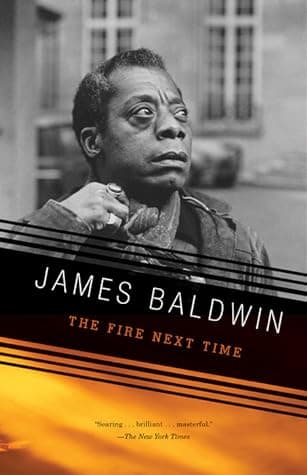
The Fire Next Time cover
Archivist's Choice

The Fire Next Time

James Baldwin (1962)

Genre

Politics / Memoir / History

Reading Time

120 min

Key Themes

See below

Track Your Reading

Sign in to track this book

Baldwin's raw and revolutionary "letters" confront America with the urgent issue of racial injustice, demanding accountability for its past and a path toward a shared, fair future.

Core Idea

James Baldwin's "The Fire Next Time" is a strong criticism of American racial injustice, expressed in two essays. It argues that the idea of white innocence and the refusal to face the realities of racism have harmed Black Americans and damaged the nation's moral and spiritual health. Baldwin states that true freedom and equality mean more than just integration. They require a complete change in American identity and consciousness. Love, honesty, and a willingness to remove deep-seated prejudices are the only way to avoid a disaster. The book challenges both Black and white Americans to confront their shared history and current involvement, pushing for a re-evaluation of national values.
Reading time
120 min
Difficulty
Medium
✓ Read this if...
You want to understand the profound psychological and societal impact of racism in America, appreciate the power of eloquent, impassioned prose, and explore themes of identity, faith, and justice from a deeply personal and intellectual perspective.
✗ Skip this if...
You are looking for a detached academic analysis or a light read, or if you are unwilling to confront uncomfortable truths about race, religion, and American history.

Core idea

The central argument and framework that powers the entire book.

James Baldwin's "The Fire Next Time" is a strong criticism of American racial injustice, expressed in two essays. It argues that the idea of white innocence and the refusal to face the realities of racism have harmed Black Americans and damaged the nation's moral and spiritual health. Baldwin states that true freedom and equality mean more than just integration. They require a complete change in American identity and consciousness. Love, honesty, and a willingness to remove deep-seated prejudices are the only way to avoid a disaster. The book challenges both Black and white Americans to confront their shared history and current involvement, pushing for a re-evaluation of national values.

At a glance

Reading time

120 min

Difficulty

Medium

Read this if...

You want to understand the profound psychological and societal impact of racism in America, appreciate the power of eloquent, impassioned prose, and explore themes of identity, faith, and justice from a deeply personal and intellectual perspective.

Skip this if...

You are looking for a detached academic analysis or a light read, or if you are unwilling to confront uncomfortable truths about race, religion, and American history.

Key Takeaways

1

The Price of Innocence

Willful ignorance of racial injustice corrodes the soul and society.

Quote

The great force of history comes from the fact that we carry it within us, are unconsciously controlled by it in many ways, and history is literally present in everything we do.

Baldwin says that American society, especially its white majority, has a dangerous 'innocence' about racial injustice. This is not simple unawareness but a deliberate refusal to see the harsh realities and history of racial oppression. This 'innocence' allows systemic racism to continue, as those who benefit from it are not held responsible. Baldwin argues that this willful blindness is morally wrong and harms the 'innocent' themselves, stopping them from fully understanding their own humanity and their nation. He insists that America...

Supporting evidence

Baldwin recounts his own experience growing up in Harlem, contrasting the harsh realities of his life with the sanitized narratives often consumed by white America. He describes the psychological toll of this 'innocence' on both the oppressed and the oppressor.

Apply this

Actively seek out and engage with histories and experiences that challenge your existing worldview, especially concerning race and power. Confront personal biases and societal complicity rather than dismissing uncomfortable truths. Support educational initiatives that offer comprehensive, unvarnished accounts of history.

white-innocencehistorical-amnesiamoral-responsibility
2

The Trap of Identity

Racial categories are a construct that limits human potential and understanding.

Quote

It is not a racial problem. It is a problem of whether or not you're willing to look at your life and be responsible for it, and then to be responsible for others.

Baldwin examines the concept of 'race' as a social construct, arguing it is a destructive invention used to keep power structures in place, not a biological fact. He states that the forced identities of 'black' and 'white' limit individual growth and prevent real human connection. For Black Americans, this identity is imposed and carries the weight of centuries of oppression. For white Americans, 'white' identity is often presented as the default, hiding its constructed nature and the privileges it gives. Baldwin calls for moving past...

Supporting evidence

Baldwin's personal journey of self-discovery and his struggles to define himself outside the narrow confines of what society expected of a young Black man in Harlem, as detailed in 'My Dungeon Shook'.

Apply this

Challenge and deconstruct the concept of 'race' in your own thinking and conversations. Focus on individual character and shared humanity rather than making assumptions based on perceived racial identity. Advocate for policies that address systemic inequalities without reinforcing racial essentialism.

social-construction-of-raceidentity-politicshuman-dignity
3

Love as a Revolutionary Act

Unflinching, radical love is the only path to true liberation and societal healing.

Quote

For, if I am not what I've been told I am, then it means that you're not what you've been told you are either.

Baldwin's idea of love is not sentimental or passive. It is a fierce, demanding force that requires deep self-awareness and a willingness to confront painful truths. He argues that true love, especially between races, means removing false ideas and recognizing the other person's full humanity, including their suffering and involvement. This love is a call to action, demanding that individuals actively work to dismantle systems of oppression that prevent genuine connection. For Baldwin, this radical love is the only choice to the destr...

Supporting evidence

His address to his nephew in 'My Dungeon Shook,' where he advises him to 'accept them, and love them' (referring to white people), not out of weakness, but out of a profound understanding of their shared humanity and the need to break cycles of hatred.

Apply this

Practice empathy and seek to understand the perspectives of those different from you, even when it's challenging. Engage in difficult conversations about race and justice with an open heart, aiming for mutual understanding and growth, not just victory. Support movements and initiatives that foster genuine reconciliation and collective liberation.

radical-lovereconciliationempathy
4

The Fire Next Time

Ignoring systemic injustice risks apocalyptic social upheaval.

Quote

God gave Noah the rainbow sign, No more water, the fire next time!

The book's title, from a Black spiritual, is a clear warning: if America keeps denying the humanity of its Black citizens and refuses to dismantle its racist structures, a disaster will follow. Baldwin suggests the 'fire' is not necessarily literal destruction, but a deep societal breakdown, a spiritual and moral blaze that will consume the nation. He implies that the patience of the oppressed is not endless, and the consequences of long-lasting injustice will appear in ways that shake the foundations of American society. This is not ...

Supporting evidence

Baldwin’s vivid descriptions of the simmering rage and frustration within the Black community in Harlem, and his analysis of how this resentment, if left unaddressed, could erupt.

Apply this

Advocate for urgent and comprehensive reforms to address racial inequality in all sectors (housing, education, justice, employment). Do not dismiss or downplay the anger and frustration of marginalized communities. Recognize that incremental change is often insufficient when fundamental justice is at stake.

social-unrestprophecyracial-justice
5

The Peril of the Negro Church

While a haven, the church can also perpetuate dangerous illusions and defer liberation.

Quote

The church was the only place in which a Negro boy could hope to play any role whatever and for which he need not pay any price in terms of the emasculation of his personality.

Baldwin, who grew up in the church and was briefly a preacher, offers a detailed critique of its role in the Black community. He acknowledges its important function as a source of comfort, community, and leadership in a hostile world. However, he also points out its potential problems: promoting a focus on the afterlife that delays justice, encouraging passive acceptance of suffering, and sometimes reinforcing a narrow, strict worldview that stops critical thinking. He explores the tension between the church's power to sustain hope an...

Supporting evidence

Baldwin's deeply personal account of his own experience as a young preacher, the intoxicating power of the pulpit, and his eventual disillusionment with its limitations in addressing systemic racism.

Apply this

Critically examine institutions that promise solace or hope, questioning whether they empower agency and demand justice in the present, or encourage passivity. Support faith-based organizations that are actively involved in social justice work and community organizing. Engage in self-reflection about how personal beliefs influence actions towards collective liberation.

black-churchspiritual-liberationsocial-gospel
6

Beyond Integration: True Equality

Integration without fundamental change is merely superficial assimilation.

Quote

One cannot be in a rage and at the same time in any way whatever hope to achieve any kind of contact with the person who has caused the rage.

Baldwin's vision goes beyond simple integration, which he sees as possibly a new form of control where Black people are expected to become like white people. He challenges the idea that the goal is just for Black people to 'become like' white people. Instead, he advocates for a complete change of American society itself, where both Black and white people are freed from the oppressive structures and psychological burdens of racism. True equality, for Baldwin, means a complete rethinking of what it means to be American, where everyone's...

Supporting evidence

His critique of the limited scope of the civil rights movement's initial demands, implying that while important, they might not go far enough to dismantle the deeper psychological and systemic roots of racism.

Apply this

Advocate for systemic changes that address power imbalances, not just superficial diversity initiatives. Question whether 'integration' truly leads to equity or simply disperses marginalized groups without empowering them. Support initiatives that foster authentic cultural exchange and mutual respect, rather than one-way assimilation.

systemic-racismassimilationequity-vs-equality
7

The Burden of Whiteness

Racism harms white people by distorting their reality and humanity.

Quote

The price of the liberation of the white people is the liberation of the black people.

Baldwin argues that racism is not just a problem for Black people; it also deeply harms white people. By creating a false reality based on racial superiority and denying the truth of their nation's history, white Americans lose their full humanity. This 'burden of whiteness' creates a moral and psychological cost, trapping individuals in a state of stalled growth and stopping them from truly understanding themselves or the world. Baldwin suggests that white people cannot be truly free or fully human until they give up the false ideas ...

Supporting evidence

His nuanced understanding of the psychological toll of racism, not just on the oppressed but also on the oppressor, as explored through his observations of white society.

Apply this

Engage in anti-racist education and self-reflection to understand the historical and ongoing benefits of whiteness. Actively challenge racist ideas and systems, even when it is uncomfortable. Recognize that dismantling racism is a project that benefits everyone, not just marginalized groups.

white-privilegeanti-racismmoral-cost
8

The Artist's Responsibility

Art must relentlessly confront truth, however uncomfortable, to foster societal awakening.

Quote

The purpose of art is to lay bare the questions which have been hidden by the answers.

As a writer, Baldwin clearly states the artist's important role in changing society. He believes that art is not just entertainment but a tool for revealing uncomfortable truths, challenging common stories, and making individuals confront their own involvement and humanity. His own sharp, brilliant writing shows this belief, using language to examine the complexities of race, identity, and power. He sees the artist as a truth-teller, someone who must disrupt peace to awaken awareness and push for change, even if it means alienating so...

Supporting evidence

The very existence of 'The Fire Next Time' itself, a work of art that is both deeply personal and profoundly political, demonstrating the power of literature to ignite social consciousness.

Apply this

Support and engage with art that challenges the status quo and explores difficult social issues. Use your own creative expression, if applicable, to speak truth to power and foster empathy. Encourage critical engagement with media and narratives, questioning underlying assumptions and biases.

art-as-activismtruth-tellingsocial-commentary
9

America's Unfinished Business

The nation's promise of freedom remains unfulfilled until racial justice is achieved.

Quote

It is not a racial problem. It is a problem of whether or not you're willing to look at your life and be responsible for it, and then to be responsible for others.

Baldwin sees the fight for racial equality as the main challenge of the American experiment. He argues that the nation's founding ideals of liberty and justice for all remain an empty promise as long as systemic racism continues. The failure to confront and correct racial injustice compromises America's moral standing and stops it from ever truly becoming the nation it claims to be. He urges Americans to deal with their history, acknowledge their current realities, and actively work toward a future where the dream of freedom is genuin...

Supporting evidence

The book was written on the centennial of the Emancipation Proclamation, highlighting the enduring gap between the legal end of slavery and the actual lived experience of freedom for Black Americans.

Apply this

Actively participate in civic life, advocating for policies that promote racial equity and justice. Hold elected officials accountable for addressing systemic racism. Support organizations working to fulfill America's promise of equality for all. Understand that the fight for racial justice is fundamental to the health and integrity of the entire nation.

american-dreamracial-justicecivic-responsibility

Critical analysis

Notable Quotes

It is not a racial problem. It is a problem of whether or not you're willing to look at a human being as a human being.

Reflecting on the deeper implications of racial prejudice beyond just race.

To be a Negro in this country and to be relatively conscious is to be in a rage almost all the time.

Describing the constant emotional state of African Americans living under systemic oppression.

The price of the ticket is to become aware that you have been and are a part of the problem.

Challenging readers, particularly white Americans, to acknowledge their complicity in racial injustice.

I imagine one of the reasons people cling to their hates so stubbornly is because they sense, once hate is gone, they will be forced to deal with pain.

Exploring the psychological reasons behind the persistence of hatred.

You think your pain and your heartbreak are unprecedented in the history of the world, but then you read. It was books that taught me that the things that tormented me most were the very things that connected me with all the people who were alive, or who had ever been alive.

Reflecting on the power of literature to provide solace and connection.

Love him and let him love you. Do you think anything else under heaven really matters?

A direct and poignant message about the ultimate importance of love.

It is a terrible thing for an innocent man to be forced to confess to a crime he has not committed.

Highlighting the injustice and cruelty of false confessions, particularly within the justice system.

The great force of history comes from the fact that we carry it within us, are unconsciously controlled by it in many ways, and history is literally present in all that we do.

Discussing how history profoundly shapes individual and collective behavior.

Not everything that is faced can be changed, but nothing can be changed until it is faced.

Emphasizing the necessity of confronting difficult truths as a prerequisite for change.

The white man's unadmitted-and apparently unadmittable-guilt at the role he plays in the American tragedy.

Pointing out the psychological burden and denial of white Americans regarding racial injustice.

The really terrible thing, old buddy, is that you must accept them. And I mean that very seriously. You must accept them and accept them and accept them, and love them. The difficulty, the bitter difficulty of this.

Advising his nephew on the difficult path of accepting and loving those who perpetuate injustice.

Life is a journey and it's about growing and changing and coming to terms with who you are.

A general reflection on the nature of life and self-discovery.

It is not possible to be an American and not be in some way a Negro.

Suggesting that the experience of Black people is fundamental to the American identity.

Quiz

Test Your Knowledge

Ready to see how well you understood this book? Take our interactive quiz with 10 questions.

10
Questions
~5
Minutes
?
Best Score

Key Questions (FAQ)

The Fire Next Time implores Americans, both Black and white, to confront and dismantle the deeply entrenched legacy of racial injustice. Baldwin argues that ignoring racism is not only detrimental to Black people but also corrupts the soul of America itself, calling for a radical re-evaluation of societal structures and individual responsibility.

About the author

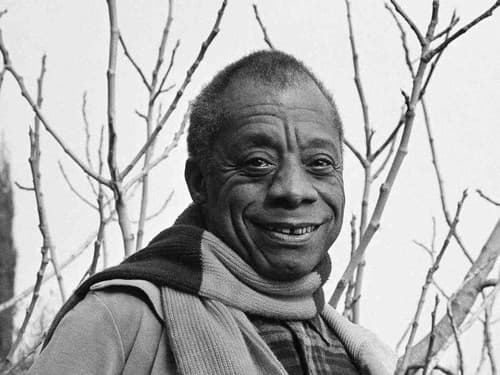
James Baldwin

James Arthur Baldwin was an American writer. He garnered acclaim for his work across several forms, including essays, novels, plays, and poems. His first novel, Go Tell It on the Mountain, was published in 1953; decades later, Time magazine included the novel on its list of the 100 best English-language novels released from 1923 to 2005. His first essay collection, Notes of a Native Son, was published in 1955.