BookBrief
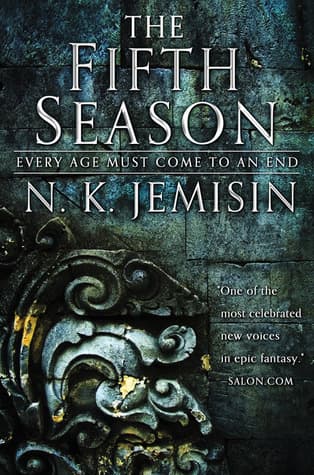
The Fifth Season cover
Archivist's Choice

The Fifth Season

N.K. Jemisin (2015)

Genre

General

Reading Time

500 min

Key Themes

See below

Track Your Reading

Sign in to track this book

In a world perpetually shattered by seismic events, a mother with earth-controlling power searches for her kidnapped daughter, even if it means tearing the dying land apart herself.

Core Idea

N.K. Jemisin's 'The Fifth Season' shows that catastrophe is a regular, repeating part of existence, especially for marginalized groups whose lives are always shaped by the Earth's violence and social oppression. The story argues that power, whether natural or political, always comes with a heavy cost and often leads to the exploitation of those who can use it, forcing people into difficult choices for survival. Through the linked stories of three women, the book explores how trauma is not just personal but spans generations and systems, appearing in fragmented identities and a desperate, often harsh, search for control and connection in a world always on the edge of collapse.
Reading time
500 min
Difficulty
Hard
✓ Read this if...
You are fascinated by complex world-building, morally grey characters, and a deep exploration of systemic oppression, power dynamics, and the resilience of the human spirit in the face of repeated apocalyptic events. Perfect for those who enjoy character-driven fantasy with a strong thematic core.
✗ Skip this if...
You prefer lighthearted fantasy, straightforward narratives without significant time jumps or multiple perspectives, or find themes of constant trauma and societal injustice too heavy. Not for readers seeking traditional heroic quests or clear-cut villains.

Core idea

The central argument and framework that powers the entire book.

N.K. Jemisin's 'The Fifth Season' shows that catastrophe is a regular, repeating part of existence, especially for marginalized groups whose lives are always shaped by the Earth's violence and social oppression. The story argues that power, whether natural or political, always comes with a heavy cost and often leads to the exploitation of those who can use it, forcing people into difficult choices for survival. Through the linked stories of three women, the book explores how trauma is not just personal but spans generations and systems, appearing in fragmented identities and a desperate, often harsh, search for control and connection in a world always on the edge of collapse.

At a glance

Reading time

500 min

Difficulty

Hard

Read this if...

You are fascinated by complex world-building, morally grey characters, and a deep exploration of systemic oppression, power dynamics, and the resilience of the human spirit in the face of repeated apocalyptic events. Perfect for those who enjoy character-driven fantasy with a strong thematic core.

Skip this if...

You prefer lighthearted fantasy, straightforward narratives without significant time jumps or multiple perspectives, or find themes of constant trauma and societal injustice too heavy. Not for readers seeking traditional heroic quests or clear-cut villains.

Key Takeaways

1

Cataclysm as a Constant

The Stillness is defined by cyclical, apocalyptic events, not stability.

Quote

This is the way the world ends. Again.

The world of the Stillness always experiences geological upheaval, where 'Seasons' – times of intense environmental disaster like volcanic winters, tsunamis, or earthquakes – are not rare but regular events. People have adapted by building a civilization focused on survival, creating specialized roles and a strict social structure to survive the next inevitable catastrophe. This constant threat shapes every part of life, from buildings to social rules, making endurance and adaptation most important. A 'Fifth Season' is not just anothe...

Supporting evidence

The entire societal structure of the Stillness, including 'communes' and 'season-preparedness' protocols, is built around surviving the 'Fifth Seasons'. The opening of the book describes a cataclysmic rift tearing the continent apart, initiating a Season that will last for centuries.

Apply this

Understand that 'normal' is a construct, and preparing for inevitable disruption (be it personal, societal, or environmental) is a more realistic and effective strategy than clinging to an illusion of static stability. Adaptability is the ultimate survival skill.


environmental-catastrophesocietal-resilienceadaptation
2

The Burden of Power

Orogenes, essential for survival, are simultaneously feared, enslaved, and exploited.

Quote

They are living weapons, living tools, living deterrents. They are also people. And that is the problem.

Orogenes have the unique ability to control seismic energy, managing earthquakes, volcanoes, and local weather. This power is necessary for stabilizing the Stillness and reducing the worst effects of Seasons. Yet, instead of being respected, they are hated and enslaved by the Sanzed Empire, trained and controlled by the Fulcrum, and violently killed by ordinary citizens (stills) if found outside approved control. Their existence is a contradiction: essential for human survival, yet treated as less than human. This systemic oppression ...

Supporting evidence

Essun's entire life as an Orogene is marked by hiding her abilities, living in fear, and experiencing the constant threat of discovery and retribution. The existence of the Fulcrum, a training and control facility for Orogenes, and the 'guardians' who enforce their subservience, are central to the narrative.

Apply this

Reflect on how societies often demonize or exploit groups whose unique abilities or differences are simultaneously essential yet threatening to the established order. Challenge the narratives that justify oppression based on fear or perceived utility.

oppressionpower-dynamicssocial-controlscapegoating
3

Motherhood as a Catalyst

A mother's primal rage and love drive a world-shattering quest.

Quote

Essun does not care if the world falls apart around her. She'll break it herself, if she must, to save her daughter.

Essun's journey comes from the deep, strong force of maternal grief and determination. The brutal murder of her son and the kidnapping of her daughter start a personal disaster within her, mirroring the global catastrophe happening around her. Her search for her daughter is not just a search; it is an act of resistance against a world that has taken everything from her. This intense, personal reason gives a strong emotional core to the epic story, connecting the large-scale destruction to a deeply human struggle. It shows how profound...

Supporting evidence

The inciting incident of the entire novel is Essun discovering her murdered son and missing daughter. Her subsequent arduous journey across the devastated Stillness is solely driven by the imperative to find her child, Damaya/Nassun.

Apply this

Recognize the immense power of deeply personal motivations and emotional drives in shaping individual agency and resilience, especially when facing overwhelming external forces. Understand how grief and love can fuel extraordinary acts.

griefmaternal-instinctresiliencepersonal-quest
4

The Interconnectedness of Trauma

Past and present suffering are inextricably linked, shaping identity and fate.

Quote

Every new scar is a reminder of an old wound, and every old wound bleeds into the present.

The story skillfully combines three different timelines and identities – Damaya, Syenite, and Essun – showing them to be parts of the same person. This non-linear structure emphasizes how past traumas, choices, and relationships deeply affect the present self, creating a complex identity. Each 'season' of her life, marked by different names and situations, adds layers to her being, showing that identity is not fixed but a constantly changing collection of experiences, especially those involving deep suffering and survival. The book ar...

Supporting evidence

The revelation that Damaya, Syenite, and Essun are the same person is a core structural and thematic element. Each narrative strand details a specific period of her life, showcasing how her experiences as a child, a young woman, and an adult contribute to her ultimate identity and motivations.

Apply this

Consider how your own past experiences, particularly difficult ones, have shaped who you are today. Practice empathy by recognizing that others' present behaviors and beliefs are often deeply rooted in their personal histories and traumas.

identitytraumamemorynarrative-structure
5

The Morality of Survival

Extreme conditions force impossible choices, blurring lines between good and evil.

Quote

When the world is ending, 'good' and 'evil' become luxuries only the dead can afford.

In the Stillness, especially during a Season, normal morality often breaks down. Characters must make harsh, practical decisions for survival, whether it is sacrificing the weak, hoarding resources, or doing things that would be unthinkable in more stable times. The Sanzed Empire, for example, says its oppressive control of Orogenes is a necessary evil for humanity's greater survival. This constant pressure to survive reveals the raw, often unpleasant, core of human nature, making readers question what they would do when facing existe...

Supporting evidence

The practices of the Fulcrum, the 'stills' murdering Orogenes, and the desperate actions of communities during a Season (e.g., rationing, forced migrations, potential cannibalism hinted at in later books) all illustrate the harsh ethical landscape.

Apply this

Challenge black-and-white moral judgments, especially when evaluating individuals or groups operating under extreme duress. Cultivate an understanding of the complex factors that drive behavior in crisis situations.

ethics-of-survivalmoral-dilemmaspragmatismhuman-nature
6

The Earth as a Living Entity

The planet is not a passive backdrop but an active, conscious, and vengeful force.

Quote

The Earth is not your mother. It is a living, breathing thing that has been hurt, and it remembers.

Unlike many fantasy settings where the world is just scenery, the Stillness's Earth (called 'Father Earth') is a thinking, suffering entity. Its geological upheavals are not random acts of nature but responses, often vengeful, to humanity's exploitation and abuse. The Orogenes, with their deep connection to the Earth's energy, are caught in the middle of this conflict. This personification of the planet turns environmental destruction into a direct, personal betrayal, raising the stakes beyond mere survival to a struggle for reconcili...

Supporting evidence

The revelations about the Obelisks, the nature of Orogene power, and the ultimate antagonist (Father Earth itself) reveal the planet's sentience and its active role in the cataclysms. The Guardians' true purpose is tied to managing this relationship.

Apply this

Reconsider humanity's relationship with the natural world. Move beyond viewing the Earth as a resource to be exploited and instead as a complex, interconnected system with its own agency and capacity for response.

environmentalismgaia-hypothesiscosmic-horrorpersonification
7

The Illusion of Control

Societal structures built for order often perpetuate deeper, more dangerous instability.

Quote

They built a cage to keep the monster in, but the cage itself became a monster.

The Sanzed Empire and its organizations, like the Fulcrum and the Guardians, are carefully designed to control the chaos of the Stillness and, specifically, the power of Orogenes. However, their methods – enslavement, brutal suppression, and systemic dehumanization – create their own instability. The very act of trying to perfectly control a volatile force ultimately leads to greater resentment, rebellion, and a build-up of destructive energy. This shows the inherent flaws in authoritarian systems that prioritize order through force o...

Supporting evidence

The Fulcrum's control of Orogenes, intended to protect humanity, directly contributes to the Orogenes' suffering and fuels their eventual rebellion. The Sanzed Empire's 'peace' is built on the systematic exploitation and fear of its most powerful citizens.

Apply this

Critically examine systems of control in your own society and life. Question whether attempts to enforce order through rigid rules and suppression might inadvertently be creating greater underlying instability and injustice.

authoritarianismsocial-controlsystemic-injusticepower-structures
8

Hope in Desolation

Even amidst total ruin, human connection and the will to rebuild persist.

Quote

Even if the world is broken, there are still pieces worth saving, and people worth fighting for.

Despite the constant destruction and the bleak future facing the Stillness, small signs of hope remain through acts of compassion, unity, and the enduring human spirit. Essun's journey, while driven by anger, also has moments of unexpected kindness and alliances. Communities, though struggling, try to rebuild and adapt. This underlying current of hope is not naive optimism, but a hard-won understanding that even when everything is lost, the ability for connection, love, and the desire for a better future remains. It suggests that true...

Supporting evidence

Essun's relationship with Hoa, the stone eater, and her interactions with others she encounters on her journey (like the leader of Castrima) demonstrate moments of trust, loyalty, and mutual aid in a broken world.

Apply this

In times of personal or collective crisis, actively seek out and cultivate connections with others. Recognize that even small acts of kindness and solidarity can be profound sources of strength and hope.

hopehuman-connectionresiliencecommunity

Critical analysis

Notable Quotes

Let's start with the end of the world, why don't we? Get it over with and move on to more interesting things.

Opening line of the novel, setting the apocalyptic tone.

This is what you must remember: the ending of one story is just the beginning of another.

Narrator reflecting on the cyclical nature of events.

There is no such thing as a true tale. Truth has many faces and the truth is like to the old road to Avalon; it depends on your own will, and your own thoughts, whither the road will take you.

Essun contemplating the nature of truth and perspective.

You are she. She is you. You are Essun. Remember?

Narrator addressing the protagonist Essun, emphasizing identity.

The Stillness is a land of quiet and death. A land where the earth is never still, and the people are never safe.

Description of the novel's setting, a supercontinent prone to catastrophic seismic events.

We are all tools, in the end. What matters is whether we are used for building or breaking.

Essun reflecting on the exploitation of orogenes (people with seismic powers).

A person is a pattern. A pattern is a story. A story is a lie. But a lie is a pattern, too.

Philosophical musing on human nature and narrative.

The Fulcrum is a cage, but it is a cage that keeps the world from breaking.

Referring to the institution that trains and controls orogenes.

Hate is a luxury. Only the safe can afford it.

Essun's thought on survival in a harsh world.

You do not know what you are until you are tested. And then, you are only what you have done.

Reflection on character and action under pressure.

The earth is not your enemy. It is your mother. And like any mother, she can be cruel.

Essun explaining the nature of orogeny (seismic power).

In a world without justice, the only justice is what you make.

Essun's resolve after personal tragedy.

Memory is a plague. It eats at you until there is nothing left but the bones of what was.

Essun grappling with loss and trauma.

The end of the world is a story that has been told before. It will be told again.

Narrator commenting on the cyclical apocalypses in the Stillness.

Quiz

Test Your Knowledge

Ready to see how well you understood this book? Take our interactive quiz with 10 questions.

10
Questions
~5
Minutes
?
Best Score

Key Questions (FAQ)

The Fifth Season is a fantasy novel set in the Stillness, a continent plagued by catastrophic climate events called Seasons. The story follows Essun, a woman whose husband murders their son and kidnaps their daughter, as she navigates a world collapsing from a massive volcanic rift that darkens the sky and threatens survival.

About the author