BookBrief
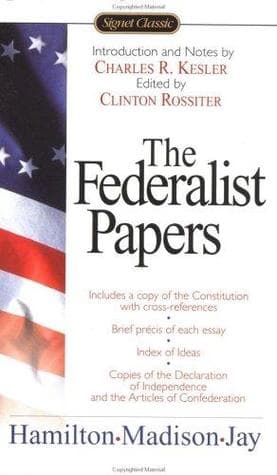
The Federalist Papers cover
Archivist's Choice

The Federalist Papers

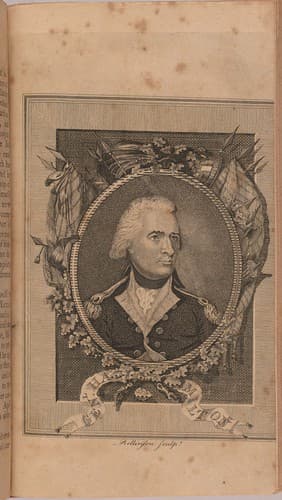
Alexander Hamilton (1961)

Genre

Politics / Reference / History / Philosophy

Reading Time

1000 min

Key Themes

See below

Track Your Reading

Sign in to track this book

Hamilton, Madison, and Jay defended the new U.S. Constitution, explaining its structure and purpose to shape American governance.

Core Idea

The Federalist Papers argue for the United States Constitution, supporting a strong federal union with a republican government. In 85 essays, the authors address objections, showing how the proposed system—with its separation of powers, checks and balances, and an extended republic—protects individual liberties, prevents factional control, ensures peace, and provides for national defense and prosperity. They assert the need for a unified national government over a loose confederation of states.
Reading time
1000 min
Difficulty
Hard
✓ Read this if...
You want to understand the foundational political philosophy and practical arguments that shaped the United States Constitution, directly from its primary proponents.
✗ Skip this if...
You are looking for a modern historical analysis or a simplified overview of American government rather than the original, dense, and often abstract primary source material.

Core idea

The central argument and framework that powers the entire book.

The Federalist Papers argue for the United States Constitution, supporting a strong federal union with a republican government. In 85 essays, the authors address objections, showing how the proposed system—with its separation of powers, checks and balances, and an extended republic—protects individual liberties, prevents factional control, ensures peace, and provides for national defense and prosperity. They assert the need for a unified national government over a loose confederation of states.

At a glance

Reading time

1000 min

Difficulty

Hard

Read this if...

You want to understand the foundational political philosophy and practical arguments that shaped the United States Constitution, directly from its primary proponents.

Skip this if...

You are looking for a modern historical analysis or a simplified overview of American government rather than the original, dense, and often abstract primary source material.

Key Takeaways

1

The Peril of Factionalism

Unchecked factions threaten republican government and individual liberty.

Quote

Among the numerous advantages promised by a well-constructed Union, none deserves to be more accurately developed than its tendency to break and control the violence of faction.

Madison examines the danger of factions—groups of citizens united by a common interest that goes against the rights of others or the community's overall interests. He argues that factions are unavoidable because of human nature, stemming from different opinions, wealth distribution, and religious views. The main problem is not that factions exist, but their ability to control public decisions, leading to instability, injustice, and majority rule. The key challenge for a republican government is not to remove factions (which would mean...

Supporting evidence

Madison's analysis in Federalist No. 10, where he defines factions and explores their causes and potential remedies.

Apply this

When evaluating political proposals or leaders, consider whether they contribute to managing factional conflict or exacerbate it. Support mechanisms that encourage broad coalition-building rather than narrow partisan victories.

factiontyranny-of-the-majorityrepublicanism
2

Extended Republic as a Safeguard

A large, diverse republic dilutes the power of any single faction.

Quote

The smaller the society, the fewer probably will be the distinct parties and interests composing it; the more frequently will a majority be found of the same party... The fewer the distinct parties and interests, the more frequently will a majority be found of the same party; and the smaller the number of individuals composing a majority, and the smaller the compass within which they are placed, the more easily will they concert and execute their plans of oppression.

Madison suggests the 'extended republic' as the main solution to factions. He argues that a larger republic, with more diverse interests and opinions, makes it less likely for any single faction to gain enough power to oppress others. The many competing interests would force compromise and prevent any one group from forming a dominant majority. Also, a larger electorate makes it harder for unworthy candidates to mislead voters, as more citizens are likely to recognize true merit. This structural design is a clever piece of political e...

Supporting evidence

Madison's argument in Federalist No. 10 that a large republic, through its greater number of citizens and extent of territory, will 'take in a greater variety of parties and interests,' making it 'less probable that a majority of the whole will have a common motive to invade the rights of other citizens.'

Apply this

Advocate for policies that strengthen the national rather than purely local scope of governance when addressing issues requiring broad consensus. Support electoral reforms that encourage broader representation rather than narrow geographic or demographic focus.

extended-republicpluralismfederalism
3

Checks and Balances: Ambition Countering Ambition

Separation of powers prevents tyranny by giving each branch the means to resist encroachments.

Quote

Ambition must be made to counteract ambition. The interest of the man must be connected with the constitutional rights of the place.

Madison's explanation of checks and balances in Federalist No. 51 is a lasting contribution to constitutional theory. He recognizes that written rules alone cannot stop power; human nature, with its drive for self-interest and power, needs a stronger defense. The solution is to divide government power among different branches (legislative, executive, judicial) and give each branch constitutional ways and reasons to resist others. This design turns human ambition from a destructive force into a protective one, ensuring that no single b...

Supporting evidence

Madison's detailed explanation in Federalist No. 51 of the separate departments and their 'constitutional means and personal motives' to resist encroachments, citing examples like the presidential veto power and judicial review (implicitly).

Apply this

When evaluating government actions, consider whether the checks and balances are functioning as intended. Support judicial independence and a robust legislative oversight of the executive branch. Be wary of attempts to consolidate power in any single branch.

separation-of-powerschecks-and-balancesconstitutionalism
4

Energy in the Executive

A strong, unified executive is essential for effective governance and national security.

Quote

Energy in the Executive is a leading character in the definition of good government. It is essential to the protection of the community against foreign attacks; it is not less essential to the steady administration of the laws; to the protection of property against those irregular and lawless combinations which sometimes interrupt the ordinary course of justice; to the security of liberty against the enterprises and assaults of ambition, of faction, and of anarchy.

Hamilton strongly argues for a single, strong executive, rejecting the idea of a shared executive or a weak, committee-like presidency. He identifies 'energy' as the crucial quality for the executive, made up of unity, duration, adequate support, and sufficient powers. A unified executive ensures quick decisions, efficient action, and accountability, which are vital for handling crises, enforcing laws, and protecting national interests. A divided executive, he warns, leads to indecision, secrecy, and a lack of accountability, weakenin...

Supporting evidence

Hamilton's detailed argument in Federalist No. 70, where he contrasts the virtues of a single executive with the dangers of a plural executive, using historical examples implicitly.

Apply this

Support leaders who demonstrate decisiveness and accountability, while also upholding constitutional limits. Demand clarity in executive decision-making and resist attempts to diffuse responsibility in the executive branch.

executive-powerpresidencynational-security
5

The Independence of the Judiciary

An independent judiciary is the bulwark of liberty and the Constitution.

Quote

The complete independence of the courts of justice is peculiarly essential in a limited Constitution.

Hamilton makes a strong case for an independent judiciary, arguing it is the 'least dangerous' branch as it has 'neither FORCE nor WILL, but merely judgment.' Its independence, secured by lifetime tenure (during good behavior) and protection against salary cuts, is important for several reasons: to interpret laws fairly, to protect the Constitution from legislative overreach (early judicial review), and to protect individual rights against popular majorities or government abuse. Without an independent judiciary, the Constitution would...

Supporting evidence

Hamilton's defense of judicial review and lifetime tenure in Federalist No. 78, arguing it's necessary for the judiciary to act as an 'intermediate body between the people and the legislature.'

Apply this

Support the principle of judicial independence, resisting attempts to politicize the courts or undermine the tenure and compensation of judges. Advocate for fair and impartial judicial appointments based on merit rather than political alignment.

judicial-reviewjudicial-independencerule-of-law
6

The Necessity of a Strong Union

A unified nation is vital for security, prosperity, and the preservation of liberty.

Quote

It has been frequently remarked that it seems to have been reserved to the people of this country, by their conduct and example, to decide the important question, whether societies of men are really capable or not of establishing good government from reflection and choice, or whether they are forever destined to depend for their political constitutions on accident and force.

The core idea of The Federalist Papers is the need for a strong, unified Union. Hamilton, Jay, and Madison repeatedly argue that disunion or a weak confederation would lead to conflicts between states, economic instability, vulnerability to foreign powers, and the end of republican government. A strong federal government, with the power to raise money, regulate trade, and maintain a national defense, is presented as the only way to achieve peace, prosperity, and secure liberty. Their warnings against fragmentation and internal conflic...

Supporting evidence

John Jay's arguments in Federalist Nos. 2-5 regarding the dangers of foreign influence and internal strife if the states remain disunited. Hamilton's opening remarks in Federalist No. 1 setting the stage for the entire project.

Apply this

Prioritize national unity and cohesion over narrow provincial interests. Support policies that strengthen federal capabilities in areas of national interest, such as defense, interstate commerce, and environmental protection, while respecting states' rights.

unionconfederationnational-unity
7

Taxation: The Lifeblood of Government

A government without the power to tax is a government destined to fail.

Quote

Money is with propriety considered as the vital principle of the body politic; as that which sustains its life and motion, and enables it to perform its most essential functions.

Hamilton strongly defends the federal government's power to tax, arguing it is essential for its existence and ability to perform its duties. Under the Articles of Confederation, the national government's inability to directly tax states or citizens made it powerless, relying on voluntary contributions that rarely came. Hamilton states that a government responsible for national defense, infrastructure, and justice must have its own sufficient source of income. Without this power, it cannot effectively protect the nation's interests or...

Supporting evidence

Hamilton's extensive arguments in Federalist Nos. 30-36, detailing the inadequacies of the Articles of Confederation regarding taxation and advocating for the federal government's power to lay and collect taxes.

Apply this

Recognize that taxation is a necessary component of a functioning government. Demand fiscal responsibility and transparency in government spending, but also understand that adequate revenue is essential for public services and national security.

taxationfiscal-policynational-debt
8

The Supremacy of Federal Law

The Constitution and federal laws are the supreme law of the land, ensuring uniformity and stability.

Quote

If a law be in opposition to the constitution; if both cannot exist together, the one or the other must yield to the constitution.

The Federalist Papers clearly establish the principle of federal supremacy, though Madison offers a nuanced view of concurrent powers. The Constitution and laws made under it are declared the 'supreme Law of the Land,' overriding conflicting state laws. This was a significant change from the Articles of Confederation, which had no way to enforce federal mandates on states, causing chaos. The supremacy clause ensures a consistent legal framework nationwide, preventing states from undermining federal policy and promoting a unified natio...

Supporting evidence

Hamilton's arguments in Federalist No. 33 and No. 82, and Madison's discussions on federal and state powers, all leading to the implicit understanding of the supremacy clause (Article VI, Clause 2).

Apply this

Support federal initiatives that address national challenges, understanding that state-level variations can impede progress on issues requiring uniform action. Advocate for clear divisions of responsibility between federal and state governments to avoid unnecessary conflict.

supremacy-clausefederalismconstitutional-law
9

The Imperative of Public Deliberation

Rational discourse and careful consideration are vital for wise governance.

Quote

The coolest and most deliberate sense of the community should prevail over every other.

While not a single essay, a recurring theme in The Federalist Papers is a strong belief in public discussion and reasoned argument. The act of writing the essays itself was an appeal to the 'cool and deliberate sense of the community.' The authors believed that through careful explanation and strong debate, the public could be convinced to adopt a constitution based on sound principles, rather than giving in to emotion or bias. They imagined a republic where informed public opinion would guide governance. This highlights the importanc...

Supporting evidence

The entire endeavor of The Federalist Papers itself—85 essays published to persuade the public through reasoned argument—serves as the primary evidence.

Apply this

Engage in informed civic discourse, seeking to understand diverse perspectives and relying on evidence-based reasoning rather than emotional appeals. Support institutions and platforms that foster thoughtful public debate and critical thinking.

public-reasondeliberative-democracycivic-engagement
10

The Enduring Experiment of Self-Governance

The American project is a test of humanity's capacity for reasoned self-rule.

Quote

It has been frequently remarked that it seems to have been reserved to the people of this country, by their conduct and example, to decide the important question, whether societies of men are really capable or not of establishing good government from reflection and choice, or whether they are forever destined to depend for their political constitutions on accident and force.

Hamilton's opening words in Federalist No. 1 frame the entire constitutional project as a major experiment, not just for America, but for all humanity. The question was whether societies could establish government through 'reflection and choice' rather than being subject to 'accident and force.' This highlights the revolutionary nature of the American founding and the great responsibility placed on its citizens to prove that self-governance is possible and lasting. The Papers constantly remind us that the Constitution is not a static ...

Supporting evidence

Hamilton's powerful opening statement in Federalist No. 1, setting the stakes for the entire ratification debate and the future of republican government.

Apply this

Actively participate in democratic processes, educate yourself on constitutional principles, and hold elected officials accountable. Recognize the fragility of democratic institutions and the continuous effort required to maintain them.

self-governancerepublican-experimentconstitutional-legacy

Critical analysis

Notable Quotes

If men were angels, no government would be necessary. If angels were to govern men, neither external nor internal controls on government would be necessary.

Discussing the need for government and its internal checks and balances.

Justice is the end of government. It is the end of civil society. It ever has been and ever will be pursued until it be obtained, or until liberty be lost in the pursuit.

Emphasizing justice as the primary purpose of government and society.

The accumulation of all powers, legislative, executive, and judiciary, in the same hands, whether of one, a few, or many, and whether hereditary, self-appointed, or elective, may justly be pronounced the very definition of tyranny.

Arguing for the separation of powers to prevent tyranny.

Ambition must be made to counteract ambition.

Explaining how the structure of government uses human ambition to maintain balance.

The inference to which we are brought is, that the causes of faction cannot be removed, and that relief is only to be sought in the means of controlling its effects.

Acknowledging that factions are inherent to human nature and focus should be on managing them.

A firm Union will be of the utmost moment to the peace and liberty of the States, as a barrier against domestic faction and insurrection.

Highlighting the role of a strong union in preventing internal conflict.

Energy in the Executive is a leading character in the definition of good government.

Arguing for a strong, decisive executive branch.

The regular distribution of power into distinct departments; the introduction of legislative balances and checks; the institution of courts composed of judges holding their offices during good behavior; the representation of the people in the legislature by deputies of their own election...

Listing key features of a well-designed republican government.

No political truth is certainly of greater intrinsic value, or is stamped with the authority of more enlightened patrons of liberty, than that on which the objection is founded, that the accumulation of all powers, legislative, executive, and judiciary, in the same hands, whether of one, a few, or many, and whether hereditary, self-appointed, or elective, may justly be pronounced the very definition of tyranny.

Reiterating the fundamental principle of separation of powers.

The LARGER the society, provided it lie within a practicable sphere, the MORE duly capable it will be of self-government.

Arguing that a large republic is more stable and less prone to factional control.

It is of great importance in a republic not only to guard the society against the oppression of its rulers, but to guard one part of the society against the injustice of the other part.

Explaining the dual role of government in protecting against both government overreach and internal oppression.

The judiciary, from the nature of its functions, will always be the least dangerous to the political rights of the Constitution; because it will have least capacity to annoy or injure them.

Discussing the limited power and role of the judiciary compared to other branches.

The celebrated Montesquieu, speaking of them, says: 'Of the three powers above mentioned, the JUDICIARY is in some measure next to nothing.'

Quoting Montesquieu to further illustrate the judiciary's relatively weak position.

The complete independence of the courts of justice is peculiarly essential in a limited Constitution.

Advocating for an independent judiciary to uphold constitutional limits on power.

Quiz

Test Your Knowledge

Ready to see how well you understood this book? Take our interactive quiz with 10 questions.

10
Questions
~5
Minutes
?
Best Score

Key Questions (FAQ)

The Federalist Papers are a collection of 85 essays written by Alexander Hamilton, James Madison, and John Jay between 1787 and 1788. Their primary purpose was to persuade the citizens of New York to ratify the newly proposed United States Constitution.

About the author

Alexander Hamilton

Alexander Hamilton was a Founding Father of the United States and a key author of The Federalist Papers, a seminal work of American political thought. His writings strongly advocated for a robust federal government and a strong executive branch. Hamilton's contributions laid crucial groundwork for the U.S. Constitution and its subsequent interpretation.