BookBrief
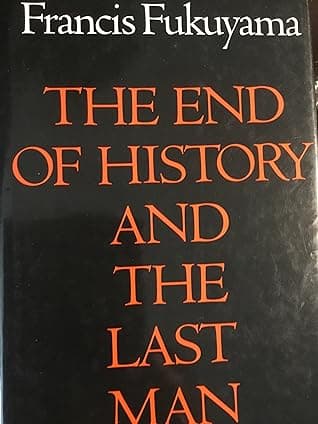
The End of History and the Last Man cover
Archivist's Choice

The End of History and the Last Man

Francis Fukuyama (1992)

Genre

Politics / History / Economics / Philosophy

Reading Time

12-15 hours

Key Themes

See below

Track Your Reading

Sign in to track this book

Fukuyama argues that the global spread of liberal democracy might mark humanity's ideological endpoint, exploring what this means for identity, conflict, and progress in a 'post-historical' world.

Core Idea

Fukuyama argues that with the fall of communism and the rise of liberal democracy and market economies worldwide, humanity has reached the 'end of history' in the Hegelian sense. This does not mean events stop, but that humanity's ideological journey is complete. He believes liberal democracy is the final, most rational, and most satisfying form of human government. This state, the 'Universal Homogeneous State,' meets the human need for recognition (thymos) by recognizing everyone's dignity and equality.
Reading time
12-15 hours
Difficulty
Hard
✓ Read this if...
You are interested in grand theories of history, the philosophical underpinnings of liberal democracy, or post-Cold War political thought. Essential for understanding contemporary debates about globalization and political systems.
✗ Skip this if...
You prefer empirical studies over philosophical arguments, are looking for actionable policy recommendations, or find broad historical narratives overly deterministic.

Core idea

The central argument and framework that powers the entire book.

Fukuyama argues that with the fall of communism and the rise of liberal democracy and market economies worldwide, humanity has reached the 'end of history' in the Hegelian sense. This does not mean events stop, but that humanity's ideological journey is complete. He believes liberal democracy is the final, most rational, and most satisfying form of human government. This state, the 'Universal Homogeneous State,' meets the human need for recognition (thymos) by recognizing everyone's dignity and equality.

At a glance

Reading time

12-15 hours

Difficulty

Hard

Read this if...

You are interested in grand theories of history, the philosophical underpinnings of liberal democracy, or post-Cold War political thought. Essential for understanding contemporary debates about globalization and political systems.

Skip this if...

You prefer empirical studies over philosophical arguments, are looking for actionable policy recommendations, or find broad historical narratives overly deterministic.

Key Takeaways

1

The Universal Homogeneous State

Liberal democracy is the endpoint of mankind's ideological evolution.

Quote

The end of history means not the end of the world, but the end of mankind's ideological evolution and the universalization of Western liberal democracy as the final form of human government.

Fukuyama argues that history, understood as a single evolutionary process, ends with the success of liberal democracy. He sees this not just as a Western event but as a universal goal, driven by both rational understanding of its benefits and the human need for recognition. He states that other systems, like communism and fascism, failed to meet these basic human needs, leading to their downfall. The 'Universal Homogeneous State' is a society that has solved the main conflicts of earlier political forms, offering both wealth and digni...

Supporting evidence

The collapse of the Soviet Union and the apparent victory of Western liberal democracies in the Cold War served as the primary empirical evidence for Fukuyama's thesis, illustrating the failure of a major ideological alternative.

Apply this

When analyzing contemporary global conflicts or political transitions, consider whether the underlying drivers align with or deviate from the pursuit of liberal democratic ideals. It encourages a framework where nation-building efforts or peace processes are viewed through the lens of establishing stable, recognized, and rights-respecting polities.


liberal-democracyteleologycold-war
2

The Desire for Recognition (Thymos)

Human dignity and the need to be valued drive political struggle.

Quote

The desire for recognition, thymos, is the part of the soul that demands respect and dignity, and without which human beings cannot be fully human.

Fukuyama brings back Plato's idea of thymos, or 'spiritedness' or 'desire for recognition,' as an important, often overlooked, force in human history and political behavior. Beyond just material desires or logical thinking, humans have an inborn need to have their worth acknowledged by others. This desire can appear as megalothymia (the desire to be seen as better) or isothymia (the desire to be seen as equal). In this view, history is a struggle for proper recognition, with different political systems trying to satisfy or suppr...

Supporting evidence

He references Hegel's master-slave dialectic as a philosophical illustration of the struggle for recognition, where the slave's eventual self-awareness and demand for recognition drives historical change. He also contrasts the aristocratic pursuit of glory (megalothymia) with the modern democratic demand for equal rights.

Apply this

When encountering social movements, political protests, or individual grievances, look beyond economic or power dynamics to identify the underlying desire for recognition. Understanding whether people seek equal respect or superior status can illuminate the true motivations behind their actions.

thymoshegelrecognitiondignity
3

The 'Last Man' Problem

The potential spiritual emptiness of a perfectly recognized society.

Quote

The problem with the 'last man' is not that he has nothing to strive for, but that he has nothing to be proud of.

While liberal democracy offers universal recognition and comfort, Fukuyama warns of a possible drawback: the 'Last Man,' a concept from Nietzsche. The Last Man is a person without struggle, ambition, or the pursuit of excellence, happy with immediate satisfaction and equal, though unexciting, recognition. In a world where all big ideological battles are won and basic needs are met, what remains to inspire greatness, courage, or deep spiritual fulfillment? This raises a profound question about the human spirit: if the struggle for reco...

Supporting evidence

Nietzsche's critique of democratic societies and his concept of the 'Last Man' serve as the philosophical foundation. Fukuyama applies this to the potential future state of advanced liberal democracies, where petty grievances and trivial pursuits might replace grander ambitions.

Apply this

Reflect on the sources of personal meaning and societal drive in affluent, stable democracies. Consider whether challenges like climate change, space exploration, or even cultural endeavors serve as necessary outlets for *megalothymia* or other forms of human striving beyond basic comfort. Be wary of complacency.

nietzschemeaninglessnesscomfortfulfillment
4

Science and the Direction of History

Modern natural science is a key driver towards a uniform global culture.

Quote

Modern natural science provides a universal horizon of understanding and a powerful engine of economic development, driving all societies toward similar economic and political structures.

Fukuyama identifies modern natural science as a main driver of historical direction. Unlike knowledge tied to specific cultures, scientific understanding is universal and builds on itself, leading to predictable technological advances. These advances, in turn, strongly encourage societies to organize in specific ways—especially towards market economies that can efficiently use and develop technology, and then towards political systems that can manage complex industrial societies and provide the stability needed for innovation. This te...

Supporting evidence

He points to the universal adoption of scientific methods and technologies across vastly different cultures, from agriculture to communication. The global pursuit of economic growth through technological innovation forces societies to adapt similar institutional frameworks.

Apply this

When examining global development or the spread of particular economic models, consider the foundational role of scientific and technological progress. Recognize how the pursuit of efficiency and innovation, driven by science, subtly pushes diverse societies towards shared organizational principles, often independent of direct political imposition.

technological-determinismglobalizationscientific-progresseconomic-development
5

The End of Ideological Alternatives

No credible, universalist alternatives to liberal democracy remain.

Quote

What we may be witnessing is not just the end of the Cold War, or the passing of a particular period of postwar history, but the end of history as such: that is, the end point of mankind's ideological evolution.

Fukuyama states that the 20th century saw the complete defeat of all major ideologies that challenged liberal democracy. Fascism was clearly defeated in World War II, and communism fell with the Soviet Union. He argues that no other broad, universal ideology has appeared to offer a coherent and appealing alternative vision for human society. While challenges from religious fundamentalism or authoritarian nationalism exist, Fukuyama sees them as specific and unable to provide a universal model for all humanity. This lack of a compellin...

Supporting evidence

The historical record of the 20th century, particularly the collapse of the Soviet bloc and the widespread embrace of market economics and democratic reforms in former communist countries, serves as empirical proof of the failure of alternative models.

Apply this

When evaluating new political movements or state models, critically assess whether they offer a truly universal and coherent ideological alternative to liberal democracy, or if they are more reactive, particularistic, or destined to repeat past failures. This framework suggests that many 'new' challenges are variations on old themes rather than true ideological breakthroughs.

ideologycold-warfascismcommunism
6

The Persistence of Particularism

Culture, religion, and nationalism still pose challenges to universalism.

Quote

The end of history does not mean the end of international relations or the end of international conflict, but rather the end of the ideological content of such conflict.

Despite liberal democracy's success as an ideal, Fukuyama acknowledges that the world is far from uniform. Deep cultural, religious, and national identities continue to shape human behavior and international relations. While he believes these do not offer a universal ideological alternative to liberal democracy, they can certainly cause conflict and slow its spread. These 'specific' forces show the human need for belonging and identity, which can sometimes clash with the universalizing trends of modern science and liberal ideals. The ...

Supporting evidence

The rise of ethnic nationalism in post-Cold War Eastern Europe, religious fundamentalist movements globally, and ongoing cultural clashes demonstrate that identity-based conflicts persist even in the absence of major ideological rivals.

Apply this

When analyzing global conflicts or political instability, consider the role of cultural identity, religion, and nationalism. Recognize that even if the 'big' ideological questions are settled, these particularistic forces can generate significant friction and resistance to universal norms, requiring nuanced approaches to diplomacy and development.

nationalismreligious-fundamentalismcultural-identityparticularism
7

The Role of Economic Development

Prosperity and modernization pave the way for democratic transition.

Quote

Economic development, driven by the universal imperatives of modern natural science, creates a middle class that demands political participation and an end to arbitrary rule.

Fukuyama stresses the strong connection between economic development and the rise of liberal democracy. As societies modernize and industrialize, driven by scientific and technological progress, they create a more complex social structure, especially a growing middle class. This middle class, with its education, property, and aspirations, typically demands more political involvement, rule of law, and protection of rights—conditions that oppose authoritarianism. Economic success also provides the material basis for stable democratic in...

Supporting evidence

He cites examples of newly industrialized countries in Asia and Latin America that experienced democratic transitions following periods of sustained economic growth and the rise of a substantial middle class.

Apply this

When evaluating prospects for democratization in developing nations, assess their level of economic development, the strength of their middle class, and the degree to which their economy is integrated into the global scientific and technological system. Recognize that economic reforms often precede or accompany political liberalization.

economic-growthmiddle-classmodernizationdemocratization
8

The Dangers of Apathy and Boredom

A post-historical world risks spiritual stagnation and the search for artificial struggle.

Quote

The end of history will be a very sad time. The struggle for recognition, the willingness to risk one's life for a purely abstract goal, the worldwide ideological struggle that called forth daring, courage, imagination, and idealism, will be replaced by economic calculation, the endless solving of technical problems, and environmental concerns.

Fukuyama expresses a deep concern that the 'end of history' might lead to a world marked by apathy, boredom, and a lack of grand purpose. If the most basic political questions are settled, and material needs are mostly met, people might lose the drive for struggle, sacrifice, and the pursuit of great ideals that have historically defined human effort. This spiritual stagnation could lead to a 'Last Man' situation where individuals, lacking meaningful challenges, might seek artificial struggles or engage in trivial activities. This pos...

Supporting evidence

He evokes the historical figures who fought and died for abstract ideals, contrasting their passion and sacrifice with the potential for a future where such heroism might be seen as archaic or unnecessary. The 'Last Man' is precisely this individual, content but unfulfilled.

Apply this

Consider how societies and individuals in advanced democracies seek meaning beyond material comfort and security. Reflect on the role of art, sports, entrepreneurship, or even constructed social challenges in providing outlets for human energy and ambition in a world that might otherwise feel 'finished.' Actively seek meaningful challenges.

nihilismboredomspiritual-crisismeaning
9

The End is Not Absolute

History's 'end' is ideological, not an end to events or problems.

Quote

The end of history does not mean the end of events, or even the end of great and important events, but the end of mankind's ideological evolution.

It is important to understand that Fukuyama's 'end of history' is not a prediction of a static, problem-free future. He clearly states that conflicts, economic crises, environmental challenges, and even wars will continue. The 'end' refers specifically to the exhaustion of workable, universal ideological alternatives to liberal democracy. While problems will remain, they will be seen as technical or administrative challenges within the liberal democratic framework, rather than fundamental debates about the best form of human governmen...

Supporting evidence

Fukuyama clarified in subsequent writings and interviews that he never meant the end of all events, but rather the end of the grand dialectical struggle between major, competing political ideologies. He acknowledges that the world is still full of problems.

Apply this

When encountering news of global instability or new challenges, avoid prematurely declaring Fukuyama's thesis 'wrong.' Instead, analyze whether the conflict represents a struggle against liberal democratic ideals (an ideological challenge) or a struggle within the liberal democratic framework (a technical or administrative problem). This distinction helps maintain a clearer analytical lens.

historical-evolutionideological-convergencepost-historychallenges

Critical analysis

Notable Quotes

What we may be witnessing is not just the end of the Cold War, or the passing of a particular period of post-war history, but the end of history as such: that is, the end-point of mankind's ideological evolution and the universalization of Western liberal democracy as the final form of human government.

Fukuyama's core thesis statement.

The struggle for recognition, which is what Hegel called the 'struggle unto death' for pure prestige, is what gives human life its dignity.

Discussing the Hegelian concept of 'thymos' and the desire for recognition.

The two challenges to liberal democracy that have emerged in the past century are fascism and communism. Both claimed to be modern, rational, and scientific alternatives to liberal democracy, and both have been defeated.

Summarizing the major ideological conflicts of the 20th century.

If liberal democracy is the final form of government, it means that there will be no further evolution in the basic principles and institutions of government, because all of the really big questions have been settled.

Elaborating on the implications of the 'end of history' thesis.

The problem with the 'last man' is that he is ultimately satisfied, and therefore has no reason to strive or struggle. He is content, but also potentially trivial.

Introducing the Nietzschean concept of the 'last man' and its implications for a post-historical world.

Economic development, in its broadest sense, promotes a process of social mobilization that inevitably leads to demands for political participation.

Connecting economic progress with political reform.

The deepest roots of human political behavior are to be found in the desire for recognition.

Reinforcing the centrality of 'thymos' in human motivation.

While there may be isolated pockets of authoritarianism or new religious fundamentalisms, these are not universal challenges to the legitimacy of liberal democracy.

Addressing potential counter-arguments to his thesis.

The end of history does not mean the end of international conflict, but rather the end of large-scale ideological struggles among states.

Clarifying that the 'end of history' doesn't imply an end to all strife.

The historical process has been directional, not merely cyclical, and that direction has been toward liberal democracy.

Arguing for a teleological view of historical development.

Modern natural science leads to a universal and homogeneous state, because it provides a common technological culture and creates a universal standard of rationality.

Explaining the role of science and technology in driving historical convergence.

Societies that have achieved a high degree of economic development and liberal democracy tend to be more stable and less prone to violent conflict.

Highlighting the benefits and stability associated with liberal democratic systems.

The final victory of liberalism has not been a victory for all mankind, but rather for a certain kind of man, the 'last man' of Nietzsche.

Reflecting on the potential drawbacks of a universally content, post-historical society.

The state built on rational principles and universal recognition must necessarily be a liberal democratic one.

Connecting the philosophical underpinnings of the state to its ideal form.

Quiz

Test Your Knowledge

Ready to see how well you understood this book? Take our interactive quiz with 10 questions.

10
Questions
~5
Minutes
?
Best Score

Key Questions (FAQ)

Francis Fukuyama argues that with the end of the Cold War, liberal democracy and free-market capitalism represent the final form of human government. He suggests that ideological evolution has concluded, and this system will increasingly become universal due to its inherent strengths and appeal.

About the author