Omit Needless Words
Conciseness is the bedrock of forceful writing, achieved by ruthlessly eliminating superfluous language.
Quote
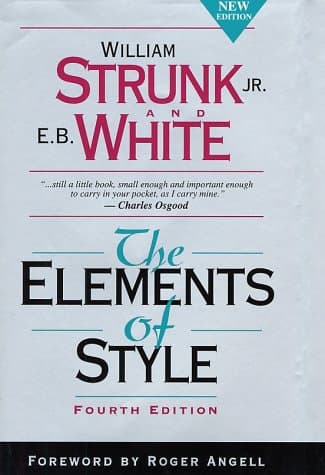
Vigorous writing is concise. A sentence should contain no unnecessary words, a paragraph no unnecessary sentences, for the same reason that a drawing should have no unnecessary lines and a machine no unnecessary parts. This requires not that the writer make all his sentences short, or that he avoid all detail and treat his subjects only in outline, but that every word tell.
This is the book's core idea and its most lasting contribution. Strunk and White suggest a direct approach to writing, where every word must earn its place. They don't mean simplistic writing, but writing that is rich with meaning, free from extra words that hide clarity. The goal is to make reading easier by presenting information directly and efficiently. This ensures that an idea's strength isn't weakened by unnecessary language. Writers must edit their own work carefully, always asking if each phrase and clause is needed.
Supporting evidence
The entire chapter 'Elementary Principles of Composition' repeatedly emphasizes brevity, with specific examples of wordy phrases (e.g., 'the fact that' becoming 'that' or simply omitted).
Apply this
After drafting, conduct a 'word audit' on each sentence. Can a phrase be replaced by a single word? Can a clause be removed without losing essential meaning? Prioritize strong verbs and nouns over adverbs and adjectives where possible.