BookBrief
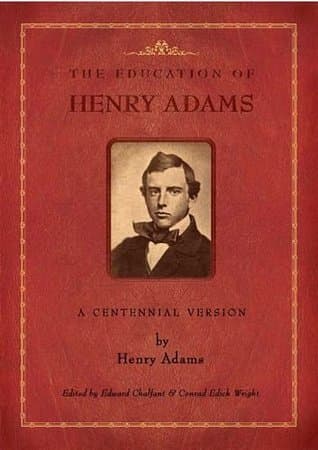
The Education of Henry Adams cover
Archivist's Choice

The Education of Henry Adams

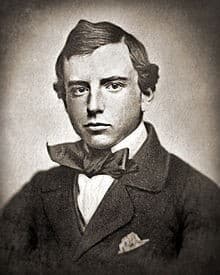
Henry Adams (1777)

Genre

Politics / Biography / Memoir / History

Reading Time

8-12 hours (approx. 320 pages, dense prose)

Key Themes

See below

Track Your Reading

Sign in to track this book

Haunted by the gap between his 19th-century Brahmin upbringing and the dizzying, fragmented start of the 20th, Henry Adams explores his own intellectual obsolescence and an education that left him unprepared for the modern world.

Core Idea

Henry Adams's autobiography is a deep look at how 19th-century education became outdated and how individuals struggle to understand a complex, fragmented, and fast-changing world. Through his story, Adams argues that traditional rationalism and old knowledge were not enough to understand the new forces of the 20th century, symbolized by the 'Dynamo.' He deals with the rapid pace of technological and social change, the feeling that individual will is powerless against these large historical trends, and the loss of a unified, spiritual view represented by the 'Virgin.' Adams suggests that history is not an objective science but a personal search for meaning, often ending with the realization that humanity cannot control or even fully grasp its own path. The book is a long complaint about his education failing to prepare him for modern times and a sign of the ongoing, often difficult, need for self-education in a universe where the idea of progress hides deeper disunity and the overwhelming power of forces beyond human understanding.
Reading time
8-12 hours (approx. 320 pages, dense prose)
Difficulty
Hard
✓ Read this if...
You are interested in the intellectual history of the turn of the 20th century, the clash between science and spirituality, or a deeply introspective and philosophical memoir about the struggle to find meaning in a rapidly changing world.
✗ Skip this if...
You prefer fast-paced narratives, straightforward historical accounts, or a book with clear answers and optimistic outlooks on progress and human agency. This is a dense, often pessimistic, and highly self-referential work.

Core idea

The central argument and framework that powers the entire book.

Henry Adams's autobiography is a deep look at how 19th-century education became outdated and how individuals struggle to understand a complex, fragmented, and fast-changing world. Through his story, Adams argues that traditional rationalism and old knowledge were not enough to understand the new forces of the 20th century, symbolized by the 'Dynamo.' He deals with the rapid pace of technological and social change, the feeling that individual will is powerless against these large historical trends, and the loss of a unified, spiritual view represented by the 'Virgin.'

Adams suggests that history is not an objective science but a personal search for meaning, often ending with the realization that humanity cannot control or even fully grasp its own path. The book is a long complaint about his education failing to prepare him for modern times and a sign of the ongoing, often difficult, need for self-education in a universe where the idea of progress hides deeper disunity and the overwhelming power of forces beyond human understanding.

At a glance

Reading time

8-12 hours (approx. 320 pages, dense prose)

Difficulty

Hard

Read this if...

You are interested in the intellectual history of the turn of the 20th century, the clash between science and spirituality, or a deeply introspective and philosophical memoir about the struggle to find meaning in a rapidly changing world.

Skip this if...

You prefer fast-paced narratives, straightforward historical accounts, or a book with clear answers and optimistic outlooks on progress and human agency. This is a dense, often pessimistic, and highly self-referential work.

Key Takeaways

1

The Failure of 19th-Century Education

Adams's 'education' was a process of unlearning, revealing the inadequacy of his formal schooling.

Quote

Practical politics was an education; and an education in politics was a hazardous occupation.

Adams criticizes the 19th-century educational system, especially its focus on classical studies and a fixed view of knowledge. He says his formal education, passed down from generations of important American politicians and thinkers, completely failed to prepare him for the dynamic, industrializing, and complex world of the late 19th and early 20th centuries. His 'education' became a lifelong, often difficult, process of facing and adapting to realities his schooling never acknowledged or explained. This was not just a personal failur...

Supporting evidence

Adams's extensive recounting of his experiences in various political circles, diplomatic posts, and academic environments, where he consistently felt out of sync with prevailing forces and understood little of their underlying mechanisms, despite his elite upbringing and schooling.

Apply this

Modern education systems must prioritize adaptability, interdisciplinary thinking, and an understanding of complex systems over rote memorization or a narrow focus on established disciplines. Embrace lifelong learning as a necessity, not a luxury.

educational-reform19th-century-pedagogylifelong-learning
2

The Dynamo vs. The Virgin

The stark contrast between mechanical force and spiritual power, and Adams's struggle to reconcile them.

Quote

The Dynamo was a symbol of infinity. The Virgin was a symbol of infinity.

Adams uses the Dynamo (representing modern scientific, industrial, and mechanical forces) and the Virgin (symbolizing the spiritual, artistic, and unified medieval worldview, especially in Chartres Cathedral) as key metaphors for the opposing forces in his world. He is struck by the huge, almost divine, power of the Dynamo at the 1900 Great Exhibition in Paris, seeing it as a new, strong force his traditional understanding could not grasp or combine. This contrasts sharply with the spiritual unity and cohesive societal structure he sa...

Supporting evidence

Adams's detailed descriptions of his experiences at the Great Exhibition of 1900 and his profound reflections on the Chartres Cathedral, comparing the 'force' of each and lamenting the lack of a unifying principle in the modern world.

Apply this

Seek to understand and integrate seemingly disparate forces in your own life and work. Recognize that progress often involves tension between tradition and innovation, and finding meaning requires an effort to bridge these gaps rather than simply choosing one over the other.

technological-determinismspiritual-crisismodernity
3

The Accelerating Pace of Change

Adams grapples with the 'multiplicity' and 'acceleration' that defined the turn of the 20th century.

Quote

The year 1900 was to the historian a world-cleft.

Adams felt history was speeding up, that the world was moving faster than any human mind could follow or manage. He saw a shift from a relatively stable, predictable 18th-century world (his great-grandfather John Adams's world) to a confusing 'multiplicity' of forces in the 20th century. This acceleration was not just technological; it was social, political, and intellectual. Adams, a trained historian, found his traditional ways of understanding and telling history completely insufficient to capture this new reality. The linear progr...

Supporting evidence

Adams's attempts to formulate a 'law of acceleration' in history, comparing the forces of a 'new cosmos' to older, more stable periods, and his observations about the rapid advancements in science, industry, and global politics.

Apply this

Cultivate mental agility and a willingness to embrace uncertainty. Recognize that change is not only constant but often exponential, and that rigid adherence to past models can lead to obsolescence. Prioritize learning new frameworks for understanding complex, rapidly evolving systems.

historical-accelerationcomplexity-theoryfuture-shock
4

The Impotence of Individual Will

Despite his lineage, Adams felt increasingly powerless against impersonal historical forces.

Quote

He knew that he was a Manikin, and that the proper study of mankind was manikin.

Born into one of America's most important political families (grandson and great-grandson of U.S. Presidents), Henry Adams first expected to have influence and leadership. However, his life story shows the decreasing role of individual will and traditional leadership against overwhelming, impersonal forces like industrialization, global capitalism, and scientific progress. He felt his lineage, once a source of power, was now a burden, giving him an education ill-suited for the new age. Adams often describes himself as a 'manikin' or a...

Supporting evidence

His repeated failures to find a meaningful role in politics or diplomacy that aligned with his expectations, and his increasing withdrawal into historical and philosophical studies, viewing himself as an observer rather than an actor.

Apply this

Acknowledge the limits of individual agency in an interconnected world. Focus on understanding systemic forces and finding ways to contribute within those systems, rather than solely relying on individual will. Cultivate humility and a strategic approach to influence.

agency-vs-structurehistorical-determinismpowerlessness
5

The Quest for Unity in a Fragmented World

Adams's lifelong search for a unifying 'science of history' proved elusive in the face of 'multiplicity'.

Quote

The attempt to find a law of history must be abandoned as an attempt to find a law of mind.

A main intellectual goal for Adams was to discover a 'science of history' – a unifying theory or a set of rules that could explain the path and forces of human events, much like physics explained the natural world. He sought a coherence he believed characterized earlier eras, especially the medieval period with its unified spiritual worldview. However, the more he observed the modern world, the more he faced 'multiplicity' – a confusing array of disconnected forces, facts, and experiences that defied any single explanation. This searc...

Supporting evidence

His detailed studies of the medieval period (e.g., Mont Saint Michel and Chartres) contrasted with his observations of modern science and industry, and his theoretical attempts to apply concepts like the Second Law of Thermodynamics to historical processes.

Apply this

Embrace interdisciplinary approaches to problem-solving, recognizing that complex issues rarely have single causes or simple solutions. Be comfortable with ambiguity and the absence of grand unifying theories, focusing instead on understanding interconnectedness and emergent properties.

interdisciplinarityepistemologypostmodernism
6

The Limitations of Rationalism

Adams found pure reason insufficient to comprehend the irrational forces of the modern world.

Quote

Chaos was the law of nature; Order was the dream of man.

Adams, a product of Enlightenment thought, first believed in the power of reason and rational inquiry to understand and order the world. However, his experiences consistently showed him that many of the most powerful forces at play – from political corruption to the raw energy of the dynamo – operated outside pure rationality. He found that human behavior, historical events, and even scientific progress were often driven by irrational impulses, unconscious drives, and unpredictable energies that reason alone could not contain or expla...

Supporting evidence

His observations of political maneuvering in Washington D.C., the seemingly undirected power of the dynamo, and his later attempts to find mystical or spiritual explanations for human behavior, suggesting a retreat from pure rationalism.

Apply this

Recognize the interplay between rational and irrational forces in decision-making and societal dynamics. Develop emotional intelligence and an understanding of human psychology in addition to logical reasoning. Don't assume that all problems have purely rational solutions.

enlightenment-critiqueirrationalityhuman-nature
7

History as Personal Narrative, Not Objective Science

The book itself is a testament to the subjective nature of historical understanding.

Quote

The object of the Education was to follow the education of a man, and the man was Henry Adams.

Despite his wish to write a 'science of history,' Adams ultimately creates a personal account of his own struggle to understand his era. The book is titled 'The Education of Henry Adams,' not 'The History of the 20th Century,' emphasizing that history is always seen through individual experience and perception. He acknowledges the inherent bias and limits of his own view, even using a third-person narrative to create a sense of distance, yet this only highlights the intensely personal nature of his intellectual journey. This approach ...

Supporting evidence

The entire structure of the book as a first-person (though often third-person narrated) memoir, focusing on Adams's internal struggles, intellectual development, and emotional reactions to historical events rather than a detached, chronological account.

Apply this

When consuming historical or analytical content, consider the author's background, biases, and perspective. When constructing your own narratives or analyses, acknowledge your own positionality and the subjective elements inherent in any interpretation.

historiographysubjectivitymemoir-as-history
8

The Weight of Ancestry and Tradition

Adams felt both blessed and burdened by his illustrious family legacy.

Quote

He knew that he must be a failure, if he could not, within fifty years, acquire the education of his great-grandfather.

Adams was very aware of his background, being the grandson of John Quincy Adams and great-grandson of John Adams, both U.S. Presidents. This lineage created great pressure on him, leading to an expectation of public service and intellectual leadership. However, he found that the 'education' passed down from his ancestors – a classical, Enlightenment-era worldview – was completely inadequate for the challenges of the late 19th and early 20th centuries. He struggled with the burden of living up to a past that no longer offered relevant ...

Supporting evidence

His frequent comparisons of his own experiences and intellectual development to those of his presidential ancestors, and his lamentations about the irrelevance of his 'Boston education' in the face of modern challenges.

Apply this

While respecting tradition and learning from the past, critically evaluate whether inherited wisdom remains relevant for current challenges. Be willing to forge new paths and develop new frameworks when existing ones prove insufficient. Understand that legacy can be both a foundation and a cage.

generational-dividelegacy-burdencultural-inheritance
9

The Illusion of Progress

Adams questioned whether technological advancement truly equated to human improvement.

Quote

He could not make of it a sequence, not even a sequence of causes.

While Adams was fascinated by the technology of his time, especially the Dynamo, he doubted whether this material progress led to real human or societal improvement. He saw an increase in raw power and complexity, but not necessarily an increase in wisdom, moral clarity, or a unified sense of purpose. In fact, he often felt that the new forces were causing greater fragmentation, confusion, and a loss of the spiritual unity he admired in earlier ages. His 'education' taught him that material progress could be an indifferent, even destr...

Supporting evidence

His comparisons between the 'force' of the Dynamo and the spiritual force of the Virgin, and his lament that despite all the new energy, humanity seemed no closer to understanding its own direction or destiny.

Apply this

Critically assess the true impact of technological and material advancements. Question whether 'more' or 'faster' always equates to 'better'. Prioritize ethical considerations and the pursuit of meaning alongside efficiency and innovation.

technological-dystopiaprogress-critiqueethics-of-technology
10

The Necessity of Self-Education

True understanding came not from institutions, but from relentless personal inquiry.

Quote

The object of education is the formation of character.

Ultimately, Adams's 'education' was a solitary, self-directed effort, largely done outside the formal structures that had failed him. He learned through extensive travel, careful observation, wide reading, and intense personal reflection, constantly updating his understanding of the world. The book itself is the result of this lifelong process of self-education, showing that true learning, especially in times of great change, cannot be passively received but must be actively pursued. His journey highlights the importance of intellectu...

Supporting evidence

The entire narrative arc of the book, which chronicles his travels across continents, his engagements with diverse individuals, his deep dives into various academic disciplines (history, physics, art), and his continuous struggle to synthesize these experiences into a coherent worldview.

Apply this

Take ownership of your own learning journey. Actively seek out diverse sources of knowledge, engage in critical self-reflection, and be prepared to continuously update your mental models. Embrace curiosity as a guiding principle, recognizing that formal education is just a starting point.

autodidacticismcritical-thinkingintellectual-autonomy

Critical analysis

Notable Quotes

Chaos was the law of nature; Order was the dream of man.

Adams reflecting on the struggle to impose order on the world.

The American mind, then, like all other minds, was a law unto itself, and, like all other laws, had been a growth.

Discussing the unique development of American thought and identity.

The object of education, as Adams understood it, was to fit young men, not to be lawyers or doctors, but to be men.

Adams's view on the purpose of true education beyond vocational training.

Politics, as a practice, whatever its professions, has always been the systematic organization of hatreds.

A cynical observation on the underlying nature of political activity.

He knew, to his cost, that neither history nor science nor any other school of thought had ever been able to explain him to himself.

Adams's personal struggle with self-understanding and the limitations of knowledge.

The true American was a new man, who acted on new principles, new ideas, and new feelings.

Describing the emergence of a distinct American character.

A teacher affects eternity; he can never tell where his influence stops.

Reflecting on the profound and lasting impact of educators.

Power is poison.

A concise and strong statement on the corrupting nature of power.

Modern politics is, at bottom, a struggle between the rich and the poor, and between the rich and the richer.

Analyzing the economic drivers and class struggles within modern political systems.

The older he grew, the more he felt that his education had been all wrong.

Adams's recurring theme of feeling unprepared by his formal education for the modern world.

The press is the only check on government.

Highlighting the crucial role of journalism in a democratic society.

The mind of man, at its best, was a poor machine, and was always breaking down.

A pessimistic view on the limitations and fallibility of human intellect.

Society is a troop of children, who, in their play, take a fancy to some particular doll, and then worship it.

A satirical observation on the arbitrary nature of societal values and trends.

One could not be a man without being a politician.

Adams's belief that engaging with the political world was an essential part of being an active citizen.

Quiz

Test Your Knowledge

Ready to see how well you understood this book? Take our interactive quiz with 10 questions.

10
Questions
~5
Minutes
?
Best Score

Key Questions (FAQ)

This book is a memoir and autobiography by Henry Adams, reflecting on his struggle to comprehend and adapt to the rapid technological, social, and intellectual changes of the late 19th and early 20th centuries. It also serves as a sharp critique of 19th-century educational systems and their relevance to the modern world.

About the author