BookBrief
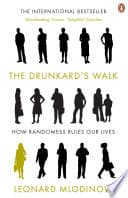
The Drunkard's Walk cover
Archivist's Choice

The Drunkard's Walk

Leonard Mlodinow (2009)

Genre

General

Reading Time

240 min

Key Themes

See below

Track Your Reading

Sign in to track this book

Mlodinow shows how our lives are a high-stakes game of chance, revealing the hidden mathematical forces behind everything from lottery wins to superstardom, and why we often misunderstand them.

Core Idea

The Drunkard's Walk explains how randomness affects our lives and the world, often in ways we mistake for skill, intent, or clear cause-and-effect. Mlodinow argues that from financial markets to medical diagnoses, and from personal success to scientific discovery, chance plays a bigger role than people usually admit. By exploring ideas like regression to the mean, the law of large numbers, and common probability errors, the book offers a way to understand uncertainty. The main idea is that understanding how randomness works—instead of trying to get rid of it—is important for making better decisions, interpreting events more accurately, and living in a world shaped by statistics. It challenges our natural human desire to find patterns and assign reasons, pushing readers to think probabilistically to avoid common mental errors and improve their predictions.
Reading time
240 min
Difficulty
Medium
✓ Read this if...
You want to understand the pervasive role of randomness and probability in everyday life, decision-making, and the interpretation of events, and how to avoid common cognitive biases related to chance.
✗ Skip this if...
You are looking for a prescriptive self-help guide or a book that offers deterministic solutions to complex problems, or if you already have a strong background in statistics and probability theory.

Core idea

The central argument and framework that powers the entire book.

The Drunkard's Walk explains how randomness affects our lives and the world, often in ways we mistake for skill, intent, or clear cause-and-effect. Mlodinow argues that from financial markets to medical diagnoses, and from personal success to scientific discovery, chance plays a bigger role than people usually admit. By exploring ideas like regression to the mean, the law of large numbers, and common probability errors, the book offers a way to understand uncertainty.

The main idea is that understanding how randomness works—instead of trying to get rid of it—is important for making better decisions, interpreting events more accurately, and living in a world shaped by statistics. It challenges our natural human desire to find patterns and assign reasons, pushing readers to think probabilistically to avoid common mental errors and improve their predictions.

At a glance

Reading time

240 min

Difficulty

Medium

Read this if...

You want to understand the pervasive role of randomness and probability in everyday life, decision-making, and the interpretation of events, and how to avoid common cognitive biases related to chance.

Skip this if...

You are looking for a prescriptive self-help guide or a book that offers deterministic solutions to complex problems, or if you already have a strong background in statistics and probability theory.

Key Takeaways

1

The Illusion of Control

We systematically overestimate our skill and underestimate the role of luck.

Quote

The feeling that we are in control is often an illusion. The feeling that we are not in control is often a reality.

People tend to credit outcomes, especially good ones, to skill and deliberate action rather than to chance. This 'illusion of control' makes us believe we can influence events largely beyond our reach. Mlodinow shows how this mental error affects everything from financial markets to sports, causing us to misinterpret success and failure. We look for patterns where there are none, creating stories to explain random changes. This overconfidence in our abilities hides the real reasons behind many events, making us prone to predictable ju...

Supporting evidence

Mlodinow discusses the hot hand fallacy in basketball, where players and fans believe a player has a 'hot hand' after making several shots, despite statistical analysis showing that sequences of hits and misses are consistent with random chance. He also cites studies on stock market performance, where active fund managers often fail to consistently beat market averages, suggesting that their 'skill' is largely indistinguishable from random fluctuation.

Apply this

Cultivate intellectual humility by consciously questioning whether an outcome was due to skill or luck. Before making a decision, consider a counterfactual: what if a different, random variable had occurred? This helps calibrate expectations and reduces overconfidence, leading to more robust strategies that acknowledge uncertainty.


illusion-of-controlcognitive-biashot-hand-fallacy
2

Regression to the Mean

Extreme performances tend to be followed by more average ones.

Quote

Extremely good or bad performances are often followed by more average ones, not because of some mystical balancing force, but because extreme events are often a combination of skill and extreme luck.

Regression to the mean is a basic statistical idea often confused with cause-and-effect. Mlodinow explains that when an outcome is affected by both skill and chance, an exceptionally good or bad result is likely due to unusually good or bad luck. Following performances are thus likely to be closer to the average, as extreme luck probably will not repeat. This idea is widely misunderstood, leading to wrong conclusions, such as thinking that criticism improved performance (when it was just returning from an unusually bad period) or that...

Supporting evidence

Mlodinow uses the example of flight instructor experiments, where instructors believed praise for good landings led to worse subsequent landings, and criticism for bad landings led to better subsequent ones. In reality, exceptionally good or bad landings were simply regressing to the pilot's average performance, making it appear as though the feedback caused the change, rather than it being a statistical inevitability.

Apply this

When evaluating performance, especially after an extreme result, remember to account for regression to the mean. Don't attribute an improvement or decline solely to an intervention if the previous result was an outlier. This helps in designing more effective feedback systems and avoiding superstitious conclusions about causality.

regression-to-the-meanstatistical-fallacycausality-vs-correlation
3

The Law of Large Numbers (and Small Ones)

Large samples reveal underlying probabilities; small samples can be wildly misleading.

Quote

The law of large numbers assures us that if we repeat a random experiment a large enough number of times, the average of the results will tend to be close to the expected value. The law of small numbers, however, is a fallacy.

Mlodinow highlights the important difference between large and small sample sizes when looking at data. The Law of Large Numbers states that as the number of trials increases, the observed frequency of an event will approach its true probability. This is why casinos make money over time, even with random results. However, people often fall for the 'Law of Small Numbers,' drawing firm conclusions from too little data. Small samples are very sensitive to random changes, making them unrepresentative and leading to incorrect generalizatio...

Supporting evidence

Mlodinow discusses how small towns often show higher rates of certain diseases (like cancer clusters) purely by chance, because their smaller populations mean that a few extra cases can dramatically skew the percentage, whereas in larger cities, those same few cases would be diluted. He also mentions the gambler's fallacy, where people believe that after a run of reds on a roulette wheel, black is 'due,' ignoring that each spin is an independent event.

Apply this

Always question the sample size when presented with data or anecdotes. Be skeptical of conclusions drawn from small datasets, especially in areas like health, finance, or social trends. Prioritize studies with large, representative samples to gain a more accurate understanding of underlying probabilities.

law-of-large-numbersgamblers-fallacysample-size-bias
4

The Power of Pathways

The number of ways an event can occur profoundly impacts its probability.

Quote

The number of paths to a particular outcome can often be as important as the individual probabilities of each step along the way.

Mlodinow stresses that probability is not just about how likely a single event is, but also about the number of ways that event can happen. This idea, based on combinatorics, explains why some outcomes appear more often than others, even if individual small events are equally likely. For example, there are many more ways to get an average test score than an exceptionally high or low one. Our natural understanding often misses this 'pathway' factor, causing us to misjudge the likelihood of complex events. Understanding this helps expla...

Supporting evidence

Mlodinow illustrates this with the example of a Galton board (or bean machine), where balls drop through a series of pegs. While each individual turn at a peg is random (left or right), the balls accumulate in a bell-shaped curve at the bottom, because there are many more paths that lead to the center bins than to the extreme outer bins. This visually demonstrates how the number of pathways creates the normal distribution.

Apply this

When assessing the probability of a complex outcome, don't just consider the likelihood of one specific sequence of events. Instead, think about all the possible combinations and pathways that could lead to that outcome. This perspective helps in understanding why 'average' is so common and 'extreme' is so rare.

combinatoricsnormal-distributionprobability-theory
5

Subjective Probability and Bayesian Thinking

Our beliefs should be updated based on new evidence, not held rigidly.

Quote

Probability is not just a property of the world, but also a property of our knowledge about the world.

Mlodinow explores subjective probability, where probabilities reflect how much we believe in an event, rather than an objective frequency. He introduces Bayesian thinking as a way to update these beliefs. Instead of sticking to initial assumptions, Bayesian inference teaches us to adjust our prior probabilities (initial beliefs) with new evidence to form posterior probabilities (updated beliefs). This is a tool for rational decision-making, helping us move past personal stories and confirmation bias. It is especially important in fiel...

Supporting evidence

Mlodinow explains the classic medical diagnosis problem: if a disease affects 1% of the population and a test is 90% accurate (90% true positive, 10% false positive), what is the probability that someone who tests positive actually has the disease? Most people overestimate, neglecting the low prior probability of having the disease. Bayesian analysis reveals the actual probability is much lower than intuition suggests, due to the high number of false positives in a low-prevalence population.

Apply this

Actively seek out new information that might challenge your existing beliefs. When encountering new data, use it to update, rather than merely confirm, your prior probabilities. This iterative process of belief revision is fundamental to critical thinking and adapting to a changing world.

bayesian-inferencesubjective-probabilityconfirmation-biasprior-probability
6

The Fallacy of Determinism

Many outcomes we perceive as predetermined are merely random paths taken.

Quote

We tend to mistake the outcome of a random process for the result of some deep and meaningful plan.

One of Mlodinow's main points is that our universe, and especially our lives, are less predetermined than we like to think. We tend to create convincing stories after the fact to explain successes and failures, giving random events purpose or inevitability. This backward-looking determinism ignores the many other paths that could have been taken and the significant role of chance. From career success to scientific discoveries, many outcomes that seem to result from genius or careful planning are, in fact, the result of a 'drunkard's w...

Supporting evidence

Mlodinow discusses the career paths of successful individuals, noting that many attribute their success to a clear vision or specific decisions, while often overlooking the fortunate encounters, unexpected opportunities, or even failures that randomly diverted them onto a successful trajectory. He also alludes to the 'butterfly effect' in chaos theory, where small, random perturbations can lead to vastly different outcomes.

Apply this

Resist the urge to create overly simplistic, linear narratives for success or failure. Acknowledge the role of serendipity and random events in your own life and the lives of others. This fosters empathy and a more realistic view of achievement, encouraging adaptability rather than rigid adherence to a 'master plan.'

determinismserendipitynarrative-fallacyretrospective-bias
7

Risk Perception and Decision Making

Our emotional response to risk often overrides rational statistical assessment.

Quote

The human mind is not built to understand probabilities well, and the media often exploits this weakness.

Mlodinow criticizes how our view of risk is often distorted, leading to illogical decisions. We tend to overreact to vivid, emotional, and easily remembered information (availability heuristic) while downplaying more common, less dramatic threats. This explains why people fear flying more than driving, even though driving is statistically much more dangerous. The media often makes this worse by focusing on sensational events, further skewing our risk assessment. Understanding the statistical realities of risk, instead of relying on gu...

Supporting evidence

Mlodinow discusses how people often overestimate the likelihood of rare, dramatic events (like plane crashes or terrorist attacks) due to their vivid portrayal in the media, while underestimating the probability of more common, mundane risks (like car accidents or lifestyle-related diseases). He also touches upon the anchoring effect, where an initial piece of information biases subsequent judgments.

Apply this

When evaluating risks, actively seek out objective statistical data rather than relying on anecdotes, media headlines, or emotional responses. Compare risks in a broader context and challenge your initial gut reactions to ensure decisions are based on actual probabilities, not just perceived threats.

risk-perceptionavailability-heuristicemotional-biasanchoring-effect
8

The Drunkard's Walk of Molecules and Markets

Random walks underpin diverse phenomena, from physics to finance.

Quote

The random walk is a mathematical model that describes a path consisting of a sequence of random steps.

At the core of Mlodinow's book is the 'drunkard's walk' or random walk, a mathematical model where each step is taken in a random direction. He shows how this simple model, originally used to describe the erratic movement of molecules (Brownian motion), applies to many complex systems. From stock market changes and disease spread to individual life paths, many things that seem to have patterns are, in fact, best described as random walks. Recognizing this helps us understand the inherent unpredictability in many systems and warns agai...

Supporting evidence

Mlodinow explains Brownian motion, where pollen grains suspended in water move randomly due to collisions with water molecules. He then extends this to financial markets, arguing that stock prices often follow a random walk, meaning past price movements are not reliable predictors of future movements, making consistent stock picking extremely difficult.

Apply this

When observing volatile systems like financial markets or even career trajectories, be wary of attributing every fluctuation to a deliberate cause. Understand that inherent randomness can drive significant movement. This encourages a more patient, less reactive approach, focusing on long-term probabilities rather than short-term noise.

random-walkbrownian-motionstochastic-processesmarket-efficiency
9

The Tyranny of Small Differences

Minute random advantages can compound into massive disparities over time.

Quote

In a world ruled by chance, the initial conditions, even tiny random differences, can have enormous consequences over time.

Mlodinow reveals how seemingly small, random advantages or disadvantages can, over time, grow into large differences in outcomes. This 'tyranny of small differences' explains why, for example, a slightly better student early on might get access to better resources, which further improves their performance, leading to a big gap later. It is not always about a single, decisive moment of genius or failure, but often a chain of small, random benefits or setbacks accumulating. This idea challenges meritocratic ideals, suggesting that while...

Supporting evidence

Mlodinow cites studies on the careers of scientists, athletes, and artists, showing how early, often random, recognition or opportunity can create a positive feedback loop, leading to disproportionate success. He might also allude to the Matthew Effect, where 'the rich get richer and the poor get poorer,' demonstrating how initial advantages snowball.

Apply this

Recognize that 'success' is often a complex interplay of effort, talent, and accumulated random advantages. Advocate for systems that mitigate the tyranny of small differences by providing more equitable starting points and opportunities for those who may have experienced early random disadvantages. Practice humility in your own successes and empathy for others' struggles.

compounding-effectsinitial-conditionsinequalitymatthew-effect
10

Embracing Uncertainty for Better Decisions

True wisdom lies in understanding and adapting to a random world, not fighting it.

Quote

The greatest obstacle to understanding the role of randomness in our lives is our human need for meaning and control.

Ultimately, Mlodinow's work encourages us to accept uncertainty rather than deny it. Our deep need for meaning and control often leads us to create elaborate, but false, explanations for random events. By understanding the mathematical principles of randomness—from regression to the mean to the law of large numbers—we can develop a more realistic and balanced view of the world. This does not mean giving in to fatalism, but rather giving ourselves the mental tools to make better decisions, manage expectations, and build resilience in t...

Supporting evidence

Throughout the book, Mlodinow consistently contrasts intuitive, often flawed, human reasoning with rigorous statistical analysis. He shows how acknowledging randomness in sports, finance, and everyday life can lead to more effective strategies, such as focusing on process over outcome, or diversifying investments rather than chasing 'hot' stocks.

Apply this

Integrate an understanding of randomness into your daily decision-making. Focus on processes that are robust to random fluctuations, rather than trying to predict or control every outcome. Develop a mindset that accepts uncertainty as an inherent part of life, fostering adaptability and reducing anxiety about factors beyond your control.

uncertainty-acceptancedecision-makingresiliencestatistical-literacy

Critical analysis

Notable Quotes

The mind is a wonderful thing. It starts working the minute you're born and never stops working until you get into a classroom and are asked to solve a problem.

Mlodinow's humorous observation on learning and problem-solving.

We often confuse the fact that the world is deterministic with the idea that we can predict it.

Discussing the difference between determinism and predictability, especially in complex systems.

The laws of probability, like the laws of physics, are not suggestions. They are laws.

Emphasizing the fundamental and unyielding nature of probability laws.

Chance is a more fundamental concept than determinism.

A provocative statement challenging the intuitive dominance of deterministic thinking.

The human mind is a story generator, not a logic machine.

Explaining why humans often prefer narratives and causal explanations over statistical reasoning.

Sometimes a truly random event just looks like it was caused by something.

Highlighting the human tendency to seek patterns and causes even in pure randomness.

The world is not as predictable as we think it is, nor as unpredictable as we sometimes fear.

A nuanced perspective on the balance between order and chaos in the universe.

We are much more likely to remember when our prediction was right than when it was wrong.

Discussing confirmation bias and selective memory in evaluating our foresight.

Luck is not a magical force, but a statistical reality.

Demystifying the concept of luck by grounding it in the principles of probability.

Correlation is not causation, but it sure is a hint.

A common statistical adage, acknowledging the practical utility of correlation while warning against overinterpretation.

The greatest enemy of knowledge is not ignorance, it is the illusion of knowledge.

A powerful statement about the danger of overconfidence and unexamined beliefs.

The more unlikely an event, the more likely we are to search for a cause.

Explaining the psychological drive to find explanations for rare or surprising occurrences.

Our brains are wired to see patterns, and sometimes those patterns are just noise.

Discussing the evolutionary advantage and potential pitfalls of human pattern recognition.

Understanding probability means understanding the world better, and understanding the world better means making better decisions.

Summarizing the core message and practical benefit of the book.

Quiz

Test Your Knowledge

Ready to see how well you understood this book? Take our interactive quiz with 10 questions.

10
Questions
~5
Minutes
?
Best Score

Key Questions (FAQ)

'The Drunkard's Walk' by Leonard Mlodinow explores how randomness and uncertainty profoundly influence our lives, yet we often fail to grasp their significance. The book uses mathematical principles to reveal the hidden role of chance in everything from lotteries and sports to stock markets and medical diagnoses.

About the author

Leonard Mlodinow

Leonard Mlodinow is an American theoretical physicist and mathematician, screenwriter and author. In physics, he is known for his work on the large N expansion, a method of approximating the spectrum of atoms based on the consideration of an infinite-dimensional version of the problem, and for his work on the quantum theory of light inside dielectrics.