“I am a ridiculous person. They call me a madman now. That was a promotion, if you ask me. I used to be simply ridiculous.”
— The narrator's opening self-assessment, setting the tone for his alienation and perceived absurdity.

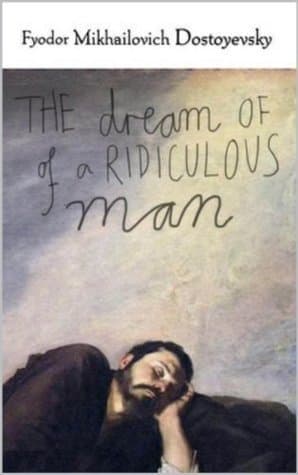
Genre
Philosophy
Reading Time
30 min
Key Themes
See below
Sign in to track this book
A man's cynical path to suicide is interrupted by a distressed child, leading him to a vivid dream of a perfect world and a fervent, if absurd, mission to share its truth.
“I am a ridiculous person. They call me a madman now. That was a promotion, if you ask me. I used to be simply ridiculous.”
— The narrator's opening self-assessment, setting the tone for his alienation and perceived absurdity.
“I had a terrible knowledge that I could not be happy in this world.”
— The narrator reflecting on his profound nihilism and disillusionment before his transformative dream.
“It was just then, in the very moment when I was thinking of putting an end to my life, that I looked at the little girl.”
— The pivotal moment where the narrator's encounter with a distressed child interrupts his suicidal ideation.
“I suddenly felt that it was all the same to me whether the world existed or whether there had never been anything at all.”
— The narrator describing his complete indifference to existence, a precursor to his decision to end his life.
“Oh, it was a dream, but the sensation of the love of those innocent, uncorrupted people remained in my heart.”
— After waking from his dream of a paradisiacal Earth, the narrator feels the profound impact of the experience.
“I saw their sun, their pale-blue sky, their pale-green trees, I saw their children.”
— A description from the narrator's dream of a pristine, utopian world.
“They were happy, without science, without work, without pain, without sickness.”
— The narrator's initial observation of the inhabitants of the ideal world in his dream.
“But soon they learned to lie, and they loved lying, and they knew the beauty of lying.”
— The narrator describing how he corrupted the innocent people of the dream world, introducing vice.
“They learned to know sorrow, and they loved sorrow; they thirsted for suffering, and they said that truth was only attained through suffering.”
— After being corrupted, the dream people embrace suffering and associate it with truth, reflecting a Dostoevskian theme.
“I saw how their knowledge grew, how their science developed, how their art flourished, and how their suffering increased.”
— The narrator observing the 'progress' of the corrupted dream society, linking advancement with increased misery.
“I have seen the truth. I have seen it and I know it.”
— The narrator's declaration after his dream, convinced of the possibility of a better world.
“And it's so simple! The one thing is—love thy neighbour as thyself—that's the one thing.”
— The narrator's core realization and message after his dream, emphasizing the power of love.
“The consciousness of life is higher than life, the knowledge of the laws of happiness is higher than happiness.”
— A profound philosophical statement from the dream, suggesting that understanding life and happiness might be more significant than merely experiencing them.
“I shall go, I shall go and preach, because I have seen the truth with my own eyes.”
— The narrator's resolve at the end of the story, committing to share his newfound understanding.
Ready to see how well you understood this book? Take our interactive quiz with 10 questions.

Fyodor Mikhailovich Dostoevsky, sometimes transliterated as Dostoyevsky, was a Russian novelist, short story writer, essayist and journalist. Numerous literary critics regard him as one of the greatest novelists in all of world literature, as many of his works are considered highly influential masterpieces.

Jeff Olson
4.4
Thomas Sowell
4.4
Walter Brueggemann
4.3

Rhonda Byrne
4.3

Robin Wall Kimmerer
4.3
George S. Clason
4.3
Elliot Aronson
4.3
Joseph Campbell
4.3