BookBrief
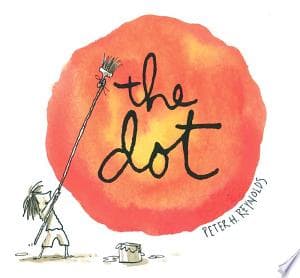
The Dot cover
Archivist's Choice

The Dot

Peter Reynolds (2003)

Genre

General

Reading Time

5 min

Key Themes

See below

Track Your Reading

Sign in to track this book

An angry dot turns a doubting student into an acclaimed artist, showing that creativity starts with the courage to make a mark.

Core Idea

The Dot suggests that creativity is a human trait often stopped by self-doubt and fear of imperfection. It proposes that artistic expression begins with one imperfect mark, and that an encouraging mentor is important in supporting early efforts. This support, more than direct teaching, helps people explore their creative potential, moving past the fear of a blank page to find a process of self-discovery and inspiration.
Reading time
5 min
Difficulty
Easy
✓ Read this if...
You're a parent, educator, or anyone looking for a gentle, inspiring reminder about the nature of creativity, self-belief, and the power of encouragement.
✗ Skip this if...
You are seeking a detailed, academic treatise on art theory or a complex narrative.

Core idea

The central argument and framework that powers the entire book.

The Dot suggests that creativity is a human trait often stopped by self-doubt and fear of imperfection. It proposes that artistic expression begins with one imperfect mark, and that an encouraging mentor is important in supporting early efforts. This support, more than direct teaching, helps people explore their creative potential, moving past the fear of a blank page to find a process of self-discovery and inspiration.

At a glance

Reading time

5 min

Difficulty

Easy

Read this if...

You're a parent, educator, or anyone looking for a gentle, inspiring reminder about the nature of creativity, self-belief, and the power of encouragement.

Skip this if...

You are seeking a detailed, academic treatise on art theory or a complex narrative.

Key Takeaways

1

The Power of a Single Mark

Even the smallest beginning can unleash immense creative potential.

Quote

Just make a mark and see where it takes you.

The book shows that creativity does not need grand gestures or natural talent; it just needs a start. Vashti's first angry dot, seemingly unimportant, begins her artistic journey. This idea challenges the common belief that one must have a full idea or great skill before starting. Instead, it supports the courage to begin, even imperfectly, and trust that the process will guide the outcome. It reminds us that every great work, invention, or discovery began with one, often unsure, step.

Supporting evidence

Vashti's initial 'unremarkable and angry mark' on a blank sheet of paper, which her teacher frames and displays, validating its existence and potential.

Apply this

When facing a daunting creative task or feeling overwhelmed by a blank slate, commit to making the absolute smallest possible start. Write one sentence, draw one line, or even just title a document. This breaks the inertia and allows momentum to build.


creative-initiationovercoming-inertiaminimal-start
2

The Encouraging Mentor

Supportive mentorship can transform self-doubt into self-discovery.

Quote

Her teacher smiled. 'Just make a mark and see where it takes you.'

Vashti's teacher is an ideal mentor: someone who sees ability where the student sees only lack. Instead of criticizing Vashti's perceived inability or her 'angry mark,' the teacher supports her effort and gently encourages her to explore. This kind encouragement is key for building creativity, especially in those who are unsure or lack confidence. The teacher's simple act of framing the dot changes it from a 'mistake' to art, shifting Vashti's view of her abilities and inspiring her to continue.

Supporting evidence

The teacher's act of framing Vashti's first dot and displaying it for the class, and her subsequent gentle questions like 'Now make a second dot,' rather than giving direct instructions.

Apply this

As a mentor or leader, focus on validating effort and curiosity over immediate perfection. Ask open-ended questions that encourage further exploration rather than delivering critical feedback. Celebrate small attempts as significant progress.

mentorshippositive-reinforcementcreative-coaching
3

Validation Fuels Creativity

Acknowledging and celebrating early efforts can unlock greater potential.

Quote

'A dot? Not just a plain dot?' 'Well, perhaps. But it is a VERY good dot,' said Vashti's teacher.

The teacher's simple act of framing Vashti's first dot is a strong example of support. It tells Vashti that her work, no matter how simple, deserves recognition and respect. This external support gives Vashti the confidence boost she needs to overcome her self-doubt and start experimenting more boldly. It changes her view from seeing her mark as a failure to seeing it as a starting point. This idea applies broadly: positive feedback, even for small achievements, can greatly motivate people to pursue more complex and ambitious goals.

Supporting evidence

The teacher's decision to frame Vashti's first dot and place it on her desk, prompting Vashti to think, 'Hmmmm. What else can I do with a dot?'

Apply this

Actively seek opportunities to validate the small, initial efforts of others (and yourself). Give specific, honest praise for a beginning, an idea, or an attempt, rather than waiting for a fully polished product. This creates psychological safety for further experimentation.

validationself-efficacyrecognition
4

The Journey of Exploration

One initial step often leads to a delightful and unexpected path of discovery.

Quote

That one little dot marks the beginning of Vashti’s journey of surprise and self-discovery.

Once Vashti makes her first mark and gets support, her creative journey unfolds naturally. She moves from simple dots to more complex art, trying different colors, sizes, and methods. This shows that creativity is rarely a straight path but rather one where each step informs the next. The 'surprise and self-discovery' in the book are important; Vashti does not know where her dots will take her, but she embraces the exploration. This encourages us to let go of strict expectations and let the creative process reveal new possibilities.

Supporting evidence

Vashti's progression from a single dot to 'dots of many colors,' 'big dots and small dots,' and eventually creating entire landscapes and abstract pieces using dots.

Apply this

Embrace iterative creation. Don't feel pressured to have the final vision before starting. Allow your initial work to guide your next steps, remaining open to unexpected turns and discoveries. View 'mistakes' as opportunities for new directions.

creative-processiterative-designexploration
5

Inspiring Others Through Example

Authentic self-expression has a ripple effect, empowering others to find their own voice.

Quote

And Vashti, with a smile, handed the boy the paper. 'Your dot is better than mine,' he said. 'Perhaps,' Vashti replied, 'but can you make a dot like THIS?'

Near the end of the story, Vashti, now a confident artist, meets a boy struggling with his own blank page. Instead of drawing for him, she uses her new understanding to encourage him, much like her teacher did. This shows the strong effect of creative confidence. When people embrace their own expression, they inspire others to do the same, not by direct teaching, but by showing courage and openness. It is about helping others find their own 'dot,' rather than copying someone else's.

Supporting evidence

Vashti's interaction with the boy at her art show, where she encourages him to make his own mark and then challenges him to 'make a dot like THIS,' pointing to his own initial mark.

Apply this

When someone expresses creative insecurity, avoid doing the work for them. Instead, share your own journey of overcoming initial fear, offer encouragement for their first step, and ask guiding questions to help them discover their unique approach.

inspirationpeer-mentorshipcreative-community
6

Art is Not Just Perfection

The true value of art lies in authenticity and the journey of creation, not flawless execution.

Quote

'There!' she says. That one little dot marks the beginning of Vashti’s journey of surprise and self-discovery.

Vashti's journey clearly rejects the idea that art must be 'perfect' or follow set rules. Her first dot is 'angry' and 'unremarkable' by her own judgment, yet this raw, real mark begins her path. The book quietly argues that the act of creation, the expression of an inner feeling, and the exploration of an idea are more valuable than the finished product. This view frees people from the fear of not being 'good enough,' opening the door for real self-expression.

Supporting evidence

The teacher's immediate validation of Vashti's 'angry' dot, and Vashti's subsequent production of diverse dots, some 'plain' and some complex, all celebrated as part of her artistic evolution.

Apply this

Shift your focus from striving for a 'perfect' outcome to embracing the process of creation itself. Allow for imperfections, view them as part of the unique character of your work, and prioritize genuine expression over technical flawlessness.

authenticity-in-artprocess-over-productimperfection
7

Overcoming the Blank Page Paralysis

The fear of starting can be conquered by making any mark, no matter how small.

Quote

Art class is over, but Vashti is sitting glued to her chair in front of a blank piece of paper. The words of her teacher are a gentle invitation to express herself. But Vashti can’t draw - she’s no artist.

The 'blank page' is a common sign of creative block, representing the difficult challenge of starting something new when self-doubt is strong. Vashti's initial inability to start perfectly shows this feeling. The book's great simplicity is in its answer: do not overthink, just make a mark. This act, even if from frustration, breaks the spell of inaction. It suggests that the biggest obstacle is often just starting, and once that first barrier is overcome, the path forward becomes clearer, or at least visible enough for the next step.

Supporting evidence

Vashti's initial state of being 'glued to her chair in front of a blank piece of paper' and her subsequent angry jab to make a dot.

Apply this

When faced with a blank slate, whether it's writing, designing, or problem-solving, resist the urge to strive for brilliance immediately. Instead, commit to a tiny, non-consequential action that simply gets something down. This 'first mark' often unlocks the flow.

creative-blockstarting-smallfear-of-failure
8

The Recursive Nature of Creativity

The act of creating expands one's capacity for further creation.

Quote

Vashti made a dot. Just a plain dot. She pressed down hard on the paper to make an angry mark. 'There!' she says.

Vashti's journey powerfully shows how creativity is not a limited resource but a skill that grows with use. Her first angry dot, once supported, leads to a series of more detailed and confident dot creations. Each new dot, each new experiment, expands her understanding of what she can do. This cycle—action leading to confidence, leading to more action—is key to developing skills in any area. It highlights that the more you create, the more creative you become, making the first push even more important.

Supporting evidence

Vashti's progression from one dot to 'dots of many colors,' 'big dots and small dots,' and eventually creating complex 'dot-paintings' for an art show.

Apply this

Commit to a regular, small creative practice, even when you don't feel inspired. The consistent act of making, writing, or designing, however imperfect, will build your creative 'muscle' and foster a sense of continuous possibility. View each finished piece as fuel for the next.

creative-growthskill-developmentiterative-learning
9

Everyone is an Artist

The book champions the belief that innate creative potential resides in us all, waiting to be unlocked.

Quote

That special moment is the core of Peter H. Reynolds’s delicate fable about the creative spirit in all of us.

At its core, 'The Dot' states that creativity is not a gift given to a few, but a human ability. Vashti's first statement of 'I can't draw - I'm no artist' is a common feeling that the book breaks down. By showing how a simple mark can grow into full artistic expression, Reynolds argues that the title 'artist' is earned through creating, not through some natural talent. It is a freeing message that encourages everyone to use their unique creative spirit, regardless of perceived skill.

Supporting evidence

The entire narrative arc of Vashti, who starts believing she's 'no artist' and ends up inspiring others with her art, embodying the transformation of self-perception.

Apply this

Challenge your own limiting beliefs about your creative abilities. Engage in creative activities without the pressure of producing a masterpiece, simply for the joy of expression and exploration. Encourage others by affirming their potential, not just their polished output.

universal-creativityself-expressioncreative-confidence

Critical analysis

Notable Quotes

I can't draw.

Vashti's initial declaration to her art teacher.

Just make a mark and see where it takes you.

The art teacher's simple, encouraging instruction to Vashti.

Vashti jabbed at a clean sheet of paper. 'There!' she said.

Vashti's frustrated but defiant first mark.

Her teacher picked up the paper and studied it carefully. 'Hmmmm.'

The teacher's thoughtful, non-judgmental reaction to Vashti's dot.

She pushed the paper toward Vashti. 'Now sign it.'

The teacher's instruction to Vashti after praising her first dot.

Vashti thought for a moment. Well, maybe I can't draw, but I can make a dot.

Vashti's internal reflection leading to her signing her work.

The next day, when Vashti walked into art class, she was surprised to see her little dot, all framed in a sparkly gold frame, hanging on the teacher's desk.

Vashti's discovery of her framed artwork, boosting her confidence.

A dot? 'I can make a better dot than that!'

Vashti's reaction, spurred by seeing her framed dot, to create more.

She began to experiment. She made dots of all colors. Big dots, little dots, red dots, blue dots, yellow dots, green dots.

Vashti's exploration and expansion of her artistic boundaries.

She even made a dot by not making a dot.

Vashti's innovative creation of a negative space dot.

'Your dot is really great,' said Vashti. 'How did you draw it?'

Vashti's interaction with a young boy who claims he can't draw.

She handed the boy a blank sheet of paper. 'Make a mark and see where it takes you.'

Vashti passes on her teacher's wisdom to another child.

And Vashti's art show was a real smash.

The success of Vashti's art exhibition.

Just a dot. To me, it is a dot of pure genius.

The art teacher's internal thought about Vashti's first dot, reflecting its significance.

Quiz

Test Your Knowledge

Ready to see how well you understood this book? Take our interactive quiz with 10 questions.

10
Questions
~5
Minutes
?
Best Score

Key Questions (FAQ)

'The Dot' by Peter H. Reynolds is a story about a young girl named Vashti who believes she can't draw. With the encouragement of her teacher, she makes a simple mark on a piece of paper, which sparks a journey of self-discovery and unleashes her creative spirit.

About the author