BookBrief
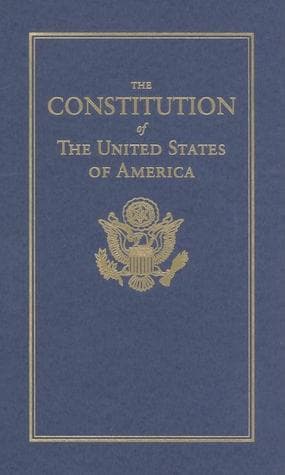
The Constitution of the United States of America cover
Archivist's Choice

The Constitution of the United States of America

Founding Fathers (2014)

Genre

Politics / Reference / History / Philosophy

Reading Time

30 min

Key Themes

See below

Track Your Reading

Sign in to track this book

Understand American governance and liberty with the text that shaped a nation and inspired generations.

Core Idea

The U.S. Constitution sets up American governance, balancing power among three branches and between federal and state authorities, while protecting individual liberties. It is a dynamic document, not a static relic, designed to change through amendment and interpretation, ensuring its continued use for a self-governing people. The document's core strength is its detailed explanation of popular sovereignty, checks and balances, federalism, and the protection of fundamental rights. All of this is meant to prevent tyranny and promote general welfare through a government of limited powers.
Reading time
30 min
Difficulty
Medium
✓ Read this if...
You need a direct, unadulterated understanding of the foundational legal and philosophical document governing the United States, essential for any citizen, student, or legal professional.
✗ Skip this if...
You are looking for an interpretive analysis or historical commentary on the Constitution; this book is the raw text itself.

Core idea

The central argument and framework that powers the entire book.

The U.S. Constitution sets up American governance, balancing power among three branches and between federal and state authorities, while protecting individual liberties. It is a dynamic document, not a static relic, designed to change through amendment and interpretation, ensuring its continued use for a self-governing people. The document's core strength is its detailed explanation of popular sovereignty, checks and balances, federalism, and the protection of fundamental rights. All of this is meant to prevent tyranny and promote general welfare through a government of limited powers.

At a glance

Reading time

30 min

Difficulty

Medium

Read this if...

You need a direct, unadulterated understanding of the foundational legal and philosophical document governing the United States, essential for any citizen, student, or legal professional.

Skip this if...

You are looking for an interpretive analysis or historical commentary on the Constitution; this book is the raw text itself.

Key Takeaways

1

A Living Document, Not a Relic

The Constitution's enduring power lies in its capacity for amendment and interpretation.

Quote

The Congress, whenever two thirds of both Houses shall deem it necessary, shall propose Amendments to this Constitution, or, on the Application of the Legislatures of two thirds of the several States, shall call a Convention for proposing Amendments...

The Constitution is often seen as a static, sacred text, but its framers intentionally built in ways for it to change. Article V outlines the amendment process, recognizing that future generations would face new challenges and need adjustments to the nation's law. This foresight keeps the document from becoming outdated, ensuring its continued use and flexibility. The amendment process, while difficult, has allowed for major societal shifts, from abolishing slavery to expanding voting rights. This shows that the Constitution is a dyna...

Supporting evidence

Article V, detailing the amendment process, and the existence of 27 amendments ratified over time.

Apply this

When debating constitutional issues, consider the framers' intent for a living document and the historical context of amendments. Advocate for thoughtful constitutional interpretation that balances original intent with contemporary societal needs.


constitutional-amendmentsoriginalismliving-constitutionarticle-v
2

Checks and Balances: Power Divided, Not Concentrated

The separation of powers is designed to prevent tyranny by distributing authority across three distinct branches.

Quote

All legislative Powers herein granted shall be vested in a Congress of the United States, which shall consist of a Senate and House of Representatives. The executive Power shall be vested in a President of the United States of America. The judicial Power of the United States shall be vested in one supreme Court, and in such inferior Courts as the Congress may from time to time ordain and establish.

The U.S. Constitution's strength is its design to prevent power from concentrating in one place. By dividing government authority into three branches—legislative (Congress), executive (President), and judicial (Supreme Court and lower courts)—the framers created a system of 'checks and balances.' Each branch has specific powers that can limit or oversee the others. For instance, Congress can impeach the President, the President can veto legislation, and the judiciary can declare laws unconstitutional. This interaction ensures no singl...

Supporting evidence

Articles I, II, and III explicitly define the powers and composition of the legislative, executive, and judicial branches respectively, along with specific checks each holds over the others (e.g., presidential veto, congressional override, judicial review).

Apply this

Critically analyze government actions by identifying which branch is exercising power and how other branches are checking or balancing it. Support reforms that strengthen the independence and oversight capabilities of each branch.

separation-of-powerslegislative-branchexecutive-branchjudicial-branchtyranny-prevention
3

Federalism: A Delicate Balance of Power

The division of power between national and state governments fosters local autonomy while maintaining national unity.

Quote

The powers not delegated to the United States by the Constitution, nor prohibited by it to the States, are reserved to the States respectively, or to the people.

Federalism, a core part of the Constitution, creates a system where power is shared between a national (federal) government and individual state governments. This structure was a compromise between a strong central authority and independent states, reflecting the diverse interests of the new nation. The Tenth Amendment states that powers not given to the federal government are reserved for the states or the people, showing the idea of decentralized governance. This allows states to tailor laws and policies to their specific population...

Supporting evidence

The Tenth Amendment, along with various articles outlining federal powers (e.g., Article I, Section 8) and limitations on state powers (e.g., Article I, Section 10).

Apply this

Understand which level of government (federal, state, or local) is responsible for specific issues. Participate in state and local elections to influence policies relevant to your community, and advocate for appropriate federal-state cooperation.

federalismstate-rightstenth-amendmentnational-unitydecentralized-governance
4

The Supremacy Clause: Federal Law Reigns Supreme

When federal and state laws conflict, the Constitution and federal statutes take precedence.

Quote

This Constitution, and the Laws of the United States which shall be made in Pursuance thereof; and all Treaties made, or which shall be made, under the Authority of the United States, shall be the supreme Law of the Land; and the Judges in every State shall be bound thereby, any Thing in the Constitution or Laws of any State to the Contrary notwithstanding.

While federalism gives significant power to the states, the Supremacy Clause in Article VI clearly establishes the hierarchy of law in the United States. It states that the Constitution, federal laws made under it, and treaties are the 'supreme Law of the Land.' This means if a state law conflicts with a legitimate federal law, the federal law takes precedence. This clause is important for maintaining national uniformity on critical issues and preventing chaos if states could disregard federal mandates. It ensures a cohesive legal fra...

Supporting evidence

Article VI, Clause 2, explicitly stating the supremacy of the Constitution, federal laws, and treaties over state laws.

Apply this

When encountering conflicting laws, identify whether the federal government has constitutional authority over the issue. Support judicial decisions that uphold the Supremacy Clause to maintain national legal consistency.

supremacy-clausefederal-lawstate-lawnational-uniformityarticle-vi
5

The People's Power: Popular Sovereignty and Representation

Government derives its just powers from the consent of the governed, exercised through elected representatives.

Quote

We the People of the United States, in Order to form a more perfect Union, establish Justice, insure domestic Tranquility, provide for the common defence, promote the general Welfare, and secure the Blessings of Liberty to ourselves and our Posterity, do ordain and establish this Constitution for the United States of America.

The Constitution's opening words, 'We the People,' are not just ornamental; they show the basic principle of popular sovereignty. Unlike monarchies, the American government's authority comes directly from its citizens. This power is used mainly through electing representatives to Congress and the presidency, ensuring the government is accountable to those it serves. While voting rights were initially limited, later amendments have expanded them, moving closer to universal suffrage. This direct link between the people and their governm...

Supporting evidence

The Preamble's opening phrase 'We the People,' and Article I, Section 2, mandating the election of representatives by the people of the several states. The 15th, 19th, and 26th Amendments expanding suffrage.

Apply this

Register to vote, stay informed about political issues, and actively participate in elections. Hold elected officials accountable for their actions and advocate for policies that reflect the will of the people.

popular-sovereigntyrepresentative-democracysuffragepreamblecivic-engagement
6

The Bill of Rights: Safeguarding Individual Freedoms

The first ten amendments enumerate fundamental rights that limit government power and protect citizens.

Quote

Congress shall make no law respecting an establishment of religion, or prohibiting the free exercise thereof; or abridging the freedom of speech, or of the press; or the right of the people peaceably to assemble, and to petition the Government for a redress of grievances.

Initially, the Constitution did not list specific individual rights, a major point of disagreement during its ratification. This led to the quick adoption of the Bill of Rights, the first ten amendments, which serve as a fundamental protection against potential government overreach. These amendments guarantee essential freedoms such as speech, religion, press, and assembly, and protect against arbitrary government actions like unreasonable searches and seizures, and cruel and unusual punishment. They ensure due process and the right t...

Supporting evidence

The First Amendment guaranteeing freedom of speech, religion, press, assembly, and petition. The Fourth Amendment protecting against unreasonable searches and seizures. The Fifth and Sixth Amendments ensuring due process and fair trials.

Apply this

Know your rights as outlined in the Bill of Rights. Advocate for the protection of these rights for all citizens, and challenge any governmental actions that appear to infringe upon them.

bill-of-rightsfirst-amendmentcivil-libertiesdue-processindividual-rights
7

Judicial Review: The Constitution's Ultimate Guardian

The Supreme Court's power to interpret the Constitution ensures its supremacy and limits legislative and executive action.

Quote

The judicial Power shall extend to all Cases, in Law and Equity, arising under this Constitution, the Laws of the United States, and Treaties made, or which shall be made, under their Authority...

Though not explicitly stated, the power of judicial review—the Supreme Court's ability to declare legislative or executive acts unconstitutional—was established early in American history. This power, from Article III, makes the judiciary the ultimate interpreter of constitutional meaning, effectively making it the final check on both Congress and the President. Without judicial review, the Constitution would be merely advisory, subject to the political branches' whims. Instead, it upholds the rule of law, protects minority rights from...

Supporting evidence

Article III, Section 2, outlining the scope of judicial power. The landmark case *Marbury v. Madison* (1803) which established judicial review.

Apply this

Understand the role of the Supreme Court in interpreting the Constitution. Support an independent judiciary and critically evaluate judicial appointments based on their commitment to constitutional principles.

judicial-reviewsupreme-courtrule-of-lawmarbury-v-madisonconstitutional-interpretation
8

The General Welfare Clause: A Broad Mandate for Progress

Congress has the power to legislate for the common good, fostering national prosperity and well-being.

Quote

The Congress shall have Power To lay and collect Taxes, Duties, Imposts and Excises, to pay the Debts and provide for the common Defence and general Welfare of the United States...

The 'General Welfare Clause' is one of the most debated and expansive grants of power to Congress. In Article I, Section 8, it allows the legislative branch to tax and spend for the 'general Welfare of the United States.' While some argue for a narrow interpretation, limiting it to the enumerated powers, a broader reading suggests it gives Congress significant freedom to address national problems and promote the collective good. This clause has historically been used to justify many federal programs, from infrastructure and public hea...

Supporting evidence

Article I, Section 8, Clause 1, granting Congress the power to 'provide for the common Defence and general Welfare.'

Apply this

Evaluate proposed legislation by considering its impact on the 'general welfare' of the nation. Support policies that address widespread societal needs and contribute to national prosperity, while also considering potential overreach.

general-welfare-clausearticle-i-section-8enumerated-powerscongressional-powerpublic-policy
9

The Oath of Office: A Sacred Trust

Public officials swear to uphold the Constitution, binding them to its principles above all else.

Quote

I do solemnly swear (or affirm) that I will faithfully execute the Office of President of the United States, and will to the best of my Ability, preserve, protect and defend the Constitution of the United States.

Throughout the Constitution, various oaths are prescribed for federal officials, especially the Presidential Oath of Office. These oaths are not mere formalities; they represent a deep commitment to uphold and defend the Constitution itself, placing its principles above personal ambition, party loyalty, or popular opinion. This commitment is fundamental to the rule of law, ensuring that those with power are bound by the supreme law of the land. The oath is a constant reminder that power is not absolute and must always be used within t...

Supporting evidence

Article II, Section 1, Clause 8, outlining the Presidential Oath of Office. Article VI, Clause 3, requiring all legislative, executive, and judicial officers to support the Constitution.

Apply this

Hold elected and appointed officials accountable to their oaths of office. Demand that leaders demonstrate a clear commitment to constitutional principles and challenge actions that appear to violate their sworn duties.

oath-of-officerule-of-lawconstitutional-fidelitypublic-trustpresidential-oath
10

Electoral College: A Compromise for Presidential Election

The unique system for electing the President balances popular vote with state representation.

Quote

Each State shall appoint, in such Manner as the Legislature thereof may direct, a Number of Electors, equal to the whole Number of Senators and Representatives to which the State may be entitled in the Congress...

The method for electing the President, the Electoral College, is one of the most unique and often debated features of the Constitution. Born from a compromise between electing the President by popular vote and by a vote in Congress, it gives each state a number of electors equal to its total number of representatives in Congress (House + Senate). This system ensures that states with smaller populations still have a voice in presidential elections, preventing candidates from focusing only on densely populated areas. While it has led to...

Supporting evidence

Article II, Section 1, Clauses 2 and 3 (before superseded by the 12th Amendment), outlining the creation and function of the Electoral College.

Apply this

Understand how the Electoral College impacts presidential elections and state-level campaign strategies. Engage in debates about potential reforms to the system, considering both its historical intent and modern democratic ideals.

electoral-collegepresidential-electionfederalismtyranny-of-majorityarticle-ii

Critical analysis

Notable Quotes

We the People of the United States, in Order to form a more perfect Union, establish Justice, runsure domestic Tranquility, provide for the common defence, promote the general Welfare, and secure the Blessings of Liberty to ourselves and our Posterity, do ordain and establish this Constitution for the United States of America.

Preamble to the Constitution, outlining its foundational purposes.

All legislative Powers herein granted shall be vested in a Congress of the United States, which shall consist of a Senate and House of Representatives.

Article I, Section 1, establishing the legislative branch.

The executive Power shall be vested in a President of the United States of America.

Article II, Section 1, establishing the executive branch.

The judicial Power of the United States, shall be vested in one supreme Court, and in such inferior Courts as the Congress may from time to time ordain and establish.

Article III, Section 1, establishing the judicial branch.

Full Faith and Credit shall be given in each State to the public Acts, Records, and judicial Proceedings of every other State.

Article IV, Section 1, concerning inter-state relations.

The Congress, whenever two thirds of both Houses shall deem it necessary, shall propose Amendments to this Constitution...

Article V, outlining the amendment process.

This Constitution, and the Laws of the United States which shall be made in Pursuance thereof; and all Treaties made, or which shall be made, under the Authority of the United States, shall be the supreme Law of the Land...

Article VI, establishing the supremacy of federal law.

Congress shall make no law respecting an establishment of religion, or prohibiting the free exercise thereof; or abridging the freedom of speech, or of the press; or the right of the people peaceably to assemble, and to petition the Government for a redress of grievances.

First Amendment, guaranteeing fundamental freedoms.

A well regulated Militia, being necessary to the security of a free State, the right of the people to keep and bear Arms, shall not be infringed.

Second Amendment, concerning the right to bear arms.

The right of the people to be secure in their persons, houses, papers, and effects, against unreasonable searches and seizures, shall not be violated, and no Warrants shall issue, but upon probable cause...

Fourth Amendment, protecting against unreasonable searches.

No person shall be held to answer for a capital, or otherwise infamous crime, unless on a presentment or indictment of a Grand Jury... nor shall any person be subject for the same offence to be twice put in jeopardy of life or limb; nor shall be compelled in any criminal case to be a witness against himself, nor be deprived of life, liberty, or property, without due process of law...

Fifth Amendment, outlining due process and self-incrimination protections.

In all criminal prosecutions, the accused shall enjoy the right to a speedy and public trial, by an impartial jury of the State and district wherein the crime shall have been committed...

Sixth Amendment, guaranteeing rights in criminal trials.

The enumeration in the Constitution, of certain rights, shall not be construed to deny or disparage others retained by the people.

Ninth Amendment, affirming unenumerated rights.

The powers not delegated to the United States by the Constitution, nor prohibited by it to the States, are reserved to the States respectively, or to the people.

Tenth Amendment, defining the scope of federal and state powers.

No State shall make or enforce any law which shall abridge the privileges or immunities of citizens of the United States; nor shall any State deprive any person of life, liberty, or property, without due process of law; nor deny to any person within its jurisdiction the equal protection of the laws.

Fourteenth Amendment, Section 1, establishing equal protection and due process for all citizens.

Quiz

Test Your Knowledge

Ready to see how well you understood this book? Take our interactive quiz with 10 questions.

10
Questions
~5
Minutes
?
Best Score

Key Questions (FAQ)

The U.S. Constitution establishes the framework for the federal government, defines its powers and limitations, and guarantees the rights of citizens. It serves as the supreme law of the land, outlining the structure for legislative, executive, and judicial branches.

About the author