BookBrief
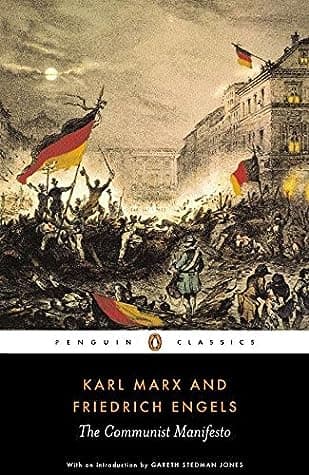
The Communist Manifesto cover
Archivist's Choice

The Communist Manifesto

Karl Marx

Genre

Politics / History / Economics / Philosophy

Reading Time

90 min

Key Themes

See below

Track Your Reading

Sign in to track this book

History is a story of class struggle. 'The Communist Manifesto' calls on the working class to unite, overthrow capitalism, and create an equal world.

Core Idea

'The Communist Manifesto' states that all history is about class struggles, specifically between those who oppress and those who are oppressed. Today, this struggle is between the bourgeoisie (capitalists who own production) and the proletariat (workers who sell their labor). The book says capitalism, despite its revolutionary destruction of feudalism and its productive power, has problems that will cause its collapse. The working class will unite because of exploitation, alienated labor, and repeated crises. They will overthrow the bourgeoisie and create a classless, communist society where private property is gone and production is owned by everyone. This revolution is a historical certainty, leading to a society without exploitation.
Reading time
90 min
Difficulty
Medium
✓ Read this if...
You are interested in the foundational text of communism, historical materialism, class analysis, or want to understand the intellectual origins of many 20th-century political movements.
✗ Skip this if...
You are looking for a detailed economic treatise, a blueprint for governing, or a nuanced philosophical exploration of individual liberty.

Core idea

The central argument and framework that powers the entire book.

'The Communist Manifesto' states that all history is about class struggles, specifically between those who oppress and those who are oppressed. Today, this struggle is between the bourgeoisie (capitalists who own production) and the proletariat (workers who sell their labor). The book says capitalism, despite its revolutionary destruction of feudalism and its productive power, has problems that will cause its collapse. The working class will unite because of exploitation, alienated labor, and repeated crises. They will overthrow the bourgeoisie and create a classless, communist society where private property is gone and production is owned by everyone. This revolution is a historical certainty, leading to a society without exploitation.

At a glance

Reading time

90 min

Difficulty

Medium

Read this if...

You are interested in the foundational text of communism, historical materialism, class analysis, or want to understand the intellectual origins of many 20th-century political movements.

Skip this if...

You are looking for a detailed economic treatise, a blueprint for governing, or a nuanced philosophical exploration of individual liberty.

Key Takeaways

1

History as Class Struggle

Society's progression is driven by the conflict between oppressors and the oppressed.

Quote

The history of all hitherto existing society is the history of class struggles.

Marx says human history is not random. It is a predictable path driven by ongoing conflict between social classes. From ancient Rome's patricians and plebeians to feudal lords and serfs, and now, the modern bourgeoisie and proletariat, this struggle for power and resources shapes society, politics, and economics. Each historical period sees new classes rise and old ones fall, leading to a new social order. This new order then faces its own problems because of class conflicts. This view suggests that change is revolutionary, not gradua...

Supporting evidence

Marx traces this pattern from ancient slave societies through feudalism to capitalism, illustrating how each system creates its own revolutionary class.

Apply this

To understand contemporary political and economic dynamics, one must analyze the underlying class interests at play, rather than accepting surface-level explanations.

class-strugglehistorical-materialismdialectical-materialism
2

The Bourgeoisie's Revolutionary Role

Capitalism, while exploitative, was a necessary destructive force that paved the way for communism.

Quote

The bourgeoisie, historically, has played a most revolutionary part.

Marx sees the bourgeoisie as having a revolutionary impact. This class, driven by profit, broke down feudal systems, ended old social ties, and globalized production and consumption. It created huge productive forces, new technologies, and linked markets on a scale never seen before. In doing so, it centralized wealth, moved people to cities, and simplified class conflicts into the clear split between bourgeoisie and proletariat. Though ultimately a system of exploitation, capitalism's energy and power were important in creating the c...

Supporting evidence

The rapid industrialization of Europe, the development of steam power and machinery, and the expansion of global trade routes are cited as evidence of the bourgeoisie's transformative power.

Apply this

Recognize that even systems deemed 'negative' can play a crucial, albeit destructive, role in historical progression, creating the groundwork for future changes.

bourgeoisiecapitalismindustrial-revolutionglobalization
3

Alienation of Labor

Under capitalism, workers are estranged from the product of their labor, the process of production, their species-being, and other humans.

Quote

The worker becomes poorer the more wealth he produces, the more his production increases in power and size.

One of Marx's main criticisms of capitalism is alienation. He says that under capitalism, workers are separated from the product they make (which belongs to the capitalist), the act of producing (which is forced and less human), their 'species-being' (their creative and social nature), and other people (as competition replaces cooperation). This four-part alienation makes labor just a way to survive, taking away its human value and making work an external, imposed activity. The more workers produce, the more powerful and separate the ...

Supporting evidence

The factory system, where workers perform repetitive tasks on an assembly line without ownership or creative input over the final product, is a prime example.

Apply this

Seek work that offers a sense of ownership, creative expression, and connection to a larger purpose, rather than merely trading time for money, to combat personal alienation.

alienationlaborexploitationwage-slavery
4

The Proletariat's Revolutionary Potential

The working class, forged by capitalism, is destined to overthrow it and establish a classless society.

Quote

What the bourgeoisie therefore produces, above all, are its own grave-diggers. Its fall and the victory of the proletariat are equally inevitable.

Marx identifies the proletariat—the modern working class who own no production means and must sell their labor—as the revolutionary class of the capitalist era. Capitalism, by bringing workers together in factories and cities, making their experiences similar, and exploiting them similarly, accidentally creates a united and disciplined force. This shared experience of oppression creates class consciousness, leading to organized resistance. Unlike earlier revolutionary classes, the proletariat, having 'nothing to lose but their chains,...

Supporting evidence

The growth of trade unions, workers' parties, and early communist movements in 19th-century industrial Europe are examples of this emerging collective power.

Apply this

Understand how shared experiences of injustice can unite disparate groups and become a powerful force for social and political change.

proletariatclass-consciousnessrevolutionhistorical-inevitability
5

Critique of Bourgeois Morality and Ideology

Dominant ideas, laws, and morality are merely reflections of the ruling class's economic interests.

Quote

Your very ideas are but the outgrowth of the conditions of your bourgeois production and bourgeois property.

Marx says that the 'ideas of the ruling class are in every epoch the ruling ideas.' This means that common morality, laws, philosophies, and cultural norms are not universal truths. They are ideas that help legitimize and keep the power of the bourgeoisie. Ideas like 'freedom of trade,' 'individual liberty,' and 'family values' are presented as natural and timeless. But Marx shows them as ideas designed to protect private property and capitalist relations. Even religion, he suggests, acts as an 'opiate of the masses,' easing the pain ...

Supporting evidence

The legal protection of private property, the glorification of entrepreneurship, and the condemnation of collective ownership are examples of bourgeois ideology.

Apply this

Question dominant narratives and 'common sense' beliefs, especially when they seem to disproportionately benefit those in power, to uncover underlying economic interests.

ideologyfalse-consciousnesssuperstructurebourgeois-morality
6

Abolition of Private Property

The core of communism is the abolition of bourgeois private property, not all property.

Quote

The theory of the Communists may be summed up in the single sentence: Abolition of private property.

Marx says that the communist call to end private property is not about personal items or the results of one's own work. Instead, it targets 'bourgeois private property'—the ownership of the means of production (factories, land, capital) that allows for wage labor exploitation. This type of property, he argues, creates class divisions and inequality. By making the means of production collective, society can move towards a system where wealth is produced for the common good, not for private gain. This is a key difference often misunders...

Supporting evidence

Marx distinguishes between 'hard-won, self-acquired, self-earned property' and capital, which is 'a collective product, and only by the united action of many members, nay, in the last resort, only by the united action of all members of society, can it be set in motion.'

Apply this

When discussing economic systems, differentiate between personal possessions and productive assets to understand the true target of critiques against 'private property'.

private-propertymeans-of-productioncommunismcapital
7

The Inevitability of Revolution

Capitalism's internal contradictions will inevitably lead to its violent overthrow by the proletariat.

Quote

The development of modern industry…produces, above all, its own grave-diggers. Its fall and the victory of the proletariat are equally inevitable.

Marx says capitalism has problems that will cause its downfall. The constant pursuit of profit leads to too much production, crises of not enough consumption, and increasing poverty for the working class. As wealth gathers in fewer hands, the proletariat grows and becomes more aware of its exploitation. These growing problems, along with the bourgeoisie's inability to manage its own system, will end in a violent revolution. Marx sees this as a historical necessity—an outcome of the process where the new society grows within the old.

Supporting evidence

The cyclical economic crises (panics and depressions) of the 19th century, which Marx observed, are seen as evidence of capitalism's inherent instability.

Apply this

Analyze current economic and social crises not just as isolated events, but as potential symptoms of deeper, systemic contradictions that could lead to fundamental societal shifts.

contradictions-of-capitalismrevolutionary-violencehistorical-inevitabilitycrisis
8

The Transition to Communism

After revolution, a 'dictatorship of the proletariat' will lead to a stateless, classless society.

Quote

The proletariat will use its political supremacy to wrest, by degrees, all capital from the bourgeoisie, to centralize all instruments of production in the hands of the State, i.e., of the proletariat organised as the ruling class.

After the working-class revolution, Marx describes a temporary stage called the 'dictatorship of the proletariat.' This is not a lasting oppressive government but a temporary state where the working class, having taken political power, will systematically remove parts of bourgeois society. This involves taking capital, centralizing production, ending inheritance, putting in place progressive taxes, and establishing universal education. The goal is to eliminate class differences completely. Once classes are gone and production is owned...

Supporting evidence

The Manifesto lists specific measures: abolition of private land ownership, a heavy progressive income tax, abolition of inheritance, centralization of credit and communication, and free public education for all children.

Apply this

Consider how societal transitions require temporary, focused interventions to reshape fundamental structures before a desired end-state can be achieved.

dictatorship-of-the-proletariatstateless-societyclassless-societytransitional-phase
9

Internationalism of the Proletariat

Workers of the world have no country and must unite across national borders against their common oppressors.

Quote

Working men of all countries, unite!

Marx rejects nationalism. He says the real division in the world is not between nations but between classes. The bourgeoisie, through global trade and colonialism, created a global capitalist system, so the exploitation of the working class is global. Therefore, freeing the working class must also be international. Workers in different countries share a common enemy—the global capitalist class—and common interests. National borders are seen as artificial divisions used by the bourgeoisie to keep control and stop workers from seeing th...

Supporting evidence

The Manifesto discusses how the bourgeoisie has 'through its exploitation of the world-market given a cosmopolitan character to production and consumption in every country.'

Apply this

When analyzing global issues, consider the role of class interests and transnational solidarity, rather than solely focusing on national interests or state-level conflicts.

internationalismproletarian-internationalismglobal-capitalismnationalism
10

Critique of Other Socialisms

Marx distinguishes 'scientific socialism' from other, less effective, or reactionary forms of socialism.

Quote

The undeveloped state of the class struggle, as well as their own surroundings, causes Socialists of this kind to consider themselves far superior to all class antagonisms.

The Manifesto also critiques other socialist and communist theories common at the time. Marx puts them into categories: 'Reactionary Socialism' (feudal, petty-bourgeois, German 'True' Socialism), which tries to go back to older social orders or romanticizes past production methods; 'Conservative, or Bourgeois Socialism,' which aims to fix social problems to keep bourgeois society going without changing it much; and 'Critical-Utopian Socialism and Communism' (like Owen or Fourier), which, while seeing class conflicts, propose unrealist...

Supporting evidence

Specific examples include feudal socialism's lament for the old aristocracy, Proudhon's bourgeois socialism, and the utopian communities envisioned by figures like Robert Owen.

Apply this

When evaluating social and political movements, critically assess their underlying assumptions about class, history, and the mechanisms of change.

utopian-socialismbourgeois-socialismfeudal-socialismscientific-socialism

Critical analysis

Notable Quotes

A spectre is haunting Europe – the spectre of communism.

The very opening line, setting the tone for the entire manifesto.

The history of all hitherto existing society is the history of class struggles.

Marx's foundational thesis on historical materialism and societal development.

The executive of the modern state is but a committee for managing the common affairs of the whole bourgeoisie.

Describing the role of the state in capitalist society, serving the ruling class.

What the bourgeoisie therefore produces, above all, are its own grave-diggers. Its fall and the victory of the proletariat are equally inevitable.

Arguing that capitalism inherently creates the conditions for its own overthrow by the proletariat.

The proletariat has nothing to lose but its chains. They have a world to win.

A rallying cry for workers, emphasizing their lack of property and the potential gains from revolution.

The Communists disdain to conceal their views and aims. They openly declare that their ends can be attained only by the forcible overthrow of all existing social conditions.

Stating the communist commitment to revolutionary action rather than reform.

In proportion as the bourgeoisie, i.e., capital, is developed, in the same proportion is the proletariat, the modern working class, developed.

Explaining the parallel growth of the capitalist class and the working class, a core dynamic of capitalism.

The ruling ideas of each age have ever been the ideas of its ruling class.

Highlighting the ideological dominance of the ruling class in shaping societal thought.

Modern industry has converted the little workshop of the patriarchal master into the great factory of the industrial capitalist.

Illustrating the transformation of production methods under industrial capitalism.

You are horrified at our intending to do away with private property. But in your existing society, private property is already done away with for nine-tenths of the population.

Addressing bourgeois criticisms of abolishing private property, arguing that it's already inaccessible to most.

The worker becomes a pauper, and pauperism develops more rapidly than population and wealth.

Describing the immiseration of the working class under capitalism, despite increasing wealth.

National differences and antagonisms between peoples are daily vanishing more and more, owing to the development of the bourgeoisie, to freedom of commerce, to the world market.

Observing the globalizing effects of capitalism, which diminish national distinctiveness.

Working men of all countries, unite!

The famous concluding slogan, a call for international solidarity among the proletariat.

The bourgeoisie has stripped of its halo every occupation hitherto honoured and looked up to with reverent awe. It has converted the physician, the lawyer, the priest, the poet, the man of science, into its paid wage-labourers.

Explaining how capitalism commodifies all professions, reducing them to wage labor.

It has created enormous cities, has greatly increased the urban population as compared with the rural, and has thus rescued a considerable part of the population from the idiocy of rural life.

Acknowledging the transformative, albeit often harsh, role of capitalism in urbanization.

Quiz

Test Your Knowledge

Ready to see how well you understood this book? Take our interactive quiz with 10 questions.

10
Questions
~5
Minutes
?
Best Score

Key Questions (FAQ)

The Communist Manifesto is a foundational text by Karl Marx and Friedrich Engels that outlines their theory of communism, arguing for a classless society and the overthrow of capitalism. It presents a historical materialist view of society and a call to action for the proletariat.

About the author