BookBrief
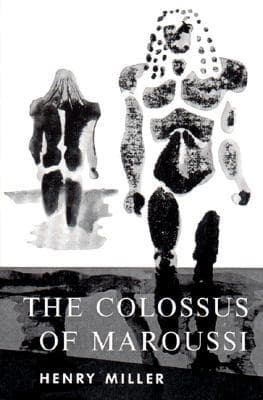
The Colossus of Maroussi cover
Archivist's Choice

The Colossus of Maroussi

Henry Miller (1941)

Genre

Lifestyle / Biography / Memoir / History

Reading Time

360 min

Key Themes

See below

Track Your Reading

Sign in to track this book

In Greece, a poor Henry Miller, at Lawrence Durrell's urging, meets George Katsimbalis, a man whose colossal spirit helps Miller find a profound sense of self.

Core Idea

Henry Miller's "The Colossus of Maroussi" is a passionate book about Greece. It presents Greece not just as a place but as a spiritual test for the human soul. Through his time there, his meetings with people (especially the larger-than-life Katsimbalis), and the old myths woven into the land, Miller argues for letting go of control and accepting life's unplanned journey. He says that true understanding and freedom come from dropping intellectual rules and embracing existence's raw, mythic, and often messy beauty. The book shows how a place and human connection can bring renewal. It advocates for living with open senses and a spirit free from society's rules, where the artist reveals the sacred in everyday life.
Reading time
360 min
Difficulty
Medium
✓ Read this if...
You are seeking a deeply philosophical and poetic travel memoir that transcends typical travelogues, exploring themes of spiritual awakening, the power of place, and the essence of human connection. Ideal for readers who appreciate stream-of-consciousness prose and a celebration of life's raw, unfiltered experiences.
✗ Skip this if...
You prefer linear narratives, conventional plot structures, or straightforward historical accounts. If you are easily put off by philosophical digressions, highly subjective interpretations, or a lack of explicit 'practical advice,' this book may not resonate.

Core idea

The central argument and framework that powers the entire book.

Henry Miller's "The Colossus of Maroussi" is a passionate book about Greece. It presents Greece not just as a place but as a spiritual test for the human soul. Through his time there, his meetings with people (especially the larger-than-life Katsimbalis), and the old myths woven into the land, Miller argues for letting go of control and accepting life's unplanned journey. He says that true understanding and freedom come from dropping intellectual rules and embracing existence's raw, mythic, and often messy beauty. The book shows how a place and human connection can bring renewal. It advocates for living with open senses and a spirit free from society's rules, where the artist reveals the sacred in everyday life.

At a glance

Reading time

360 min

Difficulty

Medium

Read this if...

You are seeking a deeply philosophical and poetic travel memoir that transcends typical travelogues, exploring themes of spiritual awakening, the power of place, and the essence of human connection. Ideal for readers who appreciate stream-of-consciousness prose and a celebration of life's raw, unfiltered experiences.

Skip this if...

You prefer linear narratives, conventional plot structures, or straightforward historical accounts. If you are easily put off by philosophical digressions, highly subjective interpretations, or a lack of explicit 'practical advice,' this book may not resonate.

Key Takeaways

1

Embrace the Unplanned Journey

True discovery often lies in surrendering to the flow of an unfamiliar land and its people.

Quote

One's destination is never a place but rather a new way of looking at things.

Miller's trip to Greece was not a carefully planned itinerary but a sudden escape from the stifling intellectualism and materialism of pre-war Europe. He arrived with no set plans, little money, and an open mind. He let the landscape and his encounters shape his experience. This openness is presented as the source of real insight, very different from structured, goal-oriented travel that often prevents deep connection. The book suggests that true travel is less about checking off landmarks and more about losing oneself in the moment, ...

Supporting evidence

Miller arrives in Greece at the invitation of Lawrence Durrell, with no clear plan beyond escaping his current circumstances. His subsequent wanderings are guided by chance encounters and the whims of his new Greek friends, rather than any pre-arranged schedule.

Apply this

When embarking on a new experience, whether travel or a creative project, consciously release the need for rigid control. Allow for spontaneity and unexpected detours. Engage with locals or new collaborators without preconceived notions, letting their perspectives inform and reshape your own path.
serendipityopennessexistential-travel
2

The Power of the Human Spirit

In Greece, Miller found a vitality and authenticity in people that transcended material wealth.

Quote

The Greeks are the only people who have never lost their sense of wonder. They are still children, in the best sense of the word.

Miller sees a deep spiritual strength and joy among the Greeks, especially compared to the tired, intellectually burdened Europeans he left behind. He finds people closely connected to their land, history, and each other, showing a pure love for life. This vitality comes not from money but from an inner appreciation for being alive, a capacity for spontaneous celebration, and a strong sense of human worth. It makes a strong point about where true wealth lies, suggesting that spiritual richness is far more important than any material p...

Supporting evidence

Miller's interactions with various Greeks, from humble villagers to the dynamic Katsimbalis, consistently highlight their zest for life, their hospitality, and their ability to find joy in simple things, often despite poverty. He contrasts this with the 'death-like' existence he perceived in modern Western society.

Apply this

Seek out and cultivate relationships with individuals who exude genuine passion and a lust for life. Prioritize experiences that foster connection, laughter, and simple pleasures over those focused on material gain or status. Actively practice gratitude for the fundamental aspects of existence.

authenticityvitalityhuman-connection
3

Katsimbalis: The Embodiment of Life

George Katsimbalis represents an ideal of unbridled, authentic human existence.

Quote

He was a man who lived with his whole being, who poured himself out in every word and gesture.

George Katsimbalis, the 'Colossus' in the title, is shown as an almost mythical figure, a force of nature whose presence fills Miller's experience of Greece. He is loud, lively, philosophical, and completely alive. Katsimbalis embodies a true authenticity, speaking his mind freely and embracing all parts of human experience, from deep discussions to basic fun. Miller uses Katsimbalis to compare with what he sees as the flaws of Western civilization. In Katsimbalis, he sees a man fully integrated with his surroundings and his own being...

Supporting evidence

Miller dedicates significant portions of the book to describing Katsimbalis's character, his passionate monologues, his larger-than-life personality, and his profound impact on everyone around him, including Miller himself. Katsimbalis's stories and pronouncements often serve as philosophical anchors for Miller's observations.

Apply this

Identify individuals in your life who embody authentic passion and courage. Observe how they engage with the world and express themselves. Challenge yourself to speak your truth more openly and to engage with experiences with greater enthusiasm and less self-consciousness.

authenticitycharismalife-force
4

The Sacredness of Place

Certain landscapes possess a spiritual resonance that can profoundly impact the human soul.

Quote

The land itself is holy, it is saturated with gods.

Miller is deeply moved by Greece's ancient landscapes, especially the Peloponnese and Crete. He sees more than just ruins; he feels the lasting presence of history, mythology, and a deep connection to the divine. The land itself is presented as a living thing, filled with a spiritual energy that can awaken hidden parts of the self. This suggests that certain places have an inherent power to heal, inspire, and connect people to something larger than themselves. It highlights the importance of finding and respecting such sacred places. ...

Supporting evidence

Miller's evocative descriptions of places like Epidauros, Delphi, and Crete are filled with almost mystical language, describing how he feels a palpable sense of the past and a spiritual energy emanating from the earth and the ancient stones. He recounts feeling a deep sense of peace and belonging in these places.

Apply this

Seek out places in nature or historical sites that evoke a sense of awe or reverence. Spend time in these locations without distraction, allowing yourself to fully absorb their atmosphere. Reflect on how different environments impact your mood, thoughts, and spiritual well-being.

sacred-geographysense-of-placespiritual-connection
5

Escape from the Mind's Prison

Over-intellectualization can hinder genuine experience and connection to life.

Quote

The mind is a good servant but a bad master.

Miller's trip to Greece is partly an escape from what he sees as the suffocating intellectualism and analytical distance of modern Western society. He criticizes a culture that values abstract thought and theoretical understanding over direct experience and emotional involvement. In Greece, he finds a refreshing lack of self-consciousness and an open embrace of life's raw sensuality, which challenges his own habits of over-analyzing. The book argues that true wisdom and joy come from experiencing life fully, rather than just examining...

Supporting evidence

Miller frequently contrasts the 'dead' intellectualism he left behind with the vibrant, unselfconscious life he observes in Greece. He celebrates the Greeks' ability to live in the moment and their disinterest in overly complex philosophical frameworks that often lead to paralysis rather than action.

Apply this

Consciously set aside time for activities that engage your senses and emotions without demanding intellectual analysis (e.g., dancing, cooking, walking in nature, engaging in spontaneous conversation). Practice mindfulness to bring your attention to the present moment, rather than getting lost in thought.

anti-intellectualismembodied-experiencemindfulness
6

The Artist as Seer

The artist's role is to perceive and articulate the hidden truths and vitality of existence.

Quote

To be an artist is to believe in life.

Miller, as an artist, sees himself not just as someone who records his travels but as a channel for deeper truths. He believes artists have a unique ability to see beyond the surface and capture the true spirit of a place and its people. His writing style, which is impressionistic and often like a stream of thoughts, shows this belief—it is not about objective reporting but about conveying a lived, felt experience. This idea emphasizes the artist's role in challenging common perceptions and revealing the world's beauty, chaos, and und...

Supporting evidence

Miller's highly subjective and poetic descriptions of Greece, its people, and his internal reactions are central to the book. He doesn't just describe what he sees; he interprets it, imbues it with personal significance, and attempts to convey its emotional and spiritual resonance. His focus on Katsimbalis is also an artist's choice to highlight a particular type of human experience.

Apply this

Engage in creative practices (writing, painting, music, photography) not just for self-expression, but as a way to observe the world more deeply and articulate insights that might otherwise go unnoticed. Cultivate a practice of mindful observation to train your 'artist's eye' in daily life.

artistic-visionsubjectivitycreative-expression
7

The Mythic Dimension of Life

Life is richer when viewed through the lens of myth, history, and timeless archetypes.

Quote

Greece is the last bastion of the spirit, where man still remembers his origins.

For Miller, Greece is not just a place but a living storehouse of myth and history. He constantly mixes his current observations with references to ancient Greek gods, heroes, and philosophical ideas. This approach suggests that understanding the mythic foundations of a culture, or even of individual lives, adds deep meaning. It argues against a purely rational, desacralized view of the world, advocating for bringing the symbolic and archetypal back into our daily perception. By seeing the mythic in the everyday, Miller elevates human...

Supporting evidence

Miller's frequent allusions to Greek mythology, ancient philosophers, and historical events throughout his narrative. He views the modern Greeks and their land through the prism of this rich past, seeing echoes of ancient deities and heroic struggles in their everyday lives.

Apply this

Explore the myths, folklore, and historical narratives of your own culture or a culture that fascinates you. Consider how these stories might offer insights into contemporary human behavior and universal experiences. Look for archetypal patterns in your own life and the lives of those around you.

mythologyarchetypescollective-unconscious
8

Hospitality as a Sacred Act

True human connection thrives on generosity and open-hearted welcome.

Quote

The Greeks give you everything they have, even if they have nothing.

Miller often points out the extraordinary hospitality he receives from the Greeks, often from poor people. This generosity is presented not as just a social custom but as a basic expression of their humanity and connection to others. It is a sharp contrast to the perceived transactional nature of relationships in more 'advanced' societies. This idea emphasizes that giving freely, without expecting anything in return, is a powerful way to build deep human bonds and experience the richness of shared existence. It suggests that true weal...

Supporting evidence

Miller recounts numerous instances of being welcomed into homes, fed, housed, and guided by Greeks he barely knew, often at their own expense. He is consistently struck by their willingness to share what little they have with a stranger.

Apply this

Practice radical hospitality in your own life, whether by offering a meal, a listening ear, or genuine assistance to someone in need, without expecting anything in return. Seek opportunities to connect with others through acts of selfless generosity.

generosityaltruismcommunity
9

The Redemptive Power of Nature

Connecting with the natural world can heal the soul and restore perspective.

Quote

The earth is still beautiful, it's man who is ugly.

Throughout his travels, Miller finds comfort and inspiration in Greece's natural beauty – the mountains, the sea, the clear light. He feels a deep sense of renewal and clarity when surrounded by these landscapes, suggesting that nature has a restorative power for the human spirit. This contrasts with the artificiality and spiritual emptiness he links to urban industrial life. The book implies that humans need to stay deeply connected to the natural world, not just for its beauty, but for psychological and spiritual well-being, seeing ...

Supporting evidence

Miller's lyrical descriptions of the Aegean Sea, the Greek mountains, the olive groves, and the quality of light. He often reflects on how being in nature helps him shed his anxieties and reconnect with a more fundamental sense of self and purpose.

Apply this

Prioritize spending regular time in natural environments, whether a local park, a forest, or the coast. Engage your senses fully while there, observing details and allowing the environment to soothe and inspire you. Consider incorporating natural elements into your living or working spaces.

ecotherapybiophilianature-connection
10

Beyond Good and Evil

True understanding requires transcending rigid moral judgments and embracing life's full spectrum.

Quote

The world is not a problem to be solved, but a mystery to be lived.

Miller's observations in Greece, especially his fascination with Katsimbalis, show a way of looking at the world that goes beyond simple moral divisions. He celebrates the raw, unpolished, and sometimes contradictory parts of human nature, finding vitality even in what might be considered 'flaws.' This suggests that a richer, more authentic life comes when one stops putting experiences and people into simple 'good' or 'evil' categories, and instead embraces the complexity and inherent mystery of existence. It is a call for radical acc...

Supporting evidence

Miller's admiration for Katsimbalis, who is portrayed with all his boisterousness and occasional excesses, without moral condemnation. Miller also reflects on his own past and the perceived 'sins' of humanity with a sense of understanding rather than judgment.

Apply this

When encountering behaviors or situations that challenge your moral framework, pause before judging. Seek to understand the underlying motivations or context. Practice radical empathy, attempting to see the world from different perspectives without immediately labeling them as right or wrong.

moral-relativismexistentialismradical-acceptance

Critical analysis

Notable Quotes

To be at leisure, to be a loafer, to be a tramp, to be a bum -- that is the acme of human endeavor.

Miller's reflection on the value of idleness and freedom in Greece.

The greatest discovery a man can make is that he is free, free to do anything he pleases.

A central theme of the book, emphasizing personal liberation and autonomy.

What is important is to be in the present, to be here now, to be alive, to be awake.

Miller's philosophical musings on the importance of living in the moment.

Greece is a land of light, a land of revelation, a land where the spirit of man is reborn.

Miller's profound admiration and spiritual connection to Greece.

The world is not to be understood, it is to be experienced.

A key philosophical stance of Miller, prioritizing experience over intellectual understanding.

I have no money, no resources, no hopes. I am the happiest man alive.

A paradoxical statement reflecting Miller's embrace of a minimalist, unburdened existence.

Maroussi is a state of mind, not a place.

Describing the profound impact and symbolic meaning of the town of Maroussi on Miller.

The real voyage of discovery consists not in seeking new landscapes, but in having new eyes.

A famous quote highlighting the importance of perspective and inner transformation.

There is no end to the journey, only the journey itself.

Reflecting on life as a continuous process of exploration rather than a destination.

The earth is a living organism, and we are its cells.

Miller's ecological and holistic view of humanity's place in the natural world.

One should not try to understand life, but to live it.

Another iteration of Miller's emphasis on direct experience over intellectual analysis.

The only way to get rid of a temptation is to yield to it.

A provocative statement reflecting Miller's embrace of human desires and impulses.

The whole world is a hospital, and we are all patients.

A cynical yet empathetic view of the human condition and universal suffering.

What does a man need—really need? A few pounds of food, a few feet of space, a bit of warmth, and the love of a woman.

Miller's minimalist take on fundamental human needs.

Quiz

Test Your Knowledge

Ready to see how well you understood this book? Take our interactive quiz with 10 questions.

10
Questions
~5
Minutes
?
Best Score

Key Questions (FAQ)

'The Colossus of Maroussi' is Henry Miller's impressionistic travelogue detailing his transformative journey through Greece in 1939. It explores the landscapes, culture, and people, particularly focusing on his friendship with the larger-than-life Greek writer George Katsimbalis.

About the author

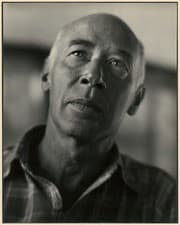
Henry Miller

Henry Valentine Miller was an American novelist. He broke with existing literary forms and developed a new type of semi-autobiographical novel that blended character study, social criticism, philosophical reflection, stream of consciousness, explicit language, sex, surrealist free association, and mysticism. His most characteristic works of this kind are Tropic of Cancer, Black Spring, Tropic of Capricorn, and the trilogy The Rosy Crucifixion, which are based on his experiences in New York and Paris. He also wrote travel memoirs and literary criticism, and painted watercolors.