“Every love story is a ghost story.”
— A recurring philosophical observation throughout the novel, often linked to the nature of memory and absence.

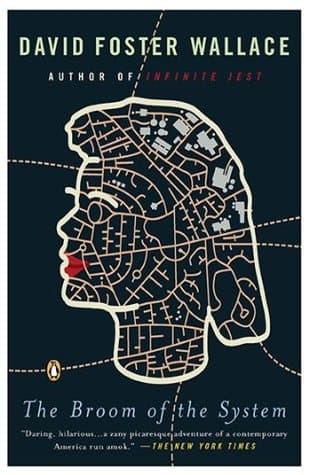
David Foster Wallace (1987)
Genre
Literary Fiction / Philosophy
Reading Time
10-12 hours
Key Themes
See below
Sign in to track this book
In a slightly askew 1990 Cleveland, a young woman grapples with a disappearing great-grandmother, a jealous boss, and a cockatiel quoting Auden, all while navigating a reality where language itself seems to be unraveling.
The story opens in a slightly askew 1990 Cleveland, Ohio, introducing Lenore Stonecipher Beadsman, a switchboard operator at the 'Truly Great Import' company. Her boss and boyfriend, Rick Vigorous, is very jealous and insecure, constantly questioning her loyalty and fidelity. Lenore's great-grandmother, a former philosophy professor also named Lenore Beadsman, has mysteriously vanished from the Shaker Heights Nursing Home, along with twenty-five other residents. This disappearance is a central mystery, largely ignored by the authorities. Lenore is also dealing with her pet cockatiel, Vlad the Impaler, who has begun speaking in a bizarre mix of psycho-babble, literary quotes, and religious verses, often mimicking her great-grandmother's voice and philosophical ideas, further disorienting Lenore's already strange reality.
Rick Vigorous's jealousy grows, leading to controlling and irrational behavior towards Lenore. He frequently calls her at work, demanding reassurances and asking about her interactions with other men, particularly his rival, Dr. Jay. Meanwhile, Vlad the cockatiel's speaking abilities grow more sophisticated and disturbing. He often recites passages that seem to comment on Lenore's life or echo her great-grandmother's philosophical concerns, especially about language and reality. Lenore feels increasingly isolated, with Vlad's pronouncements blurring the lines between pet and philosopher, and Rick's demands further constricting her world, leaving her to question her own sanity amidst the bizarre events unfolding around her.
Driven by a vague sense of duty and unease, Lenore makes sporadic attempts to find her missing great-grandmother. Her inquiries are met with indifference or bizarre responses from the authorities and the nursing home staff. She visits the nursing home, finding few clues, and the staff are unhelpful, attributing the disappearances to a mass exodus or a collective delusion. During her search, she meets various eccentric characters, including the enigmatic and seemingly all-knowing Dr. Jay, who appears to understand the events more than he lets on, and who acts as a contrast to Rick's possessiveness, further complicating Lenore's emotional state and adding to the novel's surreal atmosphere.
Lenore's regular dental appointments with Dr. Jay become an unexpected platform for philosophical discussions, particularly concerning Ludwig Wittgenstein's ideas about language and its limits, a subject her great-grandmother was very interested in. Dr. Jay, a surprisingly articulate and philosophical dentist, engages Lenore in conversations that mirror the themes articulated by Vlad and her great-grandmother's writings. These sessions often leave Lenore feeling more confused than enlightened, as Dr. Jay seems to hint at a grander, more abstract explanation for the strange occurrences, suggesting that her reality itself might be a construct or a story, further blurring the lines between the mundane and the metaphysical.
Rick's paranoia escalates dramatically. Convinced that Lenore is having an affair with Dr. Jay, he attempts to spy on her and even tries to 'test' her fidelity. He becomes obsessed with the idea that Lenore is not truly 'seeing' him, but rather a version of him constructed by her own internal narrative. This obsession leads him to increasingly erratic and self-destructive behavior, including elaborate schemes to catch Lenore in the act of infidelity, despite her consistent denials. His inability to accept Lenore's perspective or trust her word shows a core theme of the novel: the self-centered nature of individual perception and the difficulty of true communication, as Rick becomes trapped in his own interpretive framework.
Lenore stumbles upon a hidden nursery within her apartment building, an anachronistic and unsettling space that seems to exist outside of normal time. The nursery is filled with old-fashioned toys and a peculiar atmosphere, hinting at forgotten histories or alternate realities. More significantly, she finds a manuscript written by her great-grandmother, a philosophical treatise titled 'The Broom of the System.' This text discusses language, meaning, and the self, suggesting that reality is a system of propositions and that the self is an illusion created by language. This discovery provides an intellectual framework for understanding the bizarre events Lenore is experiencing, linking them to her great-grandmother's philosophical inquiries.
Seeking an escape or perhaps a deeper understanding, Lenore boards a train. The journey itself is filled with peculiar passengers and surreal events. One of the most striking encounters is with a baby who speaks with adult-like philosophical depth, echoing the themes of language and reality previously articulated by Vlad and her great-grandmother. This talking baby further blurs the boundaries of the ordinary, challenging Lenore's perception of what is possible and what constitutes a 'normal' experience. The train journey becomes a symbolic passage, propelling Lenore deeper into the novel's philosophical maze, where logic and common sense are increasingly subverted by the power of language and narrative.
Lenore eventually uncovers the truth about the Shaker Heights Nursing Home disappearances. It is revealed that her great-grandmother, in collaboration with others, orchestrated the mass exodus as part of a radical philosophical experiment. The goal was to test the limits of language and the self, to see if individuals could 'talk themselves out of existence' or transcend the boundaries of their linguistic constructions. The nursing home residents, many of whom were elderly and suffering from various forms of dementia, were chosen as subjects due to their already tenuous grip on conventional reality, making them susceptible to the experiment's premise. This revelation connects the seemingly disparate events and provides a profound, if unsettling, explanation for the novel's central mystery.
Rick Vigorous's mental state completely deteriorates, consumed by his paranoia and inability to reconcile Lenore's perceived actions with his internal narrative. He becomes increasingly unhinged, trapped in a self-centered loop of his own making, unable to truly connect with Lenore or the external world. Meanwhile, Lenore grapples with the implications of her great-grandmother's philosophical experiment. She begins to understand that the world she inhabits, and even her own identity, might be a construct of language and narrative. This realization is both liberating and terrifying, forcing her to question the very nature of her existence and the solidity of reality itself, as the lines between fiction and truth become irrevocably blurred.
In the novel's concluding moments, Lenore comes to a full, albeit unsettling, understanding of her great-grandmother's philosophical project. She realizes that the disappearances, the talking cockatiel, Rick's paranoia, and even her own experiences are all manifestations of the power of language to construct and deconstruct reality. The 'broom of the system' refers to the idea that language, while creating our understanding of the world, can also sweep away or erase what lies outside its system. Lenore is left in a state of uncertainty, recognizing that her own story, and indeed all stories, are ultimately self-referential systems, and that the 'real' world is perhaps just the most convincing narrative. The ending is ambiguous, leaving the reader to ponder the extent to which Lenore, and perhaps even the reader themselves, are characters within a larger linguistic system.
The Protagonist
Lenore begins as a somewhat naive and passive character, gradually realizing the profound philosophical implications of her world and her own existence as a linguistic construct.
The Antagonist/Supporting
Rick descends from a merely jealous boyfriend into a state of complete paranoia and self-delusion, becoming a tragic figure trapped within his own internal narrative.
The Supporting/Catalyst
Her character arc is revealed retrospectively; she moves from a theoretical philosopher to an active experimenter, pushing the boundaries of language and reality to their extreme.
The Supporting/Symbolic
Vlad evolves from a normal pet to a conduit for profound philosophical discourse, becoming a living symbol of the novel's central themes.
The Supporting
Dr. Jay remains a relatively static, yet insightful, character, serving as a consistent intellectual sounding board for Lenore.
The Supporting
Wang-Dang Lang remains largely unchanged, serving as a static character to highlight Rick's paranoia.
The Supporting
Bombardini's arc is largely implied, as he continues his extreme project of self-consumption, representing a physical manifestation of philosophical ideas.
The Supporting
Pat remains a static character, serving as a foil to Lenore's increasingly surreal experiences.
The Mentioned/Symbolic
The Baby's 'arc' is immediate and impactful, serving as a momentary, surreal revelation for Lenore.
This is the central theme of the novel, influenced by Ludwig Wittgenstein's philosophy. The book explores how language doesn't just describe reality, but actively creates and defines it. The disappearances from the nursing home, orchestrated by Lenore's great-grandmother, are an experiment to see if people can 'talk themselves out of existence' by stepping outside the system of language. Vlad the cockatiel's philosophical pronouncements, and the great-grandmother's treatise 'The Broom of the System,' directly address this idea, suggesting that what exists is what can be named and understood within a linguistic framework.
“What, if not language, is the broom of the system?”
The novel questions the idea of a stable, coherent self, suggesting that identity is largely a construct of language and the stories we tell about ourselves and others. Rick Vigorous's inability to 'see' Lenore outside of his jealous narrative, and his struggle to define himself in relation to her, exemplifies this. Lenore herself often feels like a character in a story, rather than an autonomous individual. The great-grandmother's experiment implies that if one can escape the linguistic system, one might also escape the self, highlighting the idea that our identities are tied to the words we use to describe them.
“The self is a function of language, a linguistic construct.”
Rick Vigorous's escalating jealousy and paranoia towards Lenore show solipsism—the philosophical idea that one can only be sure of one's own mind. Rick's inability to trust Lenore, or to believe her perspective, demonstrates how a person can become trapped within their own internal narrative, unable to truly connect with or perceive others objectively. His actions show the destructive nature of a mind unable to escape its own self-referential system, illustrating how personal anxieties can distort and ultimately define one's entire reality, leading to isolation and delusion.
“He seemed to see her only in terms of what she meant to him.”
Despite its focus on language, the novel also explores the difficulties and absurdities of communication. Characters often talk past each other, or their words are misinterpreted, fueling misunderstandings and escalating conflict, particularly between Lenore and Rick. The bizarre and often nonsensical pronouncements of Vlad the cockatiel, while profound, also highlight the arbitrary nature of meaning. The novel suggests that even with language, true understanding can be elusive, and that the 'system' of communication itself has limitations, often leading to alienation rather than connection.
“Words, it turned out, were not so much for communicating as for creating boundaries.”
Wallace constantly blurs the lines between reality and fiction, making the reader question the nature of the narrative itself. Lenore often feels like a character, and the novel frequently alludes to its own construction. The great-grandmother's philosophical theories, which suggest reality is a linguistic system, are mirrored in the novel's metafictional elements. The story itself is a 'system' that creates its own reality, inviting the reader to consider their role in constructing meaning. The ending leaves the reader pondering whether Lenore's world, and perhaps even their own, is ultimately just a very convincing story.
“This whole thing, you see, is a story.”
A pet cockatiel that speaks in complex philosophical terms, blurring the lines of reality.
Vlad the Impaler, Lenore's cockatiel, serves as a crucial plot device. His sudden ability to speak in sophisticated, philosophical language, often echoing Lenore's great-grandmother's ideas, introduces a pervasive element of the surreal and the absurd. Vlad functions as a symbolic mouthpiece, a living embodiment of the great-grandmother's theories on language and reality, making abstract philosophical concepts tangible. His pronouncements disorient Lenore and the reader, forcing a re-evaluation of what is considered 'normal' and challenging the boundaries between human and animal, and between literal and metaphorical speech. He is a constant reminder of the novel's central philosophical inquiry.
A manuscript by Lenore's great-grandmother that explicitly outlines the novel's core themes.
The discovery of Lenore Beadsman's great-grandmother's philosophical manuscript, 'The Broom of the System,' is a central plot device. This text directly articulates the novel's core themes concerning language, reality, and the self, providing an explicit intellectual framework for understanding the bizarre events. It serves as a key to unlocking the mystery of the nursing home disappearances, revealing them to be a radical philosophical experiment. By presenting these theories within the narrative, Wallace allows the philosophical underpinnings to become an integral part of the plot, rather than just abstract commentary, guiding both Lenore and the reader towards a deeper understanding of the constructed nature of reality.
The narrative frequently questions its own reality and the reliability of its characters' perceptions.
The novel employs unreliable narration and metafiction by constantly blurring the lines between what is 'real' within the story and what might be a construct of language or a character's internal narrative. Lenore often feels like a character, and the events themselves are increasingly surreal, challenging the reader's ability to discern objective truth. This device forces the reader to engage critically with the act of storytelling itself and to consider how narratives shape perception. The novel's self-awareness about its own fictionality reinforces its themes about language as a system that creates reality, making the reading experience an active participation in the philosophical questions posed.
A mass vanishing that serves as the central mystery and catalyst for philosophical exploration.
The mysterious disappearance of twenty-five residents, including Lenore's great-grandmother, from the Shaker Heights Nursing Home is the primary inciting incident and central mystery of the plot. This event propels Lenore's half-hearted search and ultimately leads to the revelation of her great-grandmother's radical philosophical experiment. The disappearances are not merely a plot hook but a literal manifestation of the novel's philosophical premise: the idea that individuals can, in a sense, 'talk themselves out of existence' or transcend the linguistic system that defines them. It is a concrete representation of the abstract philosophical concepts at play.
A hidden, anachronistic space that suggests alternate realities or forgotten pasts.
The discovery of the hidden nursery within Lenore's apartment building functions as a symbolic and unsettling plot device. This anachronistic space, filled with old-fashioned toys and possessing a peculiar atmosphere, hints at layers of reality, forgotten histories, or even parallel dimensions within the mundane. It contributes to the novel's overall surreal tone and reinforces the idea that reality is not as stable or straightforward as it appears. The nursery suggests that there are elements outside the 'system' of language or conventional understanding, adding to the sense of mystery and the breakdown of logical order that permeates Lenore's world.
“Every love story is a ghost story.”
— A recurring philosophical observation throughout the novel, often linked to the nature of memory and absence.
“The truth will set you free, but first it will make you miserable.”
— A cynical yet insightful remark about the often painful process of confronting reality.
“Words are like a broom. They sweep away the dirt, but they also kick up dust.”
— A metaphorical reflection on the power and limitations of language, particularly in communication.
“The world is a system, and every system has a broom.”
— Directly referencing the book's title, it speaks to the idea of an inherent corrective or destructive force within any structure.
“It is not the answer that enlightens, but the question.”
— A philosophical point about the process of inquiry and the value of asking the right questions.
“We are all just trying to make sense of a world that doesn't make sense.”
— A general observation on the human condition and the struggle for meaning in an absurd world.
“Sometimes the most important things are the ones you can't say.”
— Reflects on the limitations of verbal expression and the unspoken aspects of human experience.
“The past is never dead. It's not even past.”
— A Faulknerian echo, suggesting the enduring influence of history and personal experience.
“Fear is the mind-killer. Fear is the little-death that brings total obliteration.”
— While famously from 'Dune,' Wallace's use of this phrase (or similar sentiments) within the text highlights his characters' anxieties.
“To be truly free, one must first confront one's own prisons.”
— A theme of self-reflection and the internal barriers to personal liberty.
“Stories are a way of ordering the chaos, even if the order is an illusion.”
— Highlights the human need for narrative and its role in creating meaning from disarray.
“The only way out is through.”
— A common adage that appears in various forms, emphasizing perseverance and facing challenges directly.
“We are all trapped in our own heads, trying to connect.”
— A poignant reflection on the inherent isolation of individual consciousness and the desire for connection.
“Reality is just a crutch for people who can't handle drugs.”
— A darkly humorous and cynical jab at perception and escapism.
Ready to see how well you understood this book? Take our interactive quiz with 10 questions.

David Foster Wallace was an American novelist, short story writer, essayist, and university professor of English and creative writing. Wallace is widely known for his 1996 novel Infinite Jest, which Time magazine cited as one of the 100 best English-language novels from 1923 to 2005. His posthumous novel, The Pale King (2011), was a finalist for the Pulitzer Prize for Fiction in 2012. The Los Angeles Times's David Ulin called Wallace "one of the most influential and innovative writers of the last twenty years".