BookBrief
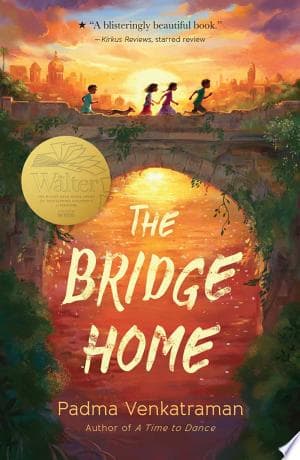
The Bridge Home cover
Archivist's Choice

The Bridge Home

Padma Venkatraman (2020)

Genre

General

Reading Time

240 min

Key Themes

See below

Track Your Reading

Sign in to track this book

Two runaway sisters in Chennai forge an unbreakable family with two homeless boys on an abandoned bridge, facing the harsh realities of survival while clinging to their fragile freedom and the hope of a better tomorrow.

Core Idea

Padma Venkatraman's "The Bridge Home" follows the journey of two young sisters, Viji and Rukku, who run away from an abusive father in rural India to the streets of Chennai. The book shows that family extends beyond biological ties, forming through shared hardship and mutual support among those unseen by society. It champions grit, creativity, and unspoken care as essential for survival and dignity amidst poverty and danger. The story suggests that even in hard circumstances, human connection and the resilient spirit of children offer hope.
Reading time
240 min
Difficulty
Medium
✓ Read this if...
You are interested in a poignant story about resilience, sisterhood, and the lives of street children in India, with themes of poverty, survival, and unexpected family.
✗ Skip this if...
You prefer books with fast-paced plots driven by external conflict over character-driven narratives focused on internal struggles and emotional depth.

Core idea

The central argument and framework that powers the entire book.

Padma Venkatraman's "The Bridge Home" follows the journey of two young sisters, Viji and Rukku, who run away from an abusive father in rural India to the streets of Chennai. The book shows that family extends beyond biological ties, forming through shared hardship and mutual support among those unseen by society. It champions grit, creativity, and unspoken care as essential for survival and dignity amidst poverty and danger. The story suggests that even in hard circumstances, human connection and the resilient spirit of children offer hope.

At a glance

Reading time

240 min

Difficulty

Medium

Read this if...

You are interested in a poignant story about resilience, sisterhood, and the lives of street children in India, with themes of poverty, survival, and unexpected family.

Skip this if...

You prefer books with fast-paced plots driven by external conflict over character-driven narratives focused on internal struggles and emotional depth.

Key Takeaways

1

The Fragility of Freedom

Homeless children navigate the razor's edge between independence and dire vulnerability.

Quote

Very quickly, eleven-year-old Viji discovers how vulnerable they are in this uncaring, dangerous world.

For children like Viji and Rukku, escaping an abusive home brings a brief sense of freedom, but immediately puts them into a new, dangerous reality on the streets. This 'freedom' is complicated: it means independence from oppressive adults, but also exposure to the elements, hunger, and exploitation. Their independence is tested by a lack of basic needs and the constant threat of illness or danger. The book shows that for these children, freedom is not an abstract idea but a daily, uncertain negotiation for survival, often costing saf...

Supporting evidence

Viji and Rukku's initial escape from an abusive father, only to find themselves scavenging for food and shelter on the streets of Chennai.

Apply this

Reflect on how privileged societies often romanticize freedom without acknowledging the foundational safety nets required for true autonomy. Advocate for programs that offer secure, supportive environments for children in crisis, allowing them to build genuine freedom, not just escape.


child-homelessnessvulnerabilityautonomy
2

Family Beyond Blood

Shared adversity forges unbreakable bonds, creating new forms of family.

Quote

With two homeless boys, Muthi and Arul, the group forms a family of sorts.

When Viji and Rukku meet Muthi and Arul on the abandoned bridge, they do not just find companions; they build a new family. This chosen family provides emotional support, physical protection, and a sense of belonging that was missing in their biological homes. Each member helps the group survive, whether by scavenging, caring for others, or just listening. The shared experience of homelessness and mutual reliance go beyond traditional definitions of family, showing that strong connections can form in the most challenging situations. T...

Supporting evidence

The four children sharing food, protecting Rukku, and collectively deciding on their daily activities and responsibilities on the bridge.

Apply this

Recognize and support diverse family structures, particularly those formed out of necessity and mutual aid. Volunteer for or donate to organizations that help create safe, community-based environments for displaced youth.

chosen-familyresiliencecommunity
3

The Power of Grit and Ingenuity

Survival on the streets demands quick thinking and unwavering determination.

Quote

And while making a living scavenging the city's trash heaps is the pits, the kids find plenty to laugh about and take pride in too.

The children's daily lives show creativity. From finding shelter on an abandoned bridge to sifting through trash for sellable items, their survival depends on their ability to adapt and innovate. Viji, the oldest and most practical, often leads decision-making, while Rukku's artistic talents find unexpected uses, even in their bad situation. Muthi and Arul contribute their street smarts and physical labor. This constant problem-solving, far from being a burden, often becomes a source of pride and a sign of their strength. It challenge...

Supporting evidence

Their system for scavenging, finding buyers for their salvaged goods, and creating a 'home' on the bridge with found materials.

Apply this

Cultivate a problem-solving mindset in daily life, embracing challenges as opportunities for ingenuity. Support initiatives that teach practical skills and foster entrepreneurship among marginalized youth, empowering them with tools for self-sufficiency.

resourcefulnesssurvival-skillsagency
4

The Unseen Lives

The novel offers an unflinching glimpse into the harsh realities of childhood homelessness.

Quote

Padma shares with us an unflinching peek into the reality millions of homeless children live every day...

The Bridge Home shows the grim realities faced by homeless children, from constant hunger and exposure to the elements to the fear of exploitation and illness. It reminds us that millions of children globally endure such conditions daily, often unseen by society. The book humanizes these statistics, giving voice and story to children who are often overlooked or stereotyped. It makes readers confront the systemic failures that lead to such suffering and emphasizes the need for greater awareness and action. This look into their lives is...

Supporting evidence

The children's constant search for food, the dangers they face from adults, and Rukku's debilitating illness due to their living conditions.

Apply this

Educate yourself and others about the realities of childhood homelessness. Support organizations that provide direct aid, shelter, and advocacy for street children, working to make their lives visible and improve their conditions.

social-inequalitychild-welfarehumanitarian-crisis
5

The Cost of Self-Reliance

Maintaining independence can mean refusing help, even when desperately needed.

Quote

But when illness strikes, Viji must decide whether to risk seeking help from strangers or to keep holding on to their fragile, hard-fought freedom.

A recurring issue in the story is the children's deep distrust of adults and institutions, a learned response from past trauma and the dangers of the street. This self-reliance, while a way to survive, becomes a problem when serious issues arise, such as Rukku's illness. Viji faces a hard choice: seek help from potentially untrustworthy strangers and risk losing their autonomy, or stubbornly hold onto their independence and watch her sister suffer. This choice shows the psychological impact of their experiences, where the 'freedom' th...

Supporting evidence

Viji's internal struggle and hesitation to approach adults for medical help for Rukku, fearing separation or further harm.

Apply this

When working with vulnerable populations, understand that trust must be earned, and past traumas profoundly influence behavior. Create safe, non-judgmental spaces that prioritize the individual's agency while offering support without coercion.

trust-issuesautonomyvulnerability
6

Hope Amidst Despair

Despite immense hardship, the human spirit's capacity for joy and optimism endures.

Quote

...but also infuses her story with hope and bravery that will inspire readers and stay with them long after turning the final page.

Even in the hardest circumstances, the children find moments of joy, laughter, and pride. Their ability to appreciate small victories—a successful day of scavenging, a shared meal, a moment of play—shows the power of hope. Rukku's artistic spirit, in particular, offers light, turning discarded items into beautiful creations. These moments are not just brief distractions; they are essential for psychological survival, showing that the human spirit can find beauty and meaning even in hard environments. The book balances the harsh realit...

Supporting evidence

The children's shared laughter, Rukku's talent for stringing together beads and making beautiful creations from trash, and their collective pride in their 'home' on the bridge.

Apply this

Actively seek out and celebrate small joys and victories in your own life and encourage others to do the same. Support art and play initiatives for children in challenging circumstances, recognizing their vital role in fostering hope and emotional well-being.

resilienceoptimismhuman-spirit
7

The Unspoken Language of Care

Love and devotion are expressed through actions, especially in the absence of traditional comforts.

Quote

Life is harsh in Chennai's teeming streets, so when runaway sisters Viji and Rukku arrive, their prospects look grim.

The love between Viji and Rukku, and later among the four children, is shown through consistent acts of care and protection. Viji's devotion to Rukku, ensuring her safety and well-being despite their struggles, is a strong example. Similarly, Muthi and Arul's acceptance and protection of the girls show a deep, unspoken bond. These actions—sharing food, offering comfort during fear, standing up for one another—form their new family. In a world without traditional comforts, these gestures become the most profound expressions of affectio...

Supporting evidence

Viji's constant vigilance over Rukku, especially given Rukku's developmental differences; the boys' protective stance towards the girls.

Apply this

Practice expressing care through tangible actions and consistent support for loved ones. Recognize that love manifests in diverse ways, particularly in challenging environments, and value acts of service as much as words.

unconditional-lovedevotionacts-of-service
8

The Burden of Responsibility

Children thrust into survival often bear adult-sized burdens, forcing premature maturity.

Quote

Very quickly, eleven-year-old Viji discovers how vulnerable they are in this uncaring, dangerous world.

Eleven-year-old Viji takes on a motherly role, not only for her younger sister Rukku but also, to some extent, for their makeshift family. She has the main responsibility for decision-making, safety, and getting food, a burden too heavy for a child her age. This early maturity, while helping them survive, takes away her own childhood. The constant stress and weight of these responsibilities shape her perspective, making her cautious and practical, but also showing the injustice of children having to navigate complex and dangerous situ...

Supporting evidence

Viji's constant planning for food and shelter, her protection of Rukku, and her ultimate decision to seek help when Rukku falls ill.

Apply this

Support policies and programs that aim to alleviate the burden on child caregivers and provide safe, nurturing environments where children can reclaim their childhood. Recognize the unseen emotional and psychological toll on children forced into adult roles.

child-laborlost-innocencepremature-maturity

Critical analysis

Notable Quotes

Home isn't a place. It's the people who love you.

Viji reflects on her bond with her sister Rukku after running away from their abusive father.

We were like two little birds, huddled together against the storm.

Viji describes her and Rukku's reliance on each other while living on the streets of Chennai.

Sometimes the bravest thing you can do is ask for help.

Viji learns to trust others, including Muthu and Arul, after initially being wary.

Rukku saw the world in colors and shapes, not in words.

Viji observes her sister Rukku, who has a developmental disability, and her unique perspective.

We built our home from scraps, but it was filled with more love than any palace.

Viji describes the makeshift shelter she and her friends create under a bridge.

The city was a monster that swallowed children whole.

Viji's initial fear and perception of Chennai as a dangerous place for street children.

Every rupee we earned was a victory against hunger.

Viji and her friends work collecting trash to survive on the streets.

Muthu taught me that family can be chosen, not just given.

Viji's growing bond with Muthu, a boy who becomes like a brother to her and Rukku.

Hope is a fragile thing, but it's the only thing that keeps us going.

Viji's thoughts during a difficult moment when their situation seems bleak.

Rukku's laughter was the music that kept our hearts from breaking.

Viji finds solace in her sister's joy despite their hardships.

We were invisible to most, but to each other, we were everything.

Viji reflects on how street children are often overlooked by society.

The bridge was our shelter, but it was also our prison.

Viji's conflicted feelings about their life under the bridge in Chennai.

In the darkness, we learned to see the light in small kindnesses.

Viji appreciates the help they receive from strangers and friends.

Quiz

Test Your Knowledge

Ready to see how well you understood this book? Take our interactive quiz with 10 questions.

10
Questions
~5
Minutes
?
Best Score

Key Questions (FAQ)

'The Bridge Home' is a middle-grade novel about four homeless children in Chennai who form a makeshift family while struggling to survive on the streets. The story follows sisters Viji and Rukku as they befriend two boys, Muthi and Arul, and create a life together under an abandoned bridge, facing dangers and illness while clinging to hope and independence.

About the author