“¿Y qué es lo que ríe en el plátano: su cáscara o su carne?”
— A question about the nature of laughter, using the example of a banana.

Genre
Philosophy
Reading Time
96 min
Key Themes
See below
Sign in to track this book
Pablo Neruda's 316 unanswerable questions invite readers to let go of logic and embrace childlike wonder, exploring life's mysteries through imagination.
“¿Y qué es lo que ríe en el plátano: su cáscara o su carne?”
— A question about the nature of laughter, using the example of a banana.
“¿Qué cosa dijo la cereza al agua para no hundirse?”
— A whimsical question pondering the defiance of natural laws or the essence of an object.
“¿Es la misma rosa la que florece en mi jardín o la que pasa en el viento?”
— Questioning identity and permanence across different states or locations.
“¿Por qué los árboles ocultan el esplendor de sus raíces?”
— A question about hidden beauty and the unseen foundations of things.
“¿Es verdad que las lágrimas no pueden verse si no se lloran?”
— Pondering the visibility and reality of internal emotions.
“¿Quién le dio el nombre a la luna sin que nadie se lo pidiera?”
— Reflecting on the origins of language and the naming of universal entities.
“¿Qué le dijo el volcán al aire para que se detuviera?”
— An imaginative question about the power of natural forces and their interactions.
“¿Por qué la primavera es verde si el invierno es blanco?”
— A simple yet profound question about the cyclical changes in nature and their colors.
“¿Qué hace la golondrina en el cielo cuando no está volando?”
— Questioning the unseen moments and activities of living beings.
“¿Es el mar una campana o un cristal que se rompe?”
— Exploring metaphors for the sea, contrasting its sound and appearance.
“¿Cuántas preguntas tiene un gato en sus ojos?”
— A whimsical question attributing depth and mystery to animal perception.
“¿Por qué la araña teje su telaraña en el aire y no en el agua?”
— A question about the specific adaptations and environments of creatures.
“¿Qué color tiene un beso que no se ha dado?”
— A poetic question about the nature of potential, unfulfilled actions, and abstract concepts.
“¿Es verdad que las hormigas tienen un corazón de piedra?”
— A question challenging common perceptions and exploring the inner life of small creatures.
Ready to see how well you understood this book? Take our interactive quiz with 10 questions.
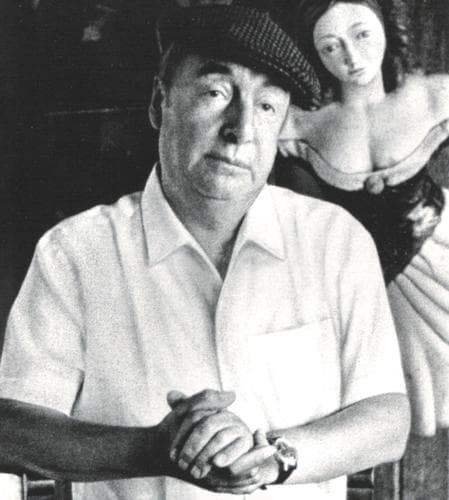
Pablo Neruda (born Ricardo Eliécer Neftalí Reyes Basoalto; 12 July 1904 – 23 September 1973) was a Chilean poet-diplomat and politician who won the 1971 Nobel Prize in Literature. Neruda became known as a poet when he was 13 years old, and wrote in a variety of styles, including surrealist poems, historical epics, political manifestos, a prose autobiography, and passionate love poems such as the ones in his collection Twenty Love Poems and a Song of Despair (1924).
Jeff Olson
4.4

Thomas Sowell
4.4
Walter Brueggemann
4.3
Rhonda Byrne
4.3

Robin Wall Kimmerer
4.3
George S. Clason
4.3
Elliot Aronson
4.3

Joseph Campbell
4.3