“The church says: the body is a sin. Science says: the body is a machine. Advertising says: the body is a business. The body says: I am a party.”
— A reflection on different societal views of the human body.

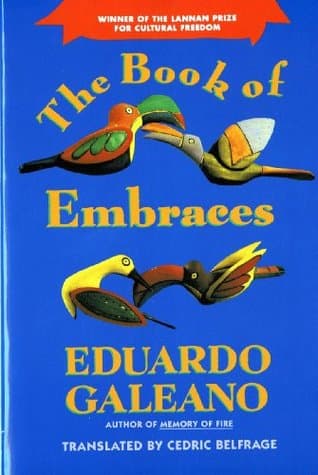
Eduardo Galeano (1991)
Genre
Philosophy
Reading Time
288 min
Key Themes
See below
Sign in to track this book
Through parables, dreams, and autobiography, Galeano celebrates human potential and invites readers to embrace life's beautiful contradictions.
“The church says: the body is a sin. Science says: the body is a machine. Advertising says: the body is a business. The body says: I am a party.”
— A reflection on different societal views of the human body.
“Many small people, in many small places, doing many small things, can alter the face of the world.”
— A hopeful statement about the power of collective small actions.
“To be free is to live without fear.”
— A simple yet profound definition of freedom.
“The first act of violence is to erase history.”
— Reflecting on the importance of memory and the dangers of historical revisionism.
“Utopia is on the horizon. When I walk two steps, it retreats two steps. When I walk ten steps, it retreats ten steps. It is no use walking, I will never reach it. What is utopia for? It is for that: it is for walking.”
— A famous parable about the nature of utopia and the continuous pursuit of ideals.
“Every person is a world, and every world is a person.”
— Emphasizing the individuality and complexity of each human being.
“The right to dream is one of the most fundamental human rights.”
— Highlighting the importance of imagination and aspirations.
“The past is a memory that doesn't want to die.”
— A poetic observation on the enduring presence of history.
“To remember is to pass through the heart again.”
— Defining the act of remembrance as an emotional and vital process.
“The world is an immense book that has been written with tears and blood.”
— A somber reflection on the harsh realities and suffering in human history.
“The greatest danger is not to dare.”
— Encouraging courage and the taking of risks.
“Fear is a prison without walls.”
— Describing the confining nature of fear.
“They say that history repeats itself. It is a lie. History limps, but it does not repeat itself.”
— A nuanced view on the cyclical nature of history, suggesting evolution rather than exact repetition.
“The journey is long and the road is hard, but the joy of walking is worth it.”
— A testament to the value of the process and perseverance despite difficulties.
“We are all mortal, until the first kiss and the second glass of wine.”
— A playful and romantic take on the moments that make us feel alive and immortal.
Ready to see how well you understood this book? Take our interactive quiz with 10 questions.
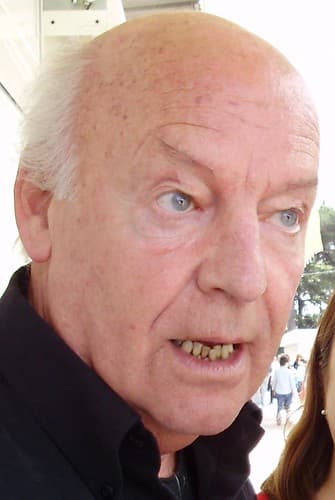
Biography coming soon.

Jeff Olson
4.4
Thomas Sowell
4.4
Walter Brueggemann
4.3
Rhonda Byrne
4.3

Robin Wall Kimmerer
4.3
George S. Clason
4.3
Elliot Aronson
4.3
Joseph Campbell
4.3