BookBrief
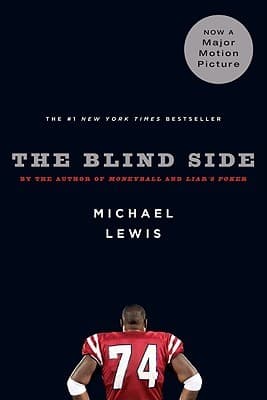
The Blind Side cover
Archivist's Choice

The Blind Side

Michael Lewis (2006)

Genre

Business / Biography / Memoir

Reading Time

6-8 hours

Key Themes

See below

Track Your Reading

Sign in to track this book

A homeless, illiterate giant finds family, purpose, and a multi-million dollar destiny on the football field as the protector of a quarterback's blind side, forever changing the game and his own improbable life.

Core Idea

The Blind Side argues that the position of left tackle in American football is one of the most critical and highly compensated in the sport. Its value was historically misunderstood until a shift in offensive strategy changed that. Beyond football, the book illustrates how an individual's environment, especially unconditional support and belief, can unlock their potential, challenging common ideas of meritocracy and success. It shows that talent often lies dormant, waiting for the right conditions and human connection to flourish, demonstrating this through the story of Michael Oher and the Tuohy family.
Reading time
6-8 hours
Difficulty
Medium
✓ Read this if...
You are interested in the intersection of sports business, social impact, and personal transformation, or if you enjoy stories about overcoming adversity through the power of human connection and unconventional families.
✗ Skip this if...
You are looking for a deep dive into pure sports strategy or a critical exposé on the ethics of college sports, as the narrative focuses more on the human story and the business of a specific position.

Core idea

The central argument and framework that powers the entire book.

The Blind Side argues that the position of left tackle in American football is one of the most critical and highly compensated in the sport. Its value was historically misunderstood until a shift in offensive strategy changed that. Beyond football, the book illustrates how an individual's environment, especially unconditional support and belief, can unlock their potential, challenging common ideas of meritocracy and success. It shows that talent often lies dormant, waiting for the right conditions and human connection to flourish, demonstrating this through the story of Michael Oher and the Tuohy family.

At a glance

Reading time

6-8 hours

Difficulty

Medium

Read this if...

You are interested in the intersection of sports business, social impact, and personal transformation, or if you enjoy stories about overcoming adversity through the power of human connection and unconventional families.

Skip this if...

You are looking for a deep dive into pure sports strategy or a critical exposé on the ethics of college sports, as the narrative focuses more on the human story and the business of a specific position.

Key Takeaways

1

The Unseen Value of the Left Tackle

Modern football's strategic shift created an outsized demand for a specific, often overlooked, position.

Quote

The market for left tackles was exploding, and nobody seemed to notice.

Lewis shows how a rule change in professional football, which limited where offensive linemen could block below the waist, greatly increased the importance and financial value of the left tackle position. Before, quarterbacks were often right-handed, and their 'blind side' (the left side of the offensive line) was less exposed. But as the game evolved, especially with more pocket passers, protecting the quarterback from hits became essential. This created a high demand for large, agile athletes who could reliably guard the quarterback...

Supporting evidence

The NFL's 1978 rule change prohibiting offensive linemen from blocking below the waist outside of a specific zone, coupled with the increasing value of franchise quarterbacks, made the left tackle a premium position. Lewis cites the skyrocketing salaries of left tackles like Jonathan Ogden and Orlando Pace as evidence of this market shift.

Apply this

Businesses should constantly analyze how rule changes, technological advancements, or shifts in consumer behavior create new 'premium' positions or skills within their industry. Identifying and investing in these emerging critical roles early can provide a significant competitive advantage.

market-inefficiencystrategic-valuepositional-scarcity
2

Beyond the Statistics: The Role of Environment

Innate talent needs the right nurturing environment to truly flourish.

Quote

Michael Oher wasn't just a physical specimen; he was a project, a canvas upon which the right environment could paint a masterpiece.

Lewis shows that physical talent, no matter how great, can stay hidden or be misdirected without the right support system. Michael Oher's early life was a chaotic struggle, without stability, education, or encouragement. It was only when the Tuohy family took him in — providing a stable, loving, and academically supportive environment — that his potential, both intellectual and athletic, began to appear. The book argues that Oher's change was not just about finding a sport. It was about finding structure, a sense of belonging, and peo...

Supporting evidence

Oher's initial academic struggles and lack of social skills, despite his physical gifts, contrasted sharply with his rapid improvement in both areas once he was living with the Tuohys, receiving tutoring, and experiencing a stable home life. His 'protective instinct' on the football field, initially seen as aggression, was channeled into the precise role of a left tackle.

Apply this

Organizations and individuals should recognize that potential is often hidden and requires a deliberate effort to cultivate the right environment for growth. Investing in mentorship, supportive team cultures, and foundational education can unlock capabilities that traditional metrics might miss.

nature-vs-nurtureenvironmental-impacttalent-development
3

The Power of Unconditional Support

True advocacy means seeing potential and removing obstacles, even when the path is unclear.

Quote

She didn’t just give him a home; she gave him a future, one she had to fight for every step of the way.

Leigh Anne Tuohy's strong support for Michael Oher is a main theme, showing the power of unconditional care. She did more than give him a home; she actively helped with his education, challenged school administrators, handled NCAA rules, and pushed him to believe in himself. Her support was not about getting something in return. It came from a real belief in his worth and potential, regardless of immediate results. This commitment helped Oher overcome big academic and personal challenges that would have stopped most people. It shows t...

Supporting evidence

Leigh Anne's direct confrontations with school officials regarding Oher's academic placement and her meticulous efforts to ensure he met NCAA eligibility requirements, including hiring tutors and overseeing his studies, exemplify her proactive advocacy.

Apply this

Leaders and mentors should strive to be active advocates for those they support, identifying and removing barriers, and championing their growth. This requires a deep commitment and a willingness to challenge existing systems for the benefit of the individual.

advocacymentorshipresilience-building
4

The Hidden Biases of Meritocracy

Standardized systems often fail to recognize or accommodate non-traditional forms of intelligence and experience.

Quote

The tests were designed to measure a certain kind of intelligence, one that had little to do with surviving on the streets or protecting a quarterback.

Lewis critiques the limits of traditional academic and evaluation systems, especially in Oher's situation. Michael, who grew up in extreme poverty and trauma, had a different kind of intelligence. He had street smarts, good observation skills, and a natural protective instinct. Standardized tests or typical classrooms did not measure these. His low GPA and test scores almost kept him from his athletic dreams, even though he was good at football and could learn when taught in a way that fit his experiences. The book suggests that stric...

Supporting evidence

Oher's initial struggles with standardized tests and low academic performance, contrasted with his later ability to grasp complex football plays and improve academically with personalized, context-rich tutoring. The NCAA's strict GPA requirements nearly disqualified him, despite his clear athletic talent and burgeoning academic commitment.

Apply this

Educators and employers should critically examine their evaluation methods to ensure they are not inadvertently biased against diverse backgrounds or different forms of intelligence. Consider alternative assessments and personalized learning/training approaches to unlock a wider pool of talent.

systemic-biasalternative-intelligenceinclusive-evaluation
5

The Business of College Sports

The 'amateur' status of college athletes masks a multi-billion dollar industry driven by complex incentives.

Quote

The NCAA was a multi-billion-dollar enterprise built on the backs of unpaid labor, disguised as amateurism.

Lewis reveals the hypocrisy in college athletics, especially football. The NCAA strictly enforces rules about 'amateurism' to keep up the idea that student-athletes play for the love of the game. But the reality is a huge, profitable business that makes a lot of money for universities, coaches, and broadcasters. The book exposes the intense pressure on coaches to recruit top talent, the complex network of boosters, and the often exploitative nature of a system that profits from the physical and emotional work of young, often poor, ath...

Supporting evidence

The intense scrutiny over Oher's academic eligibility, the involvement of NCAA investigators, and the implications for the Ole Miss football program, despite the lack of direct financial benefit to Oher himself. The astronomical salaries of college coaches compared to the 'amateur' status of their players.

Apply this

When evaluating any 'non-profit' or 'amateur' industry with significant financial flows, look beyond stated missions to understand the true economic drivers and who ultimately benefits. Question systems that demand sacrifice from one group while generating wealth for another.

college-athletics-economicsamateurism-debateexploitation
6

The Power of a Single Connection

One pivotal relationship can redirect an entire life's trajectory.

Quote

Sometimes, all it takes is one person to see you, truly see you, for your whole world to change.

Michael Oher's life was a series of temporary connections and deep instability. The moment he met the Tuohy family, especially Leigh Anne, was the most important turning point. This one connection offered not just shelter, but consistency, emotional investment, and a belief in his potential that he had never known. It shows how one committed relationship can be a strong force, giving the stability and resources needed for someone to escape cycles of poverty and disadvantage. It was not a network of social services, but a deeply person...

Supporting evidence

Oher's entire life trajectory, from homelessness and academic failure to a college scholarship and NFL career, is directly traceable to the Tuohy family's decision to take him in and become his legal guardians.

Apply this

Don't underestimate the impact of individual acts of kindness and commitment. Seek to be that pivotal connection for someone in need, whether through mentorship, advocacy, or direct support. Recognize the ripple effect one strong relationship can have.

mentorshipsocial-supportlife-changing-relationships
7

Defining 'Family' Beyond Biology

Love, commitment, and shared purpose can forge bonds stronger than blood.

Quote

They weren't just a family; they were *his* family, forged not by blood but by an act of will and love.

The Tuohy family adopting Michael Oher challenges common ideas of family. Despite no biological ties, they fully embraced him, giving emotional support, structure, and a sense of belonging that his biological family, broken by addiction and poverty, could not. The book shows how family is defined by commitment, love, and a willingness to sacrifice for each other, rather than genetics. It highlights the human need for belonging and how it can be met in unconventional ways, showing that chosen families can be as, or more, impactful than...

Supporting evidence

The Tuohys' legal adoption of Michael, their unwavering support through his academic and athletic struggles, and their integration of him into their daily lives and traditions, demonstrating a commitment that transcended biological relation.

Apply this

Expand your definition of 'family' and 'community' to include those who offer genuine support and belonging, regardless of traditional structures. Recognize the power of chosen relationships in providing stability and love.

chosen-familyadoptionbelonging
8

The Protective Instinct: A Fundamental Human Need

Deep-seated drives, when understood and channeled, can become a powerful asset.

Quote

He didn't just block; he protected. It was an instinct, primal and absolute.

Lewis looks at Michael Oher's protective nature, a trait developed from surviving dangerous environments and looking after younger siblings. This instinct, at first seen as aggression or a lack of social grace, was perfect for the role of a left tackle. The Tuohys and his coaches saw this deep drive and helped him use it as a specialized and valuable skill on the football field. This shows that seemingly 'unconventional' or 'problematic' traits, when understood and given the right context and direction, can become strengths. It emphas...

Supporting evidence

The story of Oher physically stopping a fight to protect a younger child, his protective actions towards his new siblings, and his natural, almost violent, commitment to guarding the quarterback's blind side on the field. His initial psychological assessment highlighted his 'protective' rather than 'aggressive' nature.

Apply this

In team building or personal development, identify individuals' core drives and instincts. Instead of trying to suppress or change them, explore how these traits can be channeled and leveraged to benefit the individual and the team in a constructive way.

instinctual-behaviorstrength-based-approachemotional-intelligence
9

The Ripple Effect of Opportunity

Investing in one individual can create positive outcomes for an entire community or system.

Quote

By saving Michael, they weren't just saving one life; they were demonstrating what was possible for countless others.

Michael Oher's story goes beyond his personal success to show the wider impact of providing opportunity. His story became an example for other disadvantaged youth, for the Tuohy's community, and for the sport itself. By investing in Oher, the Tuohys not only changed his life but also influenced how 'at-risk' youth are seen, inspired others to consider adoption or mentorship, and highlighted the potential in overlooked populations. His success on the field further proved the specialized role of the left tackle, influencing coaching str...

Supporting evidence

The national attention Oher's story received, inspiring discussions about poverty, adoption, and college athletics. His success at Ole Miss and in the NFL validated the Tuohys' belief and provided a tangible example of overcoming adversity.

Apply this

Consider the broader implications of individual investments. When supporting a person or project, think about how their success can serve as a model, inspire others, or create systemic improvements beyond the immediate beneficiary.

social-impactpositive-feedback-loopcommunity-development

Critical analysis

Notable Quotes

Every single one of them, the kids, the coaches, the teachers, the principal, every single person who came across Michael Oher at Briarcrest Christian School came to see him, in his quiet way, as extraordinary.

Describing the collective positive impact Michael had on those around him at Briarcrest.

A good left tackle is hard to find, and even harder to cultivate. They are the blind side protectors.

Explaining the critical importance and scarcity of skilled left tackles in American football.

The football team was a sort of social net, catching kids who might otherwise fall through the cracks.

Highlighting the role of football in providing structure and opportunity for disadvantaged youth.

The NFL draft is essentially a mechanism for allocating human capital. It’s not just about finding talent; it’s about finding talent that fits a particular, highly specialized role.

Lewis's analysis of the NFL draft as an economic and strategic process.

His world was not shaped by words, but by the physical reality of things.

Describing Michael Oher's preferred mode of understanding and interacting with his environment.

What separated the rich from the poor, in America, was less money than the sense of the future.

A broader societal observation about the psychological and cultural differences between economic classes.

The value of a human being is not measured by the size of their bank account or the clothes they wear, but by the content of their character.

A general moral reflection, implicitly applied to how the Tuohys viewed Michael.

He didn't know how to read, but he knew how to protect.

Contrasting Michael Oher's academic struggles with his innate protective instincts and football prowess.

They were good people, doing a good thing, and they weren't doing it to be seen as good people.

Referring to the genuine altruism of the Tuohy family in taking in Michael.

You can't just put a big kid in a jersey and expect him to be a left tackle. It takes an incredible amount of training, discipline, and understanding.

Emphasizing that the role of a left tackle requires more than just physical size.

The Tuohys didn't just give Michael a home; they gave him a narrative.

Highlighting how the Tuohy family provided Michael with a structured life story and identity.

He was a blank slate, and they, the Tuohys, became the ones to write on it.

Describing Michael's initial lack of direction and the Tuohys' role in shaping his future.

The blind side of a quarterback is his most vulnerable spot. It’s the part of the field he can’t see, and it’s where the most dangerous hits come from.

Explaining the literal meaning of 'the blind side' in football and its importance.

His strength was not just physical, but emotional. He had an incredible capacity to absorb pain and keep going.

Reflecting on Michael Oher's resilience beyond just his physical prowess.

Quiz

Test Your Knowledge

Ready to see how well you understood this book? Take our interactive quiz with 10 questions.

10
Questions
~5
Minutes
?
Best Score

Key Questions (FAQ)

'The Blind Side' tells the true story of Michael Oher, a homeless and traumatized teenager, who is adopted by the wealthy Tuohy family. With their love and support, he overcomes his difficult past to become a successful football player, ultimately making it to the NFL.

About the author