BookBrief
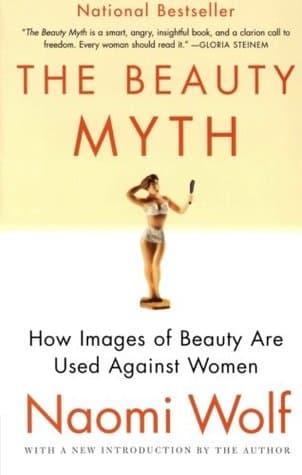
The Beauty Myth cover
Archivist's Choice

The Beauty Myth

Naomi Wolf (1990)

Genre

Politics / Psychology / Philosophy

Reading Time

12 Minutes

Key Themes

See below

Track Your Reading

Sign in to track this book

Core Idea

Naomi Wolf's "The Beauty Myth" argues that as women have gained political and economic power, a new, more insidious form of social control has emerged: the beauty myth. This myth is not about beauty itself, but about a prescriptive, often unattainable standard of beauty that is used as a political weapon against women's advancement. It dictates how women should look and behave, creating a "cage" that restricts their freedom and diverts their energy and resources into an endless pursuit of physical perfection. Wolf contends that this myth is perpetuated by industries (cosmetics, fashion, diet, plastic surgery) that profit from women's insecurities and by media representations that reinforce narrow ideals, ultimately undermining women's self-esteem and collective power.
Difficulty
Medium

Core idea

The central argument and framework that powers the entire book.

Naomi Wolf's "The Beauty Myth" argues that as women have gained political and economic power, a new, more insidious form of social control has emerged: the beauty myth. This myth is not about beauty itself, but about a prescriptive, often unattainable standard of beauty that is used as a political weapon against women's advancement. It dictates how women should look and behave, creating a "cage" that restricts their freedom and diverts their energy and resources into an endless pursuit of physical perfection. Wolf contends that this myth is perpetuated by industries (cosmetics, fashion, diet, plastic surgery) that profit from women's insecurities and by media representations that reinforce narrow ideals, ultimately undermining women's self-esteem and collective power.

At a glance

Difficulty

Medium

Key Takeaways

1

The Beauty Myth as a Counter-Revolution

As women gain power, the beauty myth intensifies to maintain social control.

Quote

The greater the power women have, the more formidable and beautiful they must be to wield it.

Wolf's main idea is that the beauty myth isn't a natural desire for attractiveness. Instead, it's a social construct created to counter the progress of the women's liberation movement. When women achieved legal, economic, and political equality, new ways of control were needed to keep them from using their new power. The beauty myth, by making women focus their energy, time, and money on an impossible ideal of physical perfection, effectively puts them back in a subordinate role. This argument is strong because it shows beauty standar...

Supporting evidence

Wolf traces the rise of diet culture, cosmetic surgery, and the intensified focus on female appearance in media during the same period women were entering the workforce and achieving suffrage.

Apply this

Recognize that societal pressure to conform to beauty standards is not benign; it's a mechanism of control. Critically evaluate media portrayals of beauty and question the motives behind industries that profit from female insecurity.


2

Beauty as a Currency of Power

Physical attractiveness becomes a non-monetary currency women must possess to navigate society.

Quote

Beauty is a currency system. It is not an innate object of desire, but a currency system that is in the service of the patriarchy.

Wolf says beauty acts as a 'currency' for women in a male-dominated society, much like money or status for men. This 'currency' affects a woman's social standing, job prospects, and even how worthy she is seen to be of love and respect. But unlike other currencies, its value is set by others, always changing, and temporary, which causes constant insecurity. This idea helps explain why women spend so much on their appearance, often at a high personal cost. They aren't just trying to look good; they are trying to gain a form of capital ...

Supporting evidence

Wolf discusses how women's attractiveness can influence hiring decisions, social acceptance, and even how seriously their opinions are taken in professional settings.

Apply this

Challenge the implicit bias that equates beauty with competence or trustworthiness. Advocate for merit-based evaluations and consciously resist judging women based on their appearance.

3

The Four Points of the Iron Maiden

Diet, cosmetics, surgery, and pornography form a system of control over women's bodies.

Quote

The Iron Maiden is the female torture device that is the beauty myth, and it has four points: diet, cosmetics, surgery, and pornography.

Wolf breaks down the beauty myth into four main parts, which she calls the 'Iron Maiden': diet, cosmetics, surgery, and pornography. Each part, she argues, contributes to the systemic oppression of women by setting impossible standards, causing self-hatred, and turning female bodies into products. Diet culture promotes starvation and body image issues; cosmetics promise change but reinforce feelings of inadequacy; surgery offers invasive 'fixes' for natural aging or perceived flaws; and pornography reduces women to sexual objects, dic...

Supporting evidence

Wolf meticulously details the historical rise and psychological impact of each of these industries, showing how they profit from female insecurity and perpetuate impossible ideals.

Apply this

Consciously resist participating in these industries when they promote self-hatred or unrealistic standards. Support body positivity movements and media that challenge these norms.

4

The Tyranny of Youth and Thinness

The beauty myth disproportionately punishes women for aging and for natural body variations.

Quote

A woman's face is her autobiography. A woman's body is her story. The beauty myth seeks to erase both.

A key part of the beauty myth, according to Wolf, is its constant demand for youth and thinness. These ideals are largely impossible to reach and maintain. This pressure punishes women for natural aging and for having diverse body types. By making youth the highest form of beauty, the myth makes women 'outdated' as they age, eroding their self-worth and social visibility. Similarly, the constant pursuit of an impossibly thin ideal pushes women into unhealthy behaviors and ongoing dissatisfaction with their natural bodies. This argumen...

Supporting evidence

Wolf cites the immense pressure on female celebrities to remain youthful and thin, and the negative media portrayals of women who deviate from these norms.

Apply this

Challenge ageism and fatphobia in media and personal interactions. Celebrate diverse body types and embrace the natural process of aging as a sign of lived experience.

5

Internalized Oppression and Self-Surveillance

Women internalize beauty standards, becoming their own most effective jailers.

Quote

The beauty myth is not about women, it is about men's fear of women's liberation.

One of the most harmful aspects of the beauty myth is how women internalize it. Wolf argues that women learn to police themselves, constantly comparing their appearance to impossible standards. This self-monitoring becomes a constant, draining mental burden, taking energy away from intellectual and career pursuits. External pressure turns into an internal critic, making women their own 'jailers' in the search for elusive perfection. This psychological part of the myth is powerful because it explains how societal control can last even ...

Supporting evidence

Wolf describes how women spend countless hours on grooming, dieting, and self-critique, often at the expense of other activities or opportunities.

Apply this

Practice self-compassion and mindfulness to recognize and challenge the internalized 'beauty myth' voice. Focus on internal growth and achievements rather than external validation.

6

Beauty and Violence: A Disturbing Link

The beauty myth, by objectifying women, contributes to a culture that tolerates violence against them.

Quote

When we define women by their beauty, we make them disposable when that beauty fades or is violated.

Wolf connects the beauty myth to society's tolerance of violence against women. By reducing women to their physical appearance and valuing them mainly for their 'beauty,' the myth dehumanizes them. This objectification, Wolf argues, makes it easier for society to justify or ignore violence, as if women who don't meet beauty standards, or whose beauty is 'damaged,' are less worthy of protection or respect. The focus on female looks can shift blame from the attacker to the victim, focusing on how a woman 'presented herself' instead of t...

Supporting evidence

Wolf discusses how media often frames victims of violence in terms of their physical attractiveness, and how 'beauty' can be used to justify or condemn women.

Apply this

Challenge victim-blaming narratives and firmly reject any justification of violence based on a woman's appearance. Advocate for legal and social systems that protect women regardless of their perceived beauty.

7

The Economic Exploitation of Insecurity

Industries profit immensely from women's perpetual insecurity about their appearance.

Quote

The beauty myth is always actually about money.

Wolf details how the beauty industry—including cosmetics, fashion, diet, and plastic surgery—is a multi-billion dollar business that thrives on female insecurity. These industries don't aim to 'fix' women but to keep a cycle of dissatisfaction going, ensuring a continuous market for their products and services. They create ever-changing beauty standards, making sure women can never truly reach perfection, thus guaranteeing lifelong consumption. This economic analysis is important because it shows the commercial basis of the beauty myt...

Supporting evidence

Wolf provides statistics on the vast profits of the beauty industry and the marketing tactics used to target women, from early adolescence through old age.

Apply this

Become a conscious consumer, questioning the motives behind advertising and products that promise 'perfection.' Redirect funds from appearance-based spending to investments in education, experiences, or personal growth.

8

Reclaiming True Beauty: Beyond the Myth

True beauty lies in authenticity, strength, and inner life, not external conformity.

Quote

Beauty is not a universal constant, but a social construct designed to keep women in their place.

While "The Beauty Myth" mostly criticizes, Wolf also offers a path to freedom. She argues that true beauty isn't about fitting external, manufactured standards, but about expressing one's true self, building inner strength, and engaging with the world intellectually and emotionally. This means rejecting external judgment and reclaiming one's body and self-image from industries that seek to exploit them. This is the book's most empowering message, encouraging women to define beauty on their own terms, to value their intelligence, creat...

Supporting evidence

Wolf encourages women to find solidarity, to challenge media representations, and to prioritize their intellectual and emotional development over physical pursuits.

Apply this

Cultivate a strong sense of self-worth independent of appearance. Surround yourself with people who value your intellect and character. Engage in activities that foster personal growth and self-expression.

9

The Myth's Impact on Sexuality

The beauty myth distorts female sexuality, making it about performance rather than pleasure.

Quote

The beauty myth teaches women to see their sexuality as a performance for others, rather than a source of their own pleasure and power.

Wolf argues that the beauty myth deeply affects female sexuality, turning it from a private, personal experience into another area for performance and self-monitoring. Women learn that their sexual desirability depends on meeting specific, often unrealistic, beauty standards. This external pressure can lead to a disconnect from their own bodies and desires, as they focus on appearing 'sexy' to others rather than experiencing genuine pleasure. This part of the myth is especially harmful because it invades one of the most personal and p...

Supporting evidence

Wolf discusses how pornography and popular culture dictate what is considered 'sexy' for women, often prioritizing specific body types and behaviors over genuine intimacy or female agency.

Apply this

Reclaim your sexuality as a personal and private domain. Prioritize your own pleasure and desire over perceived external expectations. Engage in open conversations about healthy and consensual sexuality.

10

Solidarity as a Weapon

Breaking the beauty myth requires collective action and mutual support among women.

Quote

When women refuse to compete for male approval, the beauty myth begins to unravel.

A repeated idea, though not always directly stated, is that breaking down the beauty myth needs women to act together and support each other. The myth thrives on competition, making women compete with each other for external approval. By recognizing their shared oppression and refusing to compete, women can collectively reduce the myth's power. Wolf suggests that when women support each other, celebrate diverse forms of beauty, and prioritize their collective freedom over individual attempts to 'win' the beauty game, they create a str...

Supporting evidence

Wolf implicitly advocates for feminist movements and consciousness-raising groups as essential tools for challenging patriarchal structures.

Apply this

Build supportive relationships with other women, actively challenging beauty-based comparisons and competition. Join or create communities that promote body positivity, self-acceptance, and female empowerment.

Critical analysis

Notable Quotes

Quiz

Test Your Knowledge

Ready to see how well you understood this book? Take our interactive quiz with 10 questions.

10
Questions
~5
Minutes
?
Best Score

Key Questions (FAQ)

The central argument of "The Beauty Myth" is that the concept of beauty in modern society functions as a form of social control, trapping women in an endless pursuit of unattainable physical perfection. This obsession, Wolf argues, distracts from women's real progress and power.

About the author