“Books, like men their authors, have no more than one way of coming into the world, but there are ten thousand to go out of it, and return no more.”
— Opening reflection on the mortality and fate of books.

Jonathan Swift (1704)
Genre
Philosophy
Reading Time
30 min
Key Themes
See below
Sign in to track this book
In a war of wit and ink, ancient tomes clash with modern pamphlets on the dusty shelves of a library, each vying for intellectual supremacy and the very soul of literature.
“Books, like men their authors, have no more than one way of coming into the world, but there are ten thousand to go out of it, and return no more.”
— Opening reflection on the mortality and fate of books.
“The spider, having spun his web out of his own bowels, brings forth flies and wasps, that is, books and controversy.”
— Allegory comparing modern writers (spiders) to ancient ones (bees).
“We are for the ancients, and we will maintain that the smallest leaf of a laurel is worth all the flowers of the modern garden.”
— Declaration in favor of ancient authors over modern ones.
“A man may be allowed to keep poisons in his closet, but not to vend them about as cordials.”
— Critique of modern writers spreading harmful ideas.
“The bee, that wanders through the fields, and gathers honey from every flower, is a proper emblem of the ancients.”
— Praise for ancient authors as diligent and productive.
“Learning is like a great river, which, the nearer it approaches the sea, the broader and deeper it grows.”
— Metaphor for the accumulation of knowledge over time.
“The moderns have not added one new virtue to the moral world, nor invented so much as one new convenience in life.”
— Argument that modern contributions are overstated.
“Truth is the most powerful thing in the world, since even fiction itself must be governed by it.”
— Assertion of truth's supremacy in literature and debate.
“A book is a garden, an orchard, a storehouse, a party, a company by the way, a counselor, a multitude of counselors.”
— Celebration of the multifaceted value of books.
“The ancients are the giants on whose shoulders we stand, but the moderns are the dwarfs who look over their heads.”
— Satirical twist on the idea of standing on giants' shoulders.
“Controversy is the very life of learning, and the death of ignorance.”
— Defense of intellectual debate as essential to progress.
“The spider's web is a flimsy thing, built in a corner, and swept away by the first broom of criticism.”
— Critique of modern works as fragile and insubstantial.
“We fight not for victory, but for truth; and truth is never overcome.”
— Declaration of the noble purpose in the battle of books.
“A library is a sanctuary where the ghosts of the past converse with the living.”
— Poetic description of the enduring presence of books.
Ready to see how well you understood this book? Take our interactive quiz with 10 questions.
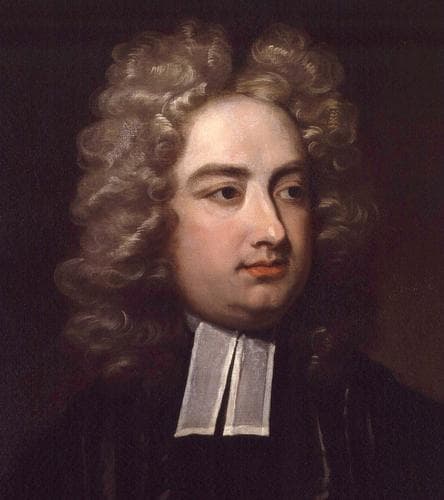
Jonathan Swift was an Anglo-Irish satirist, author, essayist, political pamphleteer, poet, and Anglican cleric who became Dean of St Patrick's Cathedral, Dublin, hence his common sobriquet, "Dean Swift".
Jeff Olson
4.4

Thomas Sowell
4.4
Walter Brueggemann
4.3
Rhonda Byrne
4.3

Robin Wall Kimmerer
4.3
George S. Clason
4.3
Elliot Aronson
4.3

Joseph Campbell
4.3