BookBrief
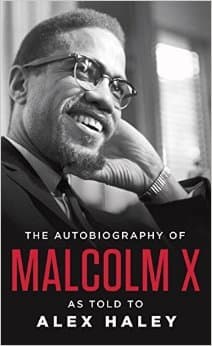
The Autobiography of Malcolm X cover
Archivist's Choice

The Autobiography of Malcolm X

Malcolm X (1964)

Genre

Politics / Biography / Memoir / History

Reading Time

12-15 hours

Key Themes

See below

Track Your Reading

Sign in to track this book

From street crime and prison, Malcolm X's autobiography chronicles his transformation into a powerful voice for Black liberation and a devout Muslim, ultimately challenging his fiery rhetoric with a message of universal brotherhood.

Core Idea

The Autobiography of Malcolm X chronicles the transformation of Malcolm Little, a street hustler known as 'Detroit Red,' into Malcolm X, a leader and spokesperson for Black nationalism within the Nation of Islam, and later into El-Hajj Malik El-Shabazz, an independent international human rights advocate. It argues that systemic racism in America requires a complete societal change, not just integration, and that self-education, self-respect, and a deep understanding of history are necessary for Black liberation. The book details how Malcolm's personal growth, shaped by incarceration, religious conversion, and global travel, led him to challenge white supremacy and the limits of his former beliefs, which ultimately cost him his life.
Reading time
12-15 hours
Difficulty
Medium
✓ Read this if...
You want to understand one of the most significant figures in 20th-century American history, grasp the complexities of identity, race, and social justice, and witness a powerful narrative of personal and ideological evolution.
✗ Skip this if...
You are looking for a light read or are unwilling to confront challenging perspectives on race, religion, and American society.

Core idea

The central argument and framework that powers the entire book.

The Autobiography of Malcolm X chronicles the transformation of Malcolm Little, a street hustler known as 'Detroit Red,' into Malcolm X, a leader and spokesperson for Black nationalism within the Nation of Islam, and later into El-Hajj Malik El-Shabazz, an independent international human rights advocate. It argues that systemic racism in America requires a complete societal change, not just integration, and that self-education, self-respect, and a deep understanding of history are necessary for Black liberation. The book details how Malcolm's personal growth, shaped by incarceration, religious conversion, and global travel, led him to challenge white supremacy and the limits of his former beliefs, which ultimately cost him his life.

At a glance

Reading time

12-15 hours

Difficulty

Medium

Read this if...

You want to understand one of the most significant figures in 20th-century American history, grasp the complexities of identity, race, and social justice, and witness a powerful narrative of personal and ideological evolution.

Skip this if...

You are looking for a light read or are unwilling to confront challenging perspectives on race, religion, and American society.

Key Takeaways

1

From 'Detroit Red' to Minister Malcolm X

The transformative power of self-education and ideological conversion in prison.

Quote

I was to learn later that in prison, you can study whatever you want.

Malcolm X's journey from a street hustler known as 'Detroit Red' to an articulate and influential minister shows the power of self-education and ideological change. While in prison, he read widely, copied dictionary pages, and debated with other inmates. This period of intense intellectual growth, combined with his discovery of the Nation of Islam, changed his worldview. He left his criminal past, took on a new identity, and found purpose in advocating for Black liberation. This transformation shows how even difficult situations can l...

Supporting evidence

Malcolm X's detailed accounts of his time in Charlestown State Prison, where he taught himself to read and write more effectively, devoured books from the prison library (especially on history and philosophy), and engaged in debates with a fellow inmate named Bimbi.

Apply this

Embrace continuous learning, regardless of formal settings. Seek out knowledge that challenges your assumptions and broadens your understanding of the world. Recognize the potential for personal transformation through dedicated study and the adoption of a strong ethical or ideological framework.


self-educationprison-reformideological-conversion
2

The Nation of Islam: Identity and Purpose

How a radical religious movement provided identity, discipline, and a sense of belonging.

Quote

The only way we are going to get anywhere is to work together, and we have to work together under a leader.

For Malcolm X, the Nation of Islam (NOI) gave more than just a religion; it provided a complete framework for identity, purpose, and community in a society that had systematically denied these to Black Americans. The NOI's teachings, though controversial, instilled discipline, self-respect, and racial pride that was deeply empowering. It offered a story that explained Black suffering and provided a path to redemption and self-sufficiency, which differed greatly from the integrationist goals of the mainstream civil rights movement. The...

Supporting evidence

Malcolm X's detailed descriptions of the NOI's teachings, its strict dietary laws, dress codes, and the emphasis on Black history and self-reliance. His deep reverence for Elijah Muhammad and his role in organizing and expanding the NOI's influence.

Apply this

Seek communities and philosophies that provide a sense of belonging, purpose, and a framework for understanding the world. Evaluate the principles of any group for their capacity to empower individuals and foster positive change, while critically examining their potential for insularity or rigidity.

black-nationalismnation-of-islamidentity-politics
3

The Power of Oratory and Rhetoric

Malcolm X's mastery of language as a weapon and a tool for awakening.

Quote

I will tell you something that is going to happen. It will happen. God will bring it into being.

Malcolm X was a gifted speaker of the 20th century, a skill he carefully developed. His speeches were not just informative; they were electrifying, confrontational, and persuasive. He used clear metaphors, direct address, and a powerful, rhythmic delivery to make his audience aware of racial injustice and inspire them to act. He spoke with an unapologetic clarity that cut through polite conversation, often using irony and sharp critiques to expose hypocrisy. His ability to voice the anger and frustration of Black Americans in a way th...

Supporting evidence

Numerous examples of his public speeches and debates, as recounted in the autobiography, where he directly challenged white supremacy and the slow pace of integration, often using emotionally charged language to convey the urgency of the Black struggle.

Apply this

Cultivate strong communication skills, particularly in public speaking. Learn to articulate your message with clarity, passion, and conviction. Understand how to use rhetoric effectively to persuade, inform, and inspire, while always striving for authenticity and truth.

oratoryrhetoricpublic-speakingpersuasion
4

Evolution of Thought: Beyond Black Nationalism

The pilgrimage to Mecca broadened his worldview beyond racial separatism.

Quote

I had never before seen such true brotherhood practiced by all colors together, irrespective of their color.

Malcolm X's pilgrimage to Mecca was a turning point in his ideological journey. Seeing Muslims of 'all colors, from blue-eyed blonds to Black-skinned Africans' interacting as equals challenged his previous understanding of race and brotherhood, which had been shaped by the NOI's Black nationalist ideas. This experience led him to question the inherent racism he had previously attributed to all white people and to embrace a more universal vision of human brotherhood under orthodox Islam. He realized that racism was a societal construct...

Supporting evidence

His detailed accounts of the Hajj, specifically his interactions with diverse Muslims from around the world, and his subsequent letters and statements expressing a newfound understanding of universal brotherhood.

Apply this

Actively seek out experiences that challenge your preconceived notions and expand your worldview. Be open to revising deeply held beliefs in light of new information or experiences. Embrace intellectual humility and the capacity for personal growth and ideological evolution.

islammeccauniversalismideological-evolution
5

The Price of Truth and Independence

Malcolm X's ultimate break from the Nation of Islam and its tragic consequences.

Quote

I knew that I had made too many enemies among the Nation of Islam.

Malcolm X's growing disappointment with Elijah Muhammad's moral failings and the NOI's rigid, often hypocritical, teachings ultimately led to his painful and dangerous departure from the organization. His intellectual honesty and commitment to what he saw as truth compelled him to speak out, even if it meant alienating his former mentors and risking his life. This break was not just ideological; it was a deep personal split that cost him his community, his safety, and ultimately, his life. It shows the immense courage needed to challe...

Supporting evidence

His recounting of the 'chickens coming home to roost' comment after JFK's assassination, which led to his silencing, and his subsequent discovery of Elijah Muhammad's extramarital affairs and the financial corruption within the NOI.

Apply this

Prioritize intellectual honesty and moral integrity, even when it is difficult or dangerous. Be prepared to challenge authority and question narratives, even those from within your own community. Understand that pursuing truth can come at a significant personal cost.

disillusionmentmoral-integritydissentmartyrdom
6

Systemic Racism vs. Individual Prejudice

Malcolm X's evolving understanding of the roots of racial oppression.

Quote

It was the first time I had ever seen white people as human beings.

Initially, Malcolm X, influenced by the Nation of Islam, viewed racism as an inherent characteristic of 'white devils.' His early speeches often mixed individual prejudice with systemic oppression, defining the problem in stark, essentialist terms. However, his travels, especially his pilgrimage to Mecca, broadened his view. He began to understand that racism was a product of social, political, and economic systems, rather than an unchangeable biological trait. This shift allowed him to differentiate between individual white people, s...

Supporting evidence

His reflections on seeing white Muslims during the Hajj, and his subsequent statements acknowledging that not all white people were inherently evil, but rather that the 'system' was the problem.

Apply this

Distinguish between individual biases and systemic issues when analyzing social problems. Understand that while individual prejudice is harmful, addressing systemic injustices requires a deeper, structural approach. Seek to understand the historical and sociological roots of oppression.

systemic-racismwhite-supremacysocial-justicestructural-inequality
7

The Unflinching Critique of American Society

Malcolm X exposed the hypocrisy and violence inherent in the American dream for Black people.

Quote

We didn't land on Plymouth Rock, Plymouth Rock landed on us.

Malcolm X offered a sharp and uncompromising critique of American society, challenging the common idea of a land of freedom and opportunity. He exposed the hypocrisy of a nation that preached liberty while systematically oppressing its Black citizens. He argued that Black Americans were not just seeking integration into a flawed system, but demanding fundamental human rights that had been denied to them for centuries. His speeches forced America to confront its violent past and present, highlighting the economic exploitation, police b...

Supporting evidence

His consistent use of historical facts regarding slavery and Jim Crow, his vivid descriptions of the daily indignities and violence faced by Black Americans, and his direct challenges to the U.S. government's claims of democracy and justice.

Apply this

Cultivate a critical perspective on dominant narratives and power structures. Question official histories and seek out marginalized voices to gain a more complete understanding of societal issues. Do not shy away from confronting uncomfortable truths about injustice.

american-dreamcivil-rightsblack-liberationsocial-critique
8

The Role of Media and Public Perception

How media manipulation shaped, and often distorted, Malcolm X's public image.

Quote

The white press, as usual, played up the most sensational aspects of my statements.

Malcolm X was aware of how the media, especially the white press, portrayed him as a dangerous, hate-mongering extremist. He recognized that his words were often taken out of context, sensationalized, and used to discredit his message and instill fear in the white public. This deliberate misrepresentation created a public image that often overshadowed his substantive arguments for Black self-determination and justice. Despite this, he skillfully used media platforms, even when hostile, to communicate his views directly to a wider audi...

Supporting evidence

His numerous complaints about newspaper headlines and television reports that distorted his speeches, often focusing on terms like 'hate' or 'violence' while ignoring his calls for self-respect and economic empowerment.

Apply this

Develop strong media literacy skills, critically analyzing news sources and being aware of potential biases and sensationalism. Understand how narratives are constructed and challenge those that misrepresent or demonize individuals or groups. Strive to control your own narrative when communicating.

media-biaspublic-imagepropagandanarrative-control
9

The Legacy of Self-Determination

Malcolm X's enduring call for Black people to define their own destiny.

Quote

Nobody can give you freedom. Nobody can give you equality or justice or anything. If you're a man, you take it.

At the core of Malcolm X's philosophy, from his early days in the Nation of Islam to his later embrace of international human rights, was a firm belief in Black self-determination. He argued that Black people could not rely on the goodwill of their oppressors for liberation, but must instead actively define their own destiny, build their own institutions, and secure their own rights. This call for self-reliance included economic independence, cultural pride, political empowerment, and the right to self-defense. His legacy continues to...

Supporting evidence

His consistent advocacy for Black-owned businesses, independent political action, self-defense against racial violence, and his speeches emphasizing 'by any means necessary' to achieve freedom and justice.

Apply this

Empower yourself and your community through self-reliance and collective action. Do not wait for others to grant you rights or opportunities; actively work to create them. Foster a spirit of independence and agency in achieving personal and collective goals.

self-determinationblack-empowermentagencyautonomy
10

A Life Defined by Constant Learning

Malcolm X's journey demonstrates an unceasing commitment to intellectual and spiritual growth.

Quote

My greatest discovery in life was that I could learn whatever I wanted to learn.

From his transformative prison years, where he copied dictionary entries, to his later global travels and deep theological studies, Malcolm X's life shows the power of continuous learning and intellectual curiosity. He never stopped questioning, reading, debating, and evolving his thinking. This commitment to self-education allowed him to move beyond the limits of his impoverished youth and the rigid beliefs of his early ideological groups. His journey illustrates that true wisdom comes from an open mind, a willingness to challenge on...

Supporting evidence

His detailed accounts of his self-study in prison, his deep dives into the teachings of the Nation of Islam, his later embrace of orthodox Sunni Islam, and his extensive reading and discussions with intellectuals during his travels abroad.

Apply this

Cultivate a lifelong habit of learning and intellectual curiosity. Challenge your own beliefs and be open to new information that might alter your worldview. See every experience, including difficult ones, as an opportunity for growth and education.

lifelong-learningintellectual-growthcuriositypersonal-development

Critical analysis

Notable Quotes

I have often reflected upon the new life that the knowledge of the black man's history has given to me.

Malcolm X reflecting on the impact of learning his true history while in prison.

The price of freedom is death.

A powerful statement on the ultimate sacrifice required for true liberation.

Early in life I had learned that if you want something, you had better make some noise.

Describing his early understanding of how to get attention and make an impact.

Nobody can give you freedom. Nobody can give you equality or justice or anything. If you're a man, you take it.

Emphasizing the importance of self-determination and taking action to achieve rights.

I believe in the brotherhood of all men, but I don't believe in wasting brotherhood on anyone who doesn't want to practice it with me.

A nuanced view on universal brotherhood, tempered by practical application.

Don't be in a hurry to condemn because he doesn't do what you do or think as you think or as fast. There was a time when you didn't know what you know today.

A call for patience and understanding towards others, acknowledging personal growth.

I had been a criminal, I had been a drug addict, I had been a pimp, and I had been a robber. I had been all these things, and I had been to prison. But I had never been to Mecca.

Reflecting on his past life of crime before his spiritual transformation and pilgrimage.

The greatest mistake of the white man is that he thinks he can bring about freedom for the black man without the black man's help.

Criticizing the paternalistic approach to civil rights and stressing the need for black self-determination.

Once I was in a room with a group of people, and someone asked me, 'Malcolm, what do you think of integration?' And I said, 'If you mean forced integration, then I am against it. If you mean voluntary integration, then I am for it.'

Clarifying his stance on integration, distinguishing between forced and voluntary forms.

The only way we'll get freedom for ourselves is to identify ourselves with every oppressed people in the world.

Advocating for a broader, internationalist approach to the struggle for liberation.

It was the best thing that could have happened to me. I had never been so free in my life.

Referring to his time in prison, where he found intellectual and spiritual awakening.

I want to be remembered as someone who was sincere. Even if I made mistakes, they were made sincerely.

Expressing his desire for his legacy to be one of sincerity and genuine conviction.

I am not a racist. I am against every form of racism and segregation, every form of discrimination. I believe in human beings, and that all human beings should be respected as such, regardless of their color.

A statement made after his pilgrimage to Mecca, showing a shift in his views on race.

Concerning nonviolence: it is criminal to teach a man not to defend himself when he is the constant victim of brutal attacks.

Challenging the unconditional embrace of nonviolence in the face of persistent aggression.

Quiz

Test Your Knowledge

Ready to see how well you understood this book? Take our interactive quiz with 10 questions.

10
Questions
~5
Minutes
?
Best Score

Key Questions (FAQ)

The book chronicles Malcolm X's transformative journey from a life of crime and imprisonment to becoming a prominent leader in the Nation of Islam and later a Sunni Muslim. It explores themes of identity, race, religion, and the search for truth and self-discovery.

About the author