BookBrief
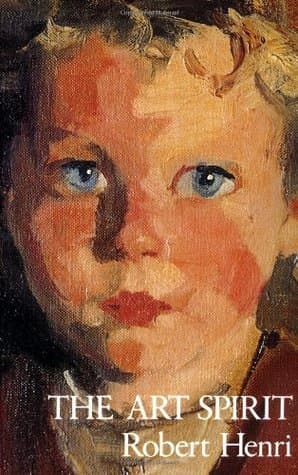
The Art Spirit cover
Archivist's Choice

The Art Spirit

Robert Henri (1929)

Genre

Reference / Creativity / Philosophy

Reading Time

300 min

Key Themes

See below

Track Your Reading

Sign in to track this book

Robert Henri's timeless wisdom guides you to see, feel, and express the world with passion and authenticity, helping you find joy in creativity.

Core Idea

Robert Henri's "The Art Spirit" argues that art is a part of life, not just an aesthetic pursuit. It encourages artists to develop strong self-expression, based on careful observation and a connection to their inner selves. Technical skill is a way to show authentic feeling and character, not an end in itself. The creative journey involves ongoing growth, struggle, and discovery, driven by freedom and a responsibility to portray humanity honestly.
Reading time
300 min
Difficulty
Medium
✓ Read this if...
You are an artist (of any medium) seeking profound philosophical and practical insights into the spirit of creation, observation, and self-expression, or if you appreciate timeless wisdom on living a more artistic and observant life.
✗ Skip this if...
You are looking for a step-by-step technical art manual, a historical overview of art movements, or a light, casual read. This book is dense with aphorisms and philosophical musings.

Core idea

The central argument and framework that powers the entire book.

Robert Henri's "The Art Spirit" argues that art is a part of life, not just an aesthetic pursuit. It encourages artists to develop strong self-expression, based on careful observation and a connection to their inner selves. Technical skill is a way to show authentic feeling and character, not an end in itself. The creative journey involves ongoing growth, struggle, and discovery, driven by freedom and a responsibility to portray humanity honestly.

At a glance

Reading time

300 min

Difficulty

Medium

Read this if...

You are an artist (of any medium) seeking profound philosophical and practical insights into the spirit of creation, observation, and self-expression, or if you appreciate timeless wisdom on living a more artistic and observant life.

Skip this if...

You are looking for a step-by-step technical art manual, a historical overview of art movements, or a light, casual read. This book is dense with aphorisms and philosophical musings.

Key Takeaways

1

Art is Life Itself

True art isn't separate from living; it's a profound engagement with it.

Quote

Art when really understood is the province of every human being. It is simply a question of doing things, anything, well. It is not an outside, extra thing. When the artist is alive in any person, whatever his calling, that person is in so far an artist.

Henri rejects the idea that art is only for a select few. He believes 'art' means living fully and consciously. It involves bringing intention, observation, and personal expression to all parts of life, whether painting, cooking, or doing business. This view makes art accessible to everyone, not just those in traditional art fields. The 'art spirit' is a way of approaching life—a commitment to doing things well, with purpose and presence. It means finding beauty and meaning in the ordinary and turning one's unique experience into some...

Supporting evidence

Henri's constant emphasis on the artist's role as an observer of life, urging students to 'look at the world' and 'be interested in humanity' rather than solely focusing on academic techniques. He believed that the subject matter of art is life itself, in all its forms.

Apply this

Approach daily tasks with the same attention, curiosity, and intention you would a creative project. If you're writing an email, craft it with clarity and purpose. If you're cooking, pay attention to the textures and flavors. Cultivate a mindset where every action is an opportunity for conscious creation and personal expression.


art-as-lifeconscious-livingeveryday-artistry
2

The Primacy of Self-Expression

Authentic art flows from the artist's unique inner world, not from external imitation.

Quote

Don't bother about the art, but be yourself as much as you possibly can. The art will take care of itself.

Henri values individuality and authentic self-expression above all else. He argues that the true power and originality of art come from the artist's deepest self—their unique perspective, feelings, and experiences—rather than from following academic rules, styles, or imitating others. He encourages students to look inward, understand their own impulses, and trust that these internal sources are the most valuable for creative material. The technical 'art' is simply the way to convey this personal truth. By focusing on self-discovery an...

Supporting evidence

Henri's teaching method often involved encouraging students to paint portraits of people they knew and cared about, or scenes from their own neighborhoods, rather than still lifes or classical figures. He frequently told students to 'paint what you feel' and 'paint your own world.'

Apply this

Before starting any creative project, take time for introspection. Ask yourself: 'What do I truly want to express here? What is my unique perspective on this subject?' Resist the urge to mimic popular styles or conform to external expectations. Focus on developing your own voice and trusting your internal impulses, even if they feel unconventional.

authenticity-in-artindividual-voiceinner-truth
3

The Power of Observation

To create truly, one must first learn to see deeply and without prejudice.

Quote

The object isn't to make art, it's to be in that wonderful state which makes art inevitable.

For Henri, observation is not passive; it is an active, empathetic engagement with the world. It means seeing beyond surface appearances to grasp the essence, character, and underlying truths of people, places, and things. This deep seeing is important because it fuels the artist's imagination and provides the raw material for authentic expression. He encourages artists to look with fresh eyes, let go of old ideas, and develop a strong curiosity about their surroundings. This intense observation leads to a state of heightened awarenes...

Supporting evidence

Henri constantly urged his students to 'draw from life,' to 'go out into the streets,' and to 'study humanity.' He believed that artists should be keen observers of human nature and the environment, emphasizing the importance of sketching and studying people in everyday situations.

Apply this

Practice 'active looking' for 10-15 minutes each day. Choose an object, a person, or a scene and observe it as if you've never seen it before. Notice details, colors, textures, and the interplay of light and shadow. Try to understand its form and character. Don't judge or label; just observe. Keep a small sketchbook to capture quick impressions.

active-observationseeing-deeplyvisual-awareness
4

Technical Skill as a Means, Not an End

Mastery of craft serves expression; it doesn't define the art itself.

Quote

Technique is to express, not to impress.

Henri has a practical view of technical skill: it is necessary, but only to serve the artist's vision. He insists that mastering tools and methods—in painting, writing, or any other craft—is essential for clearly communicating ideas and feelings. However, he criticizes technique for its own sake, where flashy execution overshadows real content. When technique becomes the main focus, art becomes mere display or academic exercise, lacking soul and originality. The true artist understands that skill provides the freedom to express comple...

Supporting evidence

Henri's teaching involved rigorous training in drawing, anatomy, and color theory, but always with the caveat that these were tools. He would often challenge students who focused too much on 'pretty' brushwork without a compelling subject or idea, pushing them to connect technique to meaning.

Apply this

Identify a technical skill relevant to your craft that you want to improve. Dedicate focused practice to it, but always keep your overarching expressive goal in mind. For example, if you're practicing perspective drawing, imagine a specific story you want to tell with that perspective, rather than just drawing lines. Always ask: 'How does this skill help me say what I want to say?'

craftsmanshipexpressive-techniqueskill-for-purpose
5

Embracing the Struggle and Failure

Creative growth demands confronting challenges and learning from mistakes.

Quote

Work with some other idea than that you are making a picture. Think of it as an experiment. What is it that you wish to find out?

Henri sees the creative process as experimental and often messy. He encourages artists to approach their work with curiosity rather than a rigid expectation of immediate success. Failure, in this context, is not a setback but an important part of learning—a necessary piece of information in the ongoing exploration of one's craft and vision. He challenges the fear of making mistakes, advocating for bold attempts and a willingness to revise, discard, and restart. This mindset builds resilience and allows for deeper discoveries. By seein...

Supporting evidence

Henri frequently advised students not to be afraid to 'destroy a good drawing' in pursuit of a better one or to 'paint over' a canvas. He stressed the process of discovery over the final product, often assigning studies rather than finished pieces.

Apply this

When starting a new project, consciously label it an 'experiment.' Set a small, achievable goal for learning or discovery, rather than a perfect final product. If you encounter a setback, instead of getting discouraged, analyze what you learned from it. Keep a 'failure log' of insights gained from projects that didn't go as planned.

creative-resiliencelearning-from-failureexperimental-process
6

The Importance of Rhythm and Movement

Dynamic composition creates vitality and engages the viewer's experience.

Quote

The great artist is one who has the power to make others feel what he feels.

Henri emphasizes that a compelling work of art is not still; it has a rhythm and movement that guides the viewer's eye and evokes an emotional response. This is not just about showing motion, but about the underlying composition that creates flow, energy, and life within the piece. He believed that artists must understand how lines, shapes, colors, and values interact to create a dynamic visual experience. A well-composed piece has a pulse, drawing the viewer in and allowing them to 'feel' the artist's intention. It is about arranging...

Supporting evidence

Henri's personal paintings, such as 'The Laughing Girl' or 'Salome,' often feature strong diagonal lines, expressive brushwork, and energetic poses that create a sense of immediacy and movement, rather than rigid, static compositions. He taught students to look for the 'big shapes' and the 'movement through the picture'.

Apply this

When composing a visual piece (e.g., a photograph, a painting, a design layout), consciously consider how your eye moves through the frame. Use leading lines, repeated shapes, and contrasting values to create a sense of rhythm and direction. Experiment with diagonal compositions to introduce more energy. Ask yourself: 'Does this feel alive?'

compositional-dynamicsvisual-flowrhythmic-art
7

The Artist's Responsibility to Society

Art is a reflection and shaper of culture, demanding engagement with humanity.

Quote

The object of painting a picture is not to make a picture, however beautiful, but to make something that will affect people.

Henri believed that art has an important societal function, not just as decoration but as a powerful way to communicate and influence. He saw artists as important contributors to cultural discussion, with a responsibility to show the human condition, challenge perceptions, and inspire thought. This means engaging with the realities of life, including its struggles and successes, and turning these observations into compelling forms that resonate with others. For Henri, art is a way of connecting, building empathy and understanding with...

Supporting evidence

Henri was a key figure in the Ashcan School, whose members frequently depicted gritty urban scenes, working-class people, and everyday life in early 20th-century New York, challenging the prevailing academic art of the time which favored idealized subjects.

Apply this

Consider how your creative work can address contemporary issues, reflect aspects of your community, or spark conversations. Don't shy away from subjects that feel challenging or uncomfortable, if they are authentic to your experience. Share your work and seek feedback on its impact.

art-and-societycultural-impactsocial-commentary
8

Cultivating Inner Freedom

True creative power comes from liberation from self-doubt and external constraints.

Quote

The great thing is to be free to do what you like. When you are free, you are at your best.

Henri emphasizes the importance of mental and spiritual freedom for the artist. This means freeing oneself from self-imposed limits, fear of judgment, and the demands of external trends or authorities. He argues that true creativity grows when artists are not burdened by self-doubt and can follow their intuition and curiosity without inhibition. This inner freedom allows for genuine exploration, risk-taking, and the authentic expression of one's unique vision. It is a continuous process of letting go of conditioning and trusting one's...

Supporting evidence

Henri consistently encouraged his students to break away from academic conventions and to trust their own instincts. His own career was marked by a rejection of traditional salon art, leading him to organize independent exhibitions like 'The Eight' show.

Apply this

Identify one creative constraint you've placed on yourself (e.g., 'I can't draw faces,' 'My writing isn't good enough'). Consciously challenge that belief by taking a small, actionable step in defiance of it. Practice mindfulness or meditation to quiet your inner critic and connect with your intuitive creative impulses. Give yourself permission to create 'bad' work.

creative-freedominner-liberationtrusting-intuition
9

The Ongoing Journey of Growth

Art is a lifelong pursuit of learning, adaptation, and continuous self-discovery.

Quote

Do not cease to be a student.

Henri views the artistic path not as a destination, but as an endless journey of evolution and learning. He insists that true artists remain perpetual students, always curious, always seeking new knowledge, and always willing to adapt their perspectives and methods. This involves a commitment to continuous self-education, whether through formal study, deep observation, or critical self-reflection. The world changes constantly, and artists must change with it, absorbing new influences and refining their understanding of both craft and ...

Supporting evidence

Henri, despite his stature, continued to experiment with his own painting throughout his life and consistently encouraged his students to explore new techniques and subjects, rather than settling into a comfortable style. His entire teaching philosophy was built around fostering independent thought and continuous development.

Apply this

Commit to learning one new skill or concept related to your creative field each quarter. Read books, take online courses, or experiment with unfamiliar materials. Regularly seek out new experiences and perspectives to broaden your understanding of the world. Maintain a beginner's mind, approaching new challenges with curiosity rather than assumed expertise.

lifelong-learningartistic-evolutioncontinuous-growth
10

The Art of Seeing Character

Beyond surface appearance, art reveals the inner essence of its subjects.

Quote

There are no uninteresting things. There are only uninterested people.

Henri's teaching emphasized the artist's ability to see and show the 'character' of a subject, whether a person, a landscape, or an object. This goes beyond just a photographic likeness; it involves an empathetic understanding of the subject's unique spirit, its inner life, and its distinguishing qualities. He believed that the artist's role is to be a sensitive interpreter, bringing out the inherent dignity, emotion, or story within the subject. This requires keen observation combined with an intuitive connection, allowing the artist...

Supporting evidence

Henri's most famous works are often portraits of ordinary people, particularly children, imbued with a profound sense of individuality and inner life, such as 'The Girl in Pink' or 'Young Woman in Black.' He taught students to look for the 'spirit' and 'personality' in their models.

Apply this

When creating a portrait or character, spend time observing not just physical traits, but also mannerisms, expressions, and the overall 'aura' of the subject. Ask yourself what story or emotion you want to convey. For non-human subjects, consider what unique qualities or 'personality' they possess that you can highlight. Focus on empathy as a tool for deeper perception.

character-studyempathetic-artinner-essence

Critical analysis

Notable Quotes

It isn't what you paint, but how you paint it.

Emphasizing the importance of artistic execution and personal expression over subject matter.

The object, the purpose, of the artist is to get the subject over to the audience.

Discussing the role of the artist in communicating their vision effectively to others.

Do not copy nature. Create from it.

Advising artists to use nature as inspiration rather than simply replicating it, encouraging originality.

The great men of the past were great because they made their work an expression of their time.

Reflecting on the historical significance of artists and their connection to their contemporary world.

To be an artist is to be a discoverer.

Highlighting the exploratory and investigative nature of the artistic process.

The greatest thing in art is the spiritual quality.

Emphasizing the intangible, deeper meaning and emotional resonance in art.

Work with great intensity. There is always a freshness to the work done in one sitting.

Encouraging focused and spontaneous creation, valuing the energy of immediate execution.

Art is not a thing, it is a way.

Defining art as a continuous journey or approach to life and creation, rather than a fixed object.

Don't worry about being original. Just be true to yourself.

Advising artists to focus on authenticity rather than striving for originality, which will naturally emerge.

The art student's business is to train himself, not to make pictures.

Emphasizing that the primary goal of art education is personal development and skill acquisition.

When you are in a state of mind that is receptive to beauty, you find it everywhere.

Suggesting that an artist's perception and mindset influence their ability to find inspiration.

The true artist is not interested in being understood, but in understanding.

Highlighting the artist's introspective and investigative drive to comprehend the world.

To be an artist is to love life.

Connecting the artistic impulse with a deep appreciation and engagement with existence.

The great thing is to see the great thing.

Encouraging artists to cultivate a discerning eye and appreciate the profound in everyday life.

Quiz

Test Your Knowledge

Ready to see how well you understood this book? Take our interactive quiz with 10 questions.

10
Questions
~5
Minutes
?
Best Score

Key Questions (FAQ)

'The Art Spirit' compiles the essential beliefs and theories of American artist and teacher Robert Henri. It offers technical advice and critical commentary for art students, alongside inspiration for anyone seeking happiness and wisdom through the arts.

About the author