BookBrief
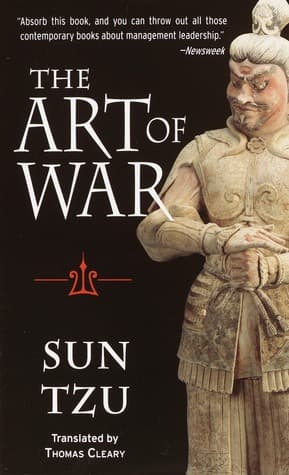
The Art of War cover
Archivist's Choice

The Art of War

Sun Tzu (2000)

Genre

Business / Politics / Leadership / History / Philosophy

Reading Time

90 min

Key Themes

See below

Track Your Reading

Sign in to track this book

Learn ancient strategies for outsmarting rivals, whether on the battlefield or in the boardroom.

Core Idea

The Art of War argues that true conflict mastery comes not from brute force, but from strategic planning, psychological tactics, and winning without direct fighting. Sun Tzu says understanding yourself, your opponent, and the situation is key. This allows you to use weaknesses, create good positions, and influence outcomes with deception, speed, and flexibility. The main goal is to save resources and achieve political aims indirectly, making war a last resort and a quick one.
Reading time
90 min
Difficulty
Medium
✓ Read this if...
You are a leader in business, politics, or any competitive field seeking timeless principles on strategy, negotiation, and conflict resolution, emphasizing efficiency and indirect approaches to achieve objectives.
✗ Skip this if...
You are looking for a detailed historical account of ancient Chinese warfare or a step-by-step guide to modern military tactics.

Core idea

The central argument and framework that powers the entire book.

The Art of War argues that true conflict mastery comes not from brute force, but from strategic planning, psychological tactics, and winning without direct fighting. Sun Tzu says understanding yourself, your opponent, and the situation is key. This allows you to use weaknesses, create good positions, and influence outcomes with deception, speed, and flexibility. The main goal is to save resources and achieve political aims indirectly, making war a last resort and a quick one.

At a glance

Reading time

90 min

Difficulty

Medium

Read this if...

You are a leader in business, politics, or any competitive field seeking timeless principles on strategy, negotiation, and conflict resolution, emphasizing efficiency and indirect approaches to achieve objectives.

Skip this if...

You are looking for a detailed historical account of ancient Chinese warfare or a step-by-step guide to modern military tactics.

Key Takeaways

1

Win Without Fighting

The supreme art of war is to subdue the enemy without fighting.

Quote

To fight and conquer in all your battles is not supreme excellence; supreme excellence consists in breaking the enemy's resistance without fighting.

Sun Tzu says that the best victory comes not from direct fighting, but from smart moves that make the enemy unwilling to fight. This means truly understanding your own strengths and weaknesses, as well as the opponent's. The goal is to create such a big advantage that the enemy sees no way to win. This could involve diplomatic pressure, economic influence, psychological tactics, or simply outmaneuvering them into a bad spot. The aim is to avoid the high costs of direct conflict—money, lives, and morale—and win through better planning ...

Supporting evidence

Sun Tzu repeatedly stresses the importance of attacking the enemy's plans, then alliances, then armies, and only as a last resort, their walled cities. This hierarchy clearly prioritizes non-combative strategies over direct engagement.

Apply this

In business, seek to outmaneuver competitors by anticipating their moves, forming strategic alliances, or developing superior products that make their offerings irrelevant, rather than engaging in price wars or aggressive marketing battles that deplete resources. Focus on creating a market position so strong that competitors are deterred from challenging it directly.
strategic-deterrenceindirect-approachpsychological-warfare
2

Know Thyself and Thy Enemy

Self-awareness and intelligence gathering are paramount to success.

Quote

If you know the enemy and know yourself, you need not fear the result of a hundred battles. If you know yourself but not the enemy, for every victory gained you will also suffer a defeat. If you know neither the enemy nor yourself, you will succumb in every battle.

This basic rule highlights how important information is. Victory isn't about brute force or courage, but about making informed choices. Knowing yourself means honestly looking at your abilities, resources, morale, and weaknesses. Knowing the enemy means having full information on their strengths, weaknesses, plans, attitude, and logistics. Without both, any action is a risk. This dual knowledge helps you create plans that use the enemy's weaknesses while using your own strengths. More importantly, it helps you avoid situations where y...

Supporting evidence

Sun Tzu dedicates significant attention to the use of spies and the importance of deceptive intelligence, highlighting that information is the most valuable asset in warfare.

Apply this

Before launching any new project or entering a competitive market, conduct thorough market research to understand competitors (their products, pricing, strategies) and an honest internal audit of your own company's capabilities, resources, and potential pitfalls. This dual understanding informs a robust and resilient strategy.

competitive-intelligenceswot-analysissituational-awareness
3

Deception is the Key

All warfare is based on deception.

Quote

All warfare is based on deception. Therefore, when able to attack, we must seem unable; when using our forces, we must seem inactive; when we are near, we must make the enemy believe we are far away; when far away, we must make him believe we are near.

Sun Tzu makes deception a core part of strategy, not just a tactic. The goal is to mislead the opponent about your real intentions, abilities, and positions. By creating false impressions, you can trick the enemy into making mistakes, overspending resources, or becoming careless, which then creates chances for a decisive strike. This doesn't always mean outright lies, but rather skillfully shaping perceptions through fake moves, misdirection, and secrecy. The skill is making the enemy react to a reality that isn't there, using up thei...

Supporting evidence

Sun Tzu provides numerous examples of feigning weakness when strong, inactivity when active, and drawing the enemy into traps by appearing vulnerable.

Apply this

In product launches, sometimes a 'soft launch' or limited release can create buzz and test the market while keeping full capabilities under wraps. In negotiations, appearing less eager or revealing only partial information can strengthen your bargaining position. The key is to control the narrative the opponent perceives.

misdirectionfeintstrategic-secrecy
4

Speed and Momentum

Exploit opportunities with swift, decisive action.

Quote

Speed is the essence of war. Take advantage of the enemy's unpreparedness, travel by unexpected routes, and strike him where he has taken no precautions.

Sun Tzu stresses the great importance of speed and taking the lead. A fast, clear strike against an unprepared enemy can be much more effective than a long siege or a direct attack. This isn't just about physical movement, but also about how fast decisions are made and carried out. Once momentum is gained, it is a strong force that can confuse the enemy, mess up their plans, and stop them from regrouping. Hesitation, on the other hand, lets the enemy prepare, get stronger, and counter-attack. This rule suggests creating and using weak...

Supporting evidence

Sun Tzu speaks of being 'swift as the wind,' and striking like a 'thunderbolt,' emphasizing the psychological impact of rapid, unexpected action.

Apply this

When a new market opportunity arises or a competitor makes a misstep, act quickly and decisively to capitalize on it. This could mean rapidly developing a new product feature, launching a targeted marketing campaign, or acquiring a key asset before others can react. Avoid analysis paralysis when a clear advantage presents itself.

first-mover-advantageblitzkriegopportunity-cost
5

Flexibility and Adaptability

Shape your strategy according to the changing situation.

Quote

Water shapes its course according to the nature of the ground over which it flows; the soldier works out his victory in relation to the foe whom he is facing.

Just as water adapts to the land, a good strategist must always adapt to the changing situation of the conflict. No plan works perfectly once it meets the enemy, and sticking strictly to a plan when things change is a recipe for failure. This means being able to change course, adjust tactics, and even drop whole plans if the situation demands it. It needs a sharp awareness of the environment, an ability to understand the opponent's actions, and the mental flexibility to respond creatively. The focus is on being fluid and responsive, m...

Supporting evidence

Sun Tzu compares the army's formation to water, which 'avoids the high and hastens to the low,' and that 'there are not more than five musical notes, yet the combinations of these five give rise to more melodies than can ever be heard.' This illustrates infinite adaptability from basic elements.

Apply this

In project management, embrace agile methodologies that allow for continuous feedback and adaptation rather than rigid, waterfall planning. In business strategy, regularly review market conditions and competitor actions, and be prepared to adjust your product roadmap or marketing approach accordingly.

agile-strategycontingency-planningstrategic-flexibility
6

Focus Your Forces

Concentrate strength to achieve local superiority.

Quote

He who is able to take the offensive in an engagement, will always choose the ground and the time. He who is able to take the defensive, must always fight on the ground and at the time chosen by his opponent.

Sun Tzu suggests focusing your forces at a key point to gain overwhelming local superiority, even if your total numbers are smaller. Instead of spreading resources thinly, you should find the enemy's weak spots and attack them with maximum force. This creates a decisive advantage at the point of contact, allowing for a breakthrough that can then be used. This rule is about smart resource use and avoiding wars of attrition. It ensures that when a fight happens, you have the best chance of winning, saving resources for future engagement...

Supporting evidence

Sun Tzu advises, 'If I am to mass my strength while the enemy is dispersed, I shall be superior in strength.' He also speaks of 'attacking the enemy's emptiness' and 'striking his weak points.'

Apply this

Instead of trying to be everything to everyone, a small business should identify a niche market where it can offer a superior product or service and dominate that segment. Focus marketing efforts and product development on this specific area to achieve a strong, defensible position.

niche-strategyresource-allocationconcentration-of-force
7

The Importance of Terrain

Understand and utilize the environment to your advantage.

Quote

We cannot enter into alliances until we are acquainted with the designs of our neighbors. We are not fit to lead an army on the march unless we are familiar with the face of the country—its mountains and forests, its pitfalls and precipices, its marshes and swamps. We shall be unable to turn natural advantages to account unless we make use of local guides.

Sun Tzu says that the physical environment, or 'terrain,' is not just a background but an active part of strategy. Understanding the terrain—whether it's geographical, market, or political—is crucial for both defense and attack. It affects movement, provides cover, creates bottlenecks, and offers chances for surprise attacks. A leader must not only know the terrain but also understand how to use it to their advantage and the enemy's disadvantage. This includes thinking about how the environment will affect logistics, communication, an...

Supporting evidence

Sun Tzu details various types of ground (e.g., accessible, entangling, open, narrow passes, precipitous heights) and provides specific advice on how to operate in each, including when to advance, retreat, or set ambushes.

Apply this

Before entering a new market, thoroughly research its regulatory landscape, cultural nuances, distribution channels, and existing infrastructure. Understanding these 'terrains' allows you to avoid costly mistakes and position your offerings effectively, perhaps by leveraging local partnerships or adapting your product.

environmental-analysisgeopoliticsmarket-segmentation
8

Leadership and Morale

A strong leader cultivates unity and discipline to inspire victory.

Quote

If words of command are not clear and distinct, if orders are not thoroughly understood, then the general is to blame. But if his orders are clear, and the soldiers nevertheless disobey, then it's the fault of their officers.

Sun Tzu puts great responsibility on the leader, not just for strategy, but for the morale and discipline of the forces. A good leader ensures clear communication, builds unity, and leads by example. Morale is a key part of fighting spirit; a discouraged army, no matter how large, is likely to lose. Discipline ensures that orders are followed well and that the army acts as one unit. The leader must be both kind and firm, inspiring loyalty while keeping order. This balance creates a force that is both motivated and able to carry out co...

Supporting evidence

Sun Tzu discusses the 'five dangerous faults which may affect a general' (e.g., recklessness, cowardice, a hasty temper, a delicacy of honor, over-solicitude for his men), all of which can undermine leadership and morale.

Apply this

As a team leader, ensure that project goals and individual responsibilities are communicated with absolute clarity. Foster a positive team culture through recognition and fair treatment, but also uphold high standards and address underperformance decisively. A unified, motivated team is far more productive and resilient.

organizational-cultureemployee-engagementtransformational-leadership
9

Avoid Prolonged Conflict

Lengthy campaigns deplete resources and erode morale.

Quote

There is no instance of a country having benefited from prolonged warfare.

Sun Tzu clearly warns against long conflicts, military or otherwise. Long engagements always use up resources, tire out people, and reduce public support, making victory harder and more costly. The goal should always be a quick, clear resolution. This means striking hard and fast, or finding non-fighting ways to reach goals, rather than getting stuck in long battles. The longer a conflict lasts, the more things can go wrong, increasing the risk of unexpected problems and ultimately, defeat. This rule promotes efficiency and focusing o...

Supporting evidence

Sun Tzu details the immense costs of war – thousands of ounces of silver for chariots, food for the army, maintenance, and the impact on a state's treasury and people. He explicitly states that 'no nation is ever benefited by prolonged warfare.'

Apply this

When launching a new business initiative or project, establish clear, ambitious but achievable timelines. Avoid scope creep and endless revisions. In negotiations, aim for a clear resolution rather than letting discussions drag on, which can lead to fatigue and a weaker outcome for all parties.

lean-operationscost-benefit-analysisresource-management
10

The Unseen Advantage

Shape the battlefield to make victory inevitable before the fight begins.

Quote

The good fighters of old first put themselves beyond the possibility of defeat, and then waited for an opportunity to defeat the enemy.

This idea sums up much of Sun Tzu's philosophy: true mastery means creating a situation where victory is almost certain before any direct fight even happens. It's about strategic positioning, careful preparation, and manipulating circumstances so much that the enemy is already at a disadvantage. This involves understanding terrain, deception, intelligence, and focusing force to create an overwhelming, almost hidden, advantage. The 'unseen advantage' is built through careful planning and proactive steps that remove chance, making the f...

Supporting evidence

Sun Tzu contrasts this with those who 'only engage in battle after having seen the certainty of victory,' implying that the wise general ensures victory before the battle, making it appear effortless.

Apply this

Before launching a product, secure key partnerships, build a strong brand reputation, and conduct extensive market testing. These preparatory steps can create an environment where your product's success is highly probable, rather than relying solely on post-launch marketing battles. Create an ecosystem where your offering thrives.

preemptive-strategystrategic-positioningasymmetric-advantage

Critical analysis

Notable Quotes

The supreme art of war is to subdue the enemy without fighting.

Discussing the highest form of military skill and strategy.

All warfare is based on deception.

Explaining a fundamental principle underlying all military operations.

If you know the enemy and know yourself, you need not fear the result of a hundred battles. If you know yourself but not the enemy, for every victory gained you will also suffer a defeat. If you know neither the enemy nor yourself, you will succumb in every battle.

Emphasizing the importance of self-knowledge and knowledge of the opponent.

Appear weak when you are strong, and strong when you are weak.

Advising on the use of appearances and misdirection in strategy.

Victorious warriors win first and then go to war, while defeated warriors go to war first and then seek to win.

Highlighting the importance of meticulous planning and preparation before engagement.

Hold out baits to entice the enemy. Feign disorder, and crush him.

Describing tactics to lure and defeat an unsuspecting opponent.

He who is prudent and lies in wait for an enemy who is not, will be victorious.

Stressing the advantage of caution and preparedness against a careless foe.

The good fighters of old first put themselves beyond the possibility of defeat, and then waited for an opportunity to defeat the enemy.

Illustrating the principle of securing one's own position before seeking to attack.

To secure ourselves against defeat lies in our own hands, but the opportunity of defeating the enemy is provided by the enemy himself.

Distinguishing between self-control in defense and exploiting an enemy's mistakes.

If your opponent is of choleric temper, seek to irritate him. Pretend to be weak, that he may grow arrogant.

Suggesting psychological tactics to exploit an enemy's temperament.

In war, the way is to avoid what is strong and to strike at what is weak.

A fundamental principle of tactical engagement.

Know the place and the time of battle, and you may be victorious a thousand times without a single loss.

Emphasizing the critical role of intelligence regarding terrain and timing.

Ponder and deliberate before you make a move.

Advising careful thought and consideration before taking action.

There is no instance of a nation benefiting from prolonged warfare.

Arguing against the sustainability and benefits of extended conflicts.

Quiz

Test Your Knowledge

Ready to see how well you understood this book? Take our interactive quiz with 10 questions.

10
Questions
~5
Minutes
?
Best Score

Key Questions (FAQ)

'The Art of War' is an ancient Chinese military treatise written by Sun Tzu. It outlines strategies and tactics for warfare, emphasizing the importance of planning, deception, and understanding both oneself and the enemy to achieve victory.

About the author