BookBrief
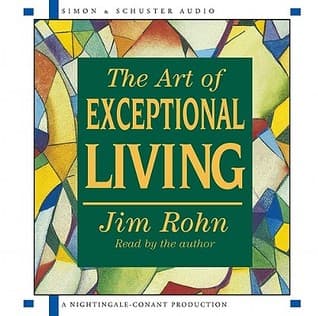
The Art of Exceptional Living cover
Archivist's Choice

The Art of Exceptional Living

Jim Rohn (1994)

Genre

Business / Leadership / Spirituality / Philosophy / Self-Help

Reading Time

180 min

Key Themes

See below

Track Your Reading

Sign in to track this book

Jim Rohn shows how mastering life's basic lessons and doing daily tasks with care can turn an average life into a successful one, leading to personal achievement and financial freedom.

Core Idea

Jim Rohn's "The Art of Exceptional Living" says that an exceptional life comes from mastering basic life lessons and consistently applying ordinary disciplines with care. The main idea is that a personal philosophy, built through learning and self-development, guides one's actions and results. By practicing self-discipline, managing time and money, protecting one's mindset, and choosing good associations, people can move from their current situation to their desired future, creating a life of abundance and satisfaction. The book stresses that small, consistent changes, based on a strong personal philosophy, lead to big results.
Reading time
180 min
Difficulty
Easy
✓ Read this if...
You are looking for foundational principles of personal development, financial wisdom, and leadership, presented in a straightforward, motivational style. Ideal for those seeking actionable advice to improve their life direction and daily habits.
✗ Skip this if...
You prefer academic or research-heavy texts, or are looking for complex, novel theories in self-help. This book is less about new concepts and more about reinforcing timeless truths.

Core idea

The central argument and framework that powers the entire book.

Jim Rohn's "The Art of Exceptional Living" says that an exceptional life comes from mastering basic life lessons and consistently applying ordinary disciplines with care. The main idea is that a personal philosophy, built through learning and self-development, guides one's actions and results. By practicing self-discipline, managing time and money, protecting one's mindset, and choosing good associations, people can move from their current situation to their desired future, creating a life of abundance and satisfaction. The book stresses that small, consistent changes, based on a strong personal philosophy, lead to big results.

At a glance

Reading time

180 min

Difficulty

Easy

Read this if...

You are looking for foundational principles of personal development, financial wisdom, and leadership, presented in a straightforward, motivational style. Ideal for those seeking actionable advice to improve their life direction and daily habits.

Skip this if...

You prefer academic or research-heavy texts, or are looking for complex, novel theories in self-help. This book is less about new concepts and more about reinforcing timeless truths.

Key Takeaways

1

Master the Four Major Lessons

Life's foundational principles dictate your success and happiness.

Quote

There are four major lessons that must be mastered in life.

Jim Rohn says life's path is largely set by how well we handle four basic lessons: how to manage life's "winters" (hard times), how to use the "spring" (opportunities), how to nurture our "crops" in "summer" (hard work and care), and how to gather in the "fall" (rewards). These are not just seasonal ideas; they show repeating cycles of challenge, potential, effort, and reward in all parts of our lives. Understanding and preparing for these cycles, rather than being surprised, helps us stay balanced and make progress. This broad view e...

Supporting evidence

Rohn's consistent use of the 'seasons of life' analogy throughout his teachings, emphasizing preparation for each phase.

Apply this

Reflect on current challenges as 'winter' and identify opportunities for growth ('spring'). Dedicate consistent effort ('summer') to a long-term goal, anticipating the 'fall' harvest. Develop a 'winter' emergency fund and a 'spring' learning plan.

life-cyclesresilienceforesight
2

Ordinary Things, Exceptionally Well

Excellence isn't about extraordinary acts, but consistent quality in daily tasks.

Quote

Just do ordinary things exceptionally well. That's The Art of Exceptional Living.

Rohn challenges the idea that an exceptional life needs grand, impossible feats. Instead, he argues that true excellence comes from doing everyday tasks with great care, effort, and attention. This idea shifts focus from chasing huge achievements to improving the quality of our routine actions. Whether it's a simple talk, a work report, or a personal habit, doing it with excellence builds an exceptionally lived life. It is about consistently applying high standards, turning ordinary things into a path for mastery and satisfaction. Thi...

Supporting evidence

The core premise of the book, repeatedly emphasized by Rohn, that exceptional living is built on the foundation of ordinary tasks done extraordinarily well.

Apply this

Identify one daily routine task (e.g., preparing a meal, responding to emails, a morning workout) and commit to performing it with heightened focus, precision, and care for one week. Observe the impact on your mindset and results.

excellenceconsistencymasterydaily-habits
3

The Power of Personal Development

Your income rarely exceeds your personal development.

Quote

Your income today is a result of your personal development up to this moment. If you want more income, you must develop yourself more.

Jim Rohn clearly connects personal growth to professional and financial success. He states that the external rewards we get directly reflect our internal development. If you want to earn more, achieve more, or experience more, you must first become more. This is not just about working harder but about investing in your skills, knowledge, wisdom, and character. It is a call to continuous learning, self-improvement, and pushing past your current abilities. This idea shows that success is attracted, not pursued; by becoming a more valuab...

Supporting evidence

Rohn's frequent anecdotes about individuals who transformed their lives by committing to reading, attending seminars, and developing new skills.

Apply this

Dedicate 30 minutes daily to reading non-fiction books related to your field or personal growth. Identify one new skill to learn or improve this quarter and commit to consistent practice. Track your progress and its correlation with new opportunities.

self-improvementlifelong-learninggrowth-mindsetvalue-creation
4

Discipline is the Bridge

Discipline is the link between goals and accomplishment.

Quote

Discipline is the bridge between goals and accomplishment.

Rohn highlights discipline as the necessary ingredient for turning goals into reality. He argues that motivation can be short-lived, but discipline provides the consistent, steady effort needed to overcome problems and keep moving towards long-term goals. Discipline is not about punishment; it is about making choices that align with your highest values and future self, even when it is uncomfortable or inconvenient. It is the daily commitment to small, consistent actions that build up over time. Without discipline, even the best ideas ...

Supporting evidence

Rohn's personal stories of overcoming early struggles through consistent disciplined effort in sales and public speaking.

Apply this

Choose one small, daily habit that directly contributes to a major goal (e.g., writing 500 words, exercising for 20 minutes, saving $10) and commit to it for 30 days, regardless of motivation. Use a habit tracker to monitor consistency.

self-disciplinehabit-formationgoal-settingconsistency
5

The Miracle of Small Changes

Small, consistent actions create exponential results over time.

Quote

Don't underestimate the power of starting small. Small changes can create a miracle in your life.

Rohn promotes the power of small steps, often calling it the 'miracle' of small changes. He says that big changes rarely happen quickly but are the total result of small adjustments and consistent efforts. The key is not to look for grand gestures but to find small, positive actions that can be consistently applied. These seemingly minor steps, when repeated daily, build up over weeks, months, and years, leading to big, often unexpected, results. This idea fights overwhelming feelings and procrastination by making success feel reachab...

Supporting evidence

Rohn's analogy of planting a seed: a tiny, seemingly insignificant act that, with consistent care, grows into a mighty tree.

Apply this

Identify one area of your life you want to improve. Brainstorm the smallest possible action you can take daily (e.g., read one page, drink one extra glass of water, write one sentence). Commit to this for 60 days and observe the cumulative effect.

compoundingincremental-progresshabit-stackingpatience
6

Guard Your Philosophy

Your personal philosophy shapes your destiny.

Quote

Your personal philosophy is the greatest determining factor in how your life works out.

Rohn places great importance on developing and protecting one's personal philosophy, which he defines as all of your beliefs, values, and attitudes about life. This inner framework dictates how you understand events, make decisions, and respond to challenges. A strong, positive philosophy helps you handle difficulties and seize opportunities, while a weak or negative one can lead to self-imposed limits and missed potential. He stresses that this philosophy is not fixed; it is constantly shaped by what you read, who you spend time with...

Supporting evidence

Rohn's stories of individuals who transformed their lives by changing their internal narratives and beliefs.

Apply this

Regularly reflect on your core beliefs about success, failure, and your own capabilities. Actively seek out books, podcasts, and mentors that challenge limiting beliefs and reinforce an empowering philosophy. Journal about your values and how they guide your decisions.

mindsetbeliefsvaluesself-talk
7

The Foundation of Financial Strategy

Saving and investing are non-negotiable for long-term freedom.

Quote

A good financial strategy begins with saving a portion of every dollar you earn.

Rohn's financial philosophy is simple yet effective: pay yourself first. He suggests consistently saving and investing a portion of all income, no matter the amount. This is not just about getting rich; it is about building a foundation of security and freedom. He stresses that many people focus on earning more without learning to manage what they already have, leading to ongoing financial struggles. The habit of saving, even small amounts, teaches discipline and creates a mindset of abundance, preparing the way for future financial i...

Supporting evidence

Rohn's consistent advice to 'save your pennies, and they will become dollars,' and his emphasis on compound interest.

Apply this

Automate a transfer of 10% (or even 1%) of every paycheck into a separate savings or investment account. Review your spending habits to identify areas where you can reduce unnecessary expenses to increase your savings rate.

financial-literacysavinginvestingcompound-interest
8

The Law of Association

You become the average of the five people you spend the most time with.

Quote

You are the average of the five people you spend the most time with.

Rohn strongly states that our environment, especially our social circle, greatly affects our thoughts, behaviors, and ultimately, our success. He encourages people to carefully evaluate their associations, making sure they are surrounded by people who lift them up, inspire them, and challenge them to grow, rather than those who drain their energy or reinforce limiting beliefs. This is not about abandoning friends but about being intentional and strategic about who you let into your inner circle. Being near excellence creates excellenc...

Supporting evidence

Rohn's anecdotes about how shifting his social circle led to significant improvements in his own life and career.

Apply this

List the five people you spend the most time with. Evaluate their influence on your goals and mindset. Seek out new connections or mentors who embody the qualities you aspire to develop, or limit time with those who consistently bring you down.

social-influencenetworkingmentorshipenvironment
9

Value the Opportunity

Recognize and act on the 'springtime' of life's opportunities.

Quote

There are always opportunities to change your life for the better. The key is to recognize them and act.

Building on the 'seasons of life' idea, Rohn stresses the importance of seeing and taking opportunities, comparing them to the 'spring' season. Opportunities are not always clear; they often appear as hard work, challenges, or new beginnings. Many people miss these important moments due to fear, putting things off, or not being able to see past immediate difficulties. Rohn's message is to develop an observant and active mindset, always looking for potential, even in tough situations. Acting on these opportunities, even small ones, is ...

Supporting evidence

Rohn's encouragement to 'plant seeds' during the spring – taking initiative and starting new ventures when conditions are favorable.

Apply this

Identify one area where you've been hesitant to act due to fear or uncertainty. Break down the opportunity into small, actionable steps and commit to taking the first step this week. Regularly scan your environment for new learning or growth opportunities.

proactivenessopportunity-recognitioninitiativecourage
10

The Art of Asking Good Questions

The quality of your questions determines the quality of your answers and life.

Quote

If you want to have more, you have to become more. And part of becoming more is asking better questions.

Rohn often champions the power of asking questions as a way for personal growth and problem-solving. He suggests that the quality of our lives is directly related to the quality of the questions we ask ourselves and others. Instead of focusing on 'why me?' or 'what went wrong?', exceptional people ask 'what can I learn?', 'how can I improve?', or 'what's next?'. This shift from being a victim to being curious and taking responsibility opens up new perspectives and solutions. Asking sharp, empowering questions is a basic skill for self...

Supporting evidence

Rohn's own teaching style, which often involved posing rhetorical questions to his audience to provoke deeper thought and self-discovery.

Apply this

When facing a challenge, instead of asking 'Why is this happening to me?', reframe it to 'What can I learn from this?' or 'What is one small step I can take to improve this situation?'. Dedicate time each week to asking yourself empowering questions about your goals and progress.

critical-thinkingself-reflectionproblem-solvingcuriosity

Critical analysis

Notable Quotes

Formal education will make you a living; self-education will make you a fortune.

Emphasizing the importance of continuous learning beyond traditional schooling for financial success.

You don't get paid for the hour. You get paid for the value you bring to the hour.

Highlighting that compensation is tied to productivity and impact, not just time spent.

Discipline is the bridge between goals and accomplishment.

Stressing the critical role of self-discipline in achieving one's objectives.

Learning is the beginning of wealth. Learning is the beginning of health. Learning is the beginning of spirituality. Searching and learning is where the miracle process all begins.

Illustrating learning as the foundational step for improvement in all aspects of life.

Don't wish it were easier, wish you were better.

Encouraging personal growth and skill development rather than hoping for less challenging circumstances.

If you are not willing to risk the usual, you will have to settle for the ordinary.

Advising that taking calculated risks is necessary to achieve extraordinary results.

Success is nothing more than a few simple disciplines, practiced every day.

Defining success as the cumulative effect of consistent daily positive habits.

The major reason for setting a goal is for what it makes of you to accomplish it. What it makes of you will always be of far greater value than what you get.

Emphasizing that personal transformation during goal pursuit is more valuable than the material outcome.

We must all suffer from one of two pains: the pain of discipline or the pain of regret. The difference is discipline weighs ounces while regret weighs tons.

Presenting a powerful choice between embracing discipline now or facing profound regret later.

You are the average of the five people you spend the most time with.

Highlighting the profound influence of one's social circle on personal development and outcomes.

Your philosophy is what determines whether you will make money or not. Your philosophy is what determines whether you will be healthy or not. Your philosophy is what determines whether you will go to heaven or not.

Underscoring that one's fundamental beliefs and worldview dictate their life's direction and results.

Work harder on yourself than you do on your job.

Prioritizing self-development and personal growth as the ultimate leverage for all other areas of life.

Happiness is not something you postpone for the future; it is something you design for the present.

Advocating for intentional design of present circumstances to cultivate happiness rather than deferring it.

Set a goal to become a millionaire not for the money, but for what it will make of you to achieve it.

Reiterating that the journey of achieving ambitious goals builds character and skills more valuable than the goal itself.

The greatest gift you can give anybody is your attention.

Emphasizing the profound value and impact of truly listening and being present with others.

Quiz

Test Your Knowledge

Ready to see how well you understood this book? Take our interactive quiz with 10 questions.

10
Questions
~5
Minutes
?
Best Score

Key Questions (FAQ)

The core message is that exceptional living doesn't require doing extraordinary things, but rather doing ordinary things exceptionally well. Jim Rohn emphasizes that consistent, high-quality effort in daily tasks leads to a life of success and fulfillment.

About the author