Beyond Instinct vs. Environment
Human destructiveness is not purely innate nor solely learned, but a complex interplay of biology and societal factors.
Quote
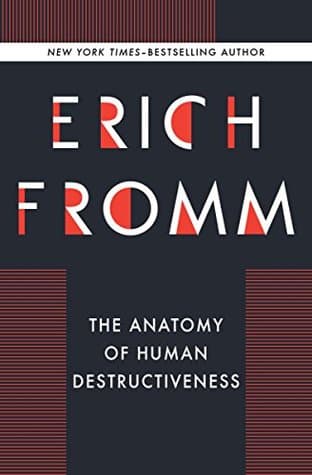
Man's destructiveness is not an instinct but a potential rooted in his existential situation and activated by specific social and cultural conditions.
Fromm breaks down the simple divide between instinct theories (like Lorenz's 'aggression instinct') and radical behaviorism (like Skinner's environmental determinism). He argues that human aggression and destructiveness are not just an inherited drive, nor are they simply learned. Instead, he offers a complex view where humans have various potentials, and social, economic, and cultural structures largely determine which ones develop. This 'existential situation' of humanity—our need for connection, meaning, and freedom—can, under cert...
Supporting evidence
Fromm's extensive analysis of various forms of destructiveness, from 'benign' (defensive, reactive) to 'malignant' (sadism, necrophilia), and his historical and anthropological examples demonstrating how different societies either foster or inhibit these potentials. He critiques Lorenz's ethological studies for oversimplifying human aggression by equating it directly with animal instincts, ignoring the uniquely human capacity for reasoning and symbolic thought.
Apply this
When analyzing conflict or violent behavior, look beyond simplistic explanations of 'bad people' or 'inherent evil.' Instead, investigate the underlying social, economic, and psychological conditions that might be frustrating human needs for relatedness, identity, and transcendence, thereby fostering destructive tendencies. Consider how societal structures either promote or hinder genuine human flourishing.