BookBrief
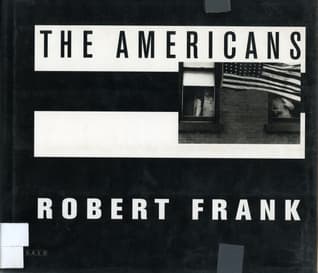
The Americans cover
Archivist's Choice

The Americans

Robert Frank

Genre

Reference / History / Creativity

Reading Time

180 min

Key Themes

See below

Track Your Reading

Sign in to track this book

Robert Frank's influential photobook, with an introduction by Jack Kerouac, captures the reality of 1950s American life through simple yet revealing images of its people and places.

Core Idea

Robert Frank's "The Americans" is a key photographic work that changed documentary photography with its direct, personal look at American life in the mid-1950s. Frank, an outsider, showed the loneliness, separation, and class differences beneath the surface of post-war prosperity, questioning the idea of American exceptionalism. With a raw, often blurred style and new image order, the book goes beyond just documenting, offering a deep, personal view of a country dealing with its own stories, influencing many photographers and artists.
Reading time
180 min
Difficulty
Medium
✓ Read this if...
You are a photographer, artist, or anyone interested in the history of photography, American culture, or the power of visual storytelling to critique societal norms. Essential for understanding the shift from traditional photojournalism to a more expressive, subjective documentary style.
✗ Skip this if...
You prefer highly polished, technically perfect photography or are looking for an optimistic, celebratory view of 1950s America. The book's stark, often melancholic tone and unconventional aesthetic might not appeal to those seeking conventional beauty or historical accuracy in a traditional sense.

Core idea

The central argument and framework that powers the entire book.

Robert Frank's "The Americans" is a key photographic work that changed documentary photography with its direct, personal look at American life in the mid-1950s. Frank, an outsider, showed the loneliness, separation, and class differences beneath the surface of post-war prosperity, questioning the idea of American exceptionalism. With a raw, often blurred style and new image order, the book goes beyond just documenting, offering a deep, personal view of a country dealing with its own stories, influencing many photographers and artists.

At a glance

Reading time

180 min

Difficulty

Medium

Read this if...

You are a photographer, artist, or anyone interested in the history of photography, American culture, or the power of visual storytelling to critique societal norms. Essential for understanding the shift from traditional photojournalism to a more expressive, subjective documentary style.

Skip this if...

You prefer highly polished, technically perfect photography or are looking for an optimistic, celebratory view of 1950s America. The book's stark, often melancholic tone and unconventional aesthetic might not appeal to those seeking conventional beauty or historical accuracy in a traditional sense.

Key Takeaways

1

The Unflinching Gaze of the Outsider

Robert Frank's unique perspective as a Swiss immigrant allowed him to reveal the undercurrents of American society.

Quote

The Americans is a book that captures the 'American way of life' as we hadn't yet quite been able to see it ourselves.

Robert Frank, as an outsider, had an important advantage in documenting 1950s America. Without cultural biases or a romanticized national identity, he could observe and photograph everyday life with an honesty that native photographers often missed or unconsciously filtered. His camera did not aim to praise or condemn but to simply present, showing the widespread loneliness, consumerism, and subtle social divisions beneath the surface of post-war prosperity. This 'outsider' perspective is key for critical observation, showing that new...

Supporting evidence

Frank's entire body of work in 'The Americans' – his choice of subjects like isolated figures, empty spaces, and the ubiquitous symbols of American life – serves as evidence of this outsider's gaze.

Apply this

To gain a deeper understanding of one's own culture or industry, seek out perspectives from newcomers or those outside the immediate context. Actively solicit feedback from 'outsiders' who can offer an unbiased, fresh viewpoint, challenging assumptions and revealing blind spots.


outsider-perspectivecultural-critiqueunbiased-observation
2

Subverting Photographic Conventions

Frank rejected traditional photographic aesthetics, embracing a raw, 'snapshot' style that mirrored the chaos of modern life.

Quote

He brought a new way of seeing, a new way of photographing, a new way of making a book.

Before 'The Americans,' much of documentary photography followed set rules for composition, lighting, and clear stories. Frank intentionally broke these rules. His images are often grainy, off-center, poorly lit, and seem spontaneous — a sharp contrast to the polished, heroic images common at the time. This 'snapshot style' was not a lack of skill, but a deliberate artistic choice to capture the fleeting, messy reality of everyday existence. It gave a sense of immediacy and truth that more formal approaches could not, making viewers f...

Supporting evidence

Photographs like 'Trolley – New Orleans' or 'Parade – Hoboken, New Jersey' exemplify his unconventional framing, blur, and seemingly casual composition.

Apply this

In any creative or professional field, challenge the unspoken rules and established aesthetics. Experiment with unconventional approaches and prioritize authenticity and emotional impact over polished perfection, even if it initially feels 'wrong' or unconventional.

snapshot-aestheticdocumentary-photographyartistic-subversion
3

The Poetics of the Mundane

Frank elevated everyday scenes and anonymous faces into profound statements about the human condition.

Quote

Pictures of normal people, everyday scenes: lunch counters, bus depots, cars, and the strangely familiar faces of people we don't quite know but have seen somewhere.

Frank's skill was in finding deep meaning in seemingly small things. His subjects are not famous people or grand landscapes, but waitresses, jukeboxes, flags, and lonely roads. He filled these ordinary elements with a sense of sad beauty and universal meaning, turning them into symbols of a larger national feeling. By focusing on 'small' moments, he showed the emotional character of an era and the shared experiences of ordinary people, proving that real insight often is not in the extraordinary, but in the overlooked details of daily ...

Supporting evidence

Images such as 'Coffee Shop – U.S. 1 leaving Columbia, South Carolina' or 'Bar – New York City' exemplify his focus on commonplace settings and anonymous individuals, imbuing them with weight and meaning.

Apply this

Practice mindful observation in your daily life and work. Look for the deeper narratives and emotional significance in routine tasks, interactions, and environments. Recognize that 'small' details can often communicate the most powerful messages.

everyday-beautyhuman-conditionobservational-art
4

Loneliness and Alienation as a National Portrait

Beneath the post-war boom, Frank captured an pervasive sense of isolation and disconnection.

Quote

The Americans... condensed the entire life of a nation in classic images that still speak to us today.

While 1950s America was often shown as a time of prosperity, conformity, and optimism, Frank's photographs offered a different, more complex view. He often captured moments of deep loneliness, even in crowded places. Figures are often alone in the frame, lost in thought, or disconnected from their surroundings. This widespread feeling of separation became a main theme, suggesting a deeper emotional state beneath the surface of national identity. It questioned the common story and hinted at the emotional costs of fast modernization and...

Supporting evidence

Photographs like 'Drug Store – Detroit,' with its solitary figures, or 'Elevator – Miami Beach,' where individuals are physically close but emotionally distant, powerfully convey this theme.

Apply this

When evaluating societal trends or organizational culture, look beyond surface-level indicators of success. Actively seek out and acknowledge the less visible emotional and psychological impacts on individuals, understanding that hidden challenges can undermine apparent strengths.

social-alienationpost-war-americaexistential-loneliness
5

The Car as an American Icon

Automobiles are not just transportation but symbols of freedom, status, and isolation in Frank's America.

Quote

Cars, and the strangely familiar faces of people we don't quite know but have seen somewhere.

The automobile appears often throughout 'The Americans,' not just as transport but as a strong symbol of American identity. Frank photographs cars in all their forms: shiny symbols of status, rusted old cars, and the private spaces in which people travel, often alone. The car represents both the promise of freedom and movement, and, paradoxically, a source of isolation, separating people from their environment and from each other. Frank's portrayal highlights how deeply the car became part of the American dream, shaping places, social...

Supporting evidence

Images such as 'U.S. 90, en route to Del Rio, Texas' showing a solitary car on a vast road, or 'Covered Car – Long Beach, California,' where the car itself becomes a mysterious, central character.

Apply this

When analyzing cultural phenomena, identify the core symbols and objects that define an era or group. Explore their multifaceted meanings – how they represent aspirations, anxieties, and contradictions – to gain a deeper cultural understanding.

american-dreamautomotive-culturesymbolism-in-art
6

The Power of Sequence and Juxtaposition

The book's impact is amplified by Frank's masterful arrangement of images, creating a narrative beyond individual frames.

Quote

The sequence of the images is just as important as the images themselves.

While each photograph in 'The Americans' is strong alone, their real impact comes from their arrangement. Frank carefully ordered the images, often putting different scenes side by side — a flag with a funeral, a politician with a jukebox, a wealthy socialite with a working-class family. This non-linear, associative order creates a complex, layered story that is more emotional and suggestive than literal. It makes the viewer connect ideas, build their own interpretations, and face the contradictions in American society. This new way o...

Supporting evidence

The entire structure of 'The Americans' as a book, where images are often paired or placed in close proximity to create a dialogue, rather than presented as isolated works.

Apply this

In presenting information or a creative project, consider the power of sequencing and juxtaposition. How can the order and arrangement of elements create new meanings, highlight contrasts, or build a more compelling narrative than individual pieces alone?

photo-book-designvisual-narrativeartistic-sequencing
7

Challenging the Myth of American Exceptionalism

Frank's work subtly questioned the idealized image of a unified, prosperous, and happy post-war America.

Quote

He captured the underlying anxiety and restlessness beneath the veneer of American prosperity.

At a time when America was promoting an image of global power, moral correctness, and great opportunity, 'The Americans' presented a more mixed picture. Frank's camera showed racial segregation, class differences, the emptiness of consumerism, and a widespread sense of boredom that went against the official story. His photographs did not explicitly condemn, but through their honest portrayal of everyday realities, they gently questioned the idea of a perfectly uniform and happy nation. This subtle criticism was first met with resistan...

Supporting evidence

Images depicting racial segregation ('Rodeo – New York City'), the stark contrast between wealth and poverty, and the vacant expressions of some subjects directly challenge the idealized national image.

Apply this

Be critical of dominant narratives and official portrayals, whether in media, politics, or corporate communications. Actively seek out alternative perspectives and evidence that might reveal underlying complexities or contradictions.

cultural-mythnational-identitycritical-perspective
8

A Legacy of Influence and Controversy

Initially met with hostility, 'The Americans' became a foundational text for modern photography.

Quote

There is no question that Robert Frank's The Americans is the most famous and influential photography book ever published.

Upon its first release in the U.S., 'The Americans' was largely misunderstood and even criticized by the photography establishment. Critics found its style crude, its subject matter sad, and its tone un-American. However, over time, its honest approach and new style were recognized as very influential. It freed photography from strict rules, inspiring many photographers to take a more personal, emotional, and socially aware approach. The book's journey from controversy to classic status shows how truly new art often challenges current...

Supporting evidence

The initial negative reviews from publications like 'Popular Photography' contrasted with its later widespread acclaim and inclusion in countless 'best photography books' lists.

Apply this

Don't be discouraged by initial resistance or negative feedback for innovative work. True originality often requires time for an audience to catch up. Persistence in presenting a unique vision can ultimately lead to lasting influence and recognition.

artistic-legacyphotography-historycultural-impact
9

The Beat Generation's Visual Counterpart

Frank's raw imagery perfectly complemented the literary rebellion of the Beat writers, particularly Jack Kerouac.

Quote

That crazy feeling in America when the sun is hot and everybody's working and you're just traveling along the road and digging everything.

Jack Kerouac's strong introduction to 'The Americans' was not by chance; Frank's photographs were the visual representation of the Beat Generation's spirit. Just as Beat writers like Kerouac aimed to capture the raw, spontaneous energy of American life, often focusing on outsiders, wanderers, and the less visible parts of society, Frank's images did the same. His gritty, honest style and focus on alienation, jazz clubs, and open roads strongly connected with the Beat's rejection of conformity and their search for real experience. The ...

Supporting evidence

Kerouac's introduction itself, with its stream-of-consciousness style and vivid descriptions of American wanderlust, directly links Frank's visual language to the Beat sensibility.

Apply this

When developing a project or message, explore interdisciplinary connections. How can different art forms or communication channels complement and strengthen each other to create a richer, more impactful experience for the audience?

beat-generationcountercultureinterdisciplinary-art
10

Beyond Documentation: Personal Expression

Frank transcended mere reportage, infusing his photographs with a deeply personal, subjective vision.

Quote

I was trying to show what I felt.

While 'The Americans' works as a strong record of a specific time and place, it is much more than objective reporting. Frank clearly stated his goal was to convey his personal feelings and subjective experience of America. His choices of framing, focus, and subject matter are deeply filled with his own emotional state — a mix of fascination, sadness, and critical distance. This addition of personal feeling raises the work from mere journalism to deep artistic expression. It shows that the most impactful 'documentation' often comes fro...

Supporting evidence

Frank's own statements about his intent, and the consistent emotional tone and perspective evident across all the images, despite their varied subjects.

Apply this

In any form of communication or creative endeavor, don't shy away from infusing your work with personal perspective and emotion. Authenticity and subjective truth can often be more powerful and resonant than a detached, objective approach.

subjective-photographyartistic-expressionpersonal-vision

Critical analysis

Notable Quotes

The camera is a sad instrument when it is used to multiply an emotion that is better seen in a book, or in a museum, or in a quiet room, than in a thousand different places.

A reflection on the potential for photography to dilute authentic experience.

I am always looking outside, trying to look inside. Trying to say something about what it is to be a human being.

Frank's artistic motivation and his approach to capturing the human condition.

When people look at my pictures, I want them to feel the way they do when they want to read a line of poetry twice.

Expressing his desire for his photographs to evoke deep thought and emotional resonance.

The world is full of people who are not really there. Their faces are masks. Their lives are empty.

A commentary on the superficiality and alienation he often perceived in American society.

Black and white are the colors of photography. To me, they symbolize the alternatives of hope and despair to which mankind is forever subjected.

Explaining his preference for monochrome photography and its symbolic meaning.

I was born in Switzerland, grew up in Switzerland. I came to America in 1947. I'm a foreigner. I look at things differently.

Highlighting his outsider perspective as a key element in his photographic vision of America.

You can photograph anything. But the main thing is to make it your own. To be yourself.

Advice on developing a personal style and authenticity in photography.

My photographs are not about America. They are about the way I feel about America.

Clarifying that his work is a subjective interpretation rather than an objective depiction.

There is one thing the photograph must contain, the humanity of the moment.

Emphasizing the importance of capturing genuine human emotion and experience.

I have been accused of being a pessimist. But I am not. I just show what I see.

Defending his often stark and critical portrayal of American life.

A picture is not enough. It must be a story. A life. A feeling.

Expressing his desire for his photographs to convey deeper narratives and emotions.

The Americans' is a sad book, a sad book for a sad country.

A concise and poignant self-assessment of his most famous work and its subject.

Sometimes I think I am a spy, looking through my camera lens at a world that is not mine.

Reflecting on his detached yet observant role as a photographer.

To be a good photographer, you have to be interested in life.

Stating the fundamental requirement for a photographer to engage with the world around them.

Quiz

Test Your Knowledge

Ready to see how well you understood this book? Take our interactive quiz with 10 questions.

10
Questions
~5
Minutes
?
Best Score

Key Questions (FAQ)

'The Americans' explores the nuances of American life in the mid-1950s through candid photographs of everyday scenes and people. It captures a raw and often melancholic view of the nation, challenging the idealized post-war image.

About the author