“The past is a stubborn ghost. It refuses to stay buried.”
— Reflecting on the enduring impact of history and personal trauma.

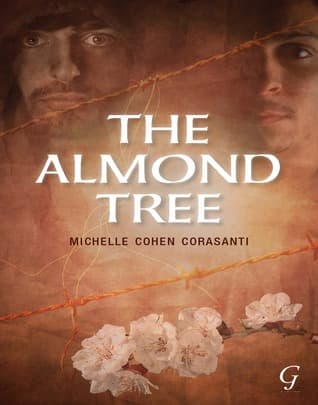
Michelle Cohen Corasanti (1947)
Genre
Politics / Historical Fiction / Spirituality
Reading Time
348 min
Key Themes
See below
Sign in to track this book
A brilliant Palestinian boy seeks to free his imprisoned father and restore his family's hope in a village scarred by occupation, finding triumph and spiritual renewal amid escalating conflict.
Ahmed Hamid, a bright young Palestinian boy, lives in a village under Israeli occupation. His twelfth birthday in 1955 is overshadowed by constant fear. While celebrating with his family, including his younger brother Abed and sister Huda, Israeli soldiers raid their home. His father, a respected teacher and olive farmer, is arrested and imprisoned without clear charges, accused of having a single bullet. Their home and belongings are taken, leaving them poor. This event breaks Ahmed's childhood innocence and creates a deep sense of injustice and a strong desire to protect his family, especially his mother and younger siblings, from more suffering. His family struggles to survive, relying on neighbors, while Ahmed deals with the burden of responsibility.
After their father's imprisonment and the loss of their home, Ahmed's younger brother, Abed, becomes increasingly filled with hatred and a desire for revenge against the Israeli occupation. Abed sees more injustices, including the destruction of their olive trees and constant harassment of their community. He is drawn to militant groups and starts taking part in acts of defiance, much to Ahmed's worry. Ahmed tries to reason with Abed, urging him to focus on education and peaceful resistance, but Abed's anger is too strong. This difference in beliefs creates tension between the brothers. Ahmed fears for Abed's safety and future, while Abed sees Ahmed's studies as weakness or complicity.
Despite the harsh conditions and the need to work to support his family, Ahmed's intelligence does not go unnoticed. His village elders and teachers recognize his talent, especially in math and science. Ahmed reads every book he can find, often studying by candlelight late at night. His ability to learn is seen as a possible way for his family to escape poverty and oppression. This recognition drives Ahmed, as he sees education not just as a personal goal but as a tool to free his loved ones from their suffering. He excels in school, often surpassing his peers and even his teachers in understanding complex ideas.
Ahmed's excellent academic performance leads him to meet Professor Sharon, a Jewish Israeli professor from the Hebrew University. Professor Sharon, visiting Ahmed's school, is impressed by Ahmed's understanding of physics and his unique problem-solving skills. Despite the political tensions and distrust between their communities, Professor Sharon sees only a brilliant mind that deserves to be helped. He offers Ahmed a scholarship and a chance to study at the Hebrew University in Jerusalem, a rare opportunity for a Palestinian boy from an occupied village. This offer creates a moral conflict for Ahmed, as it means studying among those he sees as oppressors, but he accepts, seeing it as the only way to gain the knowledge and power to help his family.
Ahmed's arrival at the Hebrew University is difficult. He is one of the few Palestinian students and faces immediate prejudice and hostility from some Israeli peers and even some faculty members. He struggles with loneliness and feeling like an outsider, constantly aware of the difference between his village life and his new academic environment. Despite these difficulties, Ahmed stays focused on his studies, driven by his goal to become a scientist. He finds comfort in the library and the intellectual challenges of his courses. Professor Sharon continues to be a supportive mentor, protecting Ahmed from some discrimination and encouraging his scientific pursuits, creating a complex but respectful relationship between them.
While Ahmed studies, his family in the village continues to suffer. His sister Huda, bright and promising, becomes ill. Because of poor medical facilities and difficulty accessing Israeli hospitals, her condition worsens. Ahmed is heartbroken when he learns of her death. This tragedy further fuels his determination but also deepens his sense of helplessness and anger at the systemic injustices. He feels the weight of his absence and his family's sacrifices for his education. Later, his brother Abed is killed during a confrontation with Israeli soldiers, a devastating blow that confirms Ahmed's worst fears about his brother's path. These losses strengthen Ahmed's resolve to find a solution that avoids violence.
Ahmed dedicates himself to his studies, especially theoretical physics. He proves to be a prodigy, making contributions to quantum mechanics and eventually developing a new theory related to clean energy or a similar scientific advancement. His work gains international attention, bringing him recognition in the scientific community. He believes that scientific progress can be a force for good, able to solve global problems and, indirectly, improve the lives of his people. His research becomes his refuge and his tool against the injustices he has seen, a way to contribute to a better future that goes beyond political and ethnic divides.
As Ahmed's scientific reputation grows, he gains a platform and a voice beyond academia. He uses his influence to highlight his people's struggles and advocate for peace and understanding. He speaks at international conferences, not just about his scientific discoveries but also about the need for reconciliation and justice in the Middle East. He engages with political figures and humanitarian organizations, trying to bridge the gap between Israelis and Palestinians. His approach is always one of reason and empathy, using his personal experiences to show the human cost of conflict, while always emphasizing the potential for shared humanity and mutual respect.
After achieving international fame, Ahmed returns to his village, not as a conqueror, but as a son who has brought knowledge and a vision for a better future. He uses his resources and influence to help rebuild his community, focusing on education and sustainable development. He establishes schools and initiatives that promote peace and understanding between Israelis and Palestinians, working with both communities. His journey has changed him from a boy consumed by grief and a desire for revenge into a man dedicated to reconciliation and progress. He embodies the hope that even amid deep conflict, intellectual pursuit and compassion can lead to a more just and peaceful world.
Ahmed's efforts begin to succeed, inspiring a new generation of Palestinians and Israelis to find common ground. His story shows the power of education, resilience, and empathy in overcoming hardship. The almond tree, a symbol of endurance and hope in Palestinian culture, represents Ahmed's steady spirit and his lasting commitment to his people. He continues to work for peace, advocating for a future where both sides can live with dignity and respect. His life's work becomes a bridge, showing that intellectual brilliance, when combined with a humanistic spirit, can cross political boundaries and heal deep wounds, offering a clear path toward reconciliation.
The Protagonist
Ahmed transforms from a traumatized boy seeking revenge into a renowned scientist and peace advocate, using his intellect to bridge divides and uplift his community.
The Supporting
Abed descends from an innocent child into a militant, his life tragically cut short by the conflict he fought against.
The Supporting
Huda's brief life and tragic death serve as a powerful catalyst for Ahmed's determination and a symbol of the innocent lives lost.
The Supporting
Professor Sharon serves as a consistent beacon of support and mentorship for Ahmed, embodying the potential for peace and intellectual collaboration.
The Supporting
His unjust imprisonment sets off the chain of events that define Ahmed's life, serving as a constant reminder of the fight for justice.
The Supporting
She remains a steadfast source of strength and emotional grounding for Ahmed throughout his tumultuous journey.
The novel shows how education and intellectual pursuit can transform, offering a path to liberation and peace even in harsh conditions. Ahmed's talent in science allows him to overcome the limits of occupation, giving him a voice and influence that violence could not. His dedication to learning is not just for himself but is driven by a desire to help his family and community, as seen when he uses his scientific achievements to advocate for his people and start educational programs at home.
“Knowledge is the only weapon that cannot be confiscated, and the only freedom that cannot be imprisoned.”
The story details the human cost of the Israeli-Palestinian conflict and occupation. Through Ahmed's personal tragedies—his father's unjust imprisonment, the loss of their home, Huda's death from lack of medical care, and Abed's radicalization and death—the novel reveals the deep and lasting impact on individuals and families. It explores how systemic injustice creates resentment, violence, and despair, emphasizing that beyond politics, real lives are shattered and potential is lost, forcing characters like Ahmed to endure great personal suffering.
“Every time I lost someone, I swore I would find a way to make sure no one else suffered as we did.”
A main theme is the contrast between reconciliation and revenge. Ahmed chooses to channel his grief and anger into constructive action, seeking understanding and scientific progress, even studying among those he sees as oppressors. In contrast, his brother Abed gives in to hatred and pursues violent resistance. The novel explores the results of both choices, ultimately supporting empathy, dialogue, and mutual respect as the only lasting way forward. Ahmed's relationship with Professor Sharon shows the possibility of building bridges across deep divides.
“Hatred is a poison that hurts the one who holds it more than the one it is aimed at.”
Ahmed struggles with his identity as a Palestinian living under occupation, then as an outsider in an Israeli academic environment. He constantly balances his loyalty to his family and people with his ambition to pursue universal scientific truths. His journey forces him to define where he belongs and how he can best serve his community. He struggles with guilt for leaving his family but ultimately finds a way to combine his Palestinian heritage with his global scientific identity, becoming a bridge between worlds.
“I was a Palestinian, but I was also a scientist. My mind belonged to the world, but my heart belonged to my village.”
A recurring symbol of resilience, hope, and enduring connection to the land.
The almond tree serves as a powerful and recurring motif throughout the novel. It symbolizes the resilience of the Palestinian people, their deep roots in the land, and the enduring hope for a future where life can flourish despite hardship. The destruction of almond trees by Israeli forces highlights the deliberate attempt to uproot and displace the community, while the continued presence and blossoming of other trees represent an unwavering spirit of survival and renewal. For Ahmed, the almond tree is a tangible link to his heritage and a reminder of what he is fighting to protect and restore.
An Israeli professor who acts as a guide and protector for Ahmed, bridging cultural divides.
Professor Sharon functions as a classic mentor figure, providing Ahmed with critical guidance, opportunities, and emotional support. Crucially, he is an Israeli, making his mentorship a powerful symbol of potential reconciliation and the ability of human connection to transcend political and ethnic conflict. He not only nurtures Ahmed's intellectual genius but also acts as a buffer against the prejudice Ahmed faces, demonstrating that compassion and respect can exist even amidst deep-seated animosity. His role is vital in Ahmed's journey from a traumatized boy to an internationally recognized scientist.
Ahmed's siblings who represent alternative, tragic paths in response to oppression.
Abed and Huda serve as foil characters to Ahmed, highlighting the different ways individuals react to extreme oppression. Abed's path of violent resistance and his tragic death underscore the futility and destructive nature of hatred, contrasting sharply with Ahmed's pursuit of peaceful, intellectual solutions. Huda, a symbol of innocence and lost potential, represents the devastating human cost of the conflict, reinforcing Ahmed's determination to prevent similar tragedies. Their fates emphasize the weight of Ahmed's choices and the importance of his chosen path towards reconciliation and progress.
Education as a weapon, a shield, and a tool for liberation and peace.
Education and knowledge are central symbols in the novel. For Ahmed, they are not just means to personal advancement but represent a powerful 'weapon' against oppression, a 'shield' against despair, and the ultimate 'tool' for liberation. His pursuit of science is framed as a way to gain influence, solve problems, and ultimately achieve a form of justice that violence cannot. The ability to learn and innovate becomes a symbol of hope and a tangible pathway to a better future, both for Ahmed personally and for his community.
“The past is a stubborn ghost. It refuses to stay buried.”
— Reflecting on the enduring impact of history and personal trauma.
“Hope is a dangerous thing, but despair is a deadlier one.”
— A character weighing the risks and necessities of maintaining hope in difficult circumstances.
“God does not make mistakes, but people often do, and they blame God for the consequences.”
— A spiritual reflection on human agency and the attribution of blame.
“Sometimes the greatest act of love is to let go, even when it tears your soul apart.”
— Discussing the painful necessity of sacrifice and letting go for the sake of another.
“Our stories are all we have when everything else is stripped away.”
— Emphasizing the importance of narrative and personal history in defining identity.
“The human heart is an almond tree, fragile yet resilient, blooming even in the harshest winter.”
— A metaphorical description of human endurance, referencing the book's title.
“Peace is not the absence of conflict, but the ability to cope with it.”
— A pragmatic view on achieving inner and outer peace amidst ongoing struggles.
“To forgive is to set a prisoner free and discover that the prisoner was you.”
— Exploring the liberating power of forgiveness, both for the forgiver and the forgiven.
“Silence can be a weapon, a shield, or a sanctuary.”
— Contemplating the multifaceted nature and power of silence in various situations.
“Every border is a wound, visible or invisible, on the body of the land and the soul of its people.”
— Reflecting on the divisive and painful impact of political borders.
“There are truths that lie deeper than facts, in the heart of what we remember and what we choose to believe.”
— Distinguishing between factual truth and the deeper, often subjective, truths of human experience.
“The greatest battles are not fought with swords, but within the confines of one's own mind.”
— Highlighting the internal struggles and psychological challenges faced by characters.
“Love does not erase the past, but it can build a future strong enough to bear its weight.”
— Acknowledging the enduring presence of past trauma while emphasizing love's power to foster new beginnings.
“Even in the darkest soil, a seed of hope can take root and grow.”
— A metaphor for finding optimism and growth even in the most challenging circumstances.
Ready to see how well you understood this book? Take our interactive quiz with 10 questions.

Brett Casper
5.0
Dirk Uffelmann
4.7

Winston S. Churchill
4.5
Chimamanda Ngozi Adichie
4.5
Will Durant
4.4
Thomas Sowell
4.4
W.E.B. Du Bois
4.3

Alan Moore
4.3